.svg)


AI assistants for insurance agencies can support very different workflows, from answering calls and qualifying leads to detecting fraud, automating customer service, and analyzing underwriting data. The best option depends on the problem your agency needs to solve, the systems it must integrate with, and the level of human oversight required.
This guide compares five AI assistants across their core use cases, strengths, limitations, and ideal agency fit. Sonant AI, for example, focuses on voice-based call handling and lead qualification, while the other platforms support areas such as fraud detection, conversational service, enterprise automation, and predictive analytics.
Quick Answer: The best AI assistant for an insurance agency depends on the workflow you want to improve. Sonant AI is the strongest fit for handling inbound calls and lead qualification. Friss specializes in fraud detection and risk assessment, IBM watsonx Assistant supports enterprise conversational AI, Kenyt.AI focuses on customer service automation, and DataRobot is best suited for predictive analytics and underwriting support.

The Evolution of AI in Insurance: From Basic Chatbots to Sophisticated Virtual Assistants
AI assistants have evolved significantly over the past decade, moving beyond rule-based chatbots to systems that can understand context, automate workflows, and support more complex insurance operations.
This evolution hasn't happened overnight. The journey from basic rule-based systems to today's AI powerhouses reflects broader technological shifts that have reshaped how insurance agencies operate.
Key Milestones in Insurance AI Development
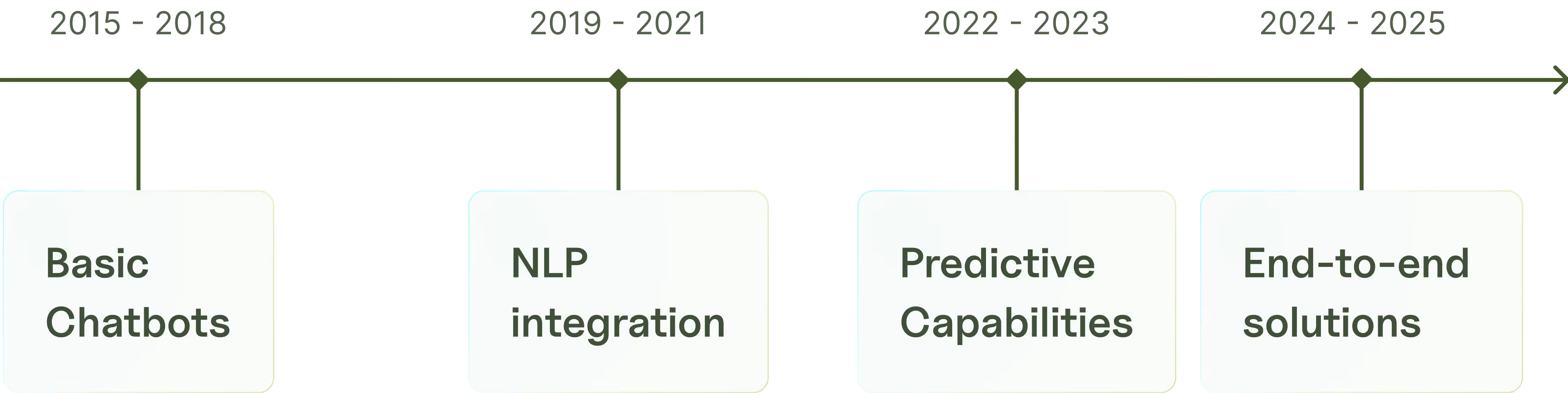
- 2015-2018: First-generation insurance chatbots emerge, primarily handling FAQs and simple policy questions
- 2019-2021: Integration of natural language processing (NLP) allows for more nuanced understanding of client inquiries
- 2022-2023: Introduction of predictive capabilities enables proactive client engagement and personalized recommendations
- 2024-2025: Emergence of fully integrated AI assistants that seamlessly connect with agency management systems and provide end-to-end service solutions
According to research published by CloudTalk, AI tools for insurance companies are expected to increase productivity and lower operating costs by up to 40%. From claims processing to fraud detection and underwriting, the applications of AI in the insurance sector continue to expand rapidly, creating new opportunities for efficiency and growth.
What distinguishes today's best insurance agency AI assistant solutions from their predecessors is their ability to handle complex, multi-step processes with minimal human intervention. As noted in Best AI for Insurance Companies: Top Tools & Use Cases , modern AI assistants can analyze risk factors, automate claims handling, and detect fraudulent activities – tasks that previously required significant human oversight.
Comprehensive Analysis of Top 5 AI Assistants for Insurance
If you're looking for a broader overview beyond this shortlist, explore our Complete 2026 guide to AI tools for insurance agencies, which covers a wider range of AI solutions and insurance use cases.
The best AI assistant depends on your agency's workflows, budget, and implementation needs. Below, we compare five leading solutions based on their core capabilities, strengths, limitations, and ideal use cases.
1. Sonant Voice AI
Sonant Voice AI agents excel in handling inbound/outbound calls and converting routine inquiries into revenue opportunities. This solution stands out for its specialized focus on voice interactions and seamless integration with agency workflows.
Key Strengths:
- Natural-sounding voice interactions that maintain brand consistency
- Intelligent call routing that connects clients with the right department
- Automated appointment scheduling that reduces administrative burden
- Integration with agency management systems for seamless data flow
- Ability to qualify leads and transfer promising prospects to agents
Limitations:
- Primarily focused on voice rather than text-based interactions (for now)
- Most valuable for agencies with significant call volume and missed opportunities
Ideal For: Insurance agencies looking to optimize their phone systems and improve the efficiency of their receptionist functions, as well as outbound capabilities.
For agencies seeking to enhance their call handling capabilities, an AI receptionist for insurance like Sonant can transform how incoming inquiries are managed, ensuring that no opportunity falls through the cracks.
2. Friss AI
Friss specializes in risk assessment and fraud detection, making it a powerful ally for insurance underwriters and claims processors.
Key Strengths:
- Industry-leading fraud detection capabilities
- Automated claim handling that validates claims and estimates costs
- Risk assessment tools that enhance underwriting accuracy
- Flexible pricing model adaptable to various business needs
Limitations:
- More focused on back-office functions than client-facing interactions
- Requires significant data input to maximize effectiveness
Ideal For: Insurance agencies dealing with high-volume claims processing and those particularly concerned with fraud prevention.
As highlighted in 5 Best AI Tools for Insurance , "Friss's robust features target fraud detection, risk assessment, and claim automation, offering a new level of efficiency and security in the insurance industry."
3. Kenyt.AI
Kenyt.AI provides a comprehensive suite of conversational AI for policy explanations and customer service, with particular strengths in automating routine inquiries.
Key Strengths:
- Intelligent chatbots that handle policy inquiries with high accuracy
- Automated lead qualification to identify promising prospects
- Claims processing automation that improves response times
- Analytics capabilities that provide actionable insights on customer interactions
Limitations:
- Less robust integration with some legacy agency management systems
- Voice capabilities not as advanced as some competitors
Ideal For: Agencies looking to automate customer service functions and improve response times for routine inquiries.
According to 5 Best Applications Of AI For Insurance Agents , "Kenyt.AI offers an advanced AI-driven platform designed specifically for insurance agents. With trainable features like intelligent chatbots, automated claims processing, and personalized policy suggestions, Kenyt.AI enhances customer engagement and streamlines agents' operations."
4. IBM watsonx Assistant
IBM's offering stands out for its enterprise-grade capabilities and extensive customization options. Designed specifically for the insurance sector, watsonx Assistant leverages advanced natural language understanding to interpret client inquiries accurately.
Key Strengths:
- Robust integration with existing insurance systems
- Pre-built insurance-specific templates that accelerate deployment
- Sophisticated intent recognition that understands industry terminology
- Omnichannel capabilities that provide consistent experiences across web, mobile, and voice interfaces
Limitations:
- Higher price point may be prohibitive for smaller agencies
- Complex implementation may require dedicated IT resources
Ideal For: Mid-size to large insurance carriers and agencies with complex needs and the resources to fully leverage the platform's capabilities.
According to IBM watsonx Assistant , their solution has enabled Allianz Taiwan Life Insurance to handle 80% of frequent customer requests automatically, demonstrating its effectiveness in real-world applications.
5. DataRobot
While not exclusively designed for insurance, DataRobot offers powerful predictive analytics capabilities that make it valuable for underwriting, pricing, and risk assessment.
Key Strengths:
- Advanced machine learning models that improve underwriting accuracy
- Predictive analytics that identify cross-selling opportunities
- User-friendly interface that makes complex data analysis accessible
- Model interpretability features that explain AI decisions in human terms
Limitations:
- Less focused on direct customer interactions
- Requires data science expertise to fully leverage its capabilities
Ideal For: Insurance agencies with robust data operations looking to enhance their analytical capabilities and improve underwriting outcomes.
ScottMax.com notes that "DataRobot's powerful and user-friendly features are revolutionizing the way businesses approach machine learning and data analytics," making it a valuable tool for insurance agencies seeking to harness the power of their data.
Real-World Implementation and Client Experience Improvements
The true test of any AI assistant is its impact on real-world operations and client satisfaction. Let's examine how these technologies are transforming day-to-day insurance operations and reshaping client experiences.
Operational Efficiency Gains
The implementation of voice-powered insurance automation has delivered remarkable efficiency improvements across various operational areas:
- Call Handling: AI assistants can manage up to 80% of routine inquiries without human intervention, freeing staff for complex cases
- Claims Processing: Automated systems reduce claims processing time by up to 50%, improving client satisfaction and reducing operational costs
- Policy Servicing: AI tools handle routine policy changes and updates, reducing error rates and accelerating service delivery
- Lead Qualification: AI-powered lead qualification systems identify promising prospects with up to 85% accuracy, ensuring agents focus on high-potential opportunities
One independent agency in the Midwest implemented an AI insurance phone system and reported a 32% reduction in administrative costs within the first six months, while simultaneously improving response times and client satisfaction scores.
Enhanced Client Experiences
Beyond operational efficiencies, AI assistants are fundamentally transforming how clients interact with insurance agencies:
- 24/7 Availability: AI in insurance support enables round-the-clock service, allowing clients to get answers and assistance whenever they need it
- Personalized Interactions: AI systems analyze client history and preferences to deliver tailored recommendations and communications
- Faster Response Times: Automated systems provide immediate responses to inquiries, eliminating wait times that frustrate clients
- Consistent Service Quality: AI assistants deliver the same high-quality service to every client, regardless of time of day or agent workload
According to CloudTalk , insurance companies utilizing AI for customer service have seen customer satisfaction scores increase by an average of 25%, demonstrating the positive impact these technologies can have on client relationships.
Case Study: Regional P&C Agency Transformation

A regional property and casualty insurance agency with 15 agents implemented a comprehensive voice AI for insurance quotes solution in early 2024. Prior to implementation, the agency was missing approximately 30% of incoming calls during peak periods, and agents were spending an average of 2.5 hours daily on routine administrative tasks.
Six months after implementation:
- Call abandonment rate decreased to under 5%
- Agents reclaimed an average of 1.8 hours daily for productive client work
- New policy quotes increased by 22%
- Client retention rate improved from 82% to 89%
The agency's managing partner attributed these improvements to the AI system's ability to handle routine inquiries, qualify leads effectively, and ensure that every client interaction was prompt and professional.
Future Directions and Strategic Adoption Considerations
As AI adoption continues to grow across the insurance industry, agencies should consider both emerging capabilities and practical implementation factors when evaluating AI assistants.
Emerging Trends in Insurance AI
Emerging trends include greater use of sentiment analysis, proactive customer engagement, cross-channel experiences, and AI models tailored to specific insurance workflows.
- Emotional Intelligence: Next-generation AI assistants are incorporating emotional intelligence capabilities, enabling them to detect client sentiment and adjust their approach accordingly
- Predictive Service: AI systems are becoming increasingly proactive, identifying potential client needs before they're expressed and initiating appropriate service actions
- Cross-Platform Integration: The most effective AI solutions now work seamlessly across voice, text, email, and social media channels, providing consistent client experiences regardless of communication method
- Specialized Insurance Domains: AI assistants are developing deeper expertise in specific insurance niches, such as commercial lines, personal lines, or specialized coverage areas
The integration of AI voice assistants in insurance represents a significant shift in how agencies approach client service and operational efficiency.
Strategic Implementation Considerations
For insurance agencies considering the adoption of AI assistants, several key factors should guide the decision-making process:
- Identify Specific Pain Points: Begin by pinpointing the operational challenges that most impact your agency's efficiency and client satisfaction
- Assess Integration Requirements: Evaluate how potential AI solutions will integrate with your existing agency management system and other critical software
- Consider Staff Readiness: Determine what training and support your team will need to effectively collaborate with AI assistants
- Evaluate ROI Potential: Calculate the potential return on investment, considering both cost savings and revenue enhancement opportunities
- Plan for Scalability: Choose solutions that can grow with your agency and adapt to changing business needs
When evaluating automated insurance voice assistants , agencies should consider both immediate operational needs and long-term strategic objectives. As highlighted in how AI boosts insurance efficiency , the right technology investments can deliver substantial improvements in productivity and client satisfaction.
The Human-AI Partnership
Perhaps the most important consideration in AI adoption is how these technologies will complement and enhance human capabilities rather than replace them. The most successful implementations position AI assistants as tools that amplify agent effectiveness by:
- Handling routine inquiries so agents can focus on complex client needs
- Providing agents with real-time information and insights during client interactions
- Supporting consistent service delivery across the agency
- Enabling agents to serve more clients more effectively
For insurance agencies looking to streamline their policy comparison processes, an AI-powered policy comparison tool can significantly reduce the time agents spend analyzing coverage options, allowing them to provide faster, more accurate recommendations to clients.
The Role of AI in Client Retention
One of the most promising applications of AI in insurance is in the area of client retention. Insurance client communication voice AI systems can help identify at-risk clients before they consider non-renewal, enabling proactive retention efforts.
These systems analyze client interaction patterns, identify potential satisfaction issues, and alert agents to intervention opportunities. As explored in AI in insurance retention , these technologies can significantly improve retention rates by ensuring that client concerns are addressed promptly and effectively.
Similarly, AI in insurance renewals is transforming how agencies approach the renewal process, making it more efficient and client-friendly.
Selecting the Best AI Assistant for Your Insurance Agency
With so many options available, how do you determine which best AI assistant for insurance is right for your specific agency? The decision should be guided by a thorough assessment of your agency's unique needs, challenges, and objectives.
Assessment Framework
Consider these key factors when evaluating potential AI assistant solutions:
- Core Functionality Match: Does the solution address your most pressing operational challenges?
- Integration Capabilities: Will it work seamlessly with your existing systems?
- Scalability: Can it grow with your agency?
- Implementation Requirements: What resources will you need to deploy and maintain the solution?
- Ongoing Support: What level of vendor support is available after implementation?
- Total Cost of Ownership: Beyond the initial investment, what ongoing costs should you anticipate?
For agencies with significant call volume, an AI-powered live transfer solution can be particularly valuable, ensuring that promising leads are quickly connected with available agents.
Implementation Best Practices
Once you've selected an AI assistant, these implementation strategies can help ensure success:
- Start Small: Begin with a limited deployment focused on specific functions or departments
- Gather Early Feedback: Collect input from staff and clients to identify improvement opportunities
- Iterate Continuously: Refine your implementation based on real-world performance
- Communicate Clearly: Ensure staff understand how the AI assistant works and how it supports their roles
- Measure Results: Establish clear metrics to evaluate the impact of your AI implementation
For more implementation guidance, see Conversational AI in Insurance, which explores how successful agencies combine AI automation with human expertise to deliver a seamless client experience.
Conclusion: The Future of AI Assistants in Insurance
The best AI assistant for insurance in 2025 is not just a technology tool – it's a strategic asset that can fundamentally transform how insurance agencies operate and serve their clients. From streamlining routine tasks to enabling more personalized client interactions, these AI solutions are redefining what's possible in insurance operations.
As AI adoption continues to grow across the insurance industry, agencies that successfully integrate these tools can improve efficiency, service quality, and operational scalability.
AI assistants will continue to evolve, with stronger integrations and more specialized capabilities for insurance workflows. Agencies that build a thoughtful AI strategy today will be better positioned to take advantage of these future advancements.
If improving call handling, lead qualification, and customer responsiveness are priorities for your agency, Sonant AI offers an AI receptionist designed specifically for insurance workflows. Explore how it can help automate routine calls while allowing licensed agents to focus on more complex customer needs.
Ultimately, the best AI assistant is the one that aligns with your agency's workflows, business goals, and client expectations. A thoughtful implementation strategy can help ensure your investment delivers lasting value as AI capabilities continue to evolve.





.svg)

.svg)
