.svg)


The insurance industry is undergoing a major transformation with the integration of AI voice assistants and conversational AI technologies. These innovations are revolutionizing customer interactions, streamlining claims processing, automating underwriting, and enhancing overall efficiency. With AI-powered automation, insurance companies can provide 24/7 support, reduce operational costs, and deliver personalized customer experiences.
That shift starts at the front desk. An insurance voice assistant answers the phone, figures out what the caller actually needs, whether that's a coverage question, a claim update, or booking a callback, and either handles it on the spot or sends it to the right person, no hold music required.
Key Takeaways
- An insurance voice assistant isn't just a faster IVR menu, it actually understands what a caller is asking for and can resolve claims, coverage, and scheduling questions on the spot instead of routing every call to a human.
- Claims processing is where AI voice assistants show up first for most agencies, automating First Notice of Loss intake and structured data capture so claims move to the right adjuster faster.
- Underwriting is shifting from a days-long manual process to real-time data collection and faster policy approvals, with AI handling the repetitive data-gathering work so underwriters can focus on judgment calls.
- Rolling AI out well means solving three real problems at once, legacy system integration, staff buy-in, and GDPR/SOC 2 compliance, not just picking a vendor and switching it on.
- Sonant AI's Insurance Call Answering Service and AI Voice Agents are what let an agency put this kind of voice automation to work on real calls, without building any of it from scratch.

Enhancing Customer Interactions with AI
AI-Powered Customer Service
Customers expect quick, accurate, and round-the-clock support. AI chatbots and voice assistants ensure faster response times, reducing frustration and improving retention rates. Companies leveraging AI for customer support have seen a 30% increase in customer satisfaction.
24/7 AI Voice Support for Insurance Queries
Insurance queries don’t adhere to business hours. AI-powered voice assistants provide hands-free policy management, ensuring customers receive answers instantly. This innovation has led to a 40% reduction in call wait times.
Streamlining Claims Processing with AI
AI voice assistants and conversational AI are transforming the insurance claims process by automating customer interactions and improving accuracy. Filing a claim is now as easy as speaking to a voice assistant.

Faster and More Accurate Claims Processing
Automating claims processing with AI reduces errors and speeds up resolutions. AI-powered claims automation has been shown to reduce processing times by 40%.
Predictive Analytics for Risk Assessment
AI-driven risk assessment leverages big data and predictive analytics to help insurers make proactive decisions. AI models analyze historical claims data to predict potential risks, minimizing fraud and enhancing decision-making.
AI-Powered Underwriting Processes
Underwriting is a time-intensive process, but AI is making it faster and more reliable.
- Automated Data Collection: AI gathers and analyzes applicant data in real time.
- Personalized Policies: AI tailors insurance coverage based on customer behavior.
- Faster Policy Approvals: Automating underwriting reduces approval times from days to minutes.
Leading insurers using AI for underwriting report a significant boost in efficiency.
Reducing Costs and Boosting Operational Efficiency
AI automation allows insurance agencies to reduce operational expenses while improving service quality.
- Lower costs: Automating repetitive tasks cuts overhead by 30%.
- Higher accuracy: AI reduces human errors in claims and policy processing.
- Better compliance: AI assists with regulatory adherence, minimizing risks.
Discover how our AI solutions can transform your insurance business. Visit our website to explore more insights and solutions.
Challenges in Implementing AI in Insurance
While AI brings many benefits, challenges must be addressed to ensure smooth integration.
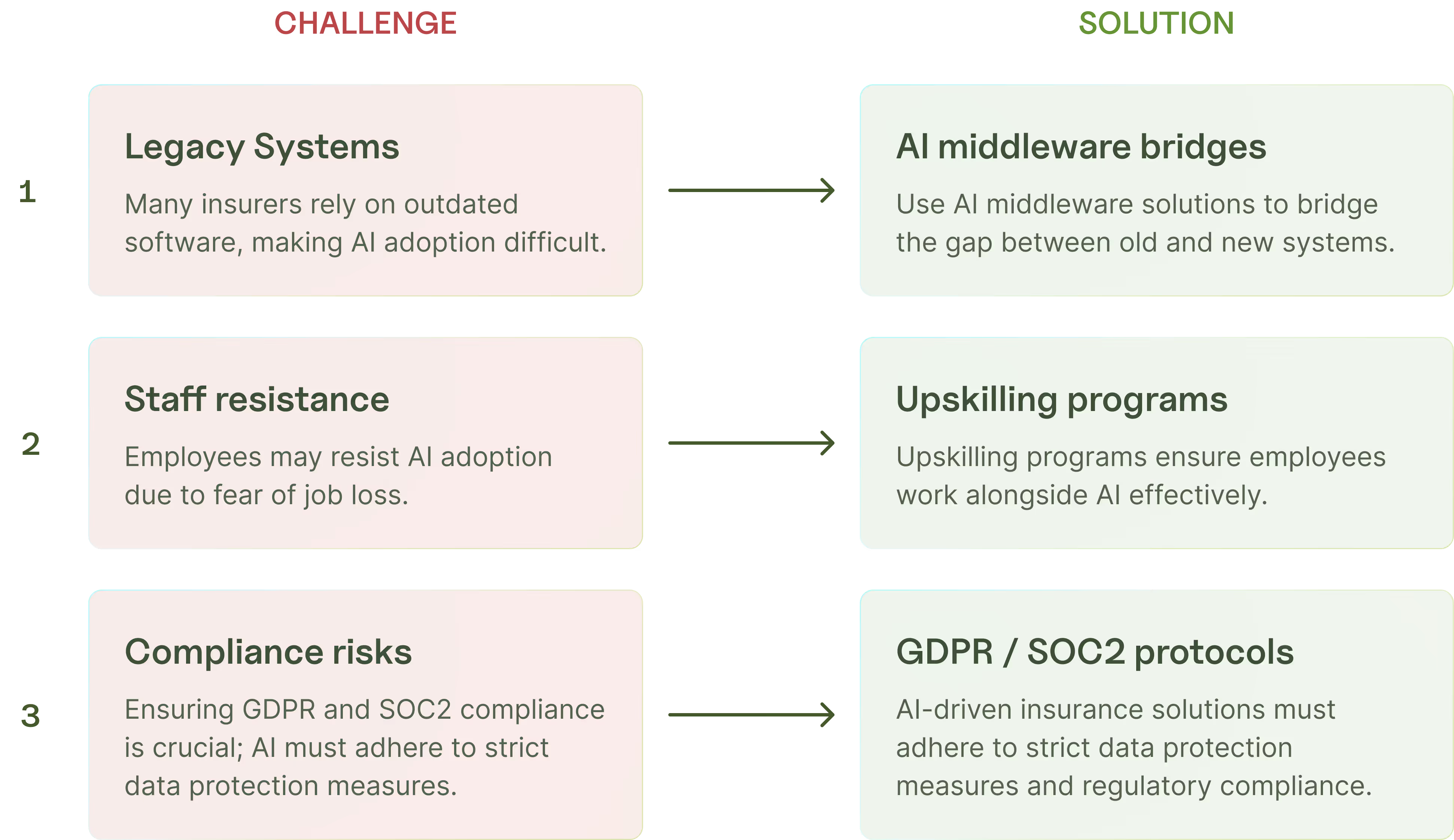
1. Integration with Legacy Systems
Many insurers rely on outdated software, making AI adoption difficult.
Solution: Use AI middleware solutions to bridge the gap between old and new systems.
2. Staff Training and AI Adoption
Employees may resist AI adoption due to fear of job loss.
Solution: Upskilling programs ensure employees work alongside AI effectively.
3. Regulatory Compliance & Data Security
Ensuring GDPR and SOC2 compliance is crucial. AI-driven insurance solutions must adhere to strict data protection measures.
Future Trends in AI for Insurance
1. AI in Fraud Detection
AI is helping insurers detect and prevent fraudulent claims in real-time using advanced pattern recognition.
2. AI Chatbots for Sales & Lead Generation
Conversational AI is playing a key role in upselling and cross-selling insurance policies by analyzing customer needs and suggesting relevant products.
3. Hyper-Personalized Insurance
AI-driven policy customization will allow customers to receive tailored coverage plans based on real-time data.
Success Stories: AI Implementation in Insurance
Insurance providers leveraging AI in their operations have experienced a 10-15% reduction in loss ratios and a 30% increase in customer satisfaction scores.
Cost Savings Through AI-Powered Automation
Leading insurance firms have reported significant cost reductions by using AI to automate back-office tasks, cutting manual workload by 50%.
Competitive Advantage in the Insurance Market
AI-driven agencies are staying ahead by delivering faster, more reliable, and highly personalized insurance solutions.
Conclusion
AI voice assistants and conversational AI are reshaping the insurance industry by improving efficiency, streamlining claims, and offering hyper-personalized services. As AI continues to evolve, predictive analytics, fraud detection, and AI-powered underwriting will redefine the future of insurance.
To remain competitive, insurers must embrace AI strategically and ethically while ensuring compliance with data security and regulatory standards. Want to see how Sonant AI can transform your insurance agency? Request a demo today and discover the power of AI automation.
FAQ
What is an insurance voice assistant?
An insurance voice assistant is an AI system that answers or places calls to policyholders, handling routine tasks like coverage questions, claim updates, and appointment scheduling without a human agent on every call. It captures what the caller needs and either resolves it or routes the call to the right person.
How is AI used in insurance claims processing?
AI voice assistants can capture First Notice of Loss details, verify coverage, and log structured claim data automatically as soon as a policyholder calls, cutting down the manual intake work that normally slows a claim's first steps.
Is insurance underwriting going to be replaced by AI?
AI is speeding up the repetitive parts of underwriting, data collection and initial screening, but the complex, judgment-based decisions still involve a licensed underwriter. AI is making underwriters faster, not replacing the role.
What challenges come with adopting AI voice assistants in insurance?
The most common challenges are integrating AI with legacy agency systems, getting staff comfortable working alongside the technology, and maintaining regulatory compliance like GDPR and SOC 2 for how customer data is handled.
Is AI voice technology secure and compliant for insurance data?
Reputable AI voice assistant providers maintain GDPR and SOC 2 compliance to protect policyholder data, with encryption, consent management, and access controls as baseline requirements.





.svg)


.svg)
