.svg)
.svg)
.svg)
Consumers are not waiting for the insurance industry to adopt artificial intelligence. Many are already using it. Across industries, AI-powered interactions are becoming a normal part of customer service, shaping expectations for how quickly and easily businesses should respond. Speed, availability, and ease of interaction are not differentiators, they are becoming the baseline.
Within insurance, this shift is beginning to take a more specific form. A growing number of agencies are exploring the use of voice-based AI assistants: systems that can answer the phone, understand natural speech, respond conversationally, and handle simple tasks such as answering questions, capturing information, or routing requests. These systems are very different from traditional automated phone experiences, replacing rigid “press 1 for…” menus with interactions that feel more like speaking with a person.
As these technologies become more widespread, some agents have been concerned about alienating customers when using AI assistants versus humans. We conducted a survey of more than 1,000 consumers to explore this assumption and looked at related questions including:
- how familiar are consumers with AI?
- are they willing to engage with voice-based assistants, and what are the best ways to establish trust?
- what do consumers value most when it comes to insurance?
- how should agencies be communicating with clients about voice AI assistants?
- how important are accuracy and data security?
- can AI assistants actually strengthen the client relationship?
Survey respondents say they’re open to voice AI in insurance, but that openness is paired with clear expectations around accuracy, privacy, and trust.
Voice AI Isn’t New to Consumers
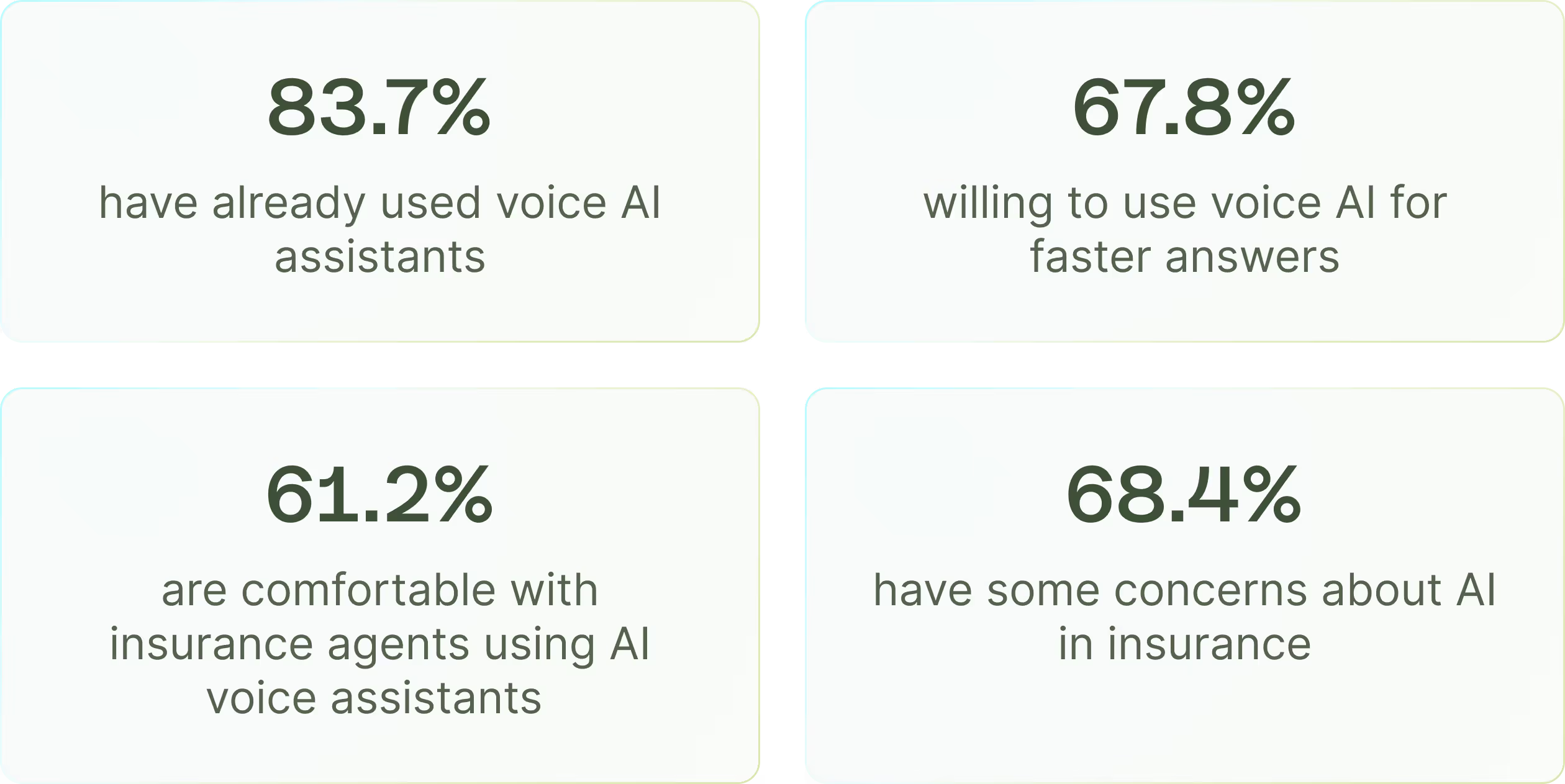
When it comes to insurance, consumers bring expectations shaped by faster, more responsive service interactions across industries. The vast majority of consumers have already had some level of exposure to AI in customer service. More than 80% report having interacted with an AI assistant as part of customer service in any industry.
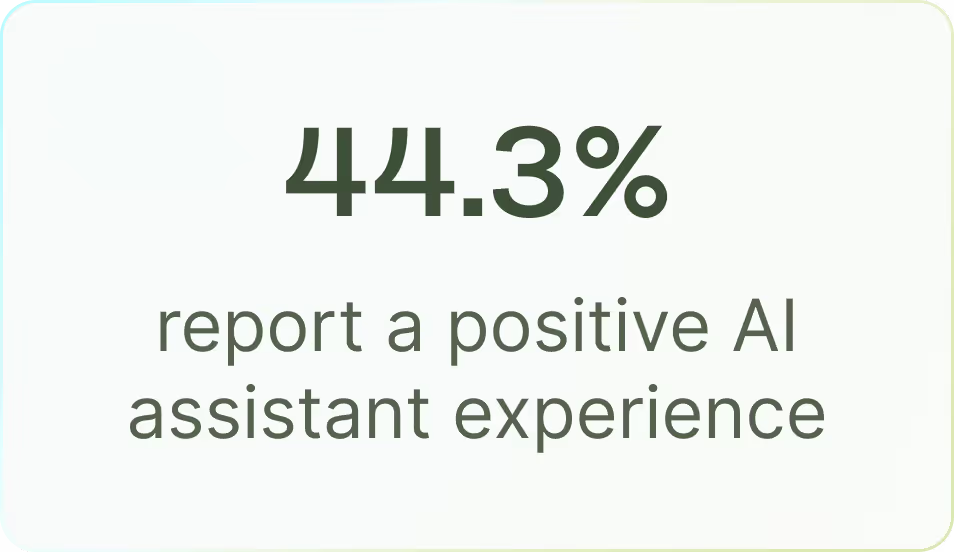
And sentiment skews favorable. Overall, 44.3% say they had a positive experience, while an additional 27.2% describe their experience as okay. Only 12.1% report having had a negative interaction, suggesting that for most consumers, AI is already delivering acceptable or better results.
The results signal a clear reality: for most consumers, AI is not unfamiliar. It is already part of how they engage with businesses, and increasingly, it is shaping what they expect from every service interaction.
Speed and Accuracy Top Insurance Wish Lists
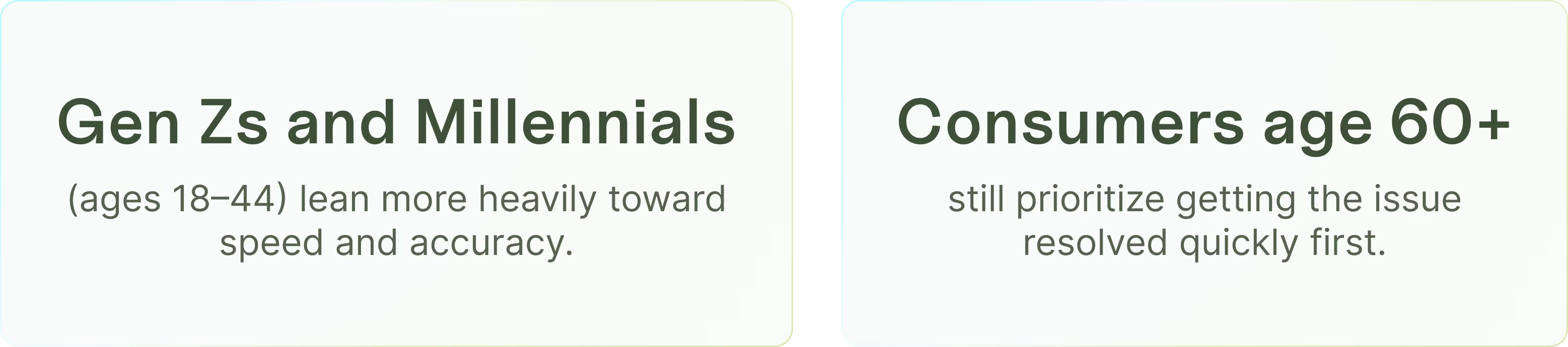
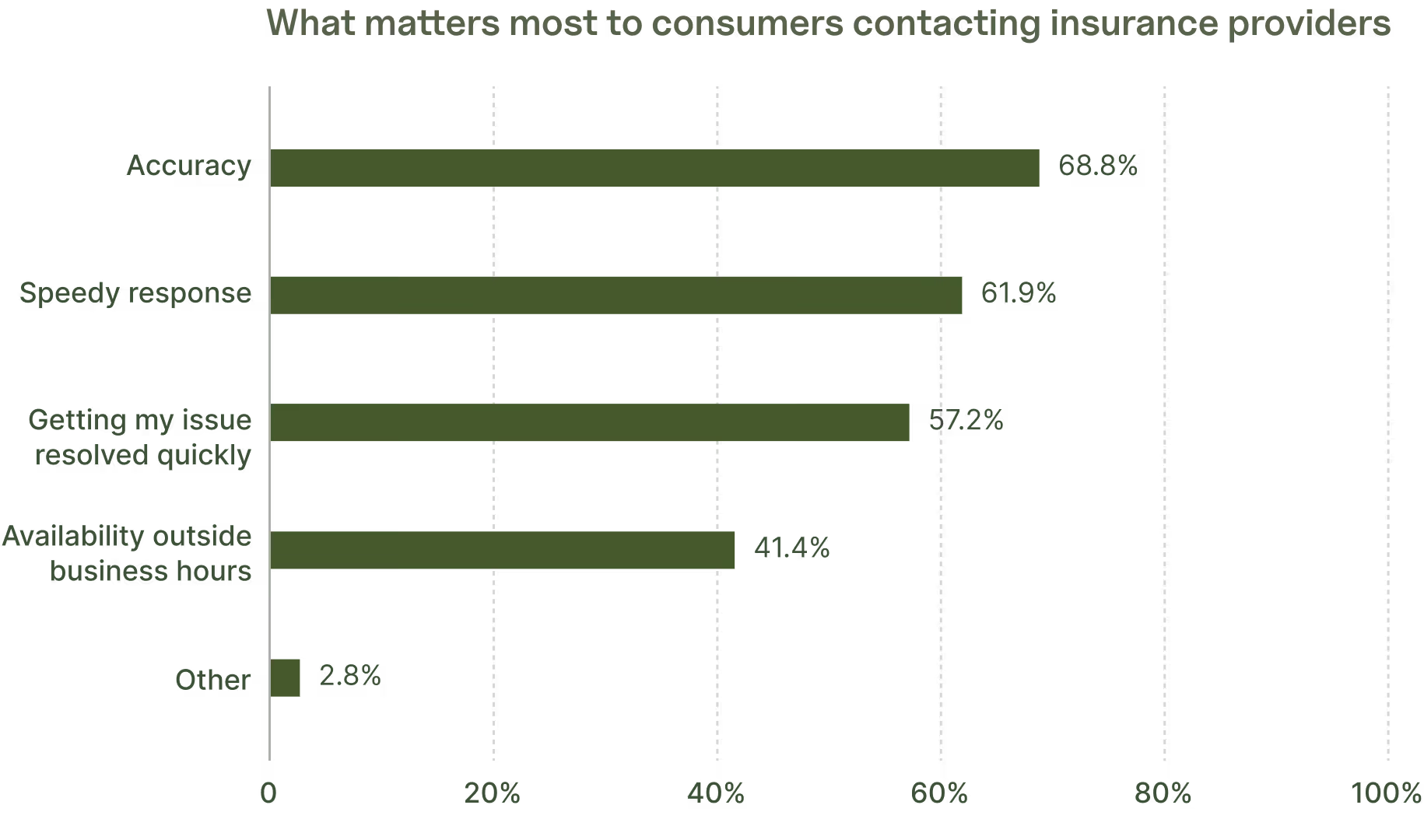
When people reach out to an insurance provider, they’re not thinking about technology. They’re thinking about getting correct and reliable information quickly. Consumers say the most important things are accuracy (68.8%), speed of response (61.9%), and getting their issues resolved quickly (57.2%). Availability outside of business hours also matters, especially for younger consumers.
Gen X Leads the Way
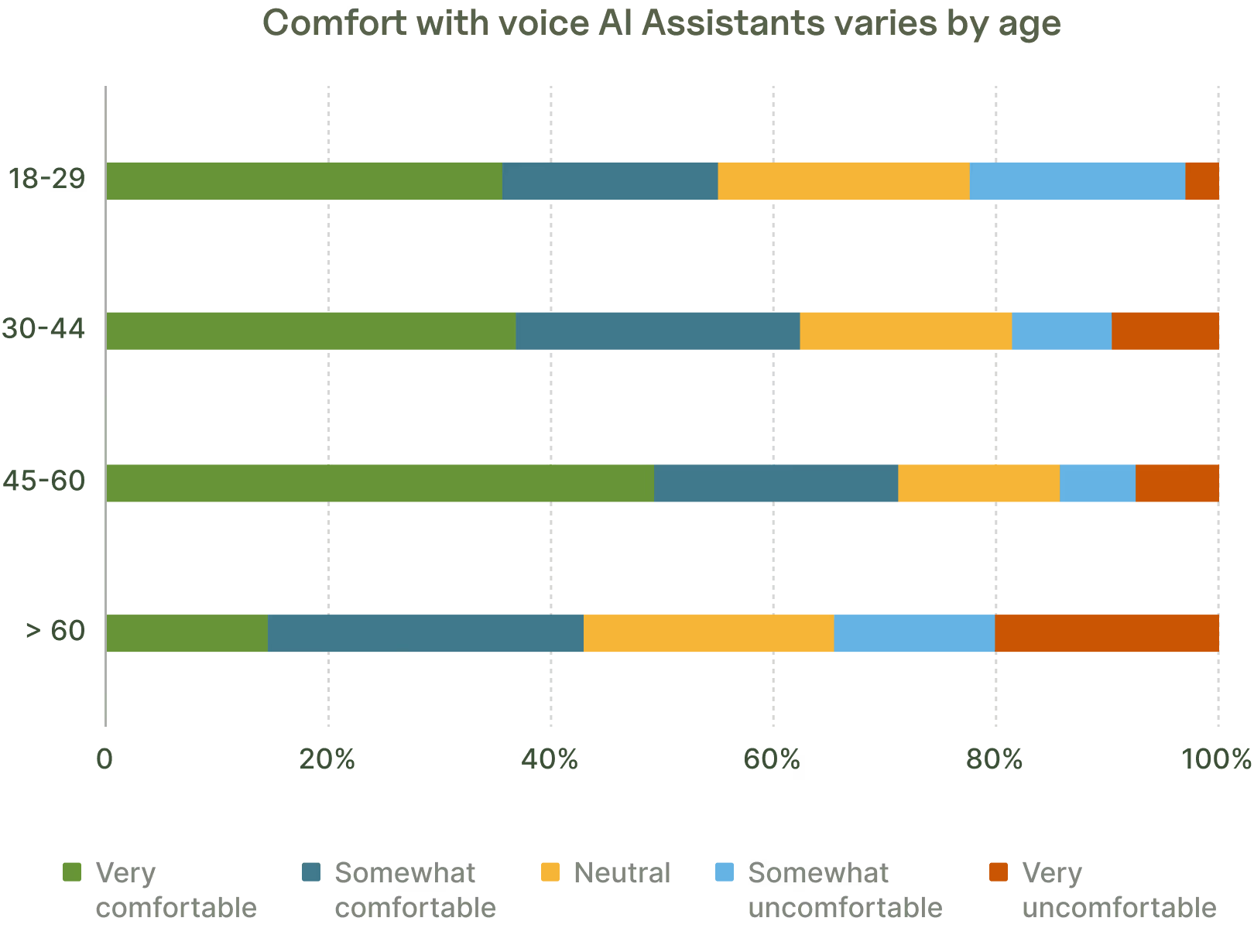
When it comes to using AI-powered voice assistants in insurance, most consumers are comfortable with the idea, but it isn’t evenly distributed. Overall, 61.2% of respondents say they are comfortable, and another 18.2% are neutral, meaning nearly 8 in 10 consumers are open to the experience. Only about 20% say they are uncomfortable.
But the age breakdown tells a more nuanced story. Consumers between 45 and 60 are actually the most open to voice AI, with more than 70% reporting they are comfortable and nearly half saying they are very comfortable. This group shows the strongest overall acceptance of voice AI assistants.
Consumers aged 30–44 also show solid comfort levels, with 62.2% comfortable, while younger consumers (18–29) are slightly lower, at 54.8% comfortable. The biggest difference shows up with consumers over 60. In that group, comfort drops to 42.8%, and more than a third report some level of discomfort, higher than any other segment.
For agents to consider: adoption won’t look the same across all age groups and it’s important to offer customers options and assess based on their preferences.
Getting Voice AI Right
Survey results point to a clear opportunity for agencies. How the experience is delivered is very important. This isn’t simply about adopting new technology. It’s about aligning that technology with what consumers expect from agency service interactions.
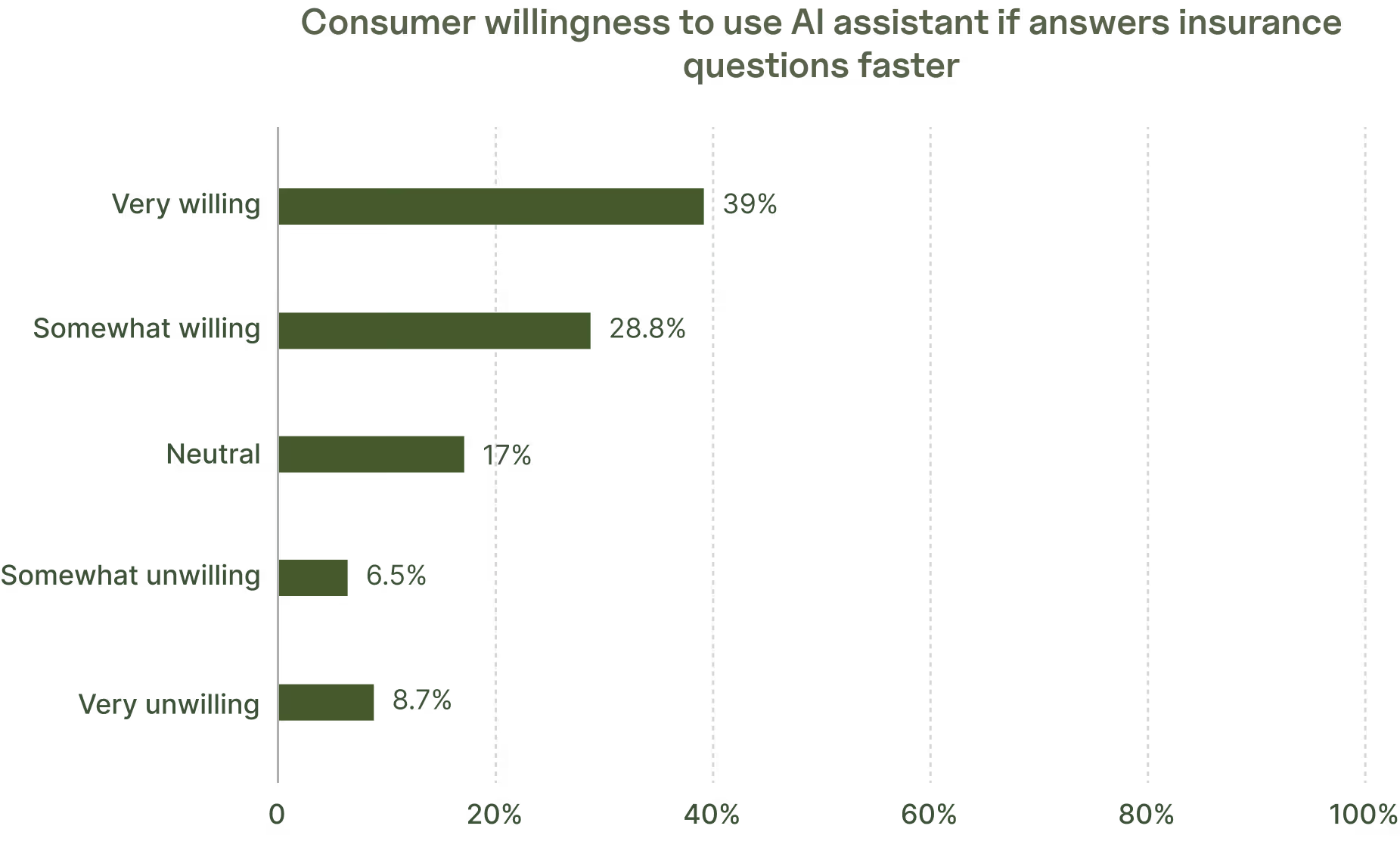
Overall, 67.8% say they are willing to use a voice AI assistant if it helps them get answers faster, making speed the strongest driver of adoption. But that willingness comes with an implicit requirement: the assistant has to be capable. It needs to understand the types of questions customers ask, provide useful responses, and move the interaction forward, rather than operating as a pass-through.
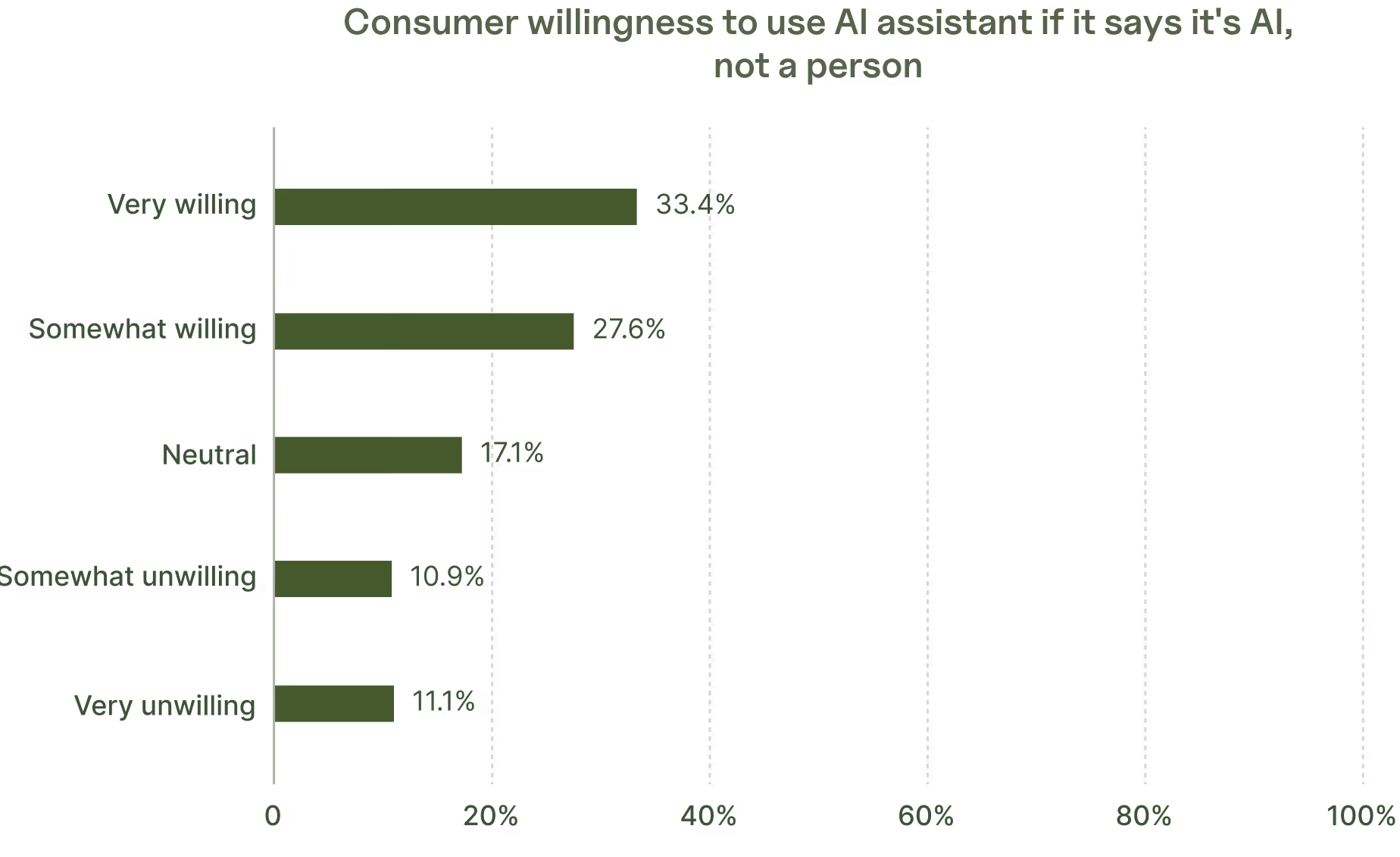
Transparency also plays a key role in the experience. Most consumers want to know up front that they’re talking to AI, and not a human. In fact, most (61%) say they are comfortable engaging with a voice AI assistant when they know upfront that it isn’t a person. Being upfront about the use of AI doesn’t reduce engagement but builds trust by setting clear expectations from the start.
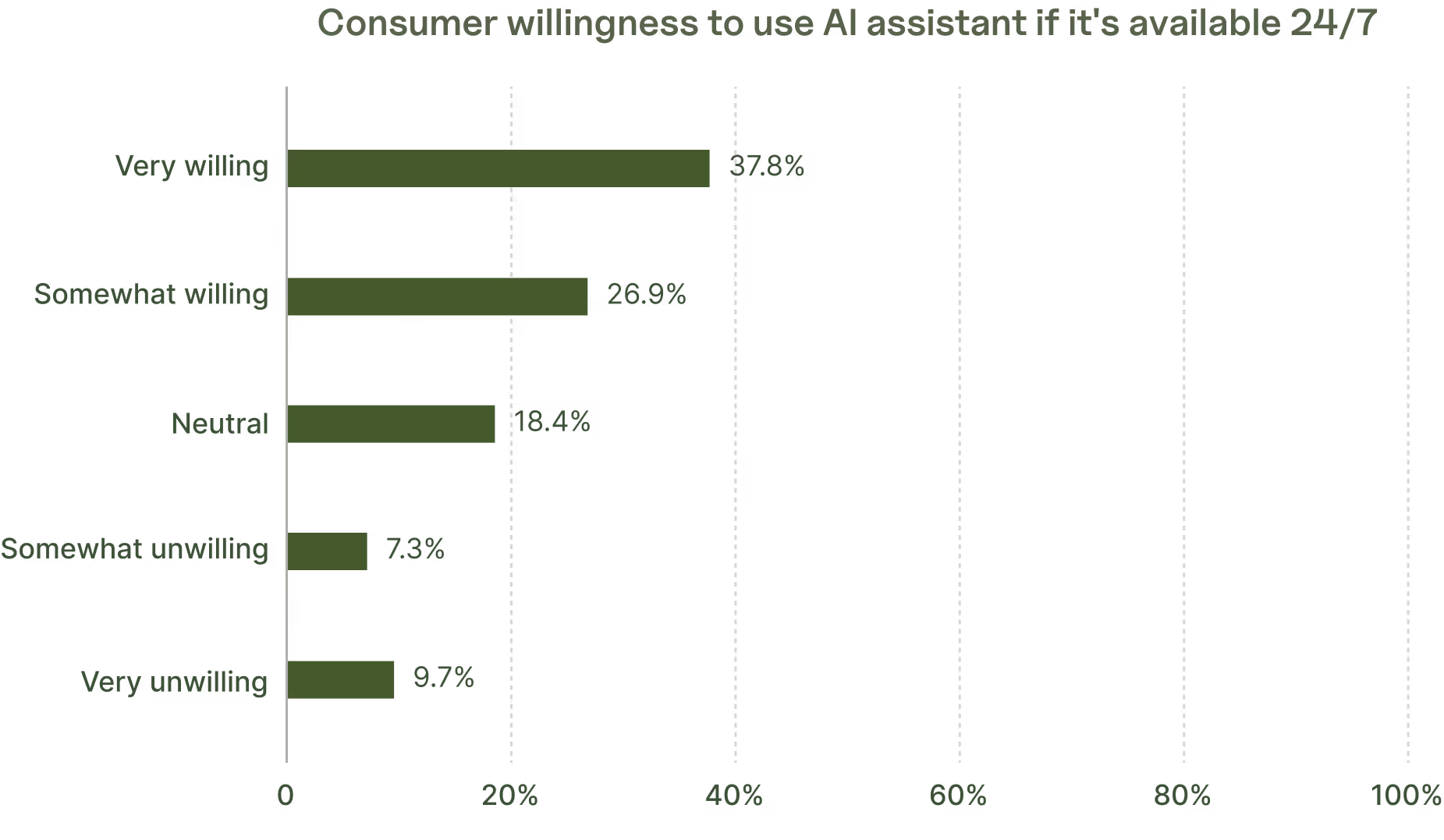
Availability is another area where voice AI assistants can deliver immediate value. Overall, 64.6% of consumers say they are willing to use AI when it is available outside of business hours. This has practical implications. Voice AI can extend service beyond the traditional workday, help agencies respond to routine requests in real time, and provide critical support during high-volume periods—such as severe weather events—when call demand spikes. Even when an issue requires human follow-up, the ability to respond immediately, capture key details, and guide the next step can significantly improve the customer experience.
At the same time, how these systems are designed matters just as much as when they are used. Consumers are not looking for a more advanced version of a phone tree. They expect interactions that feel natural, where they can speak in their own words, be understood, and receive relevant responses. The goal is not just to handle calls, but to make meaningful progress in resolving the customer’s need.
Consumers are ready to engage with voice AI assistants, but their expectations are clear. They want fast, accurate answers, transparency about what they’re interacting with, and support when they need it—especially outside of normal hours.
For agencies, success will come not from adopting voice AI alone, but from implementing it in a way that meets those expectations. Done well, it has the potential to strengthen responsiveness and reinforce the client relationship. Done poorly, it risks falling short of a standard that’s been set by consumers’ experiences in other industries.
Concerns Are Both a Barrier and a Roadmap
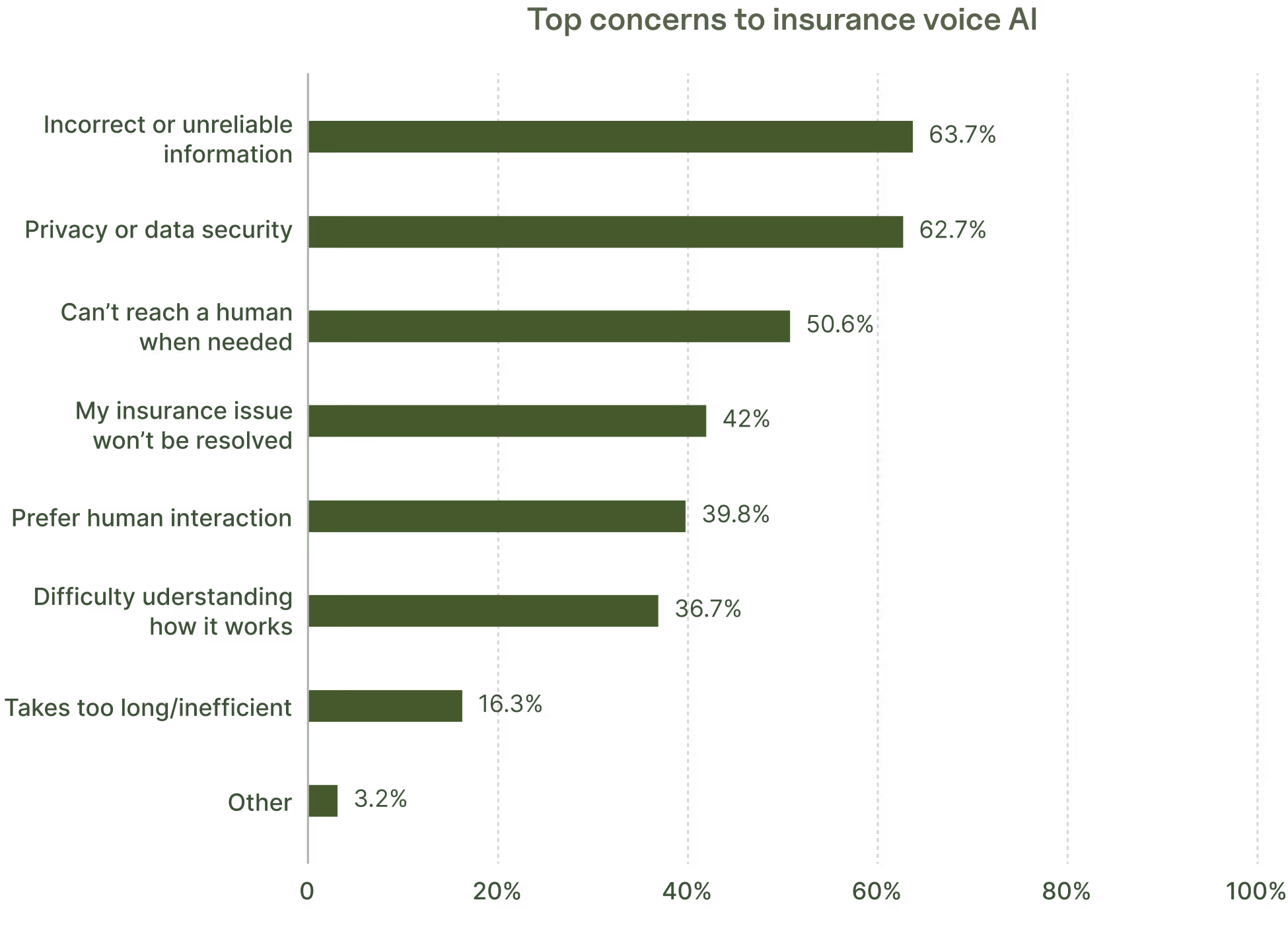
While consumers are generally open to voice AI assistants, they have some reservations. Overall, 68.4% say they have concerns about using a voice AI assistant in insurance. At the top of the list are two closely related issues: accuracy and trust. Overall, 63.7% are concerned about receiving incorrect or unreliable information, and 62.7% cite privacy and data security as a concern.
Other concerns emerge that speak to how the experience is delivered. Overall 50.6% worry they won’t be able to reach a human when needed, while 42% are concerned their issues won’t be fully resolved. Another 36.7% say they don’t fully understand how the technology works, and 39.8% have a general preference for human interaction.
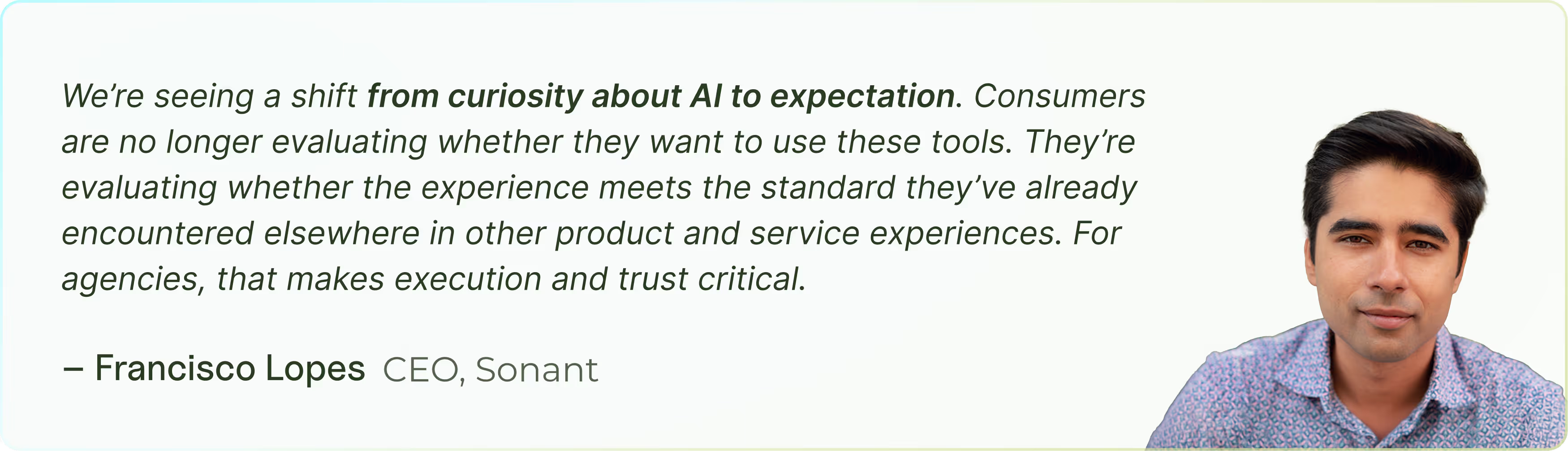
Taken together, these concerns paint a clear picture: consumers are not just evaluating whether voice AI is used. They are evaluating whether it will work reliably, securely, and in a way that still gives them control over the interaction.
For agencies, this turns potential barriers into a clear roadmap. Accuracy needs to be demonstrable. Privacy needs to be explicit. And access to a human when needed needs to be built into the experience, not treated as an afterthought.
Agencies that address these concerns directly will not only reduce friction, they will build trust in a way that makes voice AI a natural extension of the client relationship, rather than a point of tension.
Consumers are Ready, Implementation is Key
Insurance voice AI assistants aren’t being introduced onto a blank slate. Consumers are already forming opinions based on the experiences they’ve had elsewhere. When asked how a well-designed AI assistant would impact their experience with an insurance provider, the majority see upside. Nearly 60% say a well-designed AI assistant would improve the experience, including 32.5% who say it would greatly improve it. Another 18.7% say it would have no impact, while only 22.3% believe it would make the experience worse.
Clearly, consumers are not resistant to voice AI. But they are evaluating how well it is implemented. They want fast answers, accurate information, and the ability to get help when they need it. When those expectations are met, AI is seen as an improvement. When they are not, it risks becoming a point of frustration.


Turning Insight into Action
For insurance agencies, the takeaway isn’t simply whether to adopt voice AI assistants, it’s how to implement them in a way that strengthens client relationships.
At its core, insurance is built on trust. Clients rely on their agents not just for answers, but for confidence that their questions will be handled correctly, their data will be protected, and someone will be there when it matters most.
Voice AI has the potential to reinforce that trust if it is implemented thoughtfully. These assistants are not replacing the agent-client relationship, but are reshaping how that relationship is supported.
The opportunity is clear. Consumers are open to using voice AI assistants, and many believe it will improve their experiences. The differentiator will not be whether agencies adopt the technology, but how thoughtfully they implement it. The goal isn’t to replace the relationship. It’s to strengthen it with better, faster, and more responsive service.
A Checklist for Implementation
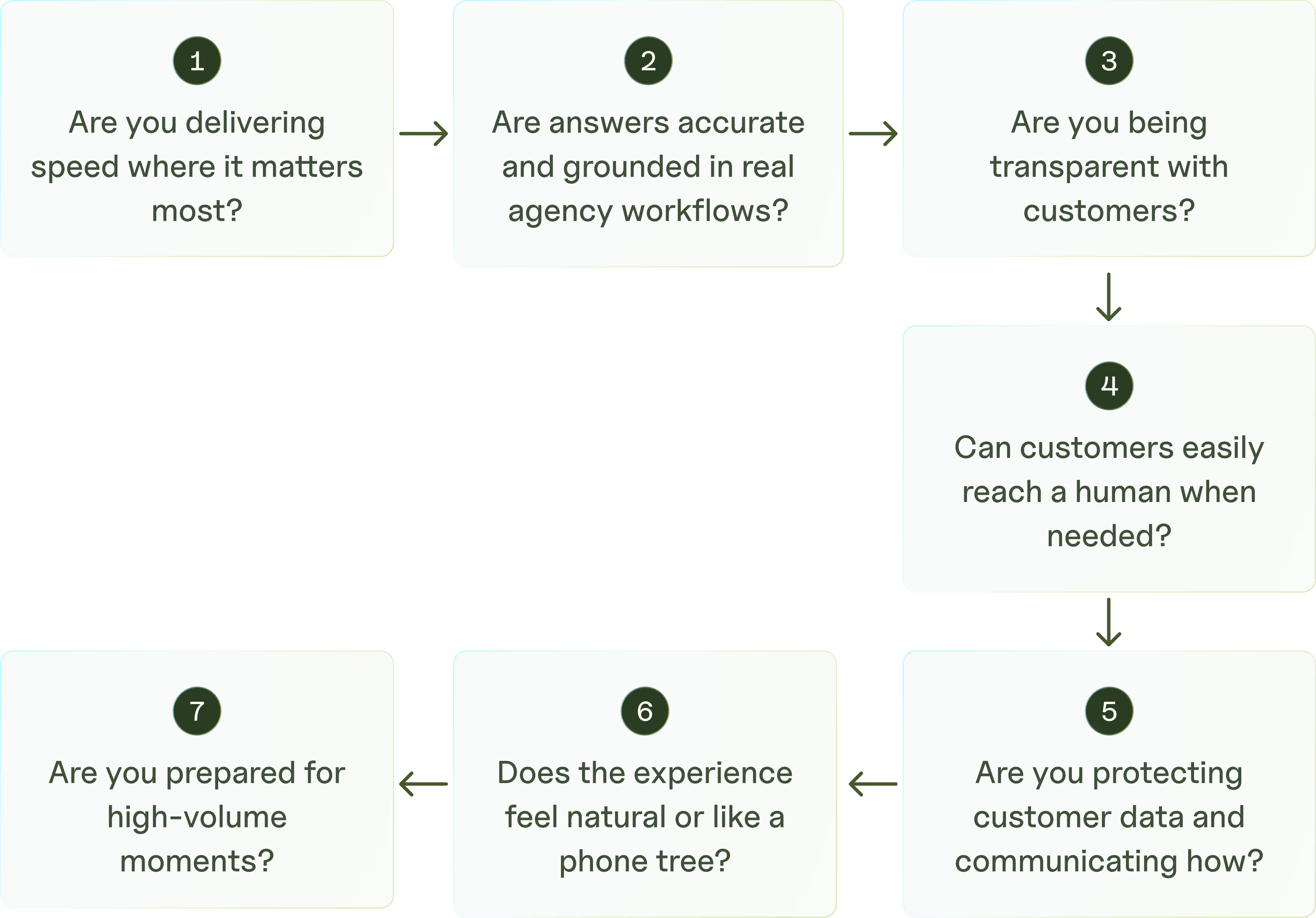
Agencies evaluating voice AI assistant should consider:
Are you delivering speed where it matters most?
Consumers expect quick responses. Can the assistant resolve common questions immediately, or does it create additional friction?
Are answers accurate and grounded in real agency workflows?
Accuracy is the top concern. Is the assistant trained on the types of calls and policies your agency actually handles?
Are you being transparent with customers?
Most consumers are comfortable using an AI assistant when they know they are talking to one. Are you setting expectations clearly at the start of the interaction?
Can customers easily reach a human when needed?
Half of consumers worry about losing access to a person. Is escalation simple, fast, and reliable?
Are you protecting customer data and communicating how?
Privacy concerns are high. Are safeguards in place and are they visible to the customer?
Does the experience feel natural or like a phone tree?
Consumers expect conversation, not navigation. Can the assistant understand intent and guide the interaction meaningfully?
Are you prepared for high-volume moments?
From storms to peak call periods, can the system help your agency respond when it matters most?
About Sonant
Sonant is the voice AI receptionist purpose-built for insurance agencies. It answers every call, intakes information for quotes and service requests, searches your AMS in real-time, and triages incoming calls into actionable tasks for your team to tackle. By automating routine interactions and ensuring no call goes unanswered, Sonant helps agencies improve responsiveness, reduce operational burden, and free staff to focus on higher-value client relationships and growth.
About the Survey
This report is based on a survey of more than 1,000 U.S. consumers, conducted online via SurveyMonkey in March 2026. The survey explored consumer familiarity with AI, willingness to engage with voice AI assistants, and expectations for how these technologies should be used in an insurance context.

Sonant AI
The AI Receptionist for Insurance
FOLLOW SONANT ON


.svg)


.svg)
