.svg)


The Onboarding Crisis Hiding in Plain Sight
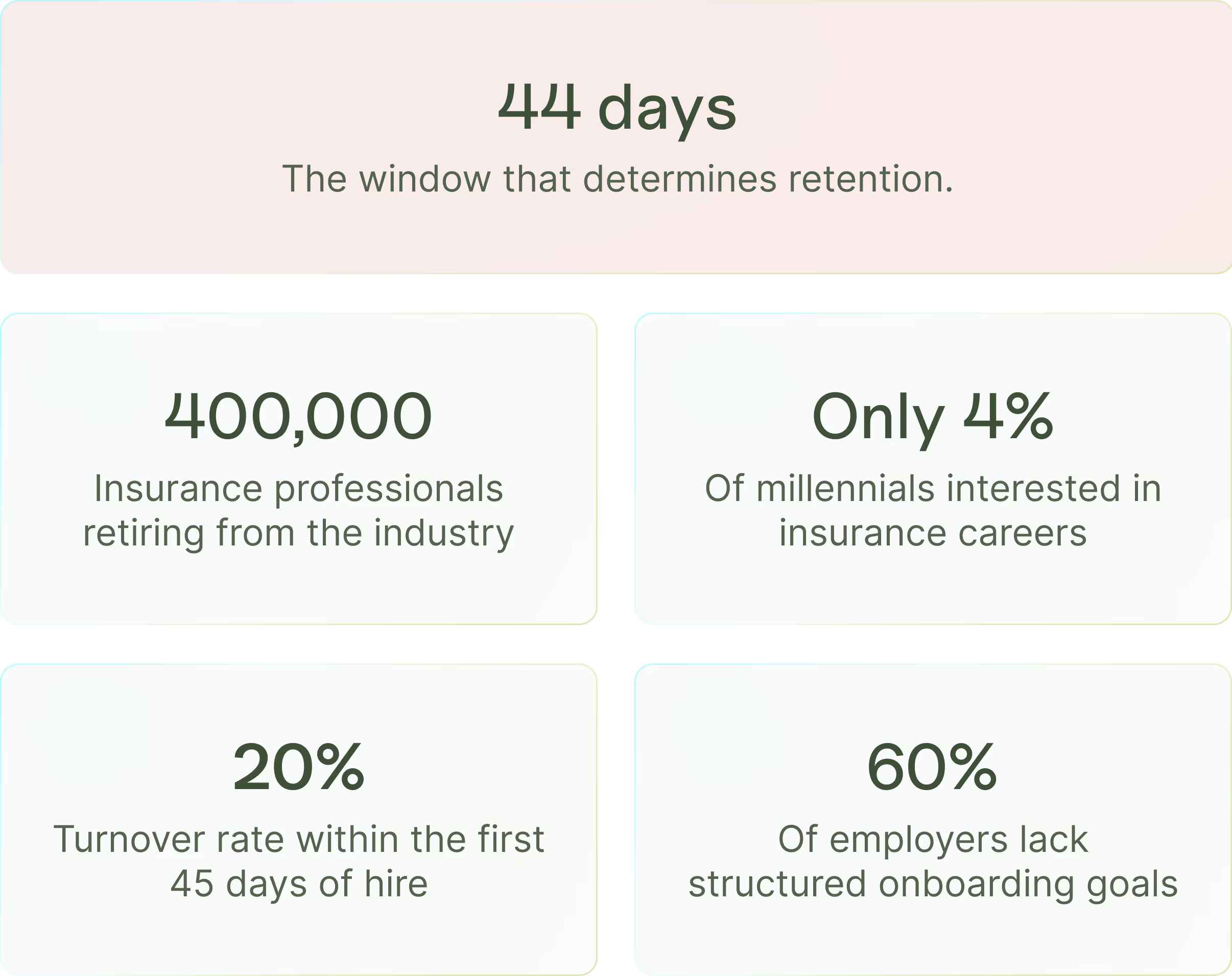
The insurance industry faces a demographic reckoning that most agency owners feel but few have quantified. MarshBerry research reveals that 400,000 insurance professionals will retire in the next 15 years - and only 4% of millennials express interest in filling those roles. Every new hire your agency brings on board carries outsized importance.
The window to get onboarding right is shockingly narrow. Deel's 2025 data shows that 70% of new hires decide whether a job is the right fit within the first month, and companies have just 44 days on average to influence long-term retention. Meanwhile, 60% of employers lack onboarding milestones or goals entirely, contributing to a 20% employee turnover rate within the first 45 days.
This article provides a comprehensive roadmap for insurance agency onboarding - covering both employee onboarding and client onboarding - with specific guidance on how AI and automation are reshaping the process in 2026. At Sonant AI, we believe every incoming call during the onboarding window is a revenue opportunity, not a distraction. Whether you're welcoming a new producer or onboarding a commercial lines client, the approach you take in those first critical weeks determines retention, productivity, and ultimately agency efficiency for years to come.
Why Insurance Agency Onboarding Demands a Specialized Approach
The complexity that generic templates miss
Running a successful insurance agency requires mastering what industry consultants call the 26 Core Insurance Agency Processes - from compliance and client service to technology adoption and carrier management. Onboarding sits at the intersection of nearly all of them, making it far more complex than onboarding in retail, SaaS, or professional services.
Consider what a new CSR or producer must absorb in their first 90 days:
- State licensing requirements and continuing education timelines
- Carrier appointment processes (which can take 30-60 days per carrier)
- Errors and omissions (E&O) compliance protocols
- Agency management system (AMS) navigation and data entry standards
- Rating tools, comparative raters, and quoting workflows
- Phone handling procedures and client communication standards
Generic onboarding checklists from HR software simply cannot address this depth. That's why AMS insurance software training alone can consume two to three weeks of a new hire's ramp-up period.
A shrinking talent pool compounds the stakes
Insurance Journal reports that the Bureau of Labor Statistics projects approximately 21,500 job vacancies each year over the next decade, even as the total number of claims professionals declines by 5%. Agencies that fumble onboarding don't just lose a hire - they lose months of recruiting effort in a market where qualified candidates are increasingly scarce.
Creating a nurturing environment is vital to agency growth. Agencies must manage three distinct onboarding tracks simultaneously:
- New employee onboarding - licensing, training, cultural integration, and productivity ramp-up
- New client onboarding - data collection, policy binding, expectations setting, and first-touch experience
- New carrier/product onboarding - appointment processes, product training, and system configuration
Each track requires different timelines, stakeholders, and success metrics. Agencies that treat them as a single process invariably drop the ball on at least one, which is a key factor behind the employee turnover crisis plaguing the industry.
Employee Onboarding: Building a 90-Day Framework That Retains
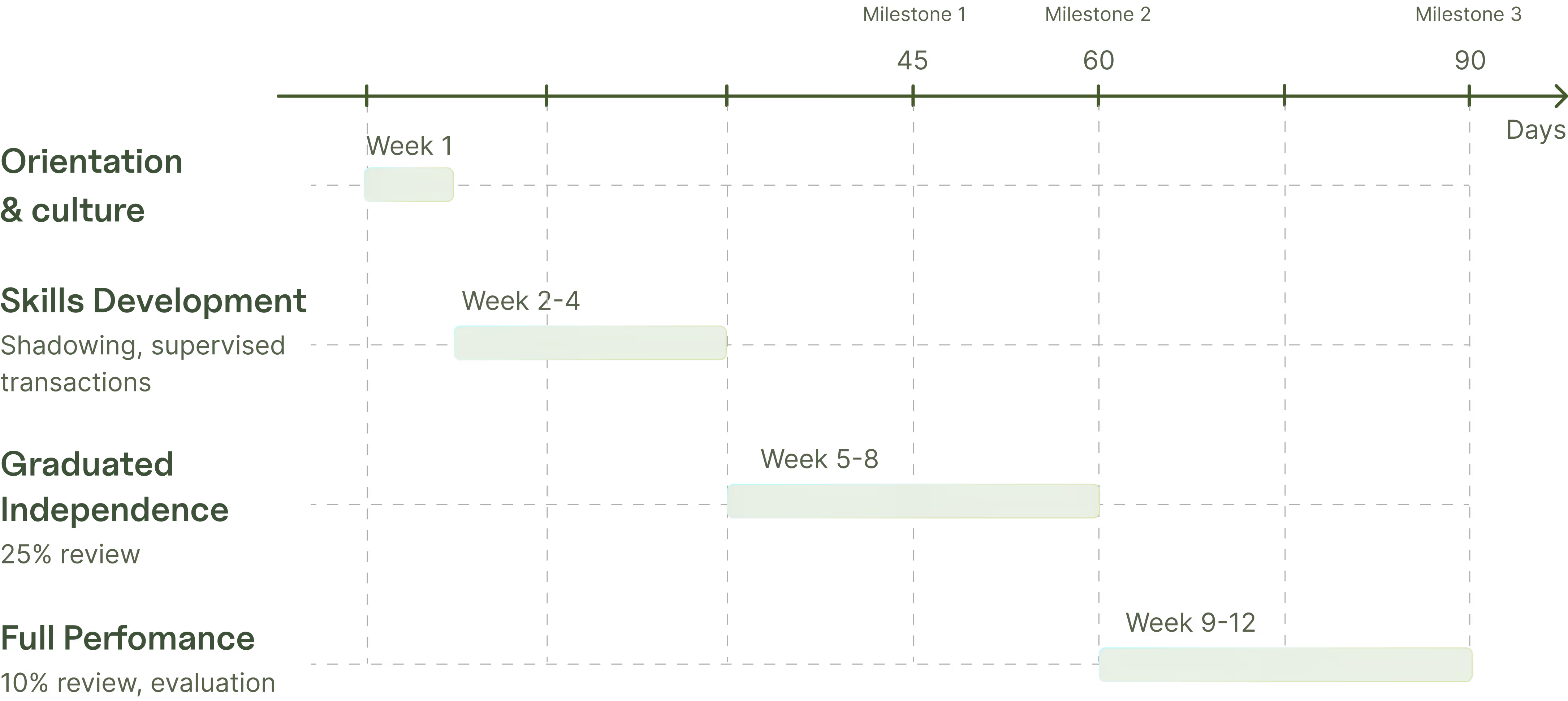
Week one: orientation and cultural immersion
The first week sets the emotional tone. Research from Deel shows that 89% of employees with great onboarding experiences feel engaged at work and 18 times more committed to their employer. These employees report 30 times more overall job satisfaction compared to those who face poor onboarding processes.
Your first-week checklist should include:
- Welcome package with agency history, mission, and team directory
- Technology setup - AMS login, email, comparative rater access, and phone system credentials
- Introduction to agency workflows and the team they'll work with daily
- Overview of the agency's book of business, carrier partners, and target markets
- Clear explanation of performance expectations and 30/60/90-day milestones
One critical mistake agencies make: leaving new hires to answer phones before they're ready. During week one, incoming calls from prospects should route to experienced staff or an AI virtual receptionist so new hires can observe without the pressure of live interactions.
Weeks two through four: skills development and supervised practice
This phase focuses on building technical competence. New producers need hands-on training with rating tools, carrier portals, and quoting workflows. New CSRs need to learn endorsement processing, certificate issuance, and claims intake procedures.
Structure this period around shadowing and supervised practice:
- Shadow experienced team members on live client calls for three to five days
- Process sample policies in a training environment within the AMS
- Handle supervised live transactions with a mentor reviewing each one
- Complete carrier-specific product training modules
- Pass internal knowledge checks before handling tasks independently
The S4TS Framework - Standards, Time Blocking, Tasks, Templates, Training, and Spot-Checking - provides a useful operational structure during this phase. Agencies that document standard operating procedures for every common task give new hires a reference library that reduces errors and accelerates confidence.
Weeks five through twelve: graduated independence and performance tracking
Effective onboarding reduces time to productivity by 50%. By week five, your new hire should handle most routine tasks independently, with spot-checks from their manager on complex items. This is where many agencies make a costly error - they declare onboarding "complete" at day 30 and stop providing structured support.
Instead, extend the framework through day 90 with these milestones:
- Day 45: New hire handles full client interactions independently; manager reviews 25% of work
- Day 60: First formal performance review with specific feedback on quality, speed, and client satisfaction
- Day 75: Reduced oversight - manager reviews 10% of work; new hire begins cross-training
- Day 90: Comprehensive evaluation against initial goals; development plan for months four through twelve
Companies with effective onboarding observe 2.5 times increased revenue and 1.5 times increased profit. That ROI compounds when you retain the hire past the critical first-year mark, which is why many agencies now explore ways to reduce labor costs during the ramp-up period by automating routine tasks that would otherwise slow down mentors and trainers.
Client Onboarding: Converting First-Touch Callers Into Loyal Policyholders
Why the first call matters more than any marketing campaign
Brightway Fusion data reveals that opportunities worked within zero to six hours convert at over 80%, while those worked after one day drop to around 30%. Client onboarding in insurance starts the moment someone picks up the phone or submits a quote request. Miss that window and your marketing spend evaporates.
Yet many agencies treat client onboarding as an afterthought - a welcome email sent three days after binding, if at all. The reality? A structured client onboarding process builds the trust that drives retention, referrals, and cross-sell opportunities for years.
Effective client onboarding addresses high call volumes by setting clear expectations upfront about how and when clients should contact the agency, which self-service options are available, and what to expect during their first policy term.
The five-step client onboarding process
- Pre-bind preparation: Collect complete client data, verify prior coverage, and document all exposures during the initial consultation - not after binding
- Binding and welcome: Send a personalized welcome packet (digital or physical) within 24 hours of binding that includes policy summary, agency contact information, claims reporting procedures, and next steps
- First-week follow-up: A phone call - not just an email - within five business days to confirm the client received their documents, answer questions, and introduce them to their service team
- 30-day check-in: Proactive outreach to address any coverage questions, confirm billing is working correctly, and identify cross-sell opportunities
- 90-day review: A comprehensive touchpoint to discuss the client's experience, review any life changes that affect coverage, and request referrals
76% of consumers now expect self-service digital options from their financial service providers. Agencies that pair human touchpoints with 24/7 AI-powered support give clients the responsiveness they demand without burning out staff.
Handling onboarding calls when your team is already stretched thin
Here's the paradox: the onboarding period generates the highest call volume - new hires have questions, new clients need guidance, carriers require follow-up. But your experienced staff are the ones doing the training, which pulls them away from revenue-generating activities.
This is precisely why many agencies now deploy AI-powered call handling during peak onboarding periods. An AI receptionist can answer routine questions from existing clients ("When is my payment due?" "Can you email me my declaration page?") while your human team focuses on high-value onboarding conversations. We built Sonant AI for exactly this scenario - ensuring that routine calls get handled without interrupting the critical work of training new team members and welcoming new clients.
How AI and Automation Transform Insurance Agency Onboarding in 2026
Automating the manual bottlenecks
AgencyBloc's 2026 survey found that 31% of agents want to use automation to replace manual tasks during open enrollment. That same appetite extends to onboarding, where agencies spend hours on tasks that technology handles in seconds.
Key onboarding tasks ripe for automation include:
- Document collection and verification: AI-powered forms pre-populate client data from prior carrier information
- Carrier appointment tracking: Automated workflows flag when appointments are pending, approved, or expiring
- Training progress monitoring: Learning management systems track which modules new hires have completed and trigger reminders for overdue items
- New client welcome sequences: Automated email and text workflows deliver onboarding content on a pre-set schedule
- Policy document delivery: Integrated systems push dec pages, ID cards, and certificates directly to client portals
eLearning Industry data reveals that 25.5% of organizations lack the necessary onboarding tools to integrate AI-based solutions - but 83% of professionals want to adopt automation in the future. The gap between desire and execution represents a competitive advantage for agencies that move now.
AI-powered call handling during the onboarding window
The onboarding window creates a perfect storm of increased call volume and decreased staff availability. New clients call with questions. Existing clients don't stop calling because you hired someone new. And your best people are tied up training instead of producing.
An AI virtual receptionist bridges this gap by handling:
- After-hours and overflow calls when your team is in training sessions
- Routine service inquiries that don't require a licensed agent
- Initial lead qualification and appointment scheduling for new prospects
- Multilingual caller support without requiring bilingual staff on day one
This approach lets agencies scale without additional hires during the vulnerable ramp-up period when new employees consume training resources but aren't yet generating revenue.
Building a technology stack that supports onboarding at every stage
The right insurance technology stack accelerates onboarding for both employees and clients. Here's what a modern onboarding-ready tech stack looks like:
Agencies that invest in AI implementation before they need it - not after they're drowning in calls and training demands - position themselves to onboard faster and retain longer. The 70% of agents who expect to be busier this enrollment season than in years past can't afford to wing it.
Addressing the Generational Shift in Insurance Onboarding
What Gen Z and millennial hires expect
Gen Z makes up one-third of the world's population, and Insurance Journal reports that 77% of them prioritize work-life balance while 92% emphasize mental health in the workplace. Your onboarding process must reflect these values or risk losing hires before they complete their first quarter.
Practical adjustments include:
- Offering hybrid work arrangements from day one - 55% of employees prefer hybrid schedules
- Providing clear career progression paths during the onboarding conversation, not six months later
- Assigning a dedicated mentor (not just a manager) who checks in on both professional development and personal well-being
- Using modern communication tools - Slack, Teams, or similar platforms - alongside traditional phone training
- Building multilingual capabilities into your agency to reflect an increasingly diverse workforce and client base
Remote and hybrid onboarding considerations
Nearly 20% of new employees experience loneliness during onboarding, according to eLearning Industry research. For insurance agencies with remote or hybrid staff, combating isolation requires intentional effort.
Schedule daily video check-ins during the first two weeks. Create a shared digital workspace where new hires can ask questions without feeling like they're interrupting. Pair remote employees with in-office buddies who proactively reach out. And consider bringing remote hires on-site for their first week - the investment in travel pays dividends in connection and cultural understanding.
Agencies exploring virtual assistant models for their workforce should build remote onboarding protocols as a core competency, not an afterthought.
Compliance and Data Security During Onboarding
Protecting sensitive information from day one
The Identity Theft Resource Center reports 1,732 publicly reported data compromises in the first half of 2025 - an 11% year-over-year increase. New employees and new clients both represent data security vulnerability points if your onboarding process lacks proper controls.
Every insurance agency onboarding program must address:
- Access controls: Grant system permissions incrementally as new hires demonstrate competence - not all at once on day one
- Data handling training: Cover PII protection, secure document transmission, and social engineering awareness before employees touch client files
- Client data collection: Use encrypted digital forms rather than email attachments for collecting SSNs, driver's license numbers, and financial information
- E&O awareness: Train new hires on documentation requirements that protect both the client and the agency
Your data and compliance framework should integrate directly into onboarding checklists so that security isn't a separate training module - it's woven into every process from the start.
Licensing and carrier appointment tracking
Few things derail insurance agency onboarding faster than a licensing delay. A producer who can't write business is a producer costing you money without generating revenue. Build these safeguards into your process:
- Verify licensing status and state requirements before the start date - not after
- Submit carrier appointment applications on or before day one
- Track appointment progress weekly and escalate delays at the 30-day mark
- Document all continuing education requirements and set automated reminders
- Maintain a shared tracker visible to the new hire, their manager, and operations staff
Automating claims and processing workflows frees up operations staff to focus on these high-stakes compliance tasks rather than drowning in routine administrative work during the onboarding period.
Measuring Onboarding Success: KPIs That Matter
Employee onboarding metrics
You can't improve what you don't measure. Track these KPIs for every new hire:
- Time to first sale/policy: How many days from start date to first revenue-generating transaction?
- 30/60/90-day retention rate: Are you keeping new hires past the critical early milestones?
- Training completion rate: What percentage of required modules are finished on schedule?
- Quality scores: Error rates on policies processed during the first 90 days
- Manager satisfaction rating: Monthly check-ins where managers rate new hire progress on a standardized scale
Client onboarding metrics
Client onboarding success drives retention and lifetime value. Monitor these numbers:
- First-call resolution rate: How often do new clients get their questions answered on the first contact?
- Policy-in-force at 90 days: What percentage of newly bound policies remain active after three months?
- Cross-sell rate within six months: Are you adding lines of coverage during the onboarding honeymoon period?
- Net Promoter Score (NPS) at 30 days: How likely are new clients to recommend you after their first month?
- Service call volume per client: A declining number indicates your onboarding set expectations effectively
Agencies that track these metrics and adjust their processes quarterly outperform those that rely on intuition. Your agency valuation reflects the quality of your systems, and onboarding is one of the most impactful systems you can build.
Building Your Insurance Agency Onboarding Playbook
Start with documentation
The best insurance agency onboarding programs share one trait: they're documented. Not in someone's head, not in a folder of scattered PDFs - in a living, maintained playbook that every manager follows consistently.
Your playbook should include:
- Pre-boarding checklist (technology setup, licensing verification, workspace preparation)
- Day-by-day schedule for the first two weeks
- Week-by-week milestones for weeks three through twelve
- Role-specific training modules for producers, CSRs, and operations staff
- Client onboarding workflow templates for personal lines, commercial lines, and benefits
- Compliance verification checklists and sign-off sheets
Invest in the tools that multiply your effort
87% of employees with great onboarding experiences clearly understand what their job entails. Clarity comes from structure, and structure comes from investing in the right tools - AI-powered agency tools that automate repetitive tasks, track progress automatically, and free your experienced team members to focus on mentorship rather than paperwork.
The agencies thriving through the talent shortage aren't the ones with the biggest budgets. They're the ones with the most systematic onboarding processes - and the technology to execute them consistently every time a new hire walks through the door or a new client calls in.
Every incoming call during the onboarding window represents either a missed opportunity or the beginning of a long-term relationship. The difference lies entirely in your preparation.





.svg)

.svg)
