.svg)


Key Numbers at a Glance

The Dual Retention Crisis Hitting Insurance Agencies
For insurance agency leaders, the word "retain" carries a painful double meaning. You need to retain the customers who keep your book growing - and you need to retain the CSRs (customer service representatives) who serve those customers every day. Right now, both are in crisis simultaneously.
The numbers paint a stark picture. Agency Performance Partners reports that the average retention rate for the insurance industry sits at 84%, while top performers reach 93%-95%. That gap represents enormous lost revenue. On the staffing side, PwC research shows that replacing just one frontline agent costs up to $10,000 before you even factor in lost productivity and declining customer satisfaction. Meanwhile, over 400,000 insurance positions will remain unfilled as half the current workforce retires over the next 15 years - a reality agencies must confront head-on.
Here's the thesis: the agencies that solve both retention problems at once - reducing CSR burnout through smart automation while simultaneously improving client experience - will dominate their markets. Those that treat these as separate issues will keep hemorrhaging talent and customers alike. This article breaks down 35 critical statistics and benchmarks, then maps a practical path to retain insurance CSR talent and the policyholders they serve.
Understanding the True Cost of CSR Turnover in Insurance
Why CSR churn costs more than agencies realize
Most agency principals underestimate the financial damage of losing a single CSR. Recruiting a replacement costs $3,000-$5,000, and training alone consumes another 90 days of reduced productivity. During those three months, your remaining team absorbs the workload, errors increase, and morale drops.
When you tally salary, benefits, training, management time, and opportunity cost, the true cost of an experienced CSR often reaches $85,000-$100,000 annually. And the pipeline to replace them keeps shrinking. Over 400,000 insurance positions will go unfilled over the next 15 years as half the workforce retires - a revolving door that agencies must plan strategically to address.
The hidden customer-side cost
CSR turnover doesn't just drain your budget. It actively pushes clients out the door. When experienced staff leave, institutional knowledge walks out with them - knowledge about specific accounts, claim histories, and the personal preferences that make clients feel valued.
Research from PwC reveals that 32% of customers will leave a brand after just one bad experience. U.S. companies collectively lose $75 billion yearly due to poor customer service. In insurance specifically, Mendix reports that one negative experience drives 50% of customers to switch to a competitor. Every CSR departure creates a ripple effect:
- New hires don't know client histories, leading to repeated questions and frustration
- Hold times spike as remaining staff scramble to cover gaps
- Renewal conversations happen without the relationship context that closes them
- Referred leads receive inconsistent service, damaging your referral pipeline
Each of these friction points chips away at the loyalty you've spent years building.
35 Customer Service Statistics and Benchmarks That Matter for Insurance in 2025
Customer retention and loyalty statistics
Understanding the benchmarks helps you measure where your agency stands - and where the biggest opportunities hide.
- 84% average retention rate across the insurance industry (Agency Performance Partners)
- 93%-95% retention among top-performing agencies (Agency Performance Partners)
- A 5% increase in retention can double your profit in five years
- Retaining existing clients costs 5-9x less than acquiring new ones (Insurance Back Office Hub)
- Increasing retention by just 5% can boost profits by 25%-95%, according to Harvard Business Review data via Sprinklr
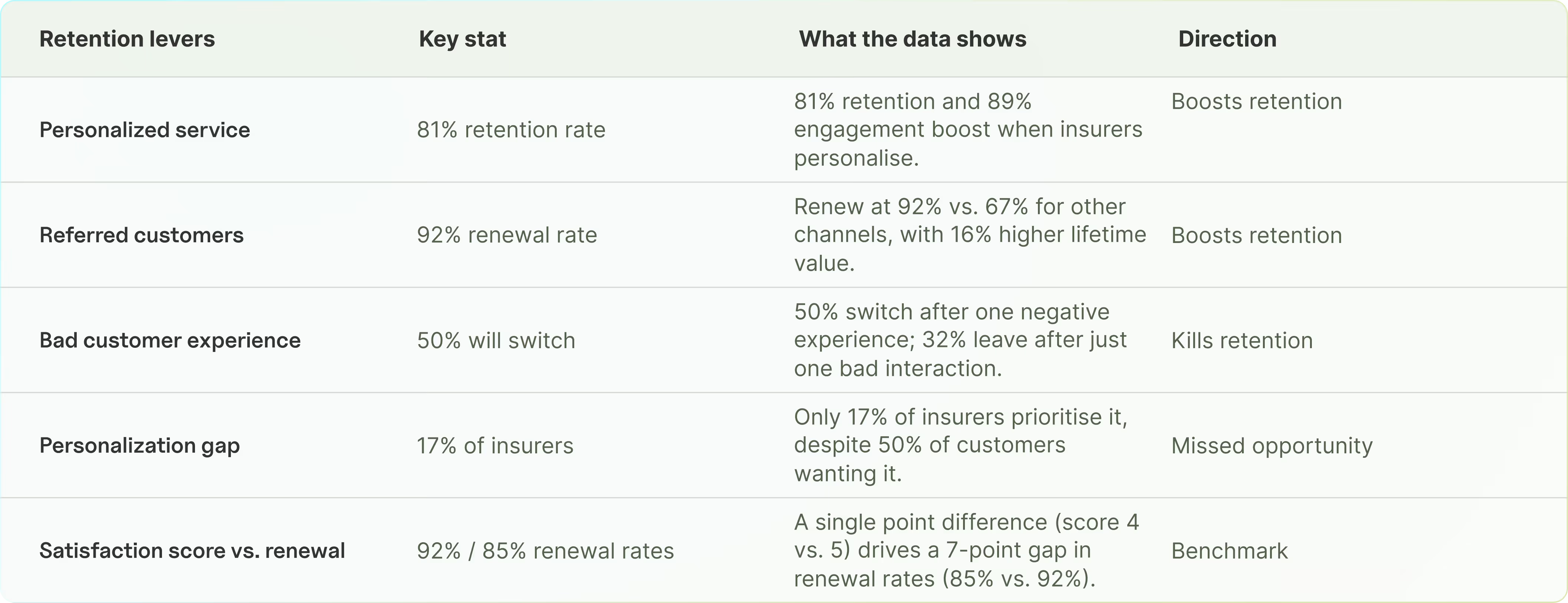
- Referred customers renew at 92% compared to 67% for those acquired through other channels
- Referred customers have 16% higher lifetime value than non-referred customers
- Customers scoring 5 on satisfaction surveys renew at 92%, while those scoring 4 renew at 85%
- 78% average retention across the broader financial services industry (Sprinklr)
- "C student" agencies should target 88% retention, with quick gains possible to reach 90%-92% (Agency Performance Partners)
The gap between 84% and 93% might seem small. It's not. For an agency with $5 million in premium, that 9-point difference represents hundreds of thousands in annual revenue - revenue that compounds year after year. Improving your customer service strategies directly addresses this gap.
Customer experience and expectations statistics
Your clients' expectations have shifted dramatically, and failing to meet them accelerates defections.
- 90% of customers expect an immediate response to their inquiries (AnswerConnect)
- 50% of customers will switch to a competitor after one negative experience (Mendix)
- 32% of customers leave a brand after just one bad interaction (PwC)
- 61% of consumers say brand loyalty ties directly to a company's actions and ethics aligning with their own values
- Companies with omnichannel service strategies achieve 23x higher customer satisfaction rates
- 81% customer retention rate when insurers offer personalized services (Mendix)
- 89% boost in customer engagement when insurers offer personalized services (Mendix)
- 50% of customers prioritize personalized digital communications from their insurance companies (Mendix)
- Only 17% of insurers currently prioritize personalization - a massive opportunity gap
- Value enhancement boosts retention probability by 82% (Gartner via Sprinklr)
Statistic 18 and 19 together reveal an enormous disconnect. Half your clients want personalized communication, but fewer than one in five insurers deliver it. Agencies that close this gap gain an immediate competitive advantage. Delivering 24/7 personalized support is no longer optional - it's what your clients expect.
CSR workforce and burnout statistics
The staffing side of the retention equation reveals equally urgent numbers.
- Up to $10,000 to replace one frontline service agent
- 12-15% staff turnover rate is now typical for insurance companies, up from 8-9% a decade ago (Staff Boom)
- 400,000+ insurance positions will remain unfilled as half the workforce retires (Insurance Business Magazine)
- 76% of employees report higher engagement when they experience empathy from leaders
- $75 billion lost annually by U.S. companies due to poor customer service
- $3,000-$5,000 in direct recruiting costs per CSR hire
- 90 days of reduced productivity during new CSR onboarding
- 13% of financial services customers are likely to switch institutions within the next year due to poor service
These workforce statistics explain why the CSR call overload problem keeps getting worse. Fewer staff handle more calls, burnout increases, and the cycle accelerates.
Technology adoption and AI integration statistics
The insurance industry stands at an inflection point in technology adoption.
- Global insurance IT spending is set to reach $362 billion in 2025 (VegaIT)
- Only 25% of call centers have successfully integrated AI automation into daily operations
- It costs 7-9x more to acquire a new insurance customer than to retain one (One Inc)
- Legacy systems operating in silos cause inconsistent data, communication delays, and disjointed customer interactions
- Customer portals are rapidly becoming the industry standard for handling routine queries
- system integration reduces data re-keying, improves consistency, and lowers operational costs
- Outdated IT infrastructure severely limits an insurer's ability to deliver high-quality customer experience
Statistic 30 stands out. Only a quarter of call centers have integrated AI effectively. For the 75% who haven't, the opportunity to leapfrog competitors remains wide open. Agencies exploring AI tools for insurance should focus on solutions that integrate directly with existing management systems rather than creating another silo.
Why CSR Burnout Drives Both Turnover and Customer Defections
The burnout-to-defection pipeline
Burnout doesn't happen overnight. It builds through weeks of repetitive calls - the same policy status inquiries, the same payment questions, the same certificate requests. When a CSR handles 50-80 calls daily and 60% of them are routine administrative tasks, even the most dedicated employee starts disengaging.
That disengagement follows a predictable path:
- Enthusiasm fades. New CSRs arrive motivated but quickly discover the job is mostly data entry and call routing
- Service quality drops. Burned-out CSRs give shorter answers, skip follow-ups, and miss cross-sell cues
- Customers notice. Callers sense the lack of engagement and feel less valued
- Retention declines. Clients who feel undervalued start shopping their policies
- CSRs leave. The best performers, who have options elsewhere, exit first
This pipeline runs in both directions. High customer churn demoralizes CSRs further, and high CSR turnover degrades customer experience. Breaking the cycle requires addressing the root cause: the overwhelming volume of low-value, repetitive tasks that consume your team's energy.
What CSRs actually want from their jobs
Research consistently shows that 76% of employees report higher engagement when they experience empathy from leaders. But empathy alone doesn't solve the structural problem. CSRs in insurance agencies tell us they want three things:
- Meaningful work - helping clients navigate complex claims, building real relationships, solving genuine problems
- Manageable workload - enough time between calls to properly document, follow up, and prepare
- Growth opportunities - paths toward account management, producer roles, or specialized expertise
None of these become possible when your team spends most of their day answering "What's my policy number?" or "When is my next payment due?" Agencies that want to retain insurance CSR talent must structurally remove the tasks that drain energy and replace them with the work that builds careers. Remote service models can help with flexibility, but the real solution requires automating the routine entirely.
The Automation Strategy That Solves Both Retention Problems
Matching the right technology to the right tasks
Not every call requires a licensed agent or an experienced CSR. In fact, most don't. The key is sorting inbound calls into three categories and handling each with the right resource:
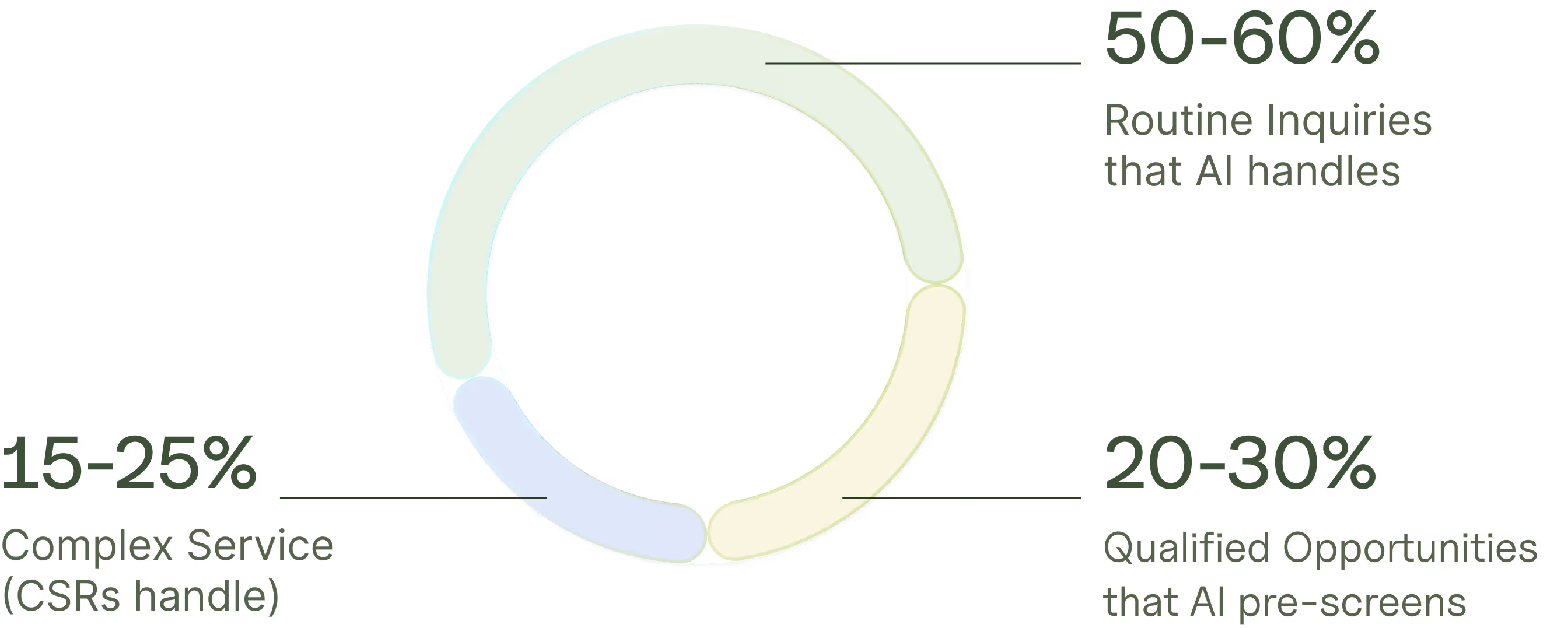
- Routine inquiries (50%-60% of volume): Policy status, payment dates, ID card requests, certificate of insurance generation. An AI receptionist handles these instantly, 24/7, without queue times
- Qualified opportunities (20%-30%): New quote requests, coverage questions, and renewal discussions that AI lead qualification can capture, pre-screen, and route to the right producer
- Complex service needs (15%-25%): Claims guidance, policy disputes, life changes requiring coverage review. These demand human empathy, expertise, and relationship skills - exactly the work your best CSRs thrive on
When you automate the first category and pre-qualify the second, your human team focuses exclusively on the third. The math changes dramatically. Instead of handling 70 calls and feeling drained, a CSR handles 25 meaningful conversations and feels accomplished.
How Sonant AI fits into this framework
We built Sonant AI specifically for this three-tier model. Our AI receptionist handles routine inbound calls with human-like, multilingual conversations, captures caller information accurately, and integrates directly with your agency management system (AMS) and CRM. No data re-keying. No silos. No missed calls at 7 PM when your office is closed.
The result? Your CSRs stop answering the same 15 questions on repeat. They start spending their days on high-value client interactions that build loyalty, generate referrals, and grow revenue. That shift alone transforms job satisfaction - and job satisfaction is the single strongest predictor of CSR retention.
Integration matters more than features
VegaIT's research makes clear that outdated IT infrastructure and siloed systems severely limit customer experience quality. integration reduces data re-keying, improves consistency, and lowers operational costs. Any automation tool that creates another disconnected system adds complexity instead of reducing it.
This is why AI virtual receptionists built specifically for insurance outperform generic solutions. Industry-specific tools understand policy terminology, map to insurance workflows, and connect natively with platforms like Applied Epic, Hawksoft, and AMS360. The efficiency gains compound when every system speaks the same language.
Building a CSR Retention Strategy Around Smarter Workflows
Step 1: Audit your call volume and categorize
Before you change anything, measure what your CSRs actually spend their time on. Track inbound calls for two weeks and categorize each one: routine inquiry, qualified opportunity, or complex service need. Most agency leaders are surprised to find that routine calls consume 50%-65% of total volume.
Step 2: Automate the routine tier
Deploy an AI receptionist to handle the routine category. Focus on the calls that follow predictable patterns: payment questions, ID card requests, basic policy lookups, and appointment scheduling. These calls don't build relationships. They burn time. Removing them from your CSRs' plates is the single fastest way to reduce burnout.
Step 3: Invest in your CSRs' growth
With routine calls handled, redirect your CSR development budget toward skills that matter:
- Cross-selling and upselling techniques that turn service calls into revenue opportunities
- Claims advocacy training that builds deep client trust during vulnerable moments
- Account management skills that prepare CSRs for producer or team lead roles
- Personalization practices - remembering details, anticipating needs, proactive outreach
When CSRs see a career path instead of an endless call queue, they stay. Insurance Back Office Hub data shows that customers scoring 5 on satisfaction surveys renew at 92%. The CSRs who deliver that level of service are the ones who have time and energy to genuinely care - because they're not buried in routine tasks.
Step 4: Measure what matters
Track these metrics monthly to confirm your strategy is working:
- CSR turnover rate - target below 15% annually
- Customer retention rate - target 90%+ within 12 months
- Average handle time on complex calls - should decrease as CSRs handle fewer but more focused interactions
- CSR satisfaction scores - survey quarterly
- Revenue per CSR - should increase as cross-sell and upsell conversations replace routine inquiries
Agencies that track the right metrics can fine-tune their approach in real time rather than discovering problems after clients have already left.
The Personalization Advantage: Where Human CSRs and AI Work Together
Why personalization drives retention
The data is unambiguous. When insurers offer personalized services, customer retention reaches 81%, and engagement jumps 89%. Yet only 17% of insurers currently prioritize personalization. That gap represents the single biggest opportunity for independent agencies to outperform larger competitors.
Personalization in insurance means more than using a client's first name. It means knowing their coverage history, anticipating life changes that affect their policies, remembering that they prefer email over phone, and proactively reaching out before renewal - not after. This work requires human judgment, emotional intelligence, and relationship investment. It's exactly what CSRs do best when they have time to do it.
How AI creates space for human connection
Consider how AI-powered renewal automation works in practice. The AI handles initial outreach, gathers updated information, and flags accounts that need attention. Your CSR then steps in with context already captured - they know the client's current coverage, recent claims, and any premium changes. Instead of spending 10 minutes collecting data, the CSR spends 10 minutes consulting, advising, and strengthening the relationship.
This division of labor amplifies human talent rather than replacing it. AI virtual assistants for SMB agencies handle the operational weight while human CSRs deliver the empathy, judgment, and trust-building that no algorithm can replicate. The agencies that master this balance retain both their people and their clients.
Future-Proofing Your Agency Against the Workforce Shortage
The retirement wave demands a new operating model
With 400,000+ insurance positions going unfilled over the next 15 years, hiring your way out of the problem simply won't work. Even agencies offering above-market compensation find themselves competing for a shrinking talent pool. The math doesn't add up unless you fundamentally change how work gets done.
Global insurance IT spending hitting $362 billion in 2025 signals that the industry recognizes this reality. But spending alone doesn't solve problems - strategic deployment does. Choosing the right AI model for your agency's specific needs matters far more than the size of your technology budget.
The competitive in 2025 and beyond
Agencies that successfully retain insurance CSR talent while automating routine work create a compounding advantage. Their experienced CSRs build deeper client relationships. Those relationships generate referrals - and referred customers renew at 92% compared to 67% for other acquisition channels. Lower turnover means lower recruiting costs. Higher retention means higher revenue per account.
Meanwhile, agencies stuck in the old model keep losing CSRs, keep losing clients, and keep spending more to replace both. The gap widens every quarter.
Taking Action: Your Next Steps
The 35 statistics in this article point to one conclusion: CSR retention and customer retention are inseparable problems that demand a unified solution. You can't fix one without addressing the other.
Start with three immediate actions:
- Audit your call volume this week. Categorize every inbound call for five business days. Identify what percentage falls into the routine category
- Calculate your true CSR cost. Add recruiting, training, benefits, management time, and the customer impact of each departure. The number will likely surprise you
- Explore purpose-built AI for insurance. Sonant AI transforms routine inbound calls into handled interactions and qualified opportunities - giving your CSRs back the time they need to do meaningful work and stay engaged
The agencies thriving in 2025 aren't choosing between technology and people. They're using technology to make their people more effective, more satisfied, and more likely to stay. That's not just good strategy - it's the only sustainable path forward in an industry facing a generational workforce shift.





.svg)

.svg)
