.svg)

.avif)
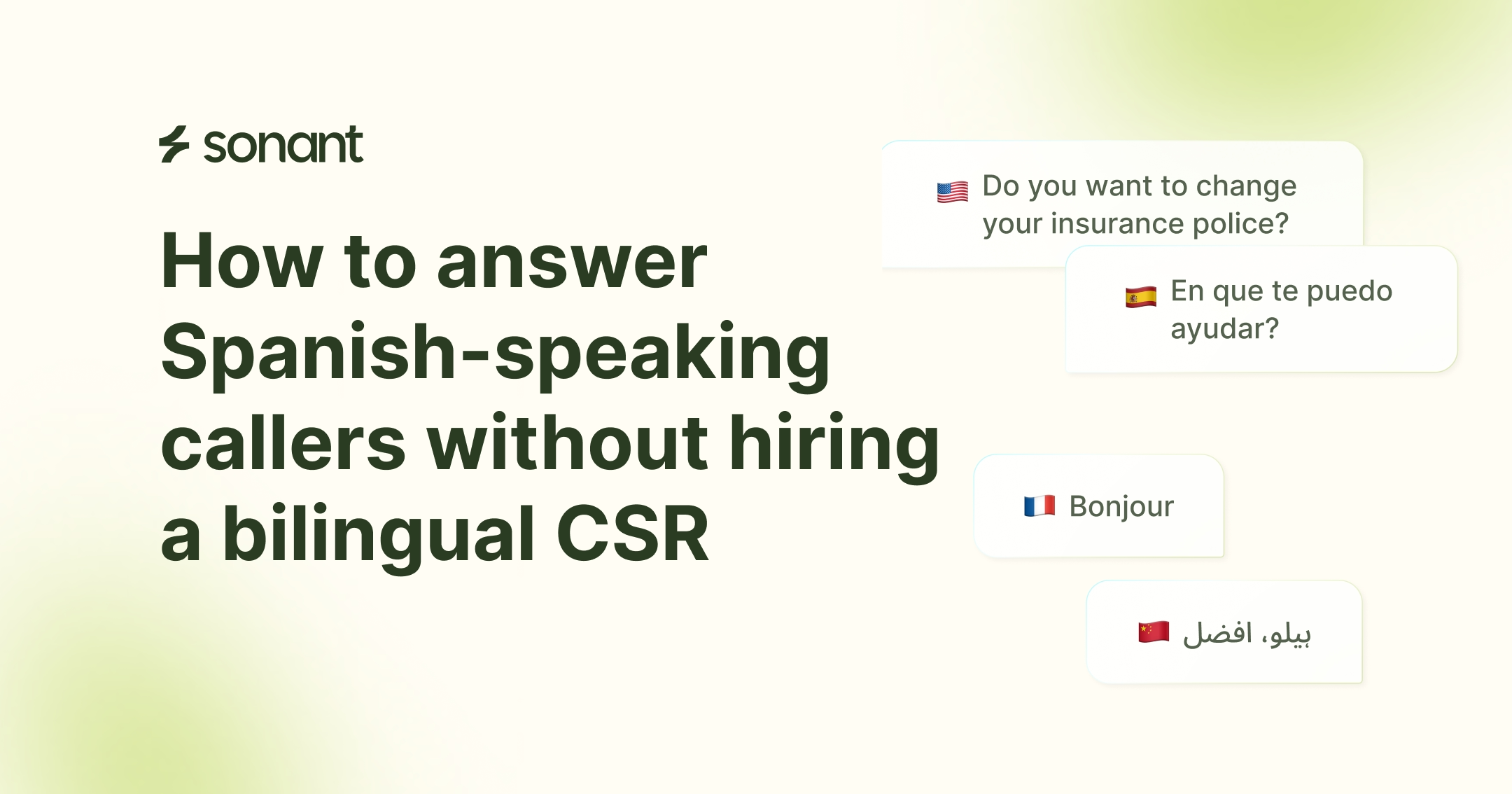
To answer Spanish-speaking callers without hiring a bilingual CSR (customer service rep), you first have to see the leak clearly: in Texas, California, Florida, and Arizona books, 15–35% of inbound calls are Spanish-speaking, per the demographic reality documented in US Census language data. Most agencies route those callers to an English greeting, a "press 2" branch that dead-ends after hours, or a single bilingual employee who cannot be on every call. The hiring market will not fix this: bilingual insurance talent is scarce and commands a premium. The coverage fix is structural, and it answers in Spanish at the first ring.
Key Takeaways
- Spanish-speaking callers are 15–35% of inbound in TX, CA, FL, AZ books, and they leak silently
- One bilingual hire is a single point of failure: lunch, vacations, turnover, simultaneous calls
- "Press 2 for Spanish" branches that lead to voicemail lose the caller entirely
- First-ring Spanish coverage captures quotes, service, and renewals the agency never saw before
- The fix costs less than the bilingual hiring premium and covers all 168 hours
See the leak your phone data hides
The Spanish leak is the hardest miss to measure because it fails before it registers: the caller hears an English greeting and hangs up, or selects the Spanish branch and abandons at the voicemail. Sample your abandoned calls and menu-branch data; agencies that audit honestly typically find the Spanish-speaking share of abandonment far exceeds its share of completed calls. The callers were there; the coverage was not.
Want your language leak measured? → Talk to Sonant
Why the bilingual hire cannot carry it alone
The standard fix, hire one bilingual CSR, creates a single point of failure with predictable gaps: lunch hours, vacations, sick days, simultaneous Spanish calls, and every evening and weekend. Add the market problem: bilingual insurance-experienced candidates are scarce, command a pay premium, and exit at the same front-desk turnover rates as everyone else (the BLS occupational data puts office-support churn among the highest of any category). The hire is valuable; the hire as the entire Spanish strategy is fragile.
Scored against what first-ring Spanish coverage actually requires, the popular options come up short:
What first-ring Spanish coverage actually means
The standard worth specifying: the call is answered in Spanish (or detects and switches within the first exchange), the full conversation runs in Spanish, qualification and appointment booking happen in Spanish, and the AMS (agency management system) note posts in English for the team, at any hour, on any number of simultaneous calls. Anything less, a transfer queue, a callback promise, an interpreter conference line with hold music, loses the shopper who has other agencies to dial.
The revenue hiding in the closed leak
Run the math on a 500-call/month agency in a 25% Spanish market: roughly 125 monthly calls arrive Spanish-first. If half currently leak, closing the leak recovers 60+ monthly conversations: quotes, renewals, service requests that protect retention. These are not new marketing leads; they are existing demand the phone configuration was refusing. The Sonant Consumer AI Readiness Report confirms language-matched service ranks among the strongest experience drivers for Spanish-preferring policyholders: being answered in their language is the experience.
Keep your bilingual staff for the moments that need them
If you have bilingual team members, the structural coverage makes them more valuable, not less: they stop being the universal Spanish switchboard and start taking only the escalations that need judgment: coverage advice, claims counseling, retention saves, conducted in Spanish with the routine already handled. The same protect-their-time logic that applies to producers applies to bilingual CSRs doubly, because they are harder to replace.
.avif)
How Sonant answers in Spanish at first ring
Sonant answers every call 24/7 with native-quality Spanish at the first ring: no menu branch, no transfer queue. It qualifies quote shoppers, resolves tier-1 service (ID cards, billing, claim status, COIs - certificates of insurance), books appointments into producer calendars, and writes the AMS note in English within 60 seconds to EZLynx, Applied Epic, HawkSoft, AMS360, QQCatalyst, Momentum, AgencyZoom, or Zywave. Spanish-language escalations route to your bilingual staff with the note pre-written. Output: the 15–35% of your market that calls in Spanish gets the same first-ring experience as everyone else, and the leak closes.
The practical takeaway for the agency in a bilingual market
To answer Spanish-speaking callers without hiring a bilingual CSR: measure the leak in your abandonment data, specify first-ring Spanish (not a menu branch), deploy coverage that runs the full conversation and books in Spanish while posting English AMS notes, and redeploy any bilingual staff you have to the judgment escalations. The demand is already dialing; the agency that answers in the caller's language at the first ring simply stops refusing it.
Ready to answer your whole market at first ring? Book a Sonant demo →
Related reading
- AI Voice Agents vs. Live Call Center Reps: What's Better?
- The Best AI Answering Services for Insurance Agencies in 2026
- 10 Ways to Reduce Insurance Operational Costs in 2026
- 100 AI Tools for Insurance Agencies (2026 Guide)






.svg)

.svg)


