.svg)

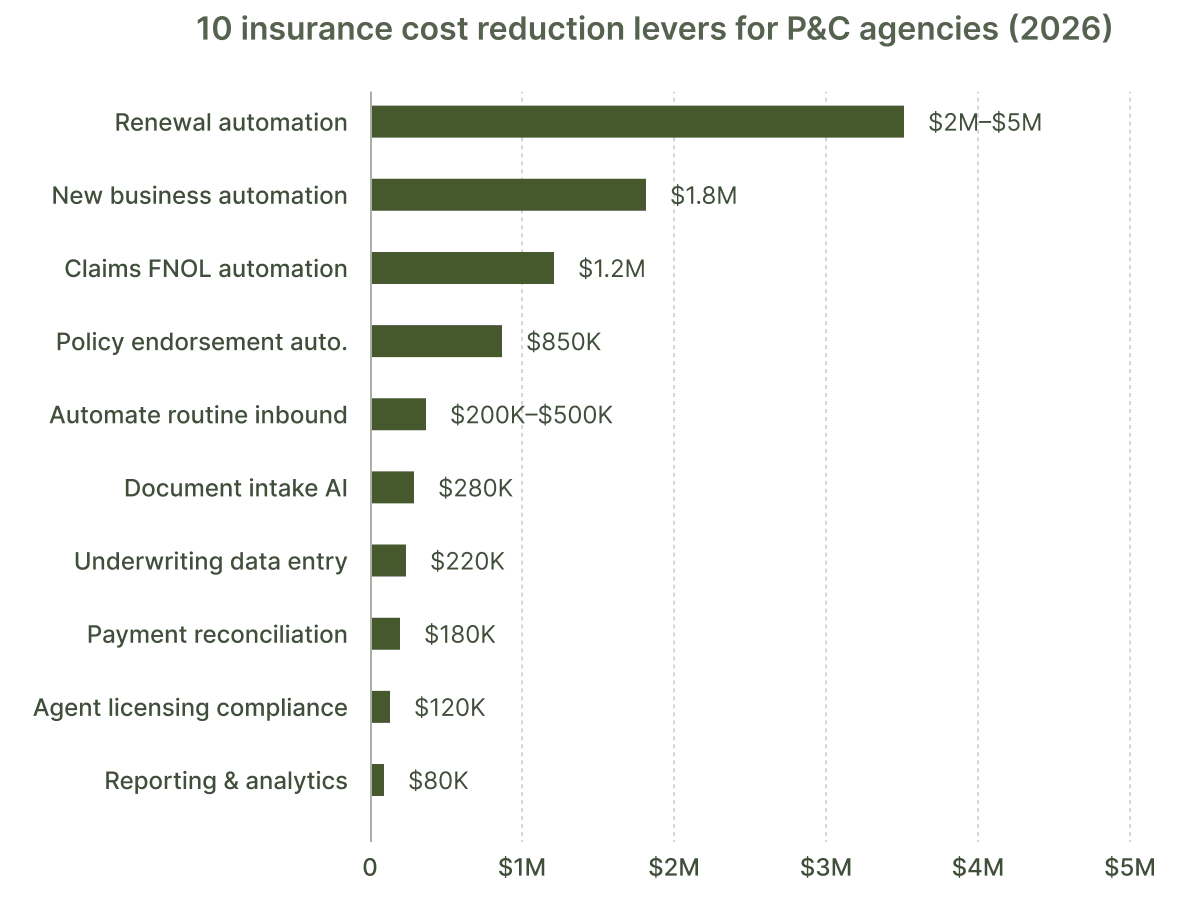
P&C (property and casualty) agency operating costs in 2026 are dominated by four line items: CSR (customer service representative) salaries, BPO (business process outsourcing) contracts, technology stack fragmentation, and producer compensation. The 10 levers below are the ones operations leaders are actually pulling - ranked by dollar impact, payback period, and implementation effort. If your team only sees the calls that were answered, you are not seeing the full front-desk problem, and that is where the biggest cost gap usually hides.
Key Takeaways
- The largest single cost lever is automating routine inbound calls - typically $400K–$700K annually at $1.5M servicing budgets
- AMS (agency management system)-native AI deployments pay back in 4–7 months; offshore BPO (business process outsourcing) replacements take 9 months
- Producer time recovery from automated renewals delivers more new-business revenue than direct cost savings
- Tech stack consolidation is a year-2 lever, not a quick win
- The right sequencing is automate → consolidate → renegotiate, not all three at once
How we ranked the 10 levers
Evaluating cost-reduction levers cleanly is harder than the naive approach. You cannot just rank by dollar impact alone. You have to weigh payback period, AMS write-back compatibility, and whether the lever is solvable through workflow versus headcount changes.
1. Automate routine inbound calls (highest leverage)
The 40–60% of inbound that is COIs (certificates of insurance), billing, claim status, and quote intake. AI receptionists run these at $0.40–$1.20 per call versus $3–$5 fully-loaded live CSR cost. Dollar impact: $200K–$500K annual at 600 calls/day. Payback: 4–7 months. Effort: medium.
2. Replace voicemail with AI overflow
Voicemail callback failure runs 50–70%. AI overflow at $0.40–$1.20 per call recovers the calls that would have been lost. Dollar impact: $1.4M–$2.1M in recovered premium at typical book mix. Payback: under 6 months. Effort: low.
3. Cut after-hours and weekend voicemail to zero
Most agencies lose 100% of weekend calls and 60–80% of weekday after-hours calls to voicemail. AI runs 24/7 at the same per-call cost as daytime. Dollar impact: $80K–$180K vs $30K–$45K per night-shift FTE. Payback: under 6 months. Effort: low.
Want a missed-call audit for your agency? → Talk to Sonant
4. Automate the 90/60/30-day renewal sequence
Producers running the sequence manually spend 5–8 hours per week on calls that AI can run. Recovered producer time goes to new business. Dollar impact: $2M–$5M new-business uplift annually. Payback: months 4–9. Effort: medium.
5. Reduce BPO scope to commercial-only
Offshore BPO at $1.50–$3.50 per call covers the routine that AI now runs at $0.40–$1.20. Keep BPO for complex commercial servicing where domain depth matters. Dollar impact: 25–35% reduction in total servicing budget. Payback: 9 months. Effort: high.
6. Standardize on AMS-native integrations
Middleware (Zapier, custom API) breaks every time the AMS releases an update. Native connectors stay clean. Engineering time saved compounds annually. Dollar impact: 30–60 CSR hours per month recovered. Payback: immediate. Effort: low at vendor selection, high if rebuilding.
7. Consolidate the tech stack (drop 2–4 vendors)
Most agencies run 6–12 software systems that do not talk to each other. AMS + AI voice + rating engine + e-signature + payment processor + BI is the realistic core. Drop the rest. Dollar impact: $30K–$120K annual on vendor fees. Payback: 12 months. Effort: high.
8. Force documentation discipline through AMS write-back
E&O (errors and omissions) claims are up across the industry. AMS write-back at the call layer creates the audit trail. Dollar impact: hard to quantify until an E&O event hits; one avoided claim covers years of platform cost. Payback: variable. Effort: low if AI receptionist already deployed.
9. Move comp away from straight commission
Total-comp packages with retention multipliers, book-metric bonuses, and equity participation drop producer attrition 5–10 points. Dollar impact: $150K–$400K per retained top producer per year. Payback: 12 months. Effort: high (requires comp plan redesign).
10. Standardize servicing post-acquisition
For agencies doing roll-up acquisitions, AMS-native AI voice deployed immediately post-acquisition cuts producer attrition 5–10 points during integration. Dollar impact: 15–30% reduction in 18-month attrition. Payback: 6–12 months. Effort: medium.
Sonant’s Consumer AI Readiness Report provides additional benchmarks for how policyholders respond when agencies deploy these levers, particularly on the inbound voice and renewal layers.
How to sequence the 10 levers
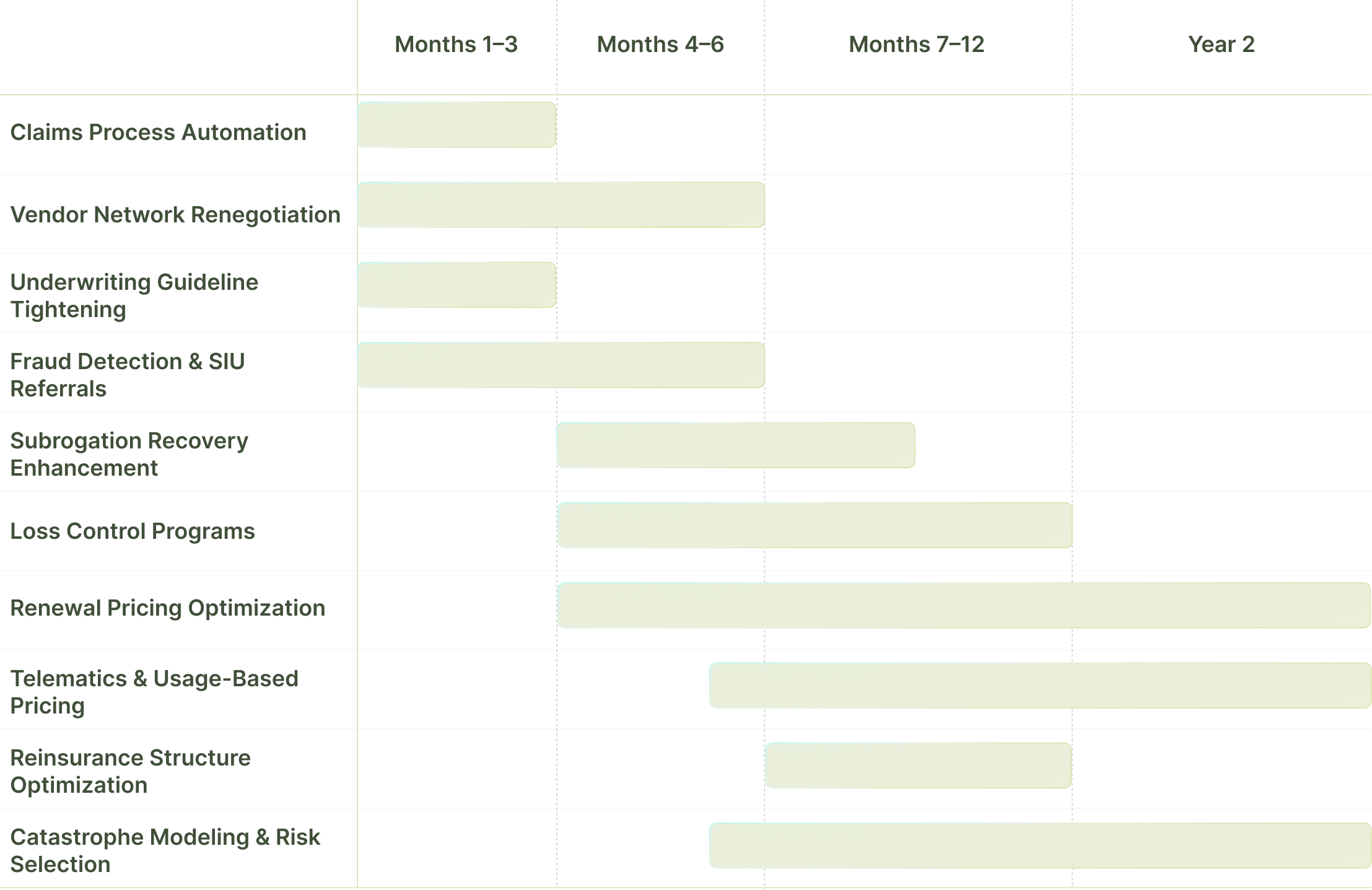
The right order is automate first, consolidate second, renegotiate third.
How Sonant addresses the top 6 levers
Sonant absorbs the routine inbound (Lever 1), replaces voicemail with AI overflow (Lever 2), runs 24/7 after-hours coverage (Lever 3), automates the 90/60/30-day renewal sequence (Lever 4), enables BPO scope reduction (Lever 5), and writes natively to EZLynx, Applied Epic, HawkSoft, AMS360, QQCatalyst, Momentum, AgencyZoom, and Zywave (Lever 6). The workflow: caller calls → Sonant answers → captures intent → writes the AMS note → escalates if complex. Output is the AMS-attached note that posts within 60 seconds of the call ending.
The 3 highest-leverage moves for the next 90 days
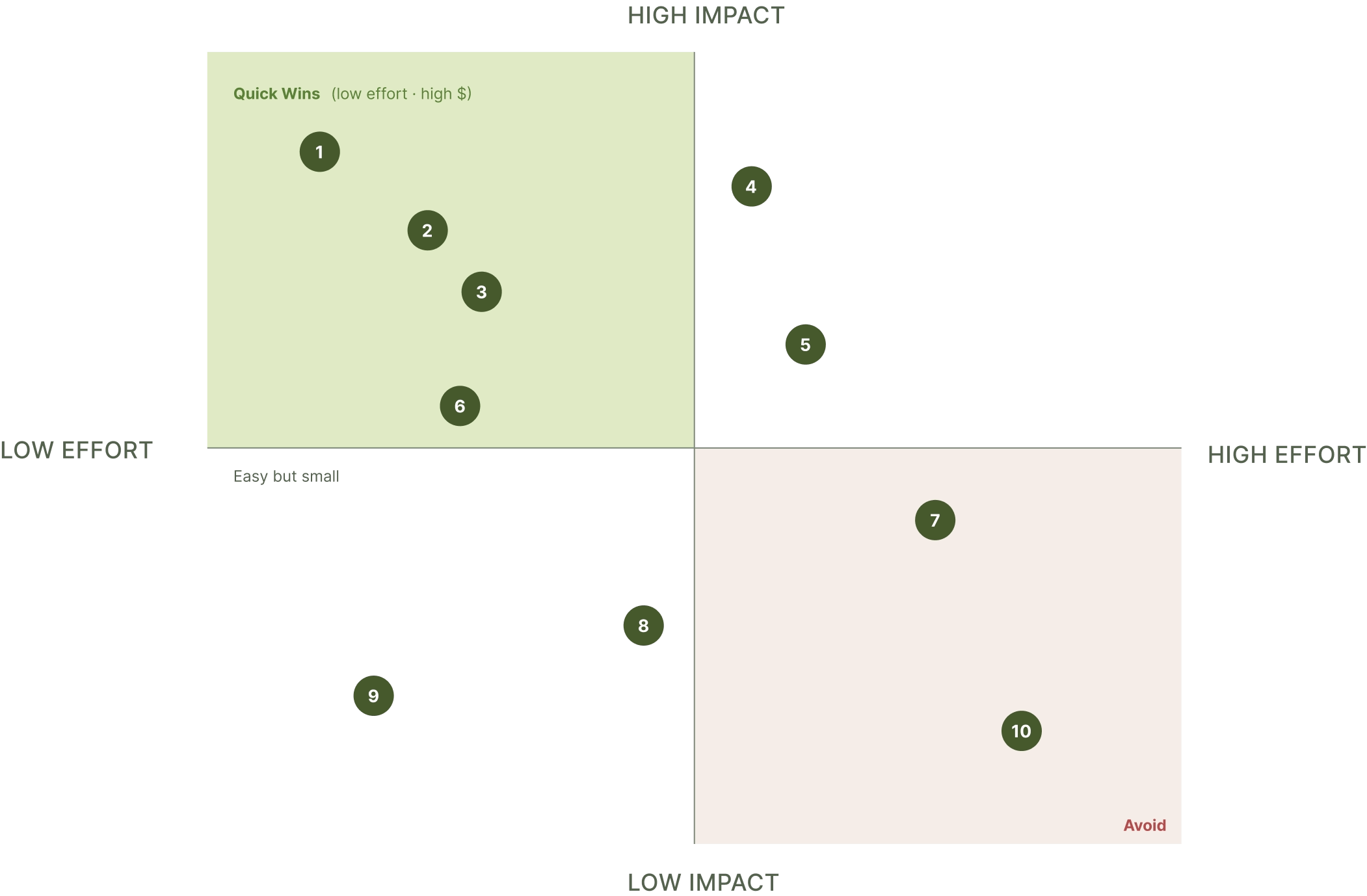
Lever 1 (automate routine inbound), Lever 2 (replace voicemail overflow), and Lever 6 (standardize on AMS-native integrations). Together they cover 70%+ of the total cost-reduction opportunity, deploy in under 30 days on the right platform, and pay back in 4–7 months. Levers 4, 5, 8, and 10 layer in afterward.
Ready to map the 10 levers against your agency’s cost structure? Book a Sonant™ demo →
Related reading
- Insurance Business Process Outsourcing in 2026
- Insurance Workflow Automation: What You Need to Know in 2026
- Live Answering vs. AI Answering Services: What's Better?
- 100 AI Tools for Insurance Agencies (2026 Guide)






.svg)

.svg)


