
.png)
Goodcall Alternative for AI Voice Agents for Insurance Agency
Sonant is an AI receptionist purpose-built for P&C insurance. Goodcall is a general-purpose AI phone agent originally incubated at Google. Compare insurance-specific AI vs. generic AI answering for your agency.
Why agencies prefer Sonant over Goodcall?
Insurance AI Receptionist vs Generic AI Phone Agent:
Quick Comparison
Sonant is an AI receptionist built exclusively for P&C insurance agencies with native AMS integrations (Momentum, Hawksoft, EZLynx, Applied Epic), insurance-specific training, and enterprise-grade security (SOC2 Type 2, GDPR certified). Used by 100+ independent agencies and enterprise brokers for phone automation.
Goodcall is a general-purpose AI phone agent founded as a Google hackathon project (originally "CallJoy"). Plans start at $79/month per agent for 100 unique callers. The AI handles FAQs, appointment booking, and lead capture across industries including home services, healthcare, and retail. Goodcall has handled 4.7 million+ calls but has no confirmed native insurance AMS integrations.
Choose Sonant if you are a P&C insurance agency needing AI that understands insurance terminology, integrates with your AMS, and handles complex insurance call workflows.
Choose Goodcall if you are a small business needing a simple, affordable AI phone agent for basic call answering, FAQ responses, and appointment booking across any industry.
We were getting disrupted constantly (...) My team couldn't focus on insurance consultations because they were always picking up the phone just to transfer calls to someone else.
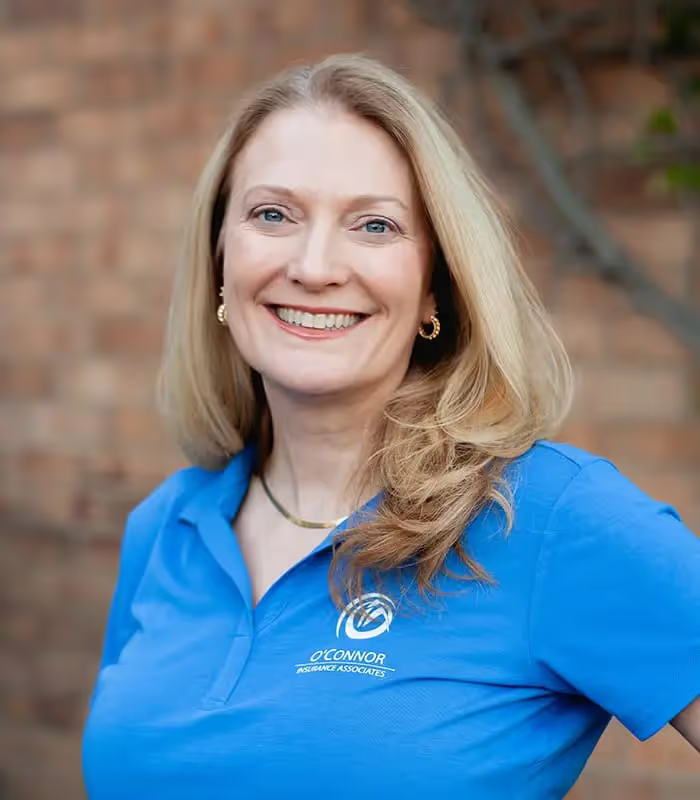
Michelle O'Connor
President at O'Connor Insurance and Associates

Platform Capabilities Insurance AI vs Generic AI Phone Agent

Insurance specific
Pre-trained on P&C insurance terminology, policy types, and agency workflows. No custom training required.

Native AMS integrations
Direct sync with Momentum, Hawksoft, EZLynx, Applied Epic, and 8+ major AMS and BMS.

24/7 AI Receptionist Coverage
Round-the-clock phone answering ensuring insurance agencies never miss calls during nights, weekends, or holidays.

White-Glove setup
Implementation in under 30 days with dedicated developers and insurance AI specialists.
Side-by-side Feature Comparison between Sonant and Goodcall
.svg)
.avif)


Sonant is a Better Scalable Goodcall alternative?

Sonant is an AI receptionist built exclusively for P&C insurance agencies and brokers. The platform handles incoming phone calls 24/7, managing quote requests, policy inquiries, appointment scheduling, and claims routing with insurance-specific training and native AMS integrations.
Sonant serves independent insurance agencies, regional brokerages, and enterprise P&C operations who need phone automation without replacing their existing agency management systems. The platform integrates with EZLynx, Applied Epic, Hawksoft, Momentum, QQCatalyst, AMS360, AgencyZoom, and Zywave.
Key Sonant Features:
- AI receptionist for phone automation
- Native AMS integrations (8+ platforms)
- Insurance-specific training (P&C terminology)
- 24/7 phone coverage
- White-glove implementation (under 30 days)
- Enterprise security (SOC2 Type 2, GDPR)
- Proven 8X ROI within 30 days
- Appointment Scheduling, Quote Intake, and more
Best For: Independent P&C agencies, retail insurance brokers, regional brokerages, enterprise P&C operations
Goodcall is an AI phone agent originally incubated at Google (as "CallJoy" within Area 120) before spinning out as an independent company in 2021. Led by Bob Summers, a former Google Speech AI leader, the platform has handled 4.7 million+ calls across 30,000+ businesses. Goodcall uses Google's AI voice technology for natural-sounding call handling.
Plans start at $79/month per agent for 100 unique callers, with unlimited minutes and AI tokens included. The AI handles FAQs, appointment booking, lead capture, and spam filtering. Integrations are primarily through Zapier. Independent reviews note the AI can struggle with complex, non-linear conversations and has noticeable latency (~600ms).
Key Goodcall Features:
- AI phone agent ($79-$249/month per agent)
- Unlimited calls and minutes included
- FAQ responses and lead capture
- Appointment scheduling (Google Calendar)
- Spam/robocall filtering
- Call transcripts and recordings
- Zapier integrations (10,000+ apps)
- Self-service setup in minutes
Best For: Small businesses (home services, salons, restaurants) needing simple AI phone answering without industry-specific requirements
Sonant AI vs Goodcall: Which AI Phone Agent to choose?
✅ Are an insurance agency or broker needing phone automation
✅ Offer P&C insurance products (auto, home, commercial lines)
✅ Need AI trained on insurance terminology and workflows
✅ Use an AMS like EZLynx, Applied Epic, or Hawksoft
✅ Want done-for-you implementation with insurance AI specialists
✅ Require native AMS integrations that sync call data
✅ Need proven SOC2 Type 2 and GDPR security certifications
Sonant: Best for P&C Insurance Agencies
✅ Need simple AI phone answering for a small business
✅ Want unlimited call minutes at a fixed monthly cost
✅ Have basic FAQ and appointment booking needs
✅ Don't need deep insurance AMS integration
✅ Want self-service setup without implementation support
✅ Are comfortable with Zapier-based integrations
Goodcall: Best for Simple Small Business AI Answering
What You Gain by Switching
Independent P&C insurance agencies switch to Sonant for one reason: it's the only AI receptionist purpose-built for how agencies actually run - quote intake, policy inquiries, appointment scheduling, and claims routing, all synced natively to your AMS. Here's how your day-to-day changes after the switch:
- Insurance-specific AI vs multi-industry universal AI employee
- Native retail AMS integrations vs general enterprise system integrations
- Pre-trained P&C terminology
- Faster, more focused implementation for retail agencies
Migration: What Switching Looks Like
Migration takes 30 days or less, with our insurance specialists handling every step. No engineering work, no DIY configuration, no extra hires required. Here's exactly what happens week-by-week:
The Bottom Line
Sonant is the best solution for P&C insurance agencies that need AI phone automation with native AMS integrations, insurance-specific training, and complex workflow handling. Goodcall is a general-purpose AI phone agent for small businesses needing basic call answering and appointment booking across any industry.
Goodcall markets to insurance agencies on its website but has no confirmed native AMS integrations, no insurance-specific AI training, and independent reviews note it struggles with complex, non-linear conversations. For insurance agencies handling policy inquiries, claims routing, and quote requests, Sonant delivers purpose-built AI that connects directly to your AMS.
Disclaimer: This comparison was created using publicly available information from Goodcall's website, press releases, and third-party review sites. Goodcall was originally incubated at Google as "CallJoy" before becoming independent. We encourage you to visit goodcall.com for the most current information.
Frequently Asked Questions
How does Goodcall compare to Sonant for insurance agencies?

Goodcall is an AI phone agent originally incubated at Google as "CallJoy", serving 30,000+ small businesses with 4.7M+ calls handled. Sonant is an AI receptionist built exclusively for P&C insurance with native AMS integrations.
Why would I consider Sonant instead of Goodcall?
Sonant is purpose-built for P&C insurance — native AMS integrations, pre-trained P&C terminology, white-glove implementation. Goodcall is general small business AI phone answering without insurance specialization or native AMS integration.
Does Goodcall integrate with insurance AMS platforms?
Integrations are primarily through Zapier (10,000+ apps). Native insurance AMS integrations (EZLynx, Applied Epic, Hawksoft) are not listed.
How does pricing compare?
Goodcall charges $79-$249/month per agent based on unique callers with unlimited minutes included. Sonant uses custom agency-level pricing designed for higher-volume P&C operations.
Should I choose Goodcall or Sonant for my insurance agency?
Choose Sonant for P&C-specific AI with native AMS integration. Choose Goodcall for affordable AI phone answering for general small business with unlimited minutes.











.avif)



.avif)

.avif)
%201.avif)




%201.avif)


.avif)
.avif)


%201.avif)






























.svg)

.svg)
