Sonant is now an Applied Epic Certified Vendor Integration
Sonant is now an Applied Epic Certified Integration Partner. Learn more ->



A free cheat sheet for independent agencies: what each front desk seat really costs, which calls an AI receptionist can handle today, and how to cover the phones without adding headcount

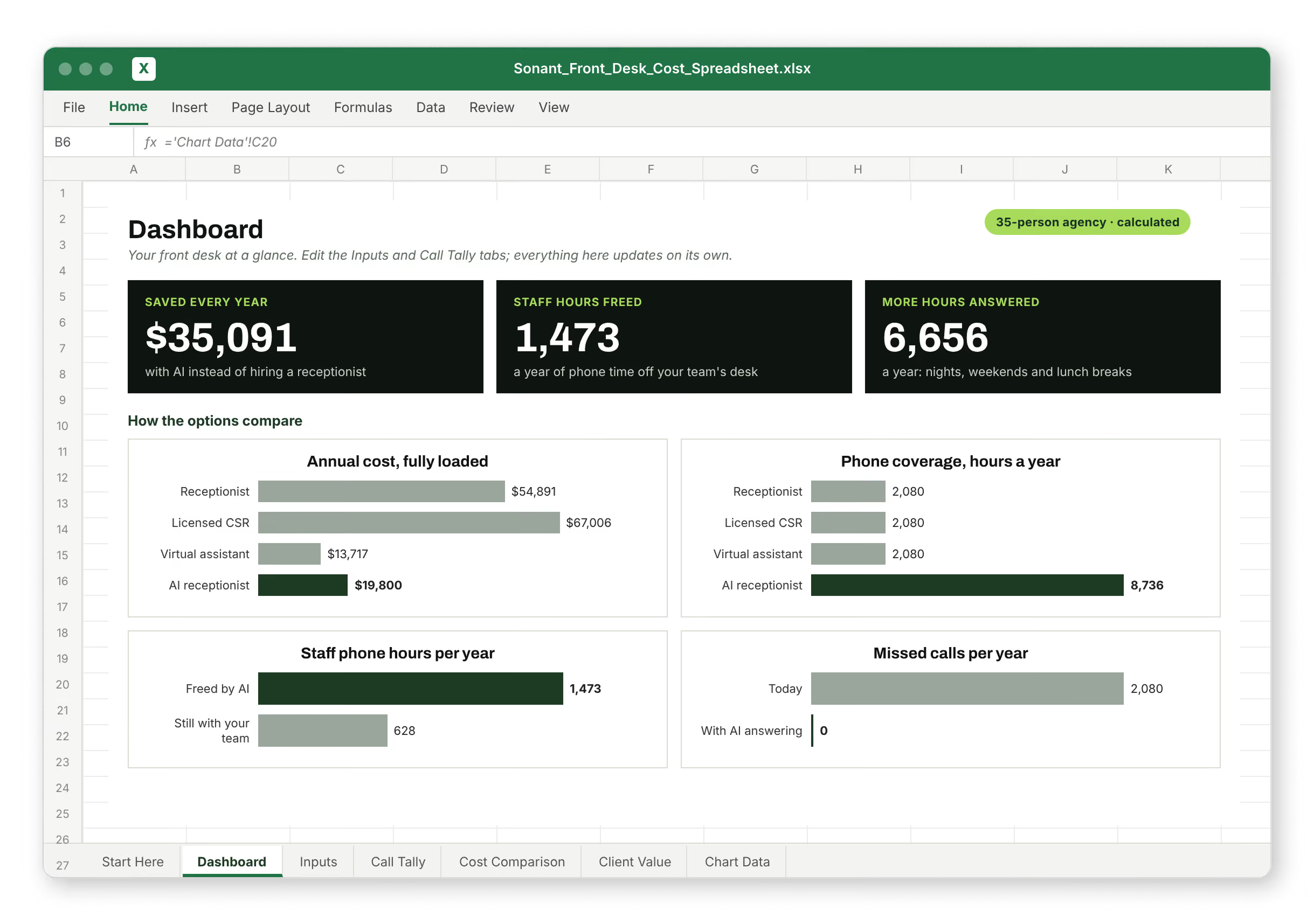
Loaded cost of a receptionist, a licensed CSR, and a virtual assistant, side by side
A call-type table splitting routine traffic from work that needs licensed staff
A 30-day plan for the week your receptionist gives notice
A spreadsheet that runs every number on your own agency
Trusted by Industry Leaders & Partners




























The phone seat carries the highest turnover, the longest ramp, and the least room for a gap. When it empties, calls ring out to the whole team, producers lose selling hours, and service requests sit in voicemail until someone has time to type them into the AMS.
Most agencies do not have a lead problem. They have a missed-call problem. This cheat sheet gives you the numbers and the call-type split to decide what to hire for and what to cover another way, before the next person gives notice.
Built from how independent agencies are restaffing the phone this year, with the case-study numbers behind each call.

Every task the seat covers in a week, from quote intake and certificate requests to billing questions and claim status. Each one is tagged routine, licensed, or judgement, so you can see what you are really hiring for.
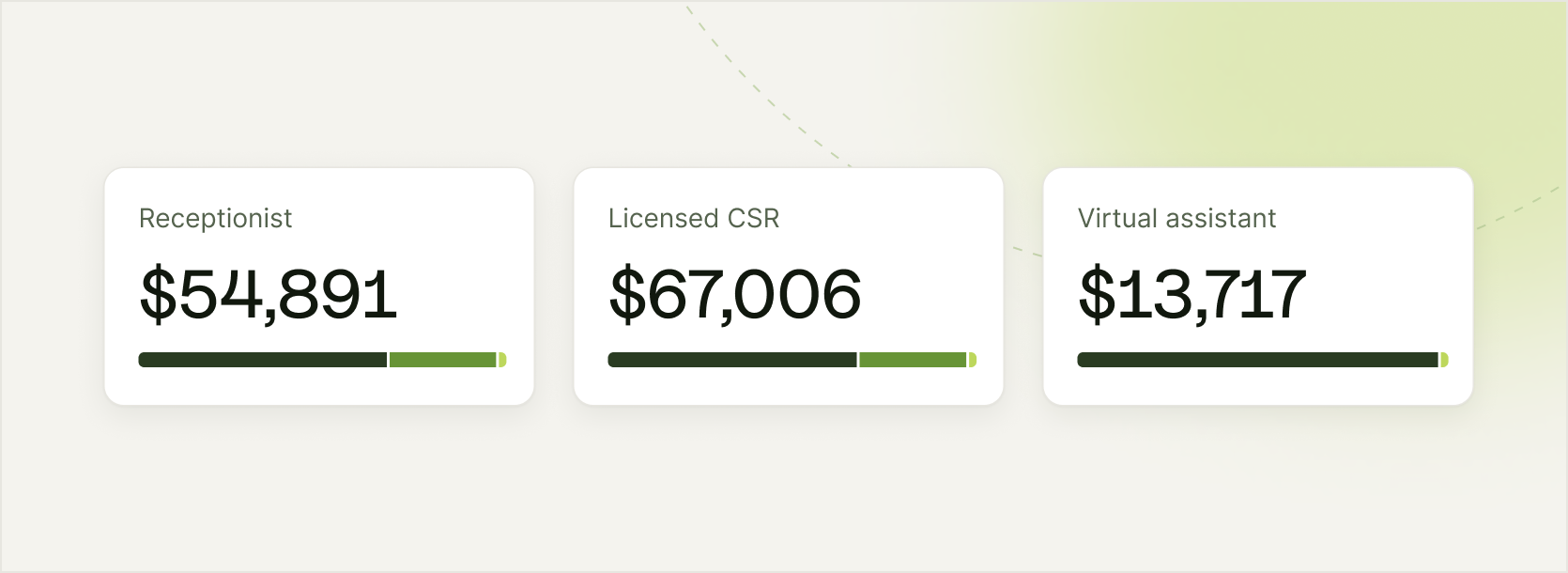
Base pay, benefits, ramp time, and turnover for each option, plus what one client household is worth and how many it takes to cover an AI receptionist. The included spreadsheet runs it on your own numbers.
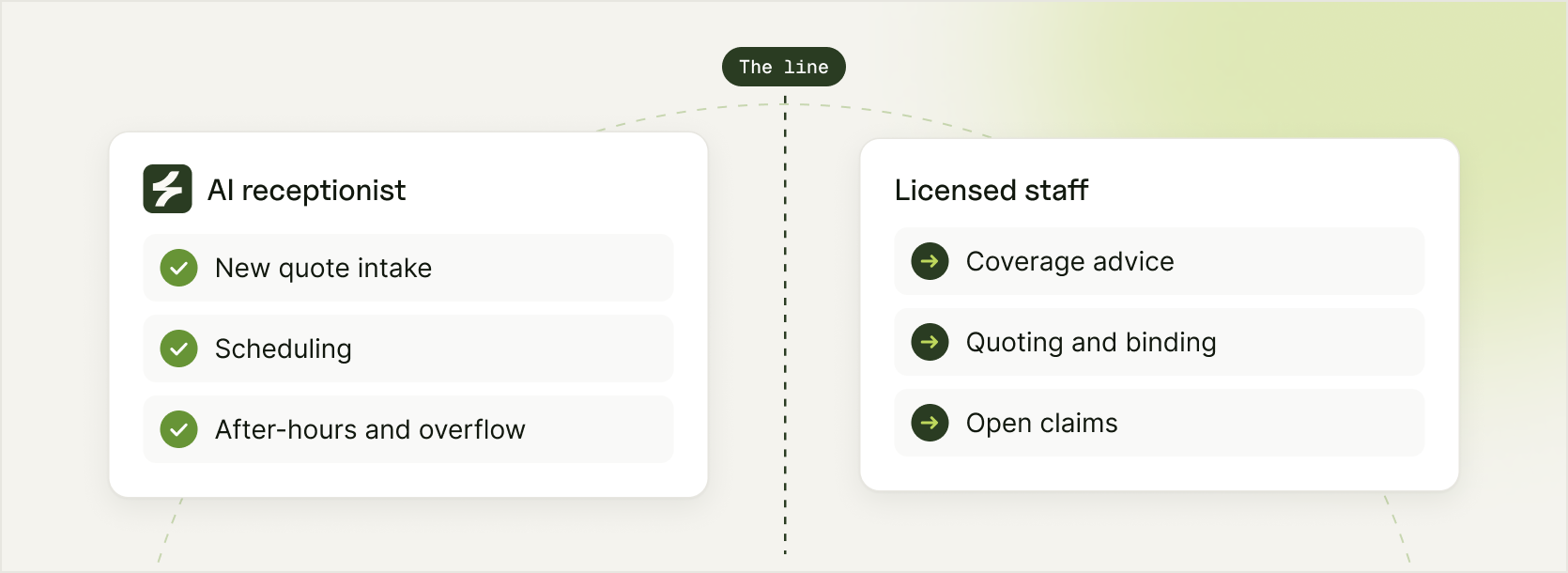
A call-type table with the line you should not cross. Routine intake, lookups, scheduling, and after-hours coverage on one side. Coverage advice, open claims, and unhappy clients on the other.

A week-by-week plan for the notice period: what to document before they leave, which call types to shift first, how to brief the team, and the three numbers to watch so nothing slips quietly.
25 or more staff with assigned CSRs per account or line, and producers getting pulled onto service calls. Use the role table to decide what the next hire should actually be.

Agencies grown by acquisition, where every office staffs its front desk differently. Run the 30-day plan office by office, then roll the standard up centrally.

Growing personal lines volume, holds running long, retention under pressure. Same playbook, written in brokerage, BMS, and CSIO terms.

Michelle O'Connor
President, O'Connor Insurance
No, and the cheat sheet does not argue that it should. An AI receptionist covers the routine volume that fills the day: intake, lookups, scheduling, after-hours calls. Licensed staff keep the coverage conversations, the open claims, and the clients who need a person.
Firefly Network reported zero customer complaints after 2,000+ AI-handled calls, and several agencies have named their AI like a colleague. VIP routing lets chosen clients bypass it entirely and reach their person directly.

A front desk hire costs more than the salary line. Add employer taxes and benefits, recruiting time, the ramp period before the person handles calls unsupervised, and the cost of repeating all of it at turnover. The cheat sheet breaks each component out, and the included spreadsheet runs it on your own numbers. For reference, the BLS national median for a receptionist is $38,010 a year, which comes to about $54,000 once taxes and benefits are added.
It depends on the mix of calls you get. If most inbound calls are routine intake, lookups, and scheduling, an AI receptionist covers them 24/7 and writes the details into your AMS. If your call mix is weighted toward coverage advice and complex service, hire, and let AI take the routine load off that person's desk.
The front desk answers inbound calls, identifies the caller and pulls their record, takes quote details, handles billing and certificate requests, books appointments, routes claim questions to the right person, and documents each call in the AMS. The cheat sheet tags every one of those tasks routine, licensed, or judgement.
Treat the notice period as the project. Document the routing rules and caller knowledge that live only in that person's head, decide which call types move to AI and which need the next hire, then run the shift in stages. Firefly Network cut manual routing by 90% after their receptionist retired.
Most let the phone ring out to whoever is free, which costs producers selling hours and still misses calls. The alternatives are a shared rotation, an outside answering service that takes messages, an offshore assistant, or an AI receptionist that answers every call and triages it into the AMS. The cheat sheet compares all four on cost and coverage.
Four realistic options: split coverage across existing staff, an answering service, a virtual assistant, or an AI receptionist. They differ on what happens after the call. Message-taking leaves the work for your team; Sonant intakes the request and writes a structured task into the AMS before the caller hangs up.
Voicemail is still the default, and it converts almost nothing. Covering after-hours with an AI receptionist means calls get answered, quote details get captured, and your team starts the morning with structured tasks instead of phone tag. BIG Pickering went from answering 12% of its calls to 100% in its first month.
Yes. A short form, then the cheat sheet and spreadsheet are yours, no call required. Book a demo only if you want to see call handling run against your own AMS and call volume.