Sonant is now an Applied Epic Certified Vendor Integration
Sonant is now an Applied Epic Certified Integration Partner. Learn more ->

Book a Demo ->

Picture a mid-sized insurance brokerage in Saskatchewan handling 400–500 transactions a day. Clients walk in. Phones ring constantly. A single receptionist is drowning - and the math simply doesn't work.
We've just found that a single receptionist is getting completely overwhelmed by it.
explains Brock Longworth, COO of Cornerstone Insurance Services.
The revenue from it doesn't justify us bringing on two, three, four receptionists.
The numbers told a brutal story: over 50% of calls went unanswered. Clients hit voicemail. Messages piled up in shared inboxes. Response times stretched longer than anyone wanted to admit - and that was before accounting for Saskatchewan's uniquely chaotic call volume, where the province's government-run auto insurance system funnels a constant stream of non-client calls (license plates, registrations, renewals) straight into the brokerage's phone lines.
Cornerstone needed more than a system that could pick up the phone. It needed one that understood context - the difference between a client calling about their home policy and the same client calling about an unrelated government auto renewal.
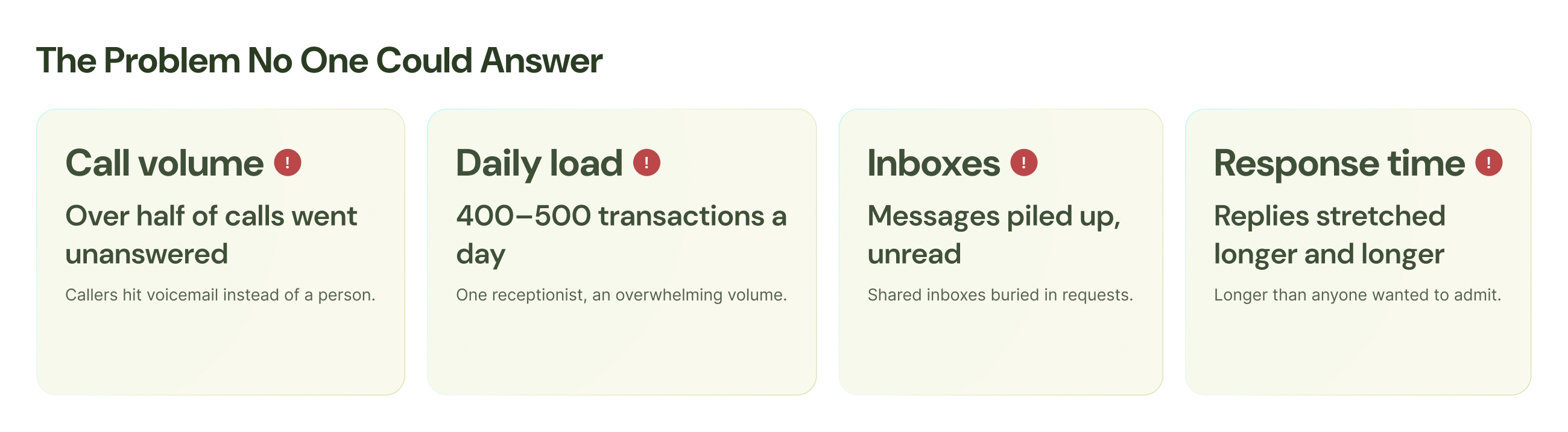
Cornerstone faced a uniquely Canadian challenge: Saskatchewan's government-run auto insurance created massive phone volume from non-clients needing license plates, registrations, and vehicle renewals.
If I called in and said, hey, I want to renew my plate, it's going to see that I also have home insurance here, but I'm not calling about the home insurance.
Brock explained.
I need to go to the auto group, not to the broker assigned to my home file.
The company needed intelligent routing that understood context - not just blind transfers.
Cornerstone tried everything: Opening overflow calls to the entire team (pulled high-value brokers from revenue work), hiring more staff (couldn't find talent in their small town), accepting the voicemail chaos (clients complained constantly).
Beth Wiebe, Director of Operations, summed up the pain: "I live PTSD when it comes to phone systems."
When Brock heard about AI phone solutions at a Greenwich Group meeting, he knew immediately: "That's what we need."
Within weeks of implementing Sonant, the results were immediate. Every single call now gets answered, instantly, 24/7 - no more 50% abandonment rate, no more voicemail backlog. Staff productivity jumped 43%, from 70 tasks per day to 100, largely because Sonant pre-collects information like plate numbers and registration details before a call ever reaches a broker, cutting 25–30% of the workload off each transaction.
Clients noticed too.
I'd be elated if we started getting clients saying, hey, your receptionist is really nice!
Brock said.
That win came faster than expected - Cornerstone now gives callers a choice between immediate AI assistance or a 10–15 minute wait for a live person, and roughly two-thirds choose the AI.
But answering the phone turned out to be just the opening chapter.
As Cornerstone settled into the receptionist, the team started using Sonant's call intelligence to solve a problem that had nothing to do with who picks up the phone: catching compliance misses before they become real liabilities.
Previously, Cornerstone's compliance review meant manually auditing a sample of roughly 100–150 files. Today, the team reviews AI-generated insights across thousands of daily interactions instead of hundreds - and they're finding more, faster.
It's been extremely good for us on the compliance front.
Brock said.
Where the brokerage used to catch maybe one or two legitimate issues a month through manual audits, they're now catching two to three a week - not because more mistakes are happening, but because far more of them are actually visible.
That visibility changed how managers coach staff, too. One Cornerstone manager used the tool to keep tabs on an employee returning from parental leave without needing to sit beside her for every call. On Saturdays - when no manager is in the building - the same system now gives the team a way to review any problem calls first thing Monday morning, closing a blind spot that used to mean zero oversight for an entire day.
It's interpreting the instructions we put in and giving very relevant stuff back - stuff that's actually actionable.

A Cornerstone manager, on the coaching insights.
Every phone call at an insurance brokerage generates paperwork. A broker has to create an activity, write a note summarizing the conversation, decide whether it stays open or closed, and often kick off a follow-up workflow. Brock estimated the average broker was spending 20 to 30 minutes a day just typing notes - more, for complex calls involving new quotes or policy changes.
Sonant now listens to the broker's side of the conversation, not just the receptionist's, and writes the summary directly into the client's file in the brokerage's Epic system. For simple, repeatable requests - like a policy address change - the system can also trigger the exact follow-up activity a broker would otherwise have to build by hand.
That would save our brokers a lot of time having to go in and manually create those.
Brock said of the automated workflow triggers.
The impact goes beyond time saved: with the note already drafted, brokers can stay focused on the conversation instead of splitting attention between the client and the keyboard.
What began as a fix for an overwhelmed phone line evolved into something broader: a system that gives Cornerstone visibility it never had before. "We're now aware of how many calls were hitting our office that we weren't even aware of before," one team member noted. Calls that used to vanish into an answering machine now get handled - and the ones that need a human get flagged, with context, to the right person.
Brock put it simply:
I feel like transferring phone calls was probably just the tip of the iceberg.
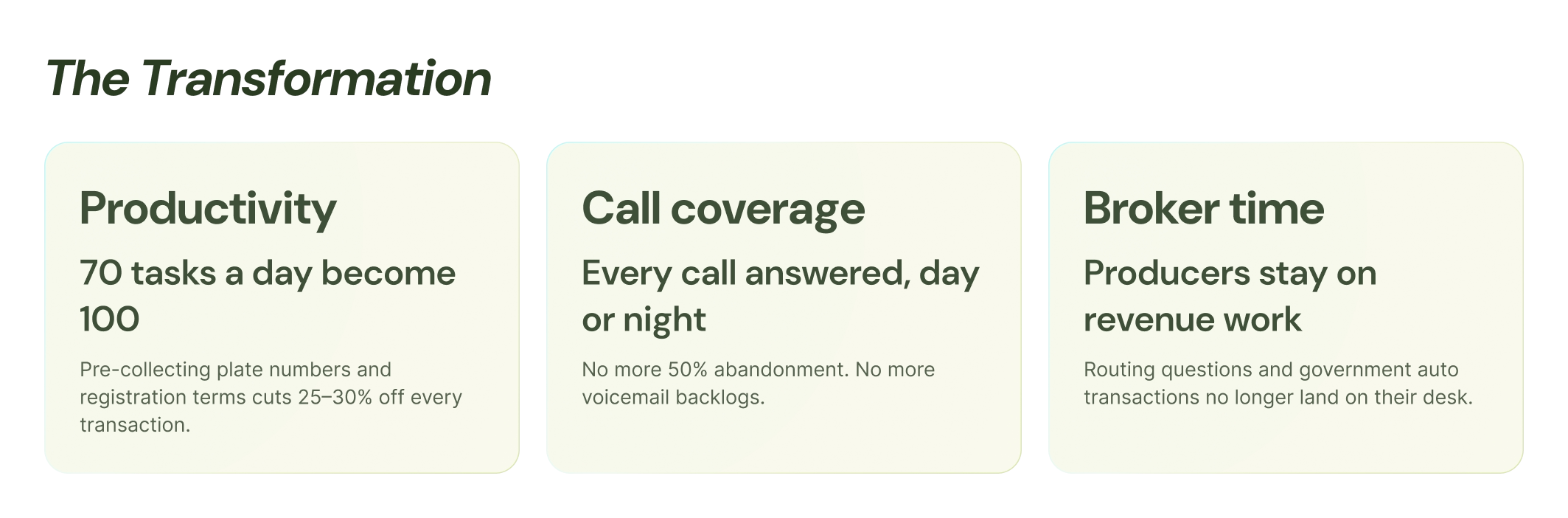
Sonant doesn't just answer phones - it understands Cornerstone's complex workflows:
"The accuracy is 100% on phone numbers," noted Diogo from Sonant's team. No more missing digits. No more "can you confirm this number?" back-and-forth.
Perhaps most telling: Clients love it.
I'd be elated if we started getting clients saying, hey, your receptionist is really nice (...) That would be like a big win.
Brock shared.
That win came faster than expected. The AI handles questions about hours and locations, transfers smoothly to brokers, and even maintains conversation context across multiple calls.
Cornerstone added an auto-dialer giving callers a choice: "Press 1 for immediate assistance from our AI, Press 2 to wait for reception." About two-thirds choose the AI. The others wait 10-15 minutes.
What started as a solution to answer phones evolved into something more powerful.
I'm finding that the potential of this thing to take easy phone calls and not have a human being disturbed is probably very vast. I feel like transferring phone calls was probably just the tip of the iceberg.
The team discovered the AI could handle coverage questions with perfect regulatory compliance, direct tenant insurance inquiries to self-service options better suited to that type of transaction, and even identify which callers require broker attention versus routine processing.Perhaps most valuable: complete visibility into previously unknown call volume.
We're now aware of how many calls were hitting our office that we weren't even aware of before.
Beth notes.
At least now they're getting the bot and we're able to get back to those clients.
.svg)

.svg)


.svg)