.svg)

Ascend is an insurance payments and premium-financing platform, and for a P&C agency the honest verdict is that it isn’t a competitor to an AI receptionist - it runs the money, not the phone. This review covers what Ascend does, what it costs, what it integrates with, and where it fits. The short version: Ascend automates premium financing, invoicing, collections, and reconciliation, while an AI receptionist fields the billing calls and logs them to your AMS. They overlap only on the billing inquiry.
All facts below are sourced from Ascend’s public materials and publicly available information.
Key takeaways
- What it is: insurance payments and accounting-automation platform (premium financing, collections, reconciliation).
- Best for: agencies, wholesalers, MGAs, and carriers modernizing financial operations.
- vs Sonant: complementary - Ascend runs billing/finance; Sonant runs the phone, including billing calls.
- Watch-outs: custom pricing; multi-week deployment; it’s finance, not reception.
- Bottom line: pair them - Ascend processes the money, Sonant answers and logs the billing call.
TL;DR
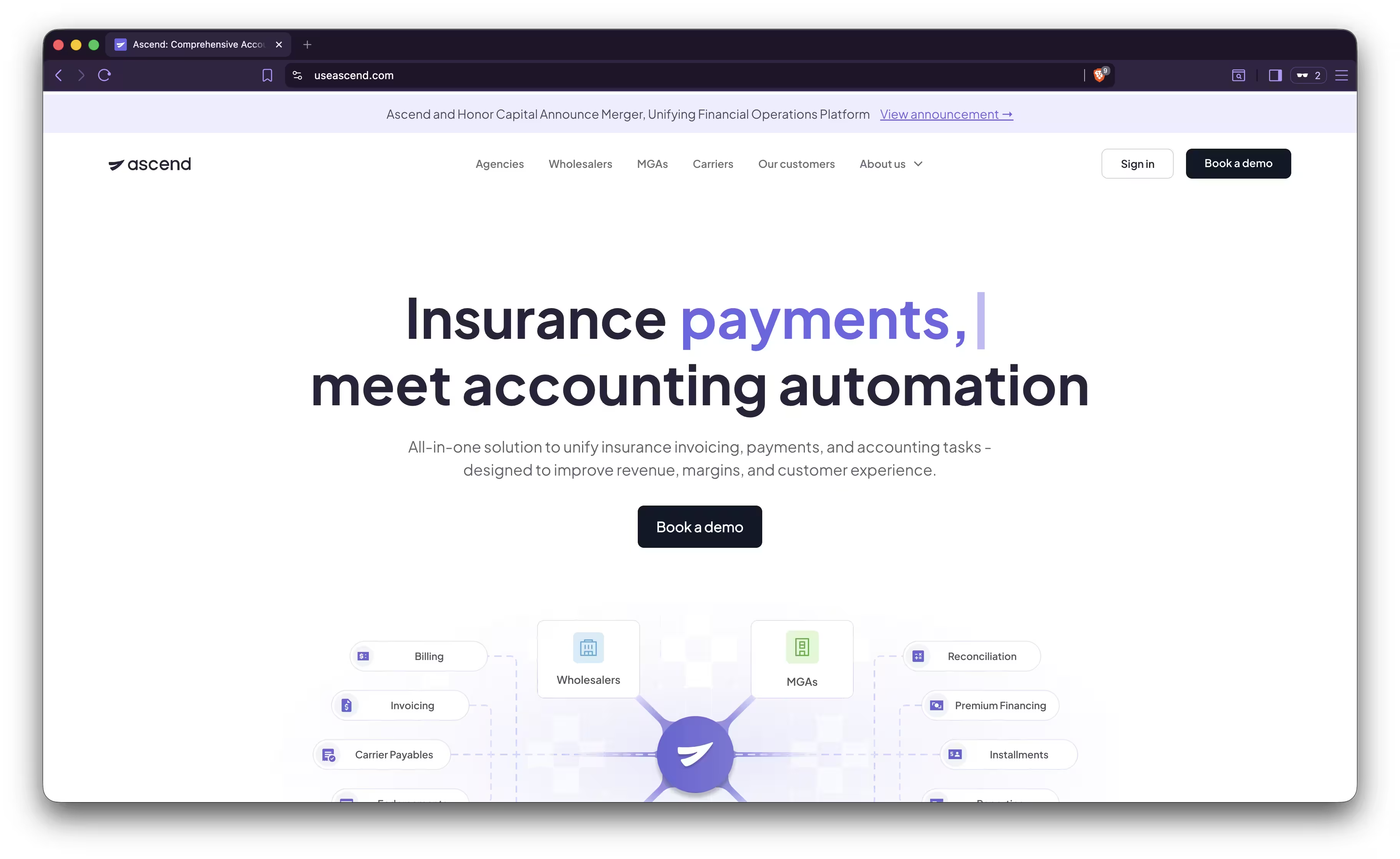
Ascend is an accounting-automation and payments platform built for insurance - premium financing, invoicing and collections, commission remittance, and cash reconciliation - with two-way AMS integrations. Founded in 2021, Ascend reports raising $285M+ in funding.
Best for: retail agencies, wholesalers, MGAs, and carriers modernizing payments and premium financing.
Less of a fit for: buyers wanting transparent public pricing or a 30-day turnkey deployment, or anyone expecting it to answer the phone.
Pricing: Flat-rate pricing (contact for a quote).
Implementation: Up and running in under 4 weeks (per Ascend).
1. What is Ascend?
Ascend is an insurance payments and accounting-automation platform: premium financing with automated loan processing, invoicing and collections, commission remittance and carrier payables, and cash reconciliation, with two-way AMS integrations. It serves retail agencies, wholesalers, MGAs, and carriers. It’s a finance product - the only place it touches reception is the billing inquiry.
2. Who uses Ascend?
Ascend’s public materials describe an insurance buyer across agencies, wholesalers, MGAs, and carriers that want to modernize financial operations. Ascend reports serving 13,000+ insurance businesses. The typical user’s pain is manual billing, collections, and reconciliation - not the front desk.
3. How much does Ascend cost?
Ascend uses flat-rate pricing quoted on request rather than a public rate card. For an agency, that means a sales conversation to scope cost, and the spend covers payments and financing automation - not phone answering. The billing call that customers still make is a separate need an AI receptionist handles.
4. Key features
- Premium financing with automated loan processing
- Invoicing and collections automation
- Commission remittance and carrier payables
- Cash application and reconciliation
- Pay-in-full, installments, and split payments
- Two-way AMS integrations (AMS360, HawkSoft, Applied Epic, and others)
- SOC 2 Type II, ISO 27001, PCI compliant (per Ascend)
Communication channels: N/A - payment platform.
Conversation design: N/A - payment platform.
Insurance terminology handling: insurance-specific payment workflows.
Feature breakdown
5. How long does it take to implement Ascend?
Ascend reports going live in under four weeks, with integration setup to connect payments and your AMS. That’s reasonable for a financial-operations platform. If you’re adding an AI receptionist alongside it, that layer deploys separately and handles the billing calls Ascend’s automation generates.
6. What does Ascend integrate with?
Ascend offers two-way integrations with AMS360, HawkSoft, Applied Epic, Veruna, Momentum, and NowCerts, so payments sync to the book. It’s a finance tool, so it pairs naturally with an AI receptionist that handles billing inquiries by phone and logs them to the AMS.
7. Compliance and security
Ascend reports SOC 2 Type II, ISO 27001, and PCI compliance - appropriate for a platform moving premium dollars. PCI in particular matters for card payments; a SOC 2 Type II attestation speaks to ongoing controls, which is the standard to look for in a payments vendor.
8. Pros and cons for insurance buyers
Pros:
- End-to-end insurance billing: financing, installments, collections, and reconciliation in one platform.
- Two-way AMS integrations keep payments synced to the book.
- Automated financing and reminders can reduce cancellations.
- Strong payments compliance (SOC 2 Type II, ISO 27001, PCI).
Cons / where it may fall short for retail P&C agencies:
- Custom pricing and a multi-week deployment.
- It’s finance, not reception - it doesn’t answer the phone; the billing call still needs handling.
9. When Ascend fits an insurance buyer
Ascend fits an agency or larger operation that wants to modernize premium financing and billing - automating collections, reconciliation, and carrier payables. If manual finance work is your constraint, it’s a strong, insurance-specific option.
10. How Ascend and an AI receptionist divide the work
Ascend runs the money; an AI receptionist runs the billing calls. Sonant answers “I have a question about my bill” 24/7, handles or routes it, and logs it to the AMS, while Ascend processes the payment behind it. Different jobs, same client. See Sonant and Ascend and reducing manual workload across the agency.
Verdict
Ascend is a strong choice for agencies modernizing premium financing and billing operations. It isn’t a reception tool and doesn’t compete with one - the only touchpoint is the billing call. Pair it with an AI receptionist that fields those calls 24/7 and logs them to the AMS, while Ascend runs the financing and reconciliation underneath.
Related reading
- Sonant™ vs Ascend alternative
- Best Voice AI Insurance Vendors
- AI Receptionists for Insurance Agencies: Buyer’s Guide
- 100 AI Tools for Insurance Agencies (2026 Guide)
Disclaimer
Ascend is a trademark of its respective owner. Sonant™ is not affiliated with or endorsed by the owner of Ascend. This review was created using publicly available information about Ascend and Ascend’s public materials. We encourage readers to visit the official Ascend website for the most current product information. Last verified: 2026-05-25.






.svg)

.svg)


