.svg)


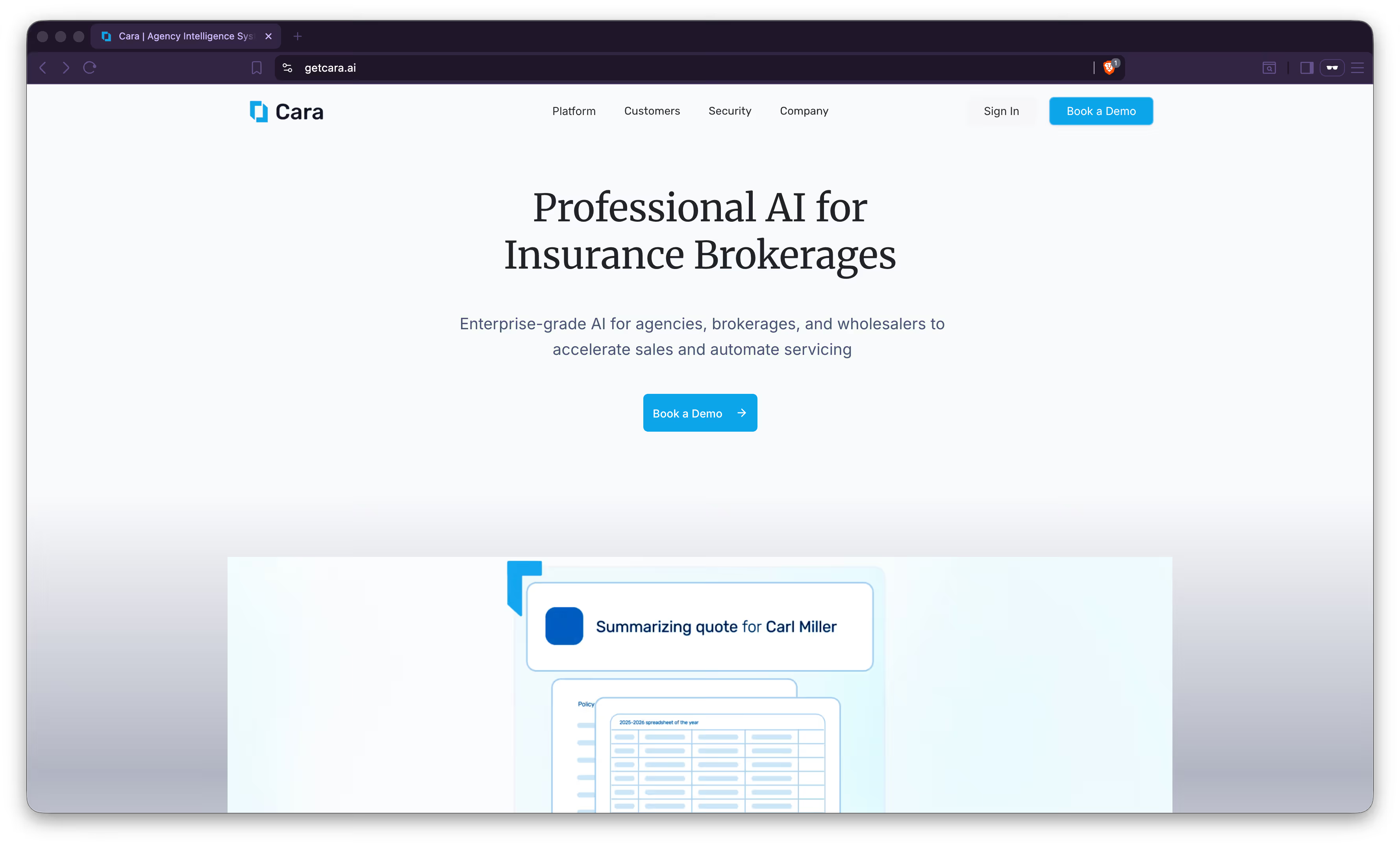
Cara is an AI CSR platform focused on back-office document work, and for a P&C agency the honest verdict is that it’s adjacent to - not the same as - a voice-first AI receptionist: its strength is paperwork (ACORD forms, certificates, policy comparison), not the phone. This review covers what Cara does, what it costs, what it integrates with, and where it fits. The short version: Cara automates document servicing, while an AI receptionist automates inbound calls - different bottlenecks, and some agencies have both.
All facts below are sourced from Cara’s public materials and publicly available information.
Key takeaways
- What it is: AI CSR platform for back-office document automation (ACORD forms, COIs, policy comparison; with a voice module).
- Best for: small commercial agencies needing document and COI automation.
- vs Sonant: adjacent / partly complementary - Cara is document-first; Sonant is voice-first.
- Watch-outs: the voice module is secondary; SOC 2 not listed in public materials.
- Bottom line: if paperwork is the bottleneck, Cara fits; if it’s the phone, that’s a voice-first job.
TL;DR
Cara is an AI CSR platform focused on back-office document automation for insurance agencies - ACORD form filling, certificate (COI) generation and delivery, policy comparison, and email servicing - with a HawkSoft partnership and claimed generic AMS/CRM compatibility.
Best for: small commercial agencies needing document automation and COI workflows.
Less of a fit for: agencies whose primary bottleneck is the phone - Cara’s core strength is documents, not inbound calls.
Pricing: Modular; per-feature activation.
Implementation: Self-service setup; hours to go live.
1. What is Cara?
Cara is an AI CSR platform focused on back-office document work - ACORD form filling, certificate generation and delivery, policy comparison, and email servicing - built to take paperwork off small commercial teams. Cara has a HawkSoft partnership and claims generic AMS/CRM compatibility, and it offers a voice module, though document automation is the core.
2. Who uses Cara?
Cara’s public materials describe independent agencies and small commercial-focused brokerages that need to automate paperwork-heavy servicing. The typical user is a team drowning in ACORD forms and COI requests, not one whose primary pain is missed phone calls - which is the distinction that decides fit.
3. How much does Cara cost?
Cara uses modular, per-feature pricing - you activate the capabilities you need rather than buying a fixed bundle. Exact rates aren’t publicly detailed. For an agency, the modular approach can keep costs aligned to use, but you’ll need a conversation to scope what the document, email, and voice modules cost together.
4. Key features
- ACORD form automation
- COI generation and email delivery
- Policy comparison (identifying coverage differences)
- Email handling and servicing workflows
- Voice module available (not the primary focus)
- Modular feature selection
- Self-service setup
Communication channels: phone, email, web chat, client portal.
Conversation design: AI CSR with modular capabilities for documents, email, and voice.
Insurance terminology handling: insurance-trained for servicing workflows.
Feature breakdown
5. How long does it take to implement Cara?
Cara is self-service and reports going live in hours, reflecting its document-automation focus and modular activation. That’s fast for back-office tooling. If your goal is phone coverage rather than paperwork, weigh that against a voice-first tool built specifically to answer and document calls.
6. What does Cara integrate with?
Cara has a HawkSoft partnership and claims generic AMS/CRM compatibility, though it doesn’t publish a detailed native-connector list. Because its strength is documents, it can complement a voice-first layer: an AI receptionist handles inbound calls and writes them to the AMS while Cara handles the paperwork.
7. Compliance and security
Cara reports end-to-end encryption; SOC 2 is not listed in its public materials. For an agency handling client documents and COIs, that’s worth confirming directly - a published SOC 2 report is the standard to ask for when a tool processes policy data.
8. Pros and cons for insurance buyers
Pros:
- Real paperwork automation - ACORD forms and COI generation are genuine CSR time-sinks.
- Policy comparison flags coverage differences automatically.
- Modular - activate only what you need.
- Fast, self-service setup.
Cons / where it may fall short for retail P&C agencies:
- Document-first - the voice module is secondary, so it isn’t primarily an inbound phone tool.
- SOC 2 isn’t listed publicly; confirm security before handling sensitive documents.
9. When Cara fits an insurance buyer
Cara fits a small commercial agency buried in document servicing - ACORD forms, COIs, policy comparison - that wants to automate that workload. If paperwork is the constraint, Cara is purpose-built for it.
10. Where Cara and an AI receptionist differ
Cara automates the paperwork side of servicing; an AI receptionist automates the phone side. If your team is buried in forms and COIs, Cara fits. If the bottleneck is missed and after-hours calls, that’s a voice-first job - Cara offers a voice module, but it’s not the core. Many agencies run both: Cara on documents, Sonant on the phone. See Sonant vs Cara and the certificate-of-insurance guide.
Verdict
Cara is a strong fit for small commercial agencies drowning in document servicing - ACORD forms, COIs, policy comparison. Its voice module is secondary, so agencies whose real constraint is phone volume (missed calls, after-hours, overloaded CSRs) should weigh a voice-first tool for that job. Many agencies could run both: Cara on the paperwork, an AI receptionist on the phone.
Related reading
- Sonant™ vs Cara alternative
- Best Voice AI Insurance Vendors
- FNOL Automation Guide
- 100 AI Tools for Insurance Agencies (2026 Guide)
Disclaimer
Cara is a trademark of its respective owner. Sonant™ is not affiliated with or endorsed by the owner of Cara. This review was created using publicly available information about Cara and Cara’s public materials. We encourage readers to visit the official Cara website for the most current product information. Last verified: 2026-06-15.





.svg)

.svg)
