.svg)


Coverflow is an AI policy-processing platform for brokers, and for a P&C agency the honest verdict is that it’s adjacent to - not the same as - an AI receptionist: it automates the document side of policies, not the phone. This review covers what Coverflow does, what it costs, what it integrates with, and where it fits. The short version: Coverflow ingests policy documents and generates proposals, while an AI receptionist answers and documents inbound calls - different bottlenecks, and some agencies have both.
All facts below are sourced from Coverflow’s public materials and publicly available information.
Key takeaways
- What it is: AI policy-processing automation - document ingestion, comparison, and proposal generation.
- Best for: brokers automating policy checking, comparison, and proposal workflows.
- vs Sonant: adjacent / complementary - document-first AI vs voice-first AI.
- Watch-outs: custom pricing; it’s documents, not the phone; compliance not publicly listed.
- Bottom line: if policy paperwork is the bottleneck, Coverflow fits; if it’s the phone, that’s a voice-first job.
TL;DR
Coverflow is an AI platform that automates policy processing for insurance brokers - ingesting policy documents, extracting data, flagging discrepancies, and generating proposals. Coverflow says it cuts manual processing by up to 90% and generates proposals in under 20 seconds.
Best for: insurance brokers needing to automate policy checking, comparison, and proposal workflows.
Less of a fit for: buyers wanting transparent public pricing, or anyone whose bottleneck is the phone.
Pricing: Not publicly listed (contact sales).
Implementation: Self-service setup.
1. What is Coverflow?
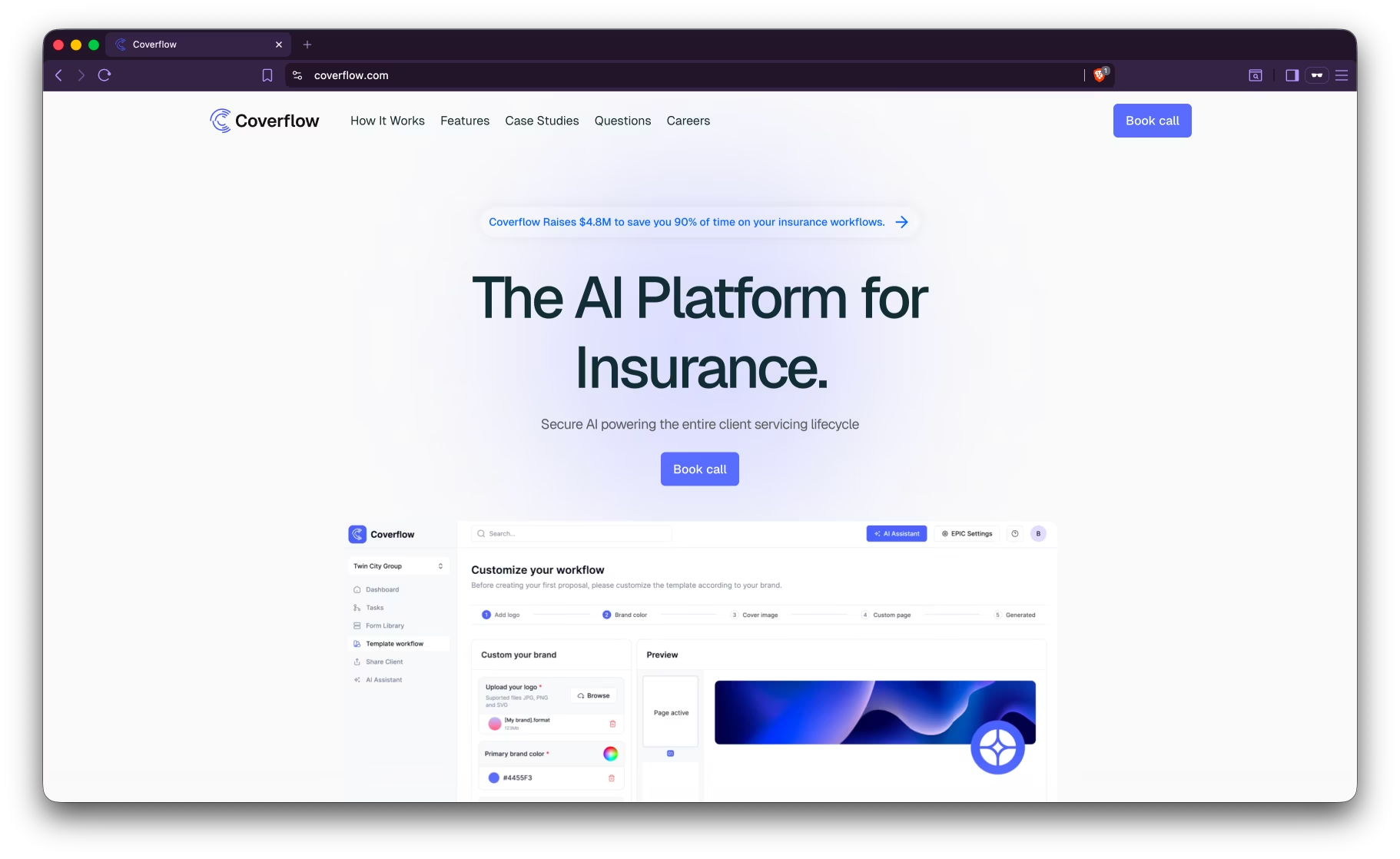
Coverflow is an AI platform that automates policy processing for brokers - it ingests policy documents, extracts the key data, flags discrepancies, and generates proposals. Coverflow says this cuts manual processing by up to 90%. It integrates with AMS360 and Applied Epic to push updates back. It’s a document-automation tool; it doesn’t answer the phone.
2. Who uses Coverflow?
Coverflow’s public materials describe insurance brokers and agencies that want to automate policy checking, comparison, and proposal generation. The typical user is drowning in policy documents and renewals - not necessarily in missed calls, which is the distinction that decides whether Coverflow or a voice-first tool is the right fix.
3. How much does Coverflow cost?
Coverflow’s pricing is not publicly listed - you contact sales. For an agency that prefers transparency up front, that’s a hurdle. The cost covers document automation; capturing and documenting inbound calls is a separate need that a voice-first AI receptionist fills.
4. Key features
- Automated policy type identification and organization
- Automated policy comparison (coverage, exclusions, schedules)
- Proposal generation in under 20 seconds
- Discrepancy flagging and analysis
- AMS integration (AMS360, Applied Epic)
- Reported up to 90% reduction in manual processing
Communication channels: document processing (no voice/phone).
Conversation design: AI document analysis and extraction.
Insurance terminology handling: insurance-specific (policy documents, coverages).
Feature breakdown
5. How long does it take to implement Coverflow?
Coverflow reports self-service setup, reflecting its document-automation focus - connect your AMS, point it at your documents, and it processes policies and generates proposals. That’s quick for back-office tooling. If your goal is phone coverage rather than paperwork, weigh that against a voice-first tool built to answer and document calls.
6. What does Coverflow integrate with?
Coverflow integrates with AMS360 and Applied Epic to push policy updates back. Because its strength is documents, it can complement a voice-first layer: an AI receptionist handles inbound calls and writes them to the AMS while Coverflow handles policy processing and proposals.
7. Compliance and security
Coverflow’s compliance certifications aren’t fully detailed publicly. For a platform ingesting policy documents and client data, confirm its security posture directly and ask whether a SOC 2 report is available before processing sensitive files.
8. Pros and cons for insurance buyers
Pros:
- Fast policy checking - automated comparison across coverage, exclusions, and schedules.
- Proposal generation in seconds rather than hours.
- Discrepancy flagging catches coverage gaps.
- AMS write-back to AMS360 and Applied Epic.
Cons / where it may fall short for retail P&C agencies:
- No public pricing - every quote requires a sales conversation.
- Document-side only - it doesn’t answer inbound calls or capture leads; compliance not publicly listed.
9. When Coverflow fits an insurance buyer
Coverflow fits a broker or agency buried in policy checking and proposals that wants to automate that workload. If document and renewal volume is your constraint, it’s a purpose-built option - with answering handled separately.
10. Where Coverflow and an AI receptionist differ
Coverflow automates the paperwork side of policies; an AI receptionist automates the phone side. If your constraint is policy-checking and proposal volume, Coverflow fits. If it’s missed and after-hours calls, that’s a voice-first job. Many agencies run both. See Sonant vs Coverflow and reducing manual workload.
Verdict
Coverflow is a strong document-automation tool for brokers buried in policy checking and proposals. It isn’t a phone tool and doesn’t compete with one - different bottleneck. Agencies whose real constraint is inbound call volume should pair it with a voice-first AI receptionist; many would run both.
Related reading
- Sonant™ vs Coverflow alternative
- Best Voice AI Insurance Vendors
- AI Receptionists for Insurance Agencies: Buyer’s Guide
- 100 AI Tools for Insurance Agencies (2026 Guide)
Disclaimer
Coverflow is a trademark of its respective owner. Sonant™ is not affiliated with or endorsed by the owner of Coverflow. This review was created using publicly available information about Coverflow and Coverflow’s public materials. We encourage readers to visit the official Coverflow website for the most current product information. Last verified: 2026-06-15.






.svg)

.svg)


