.svg)

If your P&C (property and casualty) agency runs a call center handling inbound servicing, outbound renewals, and claims intake, the automation question in 2026 is not whether. It is which 30–60% of calls to automate first, in what order, and on what platform. This piece is for operations leaders running 15+ seat insurance call centers and the sequencing they should follow. Most phone automation fails when it treats every caller the same, which is why call center automation requires more thought than front-desk receptionist deployments.
Key Takeaways
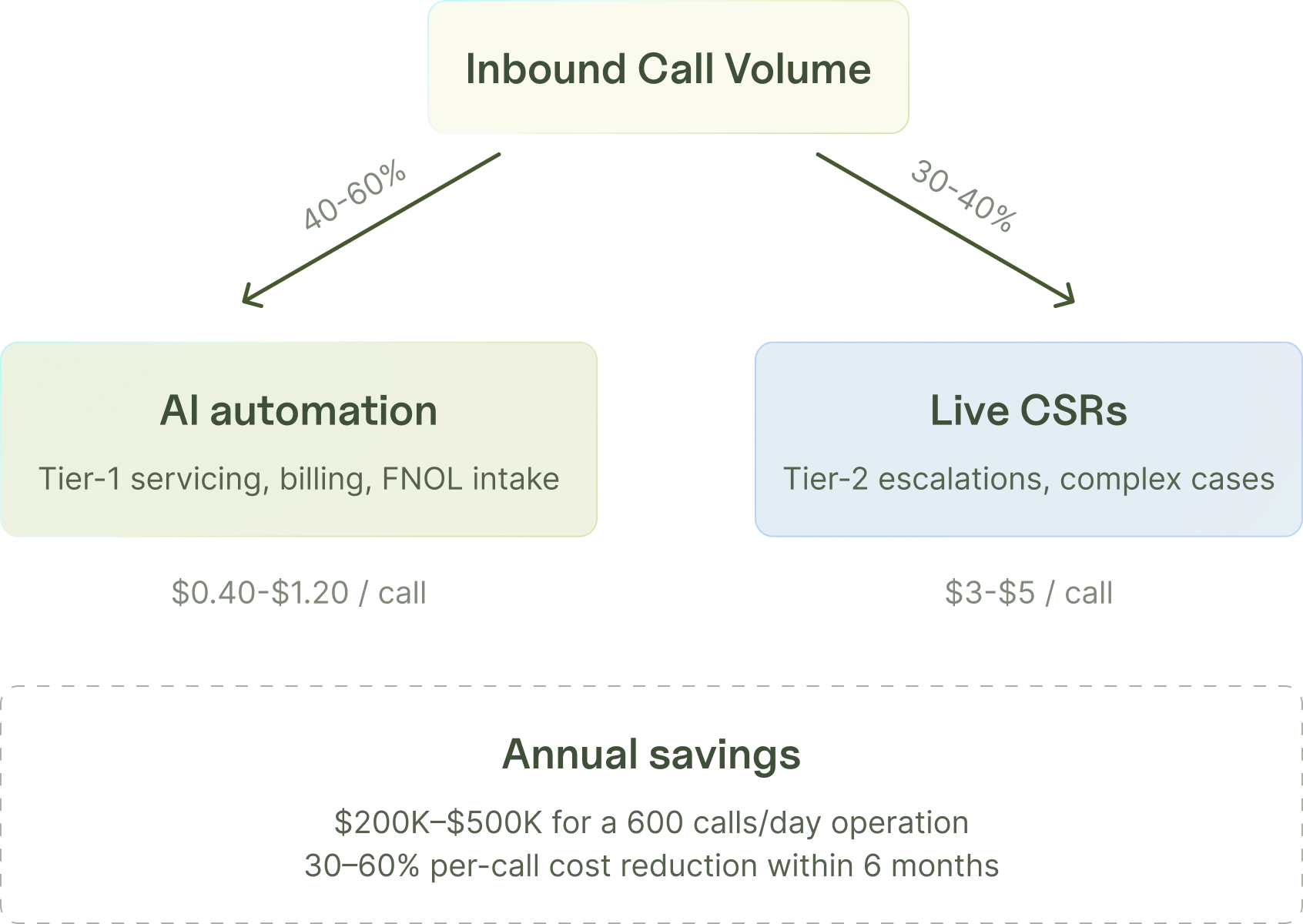
- Call center automation goes deeper than receptionist automation: it absorbs 40–60% of total call volume into AI
- Inbound automation is mature; outbound becomes mature 60–90 days after inbound is stable
- Servicing inquiries (40–55% of volume) are the highest-priority automation target
- AMS (agency management system) write-back is non-negotiable for call centers
- The 6-month sequence delivers 30–60% per-call cost reduction
Why call center automation is different from receptionist automation
A receptionist deployment automates first-ring pickup at the front door. Call center automation goes deeper by automating tier-1 workflows that previously required live CSR (customer service rep) queues, with measurable impact on per-call cost, average handle time, and resolution rates. For a call center, the right strategy can absorb 40–60% of total call volume into AI workflows while live CSRs focus on tier-2 escalations.
Inbound vs outbound automation
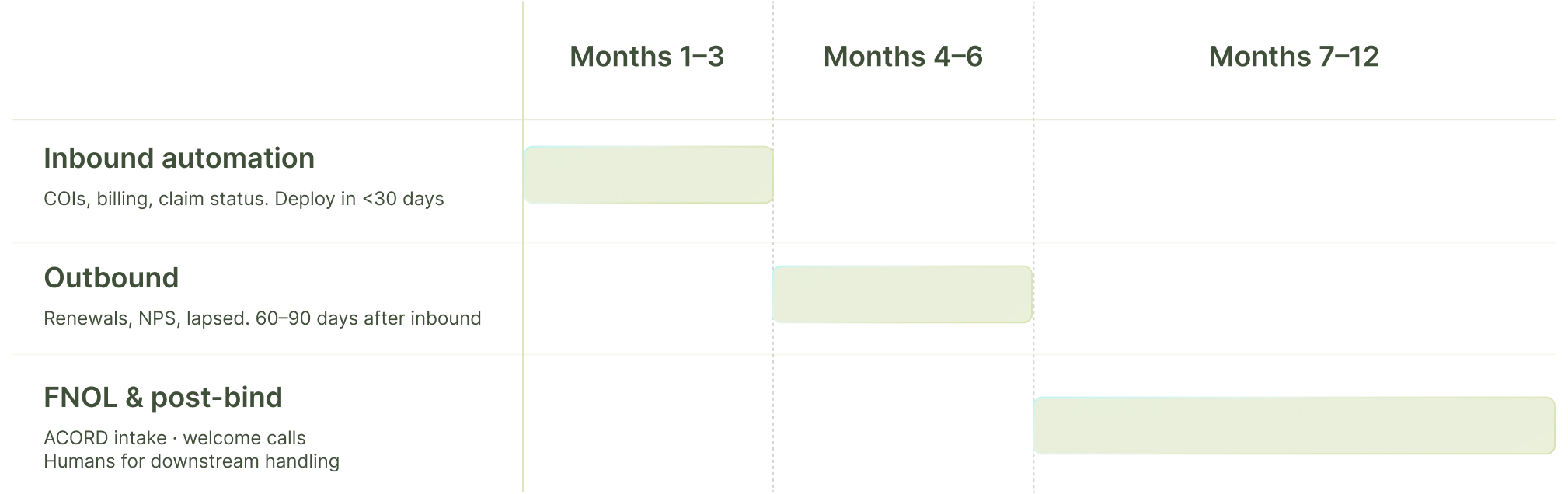
Inbound automation. Mature in 2026 for routine workflows. First-ring pickup, caller identification against AMS, routine servicing (COIs, billing, claim status), payment processing, scheduling. Insurance-native platforms deploy this in under 30 days.
Outbound automation. Also mature, but more politically sensitive. Renewal outreach, NPS (net promoter score) surveys, lapsed-policy recovery, post-bind welcome calls. Agencies typically deploy outbound 60–90 days after inbound is stable.
The Sonant Consumer AI Readiness Report confirms policyholder comfort with AI-handled inbound routine has crossed the mainstream threshold for the call types listed below.
Which call types automate well
Servicing inquiries (highest priority). 40–55% of inbound volume. COI (certificate of insurance) generation, billing questions and payment processing, claim status checks, policy detail confirmations, ID card requests, document delivery. All automatable end-to-end with AMS write-back.
Quote intake. Personal lines new business and standard commercial quote requests. Automatable for intake; producer handoff still required for complex quotes.
Renewal calls. 90/60/30 outbound sequence, confirmation calls, change capture. Fully automatable with appetite-aware routing.
FNOL (first notice of loss) intake. Loss detail capture, ACORD (industry data standard) form generation, carrier portal routing. Intake mature; downstream claim handling stays with humans.
Want to sequence the 6-month deployment? → Talk to Sonant
Which call types do not automate well
Empathy-heavy conversations. Claim denials, total losses, deaths in family, business closures. Keep humans.
Complex commercial servicing. Mid-term endorsements on large accounts, layered umbrella programs, custom coverage interpretations. Keep humans.
Caller escalations. When a policyholder is upset and demanding a manager. Route to a live escalation queue.
High-value account servicing. Top 10–20% of book by premium. The relationship value justifies live touch.
Which call center automation vendors fit retail agencies vs Fortune 500 carriers
Insurance-native AI receptionists. Sonant, Liberate (carriers), Cara. Native AMS write-back. Deploy in under 30 days. Right fit for retail.
Carrier-grade enterprise platforms. Cognigy, Floatbot, Genesys. Built for Fortune 500 carriers. Multi-month deployments. Wrong scale for retail.
Generic CCaaS (contact center as a service) with AI overlay. RingCentral, Five9, Talkdesk, Nice. Phone infrastructure with AI features. Insurance-specific workflows not the focus.
Workforce management platforms. Not call automation; they manage live CSR scheduling. Useful adjacent investment.
Why AMS write-back is the deal-breaker for call centers
The make-or-break decision. For call center automation specifically, AMS write-back is non-negotiable. Without it, CSRs spend 30–60 minutes per day transcribing notes, which eats the AI savings. For agencies running on EZLynx, Applied Epic, HawkSoft, AMS360, QQCatalyst, or Momentum, prioritize vendors with native connectors.
The 90-day pilot that proves the deployment without breaking the call flow
Week 1 – baseline measurement. First-ring pickup rate, average handle time, AMS note completion rate, per-call cost, Spanish-speaker abandonment rate.
Week 2 – vendor selection. 5-question demo framework (AMS write-back, non-renewal handling, Spanish, cost, case study).
Weeks 3–4 – pilot on overflow. Route 15–20% of calls spilling to voicemail or long wait times to AI. Do not touch primary flow.
Days 30–60 – expand to off-hours and weekends. 24/7 coverage with AI absorbing off-hours volume.
Days 60–90 – move tier-1 servicing to AI. COIs, billing, claim status. Measure impact.
Days 90–180 – add outbound automation. Renewal outreach, NPS, lapsed-policy recovery.
The 3 metrics that confirm call center automation worked
Per-call cost reduction. Target: 30–60% reduction within 6 months.
Average handle time. Target: stable or slightly down on live calls (because AI absorbs the easy ones, leaving complex for live).
Customer satisfaction. Target: NPS up 5–10 points within 12 months from faster first-ring pickup.
How Sonant runs call center automation at retail agencies
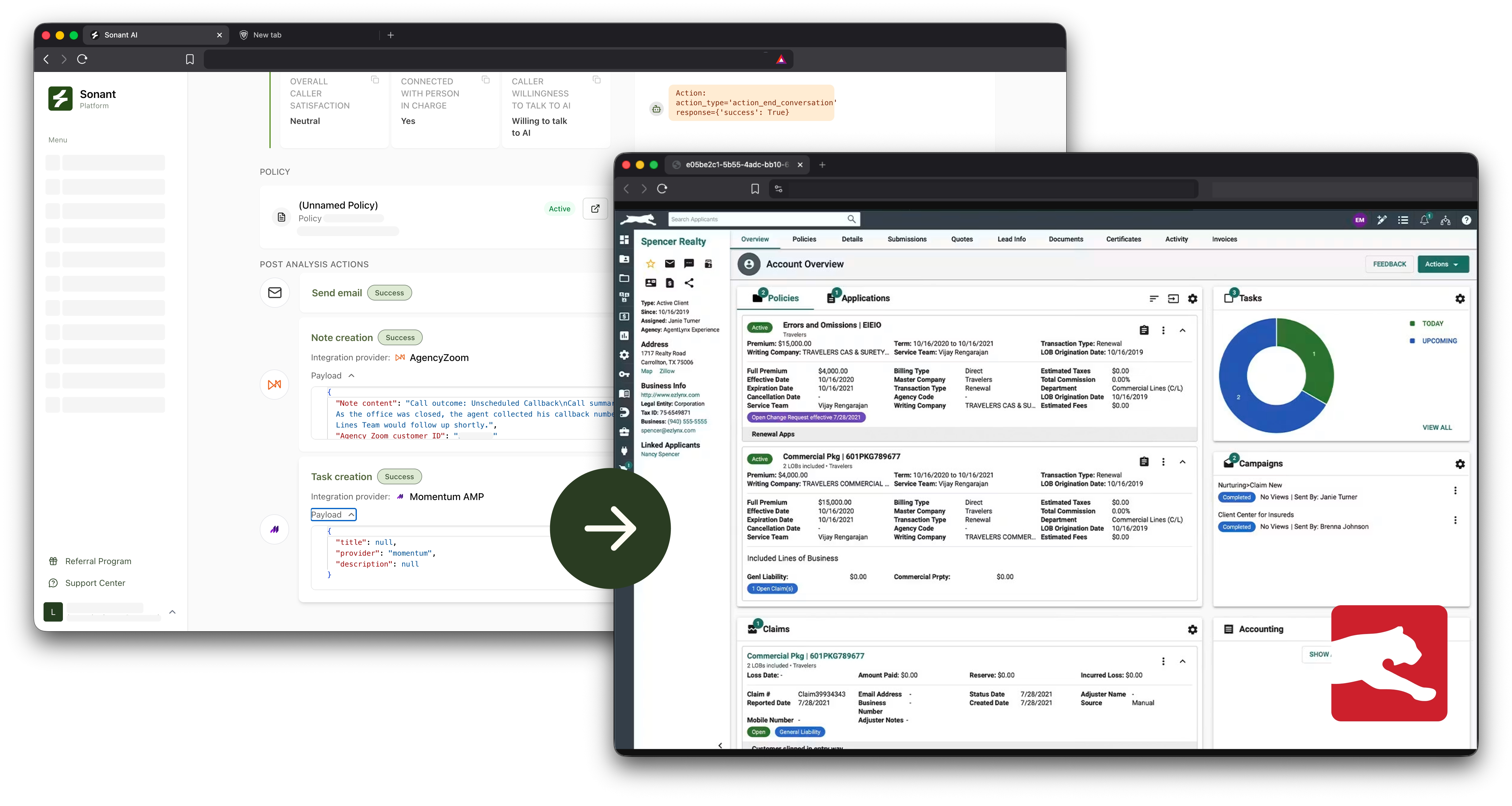
Sonant handles the inbound and outbound tier-1 workflows that previously required live CSR queues. Native AMS write-back to EZLynx, Applied Epic, HawkSoft, AMS360, QQCatalyst, Momentum, AgencyZoom, and Zywave. The workflow: call comes in → Sonant answers → captures intent → resolves routine OR escalates complex → writes the AMS note within 60 seconds. For 15+ seat call centers, Sonant typically absorbs 40–60% of call volume within 6 months of deployment.
The 6-month sequence for a 15-seat insurance call center
Start with inbound servicing automation (40–55% of volume) in months 1–3. Layer outbound renewal automation in months 4–6. Add FNOL and post-bind in months 7–12. Keep live coverage for empathy-heavy work, complex servicing, and high-value accounts. Most call centers running this sequence cut per-call cost 30–60% within 6 months.
Conclusion
Insurance call center automation in 2026 isn't a binary decision - it's a sequencing problem. Start with inbound servicing automation (the routine 40–55% of volume). Layer outbound renewal automation in months 4–6. Add FNOL and post-bind in months 7–12. Keep live coverage for empathy-heavy work, complex servicing, and high-value accounts. Most call centers running this sequence cut per-call cost 30–60% within 6 months.
Ready to sequence call center automation at your agency? Book a Sonant™ demo →






.svg)

.svg)


