.svg)


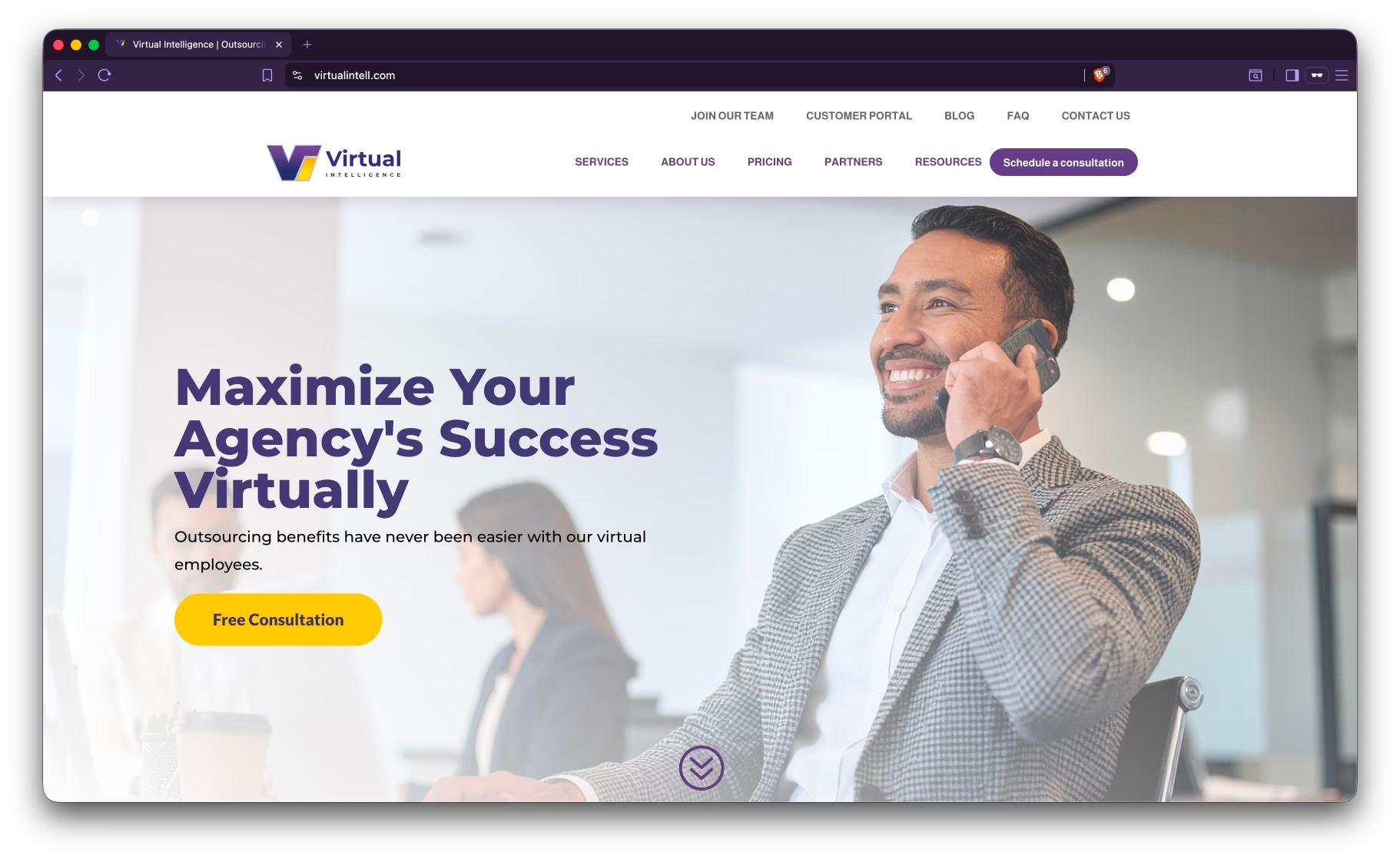
Virtual Intelligence places dedicated, insurance-experienced virtual employees with US agencies, and for a P&C agency the honest verdict is that it's a genuine alternative for daytime servicing and admin - but business-hours, per-seat human staff, not 24/7 flat-cost automation. This review covers what Virtual Intelligence offers, how it's priced, what it integrates with, and where it fits. The short version: Virtual Intelligence gives you experienced people for judgment work, while an AI receptionist answers every call 24/7 and documents it.
All facts below are sourced from Virtual Intelligence's public materials and publicly available information.
Key takeaways
- What it is: dedicated insurance virtual-employee staffing - full-time VEs with US insurance experience, bilingual options.
- Best for: agencies wanting experienced human staff for daytime servicing and admin.
- vs Sonant: alternative - dedicated human VEs are a competing way to cover calls and admin: human labor vs AI.
- Watch-outs: business hours, per-seat, one call at a time; no automatic AMS write-back; no formal security certs listed.
- Bottom line: great for judgment work with people; a different model from 24/7 flat-cost AI answering.
TL;DR
Virtual Intelligence places dedicated, full-time virtual employees with US insurance agencies - back-office VEs from the Philippines and bilingual client-facing VEs from Colombia, each with at least two years of US insurance experience. They work within your agency's schedule.
Best for: agencies wanting dedicated human staff with insurance experience for servicing and admin.
Less of a fit for: agencies that need 24/7 phone coverage without adding seats, or automatic AMS documentation.
Pricing: Per-seat (consultation-based; not publicly listed).
Implementation: Consultation and onboarding required.
1. What is Virtual Intelligence?
Virtual Intelligence places dedicated, full-time virtual employees with US insurance agencies - back-office VEs from the Philippines and bilingual client-facing VEs from Colombia, each with at least two years of US insurance experience. They work within your agency's schedule. It's a dedicated-staff model, not software: VEs handle renewals, policy management, phone work, and AMS data entry - during business hours, scaling with headcount, with no native AMS write-back of their own.
2. Who uses Virtual Intelligence?
Virtual Intelligence's public materials describe independent insurance agencies that want dedicated, experienced people rather than temporary VAs. The typical buyer needs reliable daytime coverage for servicing, renewals, and admin - and treats 24/7 phone coverage as a separate need.
3. How much does Virtual Intelligence cost?
Virtual Intelligence uses per-seat pricing for dedicated virtual employees (consultation-based - not publicly listed). Cost rises with each added VE. The price covers experienced human staff during business hours; 24/7 phone coverage with automatic documentation is a separate need an AI receptionist fills without per-seat fees.
4. Key features
- Dedicated full-time virtual employees (not temporary VAs)
- Back-office VEs from the Philippines
- Bilingual client-facing VEs from Colombia
- Minimum 2 years US insurance experience
- Renewal processing and policy management
- Phone-call management (inbound/outbound)
- Quote information gathering and AMS/CRM data entry
Communication channels: phone, email (via human VEs).
Conversation design: human virtual employees.
Insurance terminology handling: minimum 2 years US insurance experience required.
Feature breakdown
5. How long does it take to implement Virtual Intelligence?
Virtual Intelligence requires a consultation and onboarding to match and train dedicated VEs to your agency. As a staffing engagement, ramp-up reflects hiring and training a person, not switching on software. The phone coverage it provides is business-hours human handling, not 24/7 automated answering.
6. What does Virtual Intelligence integrate with?
Virtual Intelligence's VEs work inside whatever AMS/CRM you run (specific platforms not listed) - they're people operating your systems, not a software integration. For the phone specifically, an AI receptionist that answers and writes calls into the AMS automatically is the 24/7 complement to daytime VEs.
7. Compliance and security
Virtual Intelligence cites internal security measures, with no formal certifications listed. Because VEs access your systems and client data, ask directly about controls and whether a SOC 2 report exists. For staffing-cost context, the BLS publishes neutral wage data.
8. Pros and cons for insurance buyers
Pros:
- Dedicated, experienced humans - full-time VEs with 2+ years US insurance experience.
- Bilingual client-facing - Spanish/English via the Colombia team.
- Handles judgment work - renewals, policy management, quoting support.
- Works inside your existing AMS/CRM.
Cons / where it may fall short for retail P&C agencies:
- Business hours, per-seat - not 24/7, scales with headcount.
- One call at a time, no automatic AMS documentation, and no formal security certs listed.
9. When Virtual Intelligence fits an insurance buyer
Virtual Intelligence fits an agency that wants dedicated, insurance-experienced people for daytime servicing, renewals, and admin - work that benefits from human judgment. If your constraint is back-office capacity during business hours, it's a strong, insurance-specific option.
10. Virtual Intelligence vs an AI receptionist
The difference is on the phone: VEs answer during business hours, one call at a time, at per-seat cost, with no automatic AMS documentation. Agencies losing after-hours and overflow calls often pair VEs (back office) with AI (the phone). Sonant™ AI answers every call 24/7 at flat cost and writes it to your AMS. See Sonant vs Virtual Intelligence and answering service vs virtual assistant.
Verdict
Virtual Intelligence is a strong fit when you want dedicated, insurance-experienced people for daytime servicing and admin. The difference from an AI receptionist is on the phone: VEs answer during business hours, one call at a time, at per-seat cost, with no automatic AMS documentation. Agencies losing after-hours and overflow calls often pair VEs (back office) with AI (the phone).
Related reading
- Sonant™ vs Virtual Intelligence alternative
- Best Voice AI Insurance Vendors
- AI Receptionists for Insurance Agencies: Buyer’s Guide
- 100 AI Tools for Insurance Agencies (2026 Guide)
Disclaimer
Virtual Intelligence is a trademark of its respective owner. Sonant™ is not affiliated with or endorsed by the owner of Virtual Intelligence. This review was created using publicly available information about Virtual Intelligence and Virtual Intelligence's public materials. We encourage readers to visit the official Virtual Intelligence website for the most current product information. Last verified: 2026-06-15.






.svg)


.svg)


