.svg)

Agentic AI in insurance is no longer a 2027 concept at retail P&C (property and casualty) agencies. It is a set of six workflows running in production in 2026. Agentic AI differs from RPA (robotic process automation) and from rules-based workflow automation: it completes tasks end-to-end, including handling unexpected inputs that would break a scripted bot. This piece is the six workflows agencies are actually running, the maturity of each, and the deployment sequence operations leaders should follow. A missed call is not just a missed conversation; it can be a missed quote, renewal, claim update, or service request – and agentic AI is what closes the gap when scripts cannot.
Key Takeaways
- Agentic AI completes tasks end-to-end, where RPA breaks on unexpected inputs
- Four of six workflows are mature for production in 2026; two should wait
- Inbound voice + servicing is the highest-leverage starting point
- AMS (agency management system) write-back fidelity decides which agentic AI platforms work for retail agencies
- Complex underwriting should stay with humans through at least 2027
What agentic AI in insurance actually means
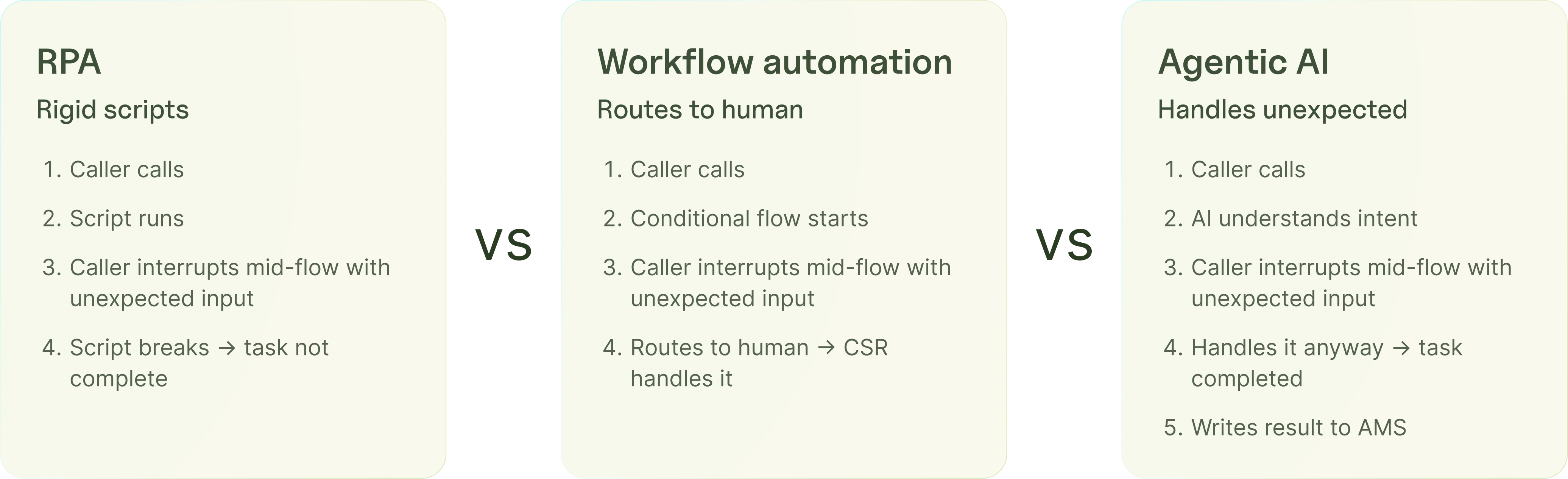
Agentic AI in insurance is an AI system that can complete a multi-step task without rigid scripting – handling caller interruptions, asking clarifying questions, routing to the right next step, and writing the result to the AMS. The distinction matters because three categories sit close to each other and behave very differently:
- RPA: scripted task automation. Breaks when anything changes.
- Workflow automation: conditional logic on coordinated steps. Routes to humans when things break.
- Agentic AI: handles the unexpected input and completes the task anyway.
Ask the vendor to handle a caller who interrupts mid-flow. RPA breaks. Workflow automation routes to a human. Agentic AI handles it. The Sonant Consumer AI Readiness Report shows policyholders consistently rate the agentic AI experience above rigid scripted bots when handling real service requests.
Workflow 1: Inbound quote intake (mature, deploy now)
A quote shopper calls. Agentic AI captures prospect details, runs them against carrier appetite, generates the initial quote in the rater, books the producer appointment, writes the AMS note. Maturity: high. Sonant, Liberate (carrier-scale), Cara all support it. Outcome: 30–40% of inbound new-business calls handled without producer time.
Workflow 2: Servicing requests for COIs, billing, claim status (mature, deploy now)
40–55% of inbound call volume at a typical commercial-heavy agency. COIs (certificates of insurance), billing questions, payment processing, claim status checks. Maturity: high. Outcome: 50% time saved on routine CSR (customer service rep) work.
Want to deploy workflows 1 and 2 together? → Talk to Sonant
Workflow 3: Renewal outbound 90/60/30-day sequence (mature, deploy now)
Most agencies run renewal outreach manually. Agentic AI runs the outbound, captures policyholder confirmations or changes, processes simple changes, routes complex cases to producers. Maturity: high. Outcome: 5–8 producer hours per week recovered, retention +2–4 points.
Workflow 4: FNOL triage (partial – automate intake, escalate the rest)
First Notice of Loss capture is mature. Agentic AI captures loss details, identifies coverage, fills the ACORD (industry data standard) form, routes to the carrier portal. Downstream claim handling stays with humans. Maturity: medium. Outcome: 60–70% of FNOLs captured automatically.
Workflow 5: Post-bind sequences (mature for personal, partial for commercial)
Welcome calls, NPS (net promoter score) collection, review requests, cross-sell triggers. Personal lines automation is mature. Commercial requires more thoughtful sequencing. Maturity: high for personal, medium for commercial. Outcome: retention +2–3 points on year-1 cohort, cross-sell hit rate +15–25%.
Workflow 6: Complex underwriting (do not automate yet)
Carrier appetite shifts, declination reasoning, mid-term endorsement underwriting, multi-state regulatory edge cases. Maturity: low. Outcome: keep underwriting judgment with experienced staff. Automate appetite flagging and routing only.
The deployment sequence
The order matters more than the speed.
How Sonant runs the agentic AI layer
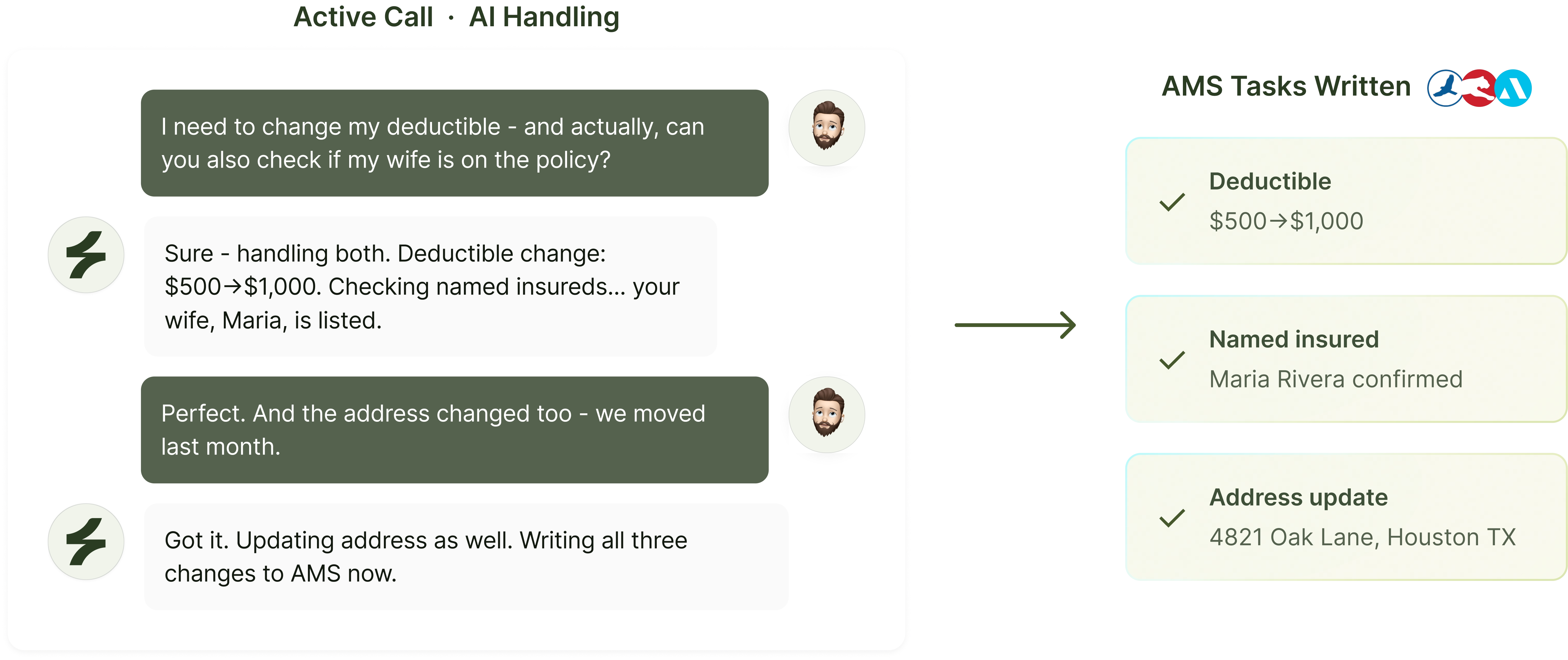
Sonant is the agentic AI layer between phones, AMS, and producers – purpose-built for retail P&C agencies. Native integrations cover EZLynx, Applied Epic, HawkSoft, AMS360, QQCatalyst, Momentum, AgencyZoom, and Zywave. The workflow Sonant runs for inbound quote intake: caller calls → Sonant answers → captures prospect details → runs appetite check → books producer appointment → writes AMS note within 60 seconds. The same agentic pattern runs across servicing, renewal outbound, FNOL intake, and post-bind. Output is the AMS-attached note, the calendared appointment, and the call summary delivered to the right staff member.
Which agentic AI workflow your agency should pilot first
Workflow 1 (inbound quote intake) and Workflow 2 (servicing requests) deploy together off a single platform in under 30 days. They cover 60–70% of the inbound call volume at a typical retail P&C agency. Pilot on overflow for 30 days, measure AMS write-back accuracy and response time, expand to primary flow by day 60. Workflows 3, 4, 5 layer in afterward. Skip Workflow 6 until at least 2027.
Conclusion
Agentic AI in insurance isn't a 2027 story - it's a 2026 deployment for any P&C agency willing to start with inbound voice and sequence the rest. The vendors are real, the case studies are public, and the math works at sub-12-month payback. The question isn't whether to adopt agentic AI. It's which workflow to automate first and which vendor can prove they're agentic and not just a chatbot wearing the label.
Ready to deploy workflows 1 and 2 in under 30 days? Book a Sonant™ demo →
Related reading
- AI in P&C Insurance: Everything You Need to Know
- Insurance Workflow Automation in 2026
- Orchestration vs. Automation in Insurance
- 100 AI Tools for Insurance Agencies (2026 Guide)






.svg)

.svg)


