.svg)

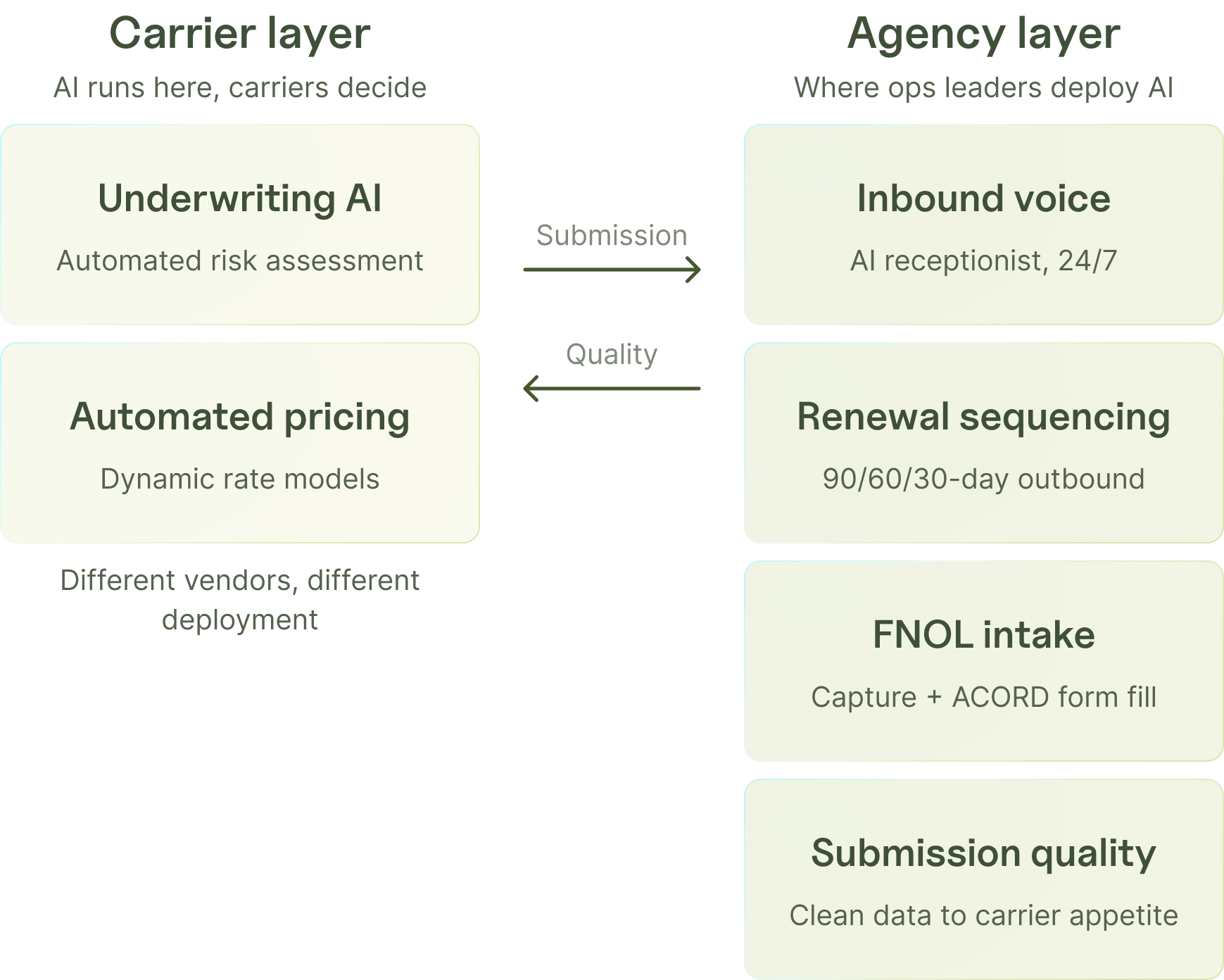
AI in P&C (property and casualty) insurance in 2026 sits at four layers at a retail agency: inbound call handling, renewal sequencing, FNOL (first notice of loss) intake, and submission quality at carrier appetite. The carrier layer (underwriting AI, automated pricing) is moving faster than the agency layer, but the agency layer is where operations leaders make the deployment decision. This guide explains what AI in P&C insurance actually means at the agency level, which workflows are mature, which AMS (agency management system) integrations matter, and the deployment sequence that pays back fastest.
Key Takeaways
- AI in P&C insurance at the agency layer means call handling, renewal sequencing, FNOL intake, and submission quality, not carrier-side underwriting
- AMS write-back fidelity is the single feature that decides ROI on any agency deployment
- The deployment sequence is inbound (months 1–3) → renewals (4–6) → FNOL + post-bind (7–12)
- Complex commercial servicing and high-value account work stay with humans
- Carrier-grade AI platforms (Cognigy, Floatbot, Liberate) are wrong scale for retail agencies
Where AI in P&C insurance actually sits in 2026
At the agency layer, AI shows up at the phone line first. Inbound call handling, after-hours coverage, Spanish at first ring, and routine servicing automation. At the carrier layer, AI shows up in underwriting and pricing. The two are different deployments with different vendors. Most retail agencies do not need to think about the carrier layer – they need to think about whether their submissions arrive clean.
The four agency-level use cases that are mature in 2026:
- Inbound voice: AI receptionist answering routine calls
- Renewal outbound: 90/60/30-day automated sequence
- FNOL intake: capture, ACORD (industry data standard) form fill, carrier portal routing
- Post-bind sequences: welcome calls, NPS (net promoter score), cross-sell triggers
The two that should wait: complex underwriting (carrier-side AI does this; agencies should not), and complex commercial servicing on bespoke accounts.
The Sonant Consumer AI Readiness Report confirms policyholders increasingly expect AI-handled service across exactly these P&C workflows.
Why AMS write-back is the make-or-break feature
The AMS is the durable system. AI vendors come and go. The integration is the critical decision. For agencies running on EZLynx, Applied Epic, HawkSoft, AMS360, QQCatalyst, Momentum, AgencyZoom, or Zywave, native write-back means the call note posts within 60 seconds of the call ending. Middleware (Zapier, custom API) breaks every time the AMS releases an update, and the CSR (customer service rep) team ends up doing manual transcription, eating the AI savings.
Want to see live AMS write-back in your platform? → Talk to Sonant
How AI in P&C insurance changes the agency cost structure
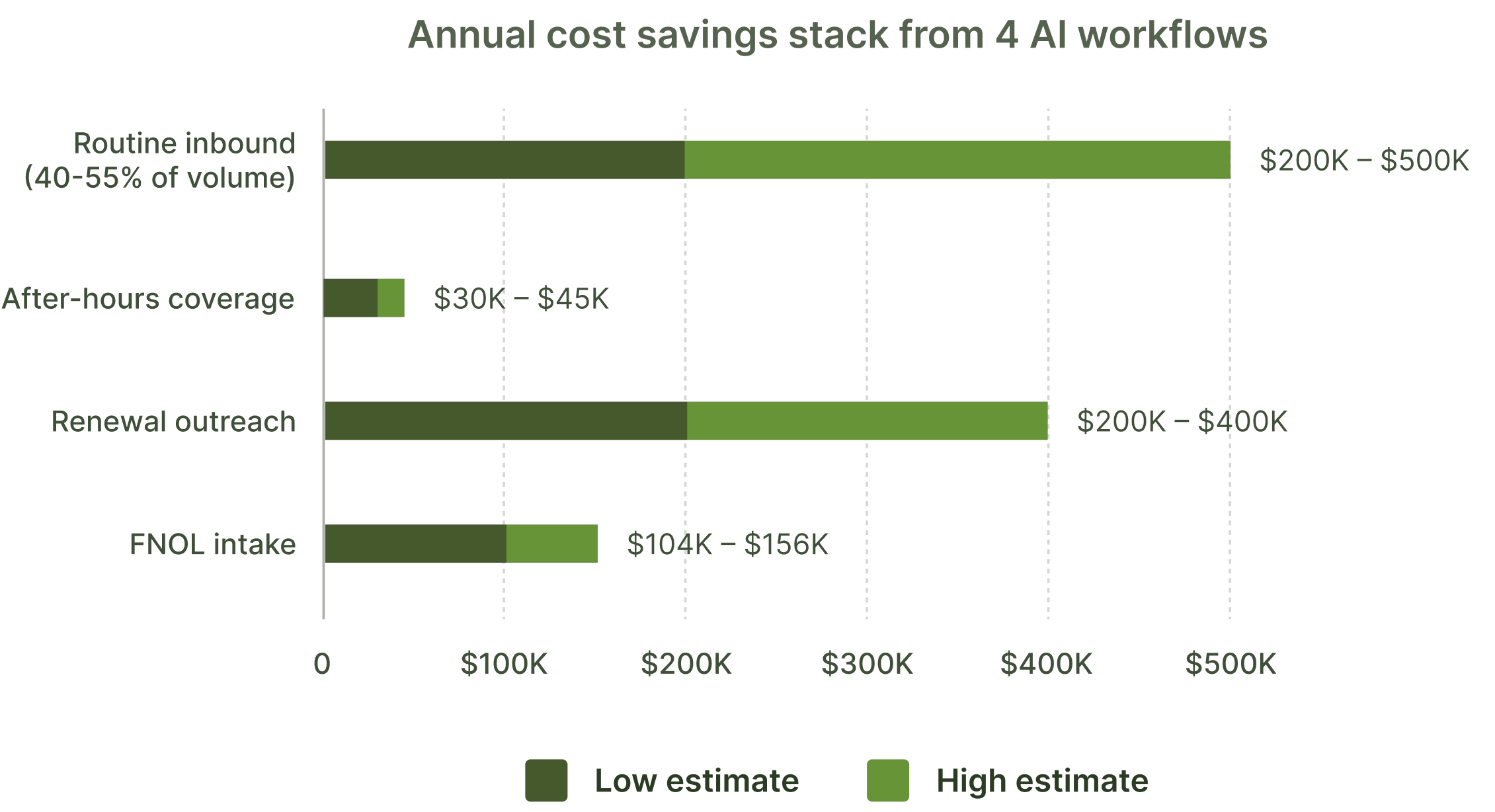
The cost math at $1.5M servicing budget and 600 inbound calls/day:
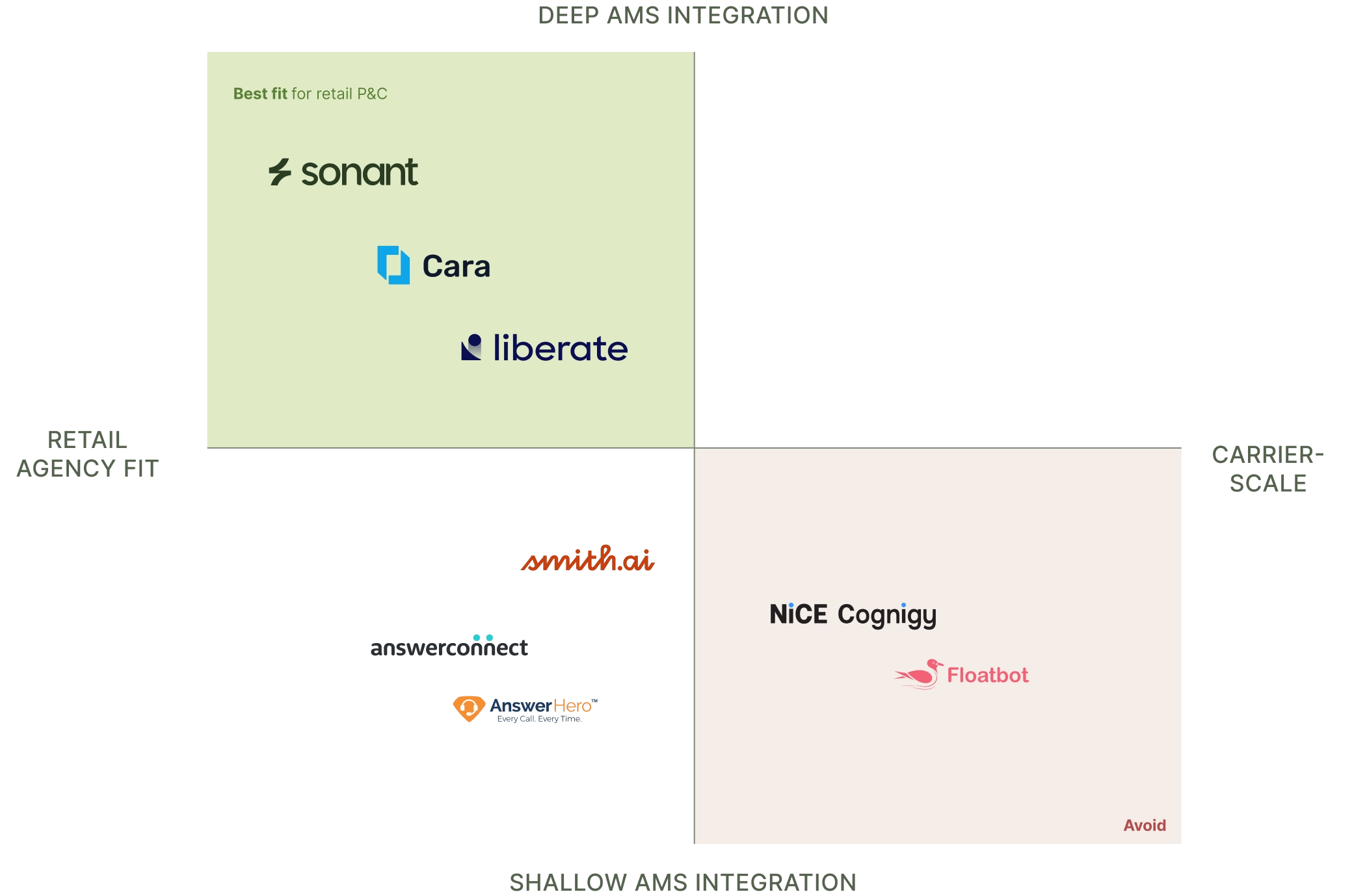
The 4 vendor categories in 2026
Insurance-native AI receptionists. Sonant, Liberate (carrier-focused), Cara. Native AMS write-back. Deploy in under 30 days. Best fit for retail P&C.
Hybrid live + AI services. Smith.ai, AnswerHero, AnswerConnect. Live US-based plus AI for routing. Weak on AMS write-back. Best fit for agencies under 200 calls/day.
Carrier-grade enterprise platforms. Cognigy, Floatbot. Built for Fortune 500 carriers. Multi-month deployments, enterprise pricing. Wrong scale for retail agencies.
Generic AI voice infrastructure. Retell, Bland, Synthflow, Vapi. Developer APIs. The agency has to build the receptionist, prompts, AMS write-back, and insurance workflows. Wrong fit without engineering capacity.
Deployment sequence for a retail P&C agency
The order matters more than the speed.
Skip complex underwriting automation for now. Keep live coverage for empathy-heavy work, complex commercial servicing, and high-value accounts.
The 5 vendor demo questions for AI in P&C insurance
- Show live AMS write-back on our exact platform – demo, not a slide
- Walk through a non-renewal call from caller intent to AMS note
- Demonstrate Spanish handling at the first ring
- Quote per-call cost at 600, 1,200, and 2,000 calls/day
- Share one named case study from an agency in our size range
If a vendor cannot answer all five with specifics, the vendor is the wrong fit.
How Sonant fits AI in P&C insurance at retail agencies
Sonant is the AI receptionist built for retail P&C agencies and brokers. The platform answers inbound calls, captures caller intent, books appointments, writes the AMS note within 60 seconds, and escalates urgent or complex requests. Native integrations cover EZLynx, Applied Epic, HawkSoft, AMS360, QQCatalyst, Momentum, AgencyZoom, and Zywave. Spanish at first ring, 24/7. Deployment under 30 days. The workflow: caller calls → Sonant answers → captures intent → resolves or escalates → writes AMS note. Output is the note that posts, the appointment booked, and the metrics reported in the dashboard.
The AI investment sequence for a retail P&C agency
Deploy inbound voice on quote intake + servicing in months 1–3. Layer renewal outbound in months 4–6. Add FNOL intake and post-bind in months 7–12. Skip complex underwriting. Pick a vendor with native AMS write-back. Pilot on overflow before touching primary flow. Most retail agencies running this sequence see payback in 4–7 months on direct cost savings alone.
Conclusion
AI in P&C insurance in 2026 is mature for inbound voice, renewals, lead qualification, cross-sell triggers, FNOL intake, and most servicing workflows. It's still gappy on complex commercial servicing, multi-state regulatory interpretation, and high-touch underwriting. For an agency, the right sequence is phones first, renewals second, claims and post-bind third. Pick AMS-native platforms. Skip complex underwriting automation for now.
Ready to sequence AI in P&C at your agency? Book a Sonant™ demo →
Related reading
- How AI Is Changing the Insurance Industry in 2026
- Agentic AI in Insurance: Benefits & Use Cases
- Insurance Workflow Automation: What You Need to Know in 2026
- 100 AI Tools for Insurance Agencies (2026 Guide)






.svg)


.svg)


