.svg)

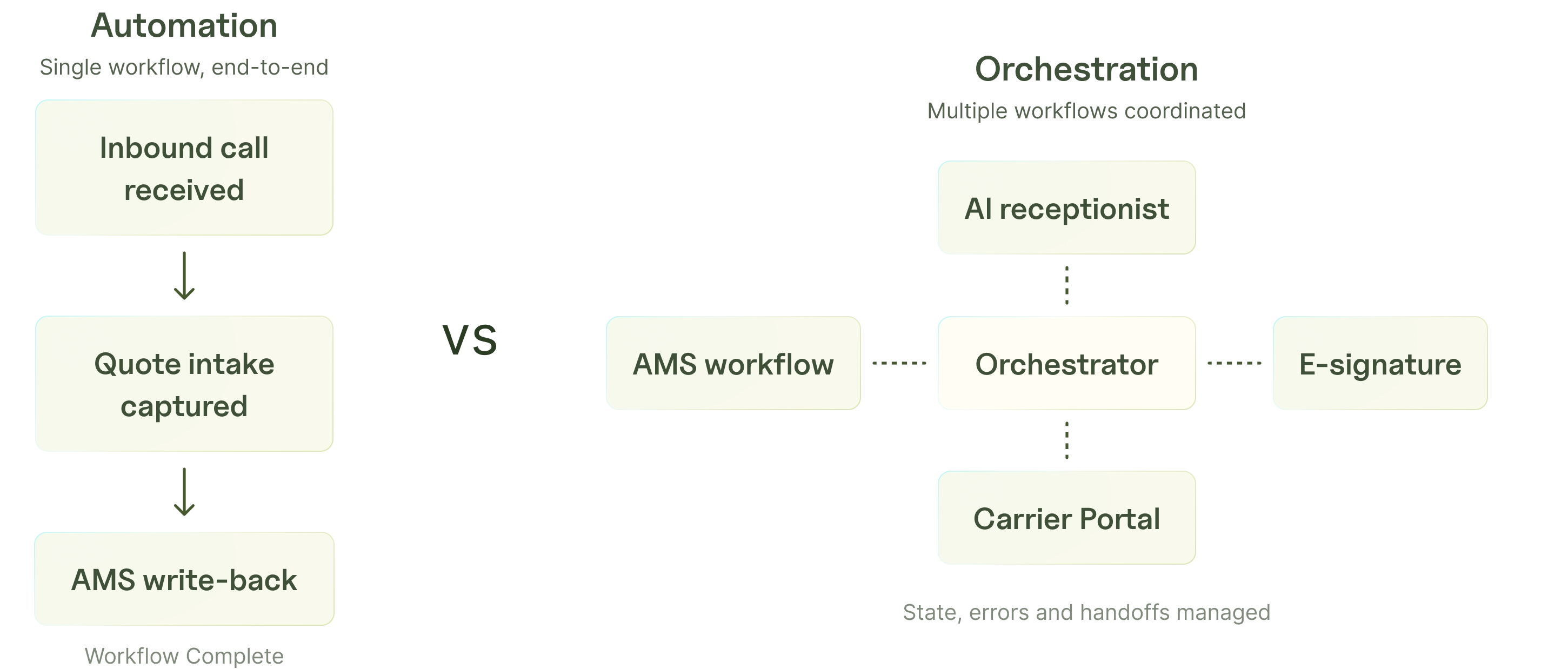
Orchestration vs automation in insurance is a category split most agencies confuse during vendor selection. Automation runs a single workflow end-to-end (a quote intake call, a renewal sequence, an FNOL capture). Orchestration coordinates multiple automations across systems, handling state, errors, and handoffs. P&C (property and casualty) agencies almost always need automation first and orchestration second – but the order matters because picking an orchestration platform without underlying workflow automations leaves the orchestrator with nothing to orchestrate.
Key Takeaways
- Automation runs a single workflow; orchestration coordinates multiple workflows across systems
- Most retail agencies need automation first (workflows 1–4 from the workflow automation guide)
- Orchestration is a year-2 lever once 3+ automations are running in production
- Carrier-grade orchestration platforms (Cognigy, Floatbot) are wrong scale for retail agencies
- AMS (agency management system) write-back is the integration spine for both categories
Orchestration vs automation in insurance: side-by-side comparison
The Sonant Consumer AI Readiness Report confirms most retail agencies achieve the customer-facing outcomes from automation alone, before orchestration adds value.
When automation alone is enough
For a retail P&C agency with under 1,000 calls/day, automation alone is enough. The four mature workflows – inbound quote intake, servicing, renewal outbound, FNOL – run from a single insurance-native platform. The platform handles state within each workflow. AMS write-back ties the workflows to the same record. No separate orchestration layer required.
Want to deploy the 4 workflows without an orchestrator? → Talk to Sonant
When orchestration starts to matter
Orchestration starts to matter when an agency runs 3+ automations across separate vendors and needs cross-system state. Example: AI receptionist on phone, separate AMS workflow on document management, separate carrier portal integration on submissions. Without orchestration, the agency owns the integration glue.
For most retail agencies, the answer is to consolidate vendors first (one platform covering 4 workflows) before adding an orchestration layer. Orchestrators with nothing to orchestrate are expensive shelfware.
The 3 orchestration platform categories
Carrier-grade orchestration: Cognigy, Floatbot, Genesys. Built for Fortune 500 carriers. Multi-month deployments, enterprise pricing. Wrong scale for retail agencies.
Workflow orchestration platforms: Workato, Tray.ai, n8n. Horizontal, not insurance-specific. Useful if the agency has engineering capacity.
AMS-native orchestration: Some AMS vendors are layering orchestration on top of their core platform. Maturity varies. Worth checking with the AMS provider directly.
Two concrete agency examples
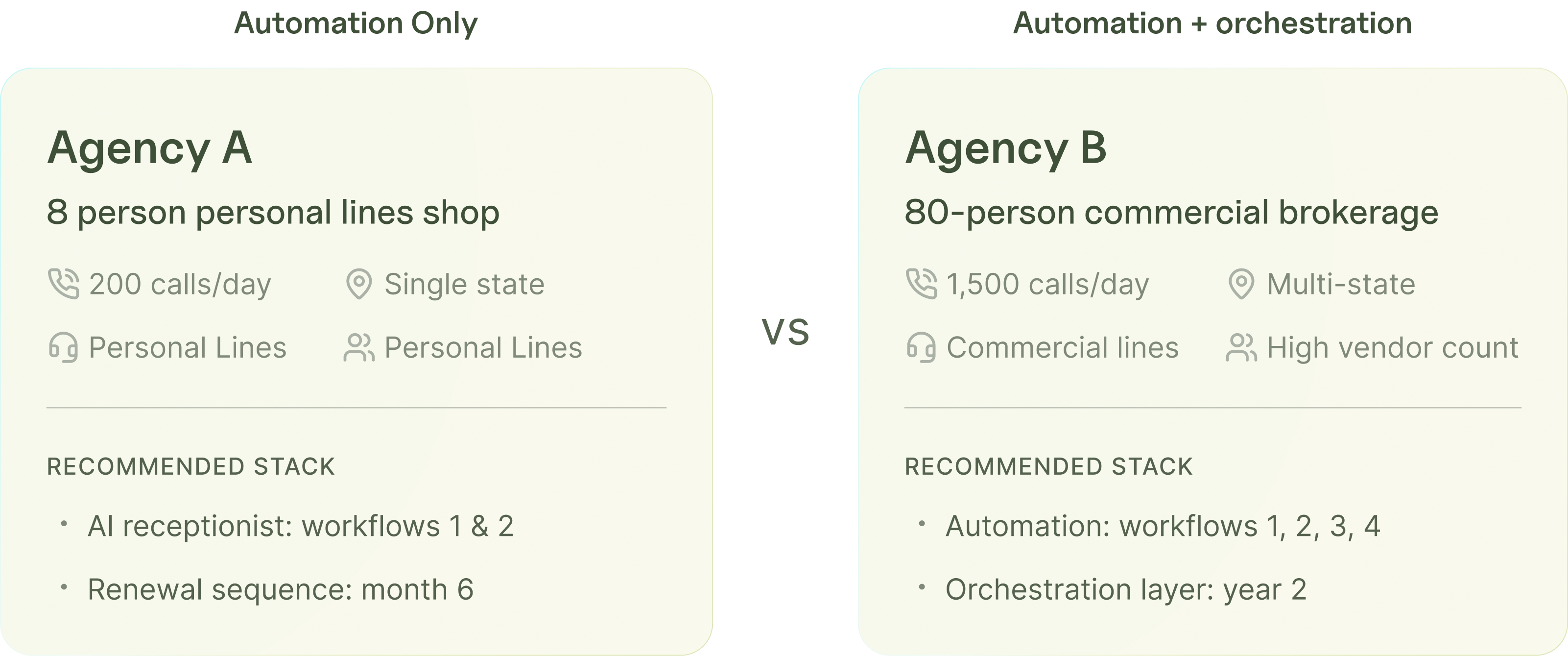
Agency A: 8-person personal lines shop, 200 calls/day. Needs automation only. Deploys AI receptionist for workflows 1 and 2. Renewal sequence layered in month 6. No orchestration layer needed.
Agency B: 80-person commercial brokerage, 1,500 calls/day, multi-state. Needs both. Automation for workflows 1, 2, 3, 4. Orchestration layer added in year 2 to coordinate AI receptionist + AMS workflows + carrier portal submissions + e-signature.
How Sonant fits the automation-first sequence
Sonant covers 4 of the 6 workflows from the insurance workflow automation playbook – inbound quote intake, servicing, renewal outbound, FNOL intake – from a single platform. Native integrations to EZLynx, Applied Epic, HawkSoft, AMS360, QQCatalyst, Momentum, AgencyZoom, and Zywave handle the AMS write-back spine. For agencies that later add orchestration, Sonant exposes the workflow events as webhooks. The workflow: trigger fires → Sonant runs the step → writes AMS note → emits event for downstream orchestration if subscribed. Output is the AMS-attached note plus the event payload.
How to know if your agency needs orchestration, automation, or both
Three questions:
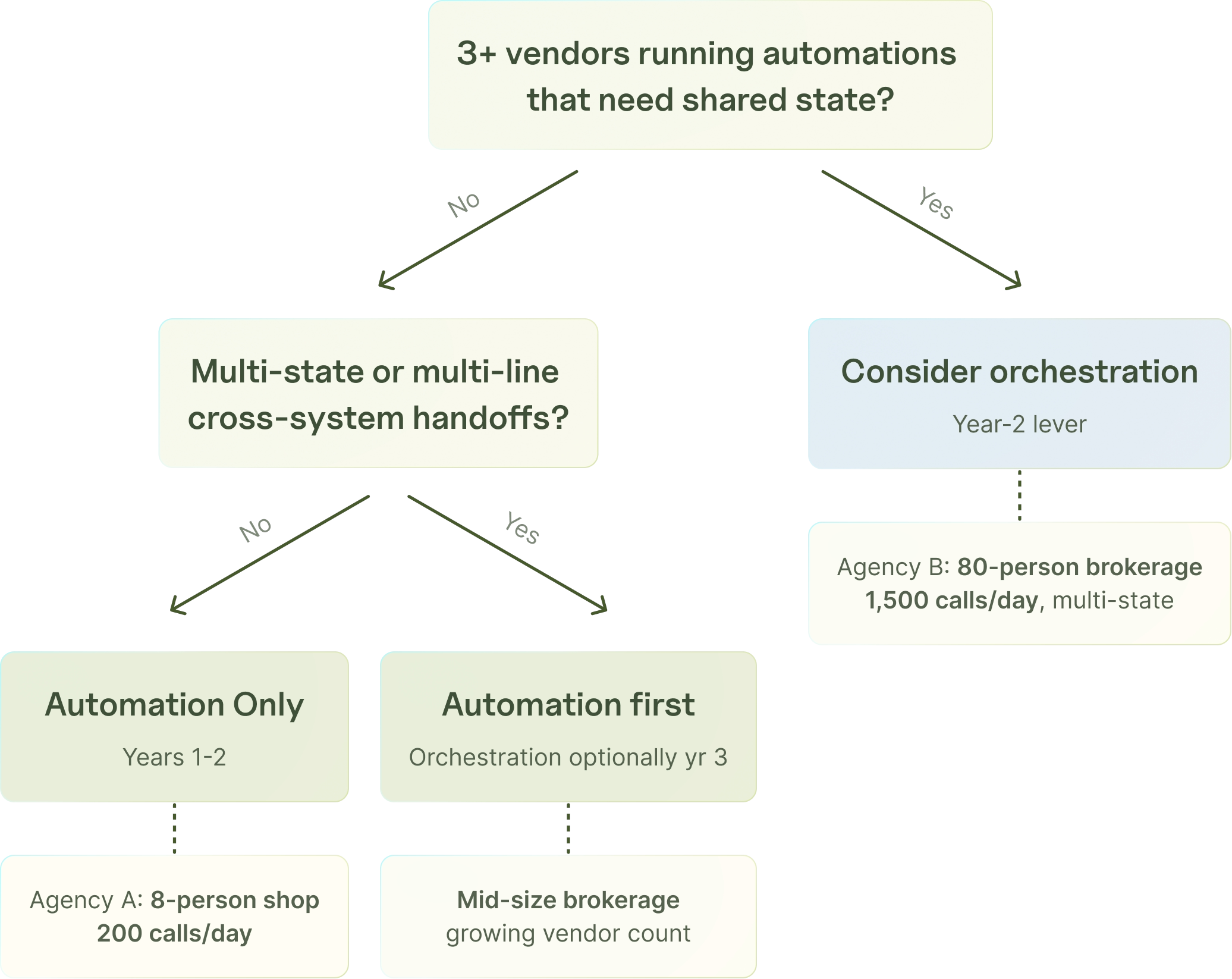
- Are 3+ separate vendors running workflow automations that need to share state? If yes, orchestration. If no, automation only.
- Is the agency running multi-state or multi-line books with cross-system handoffs? If yes, orchestration is a year-2 lever. If no, automation suffices.
- Does the agency have engineering capacity to maintain an orchestration layer? If no, stay on insurance-native automation and skip orchestration.
For most retail P&C agencies, the answer is automation only in years 1–2, orchestration optionally in year 3 if vendor count grows.
Conclusion
Orchestration vs. automation in insurance isn't a marketing distinction - it's an operational one. Automation handles a task. Orchestration coordinates a workflow. For P&C agencies, the high-leverage deployments are orchestration: inbound voice with AMS + rater + calendar + email, renewal sequences with appetite logic, commercial submission processing across portals. Single-task automation tools are point solutions; orchestration platforms replace entire workflow systems.
Ready to start with automation and add orchestration later? Book a Sonant™ demo →
Related reading
- Insurance Workflow Automation: What You Need to Know in 2026
- Agentic AI in Insurance: Benefits & Use Cases
- Insurance Call Center Automation: How to Do It in 2026
- 100 AI Tools for Insurance Agencies (2026 Guide)






.svg)

.svg)


