.svg)


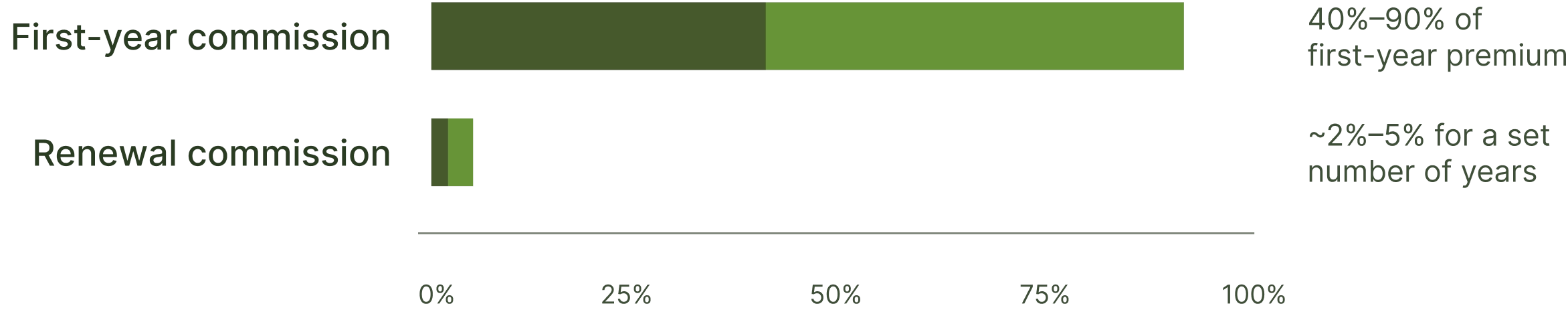
The average life insurance commission usually runs 40% to 90% of the first-year premium on a new policy, then drops to a smaller renewal commission - often 2% to 5% per year - for the life of the policy. Those numbers swing widely because the average life insurance commission depends on the product sold: a term policy pays one typical band, while a permanent policy such as whole life pays another. This guide breaks down first-year versus renewal pay, term versus permanent averages, and how carriers structure the schedule, so you can read a comp plan without guessing. Treat every figure here as industry-typical and confirm exact rates with your carrier and state filings.
Key Takeaways
- First-year commission is where most life insurance pay concentrates: roughly 40%–90% of the first-year premium is an industry-typical band.
- Renewal commissions are much smaller - often 2%–5% annually for a limited number of years - and reward persistency.
- Permanent policies (whole and universal life) generally carry higher first-year commission percentages than term policies.
- The dollar amount depends on premium size, so a small term policy can pay less than a modest permanent policy despite a higher percentage.
- Commission is only part of total pay; bonuses, overrides, and renewals shape what an agent actually earns over time.
What is the average life insurance commission?
The average life insurance commission is the typical percentage of premium a carrier pays an agent for selling a policy, split into a large first-year portion and smaller renewal portions. Industry-typical first-year rates fall in a wide 40%–90% band, with renewals near 2%–5% for a set number of years. Exact figures vary by carrier, product, and state, so the "average" is a reference point, not a promise.
Commission is quoted as a percentage of premium, but agents get paid in dollars. A policy with a $1,200 annual premium and a 60% first-year rate pays $720 up front; the same percentage on a $300 policy pays $180. For a deeper look at how these percentages roll up into earnings, see our breakdown of what a typical insurance agent earns across lines and the mechanics behind how carrier commission schedules are built.
Want fewer missed sales calls eating into commission? → Talk to Sonant
First-year vs. renewal commission
First-year commission is the large one-time payment on a new life insurance policy, while renewal commission is a smaller recurring payment in later years that rewards keeping the policy in force. Most life insurance pay is front-loaded into year one; renewals taper quickly and often stop after a set period. This structure explains why writing new business drives income more than servicing an existing book.
A common industry-typical pattern: a high first-year rate, then a small renewal for years two through ten, then little or nothing after that. Because renewals depend on the policy staying active, persistency - how many policies stay on the books - directly affects long-term pay. The U.S. Bureau of Labor Statistics publishes wage and occupation data for insurance sales agents that reflects how commission-heavy this role tends to be. If you manage producers, our guide to structuring a producer compensation plan shows how first-year and renewal splits are set.
Term vs. permanent commission averages
Term and permanent life insurance pay commission at different typical rates: term policies generally carry lower first-year percentages, while permanent policies such as whole and universal life carry higher ones. The gap reflects premium size and policy complexity - permanent products cost more and take longer to place, so carriers weight commission toward them.
The table below shows industry-typical bands. Treat these as reference ranges, not quotes; confirm actual figures with each carrier's schedule and your state department of insurance filings.
The Insurance Information Institute offers background on life insurance products and the market that helps put these product differences in context. For agencies buying warm prospects, our guide to working life insurance live transfer leads covers how lead cost interacts with these commission bands.
What affects how much commission an agent actually keeps
The commission percentage is only the starting point; carrier contract level, agency splits, chargebacks, and expenses all shape what an agent keeps. A captive agent on a lower contract level keeps less than an independent agent at a higher level, and agencies that supply leads or office support often take a split. Chargebacks - repayment of first-year commission when a policy lapses early - can claw back pay if persistency is poor. Because commission practices sit inside state insurance regulation, the NAIC's model guidance on carrier and producer conduct is a useful reference for how these arrangements are overseen.
Volume matters too. Because first-year commission is front-loaded, an agent's income tracks closely with new applications placed, which means missed inbound calls translate directly to lost commission. Faster, more consistent lead handling - covered in our overview of qualifying insurance leads before they go cold - protects the top of that funnel. For a broader pay picture beyond life sales, compare against a typical insurance broker salary and the pay range for agency service staff.
How Sonant fits
Sonant is an AI voice receptionist for P&C (property and casualty) and life-adjacent insurance agencies: it answers every inbound call, captures caller details, books appointments, and escalates anything that needs a licensed producer. The workflow is simple - a caller rings in, Sonant answers and qualifies, then writes the interaction into your system and routes hot prospects to staff. The metric that matters here is capture rate: fewer abandoned calls means more quotes started, and since the average life insurance commission is earned on placed policies, protecting inbound volume protects income.
Sonant works with native AMS (agency management system) integrations including EZLynx, Applied Epic, HawkSoft, and AMS360, so call notes and contact records write back automatically instead of living in a voicemail box. Escalation to licensed staff stays intact for anything requiring a producer. Agencies looking to cut down on missed inbound calls or connect capture to their agency management system can see how an AI receptionist built for insurance agencies handles the front desk.
See how many commission-earning calls your agency is missing today. Book a Sonant demo →
Related reading
- How carrier commission schedules are structured
- Setting up a producer pay plan for your team
- What insurance agents typically earn across lines
- Working warm life insurance live transfers
- Reading a typical insurance broker paycheck
- How much commission do insurance agents make?
- How much commission does an insurance agent make on a policy?






.svg)


.svg)


