.svg)

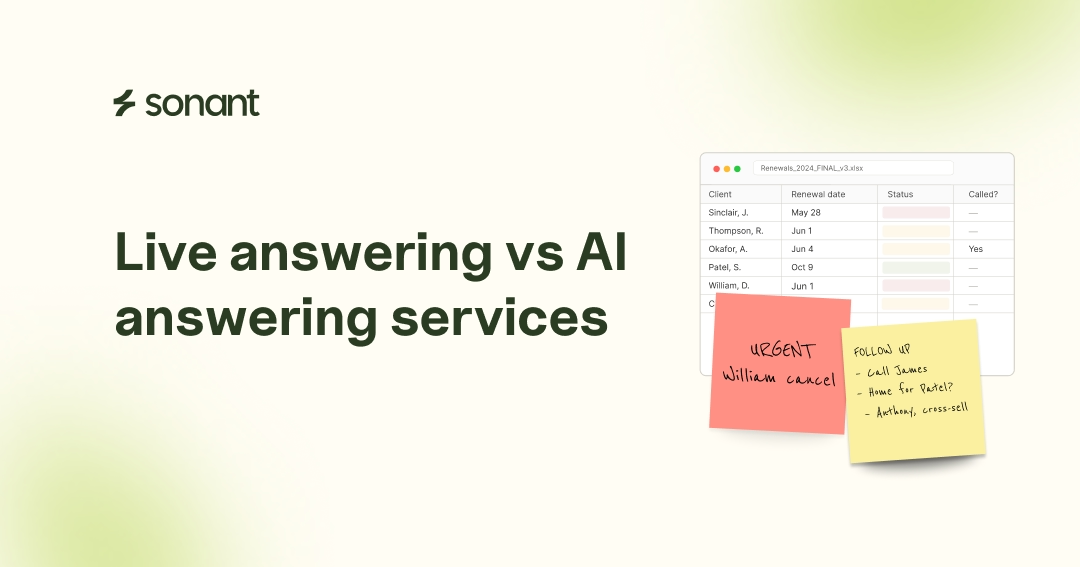
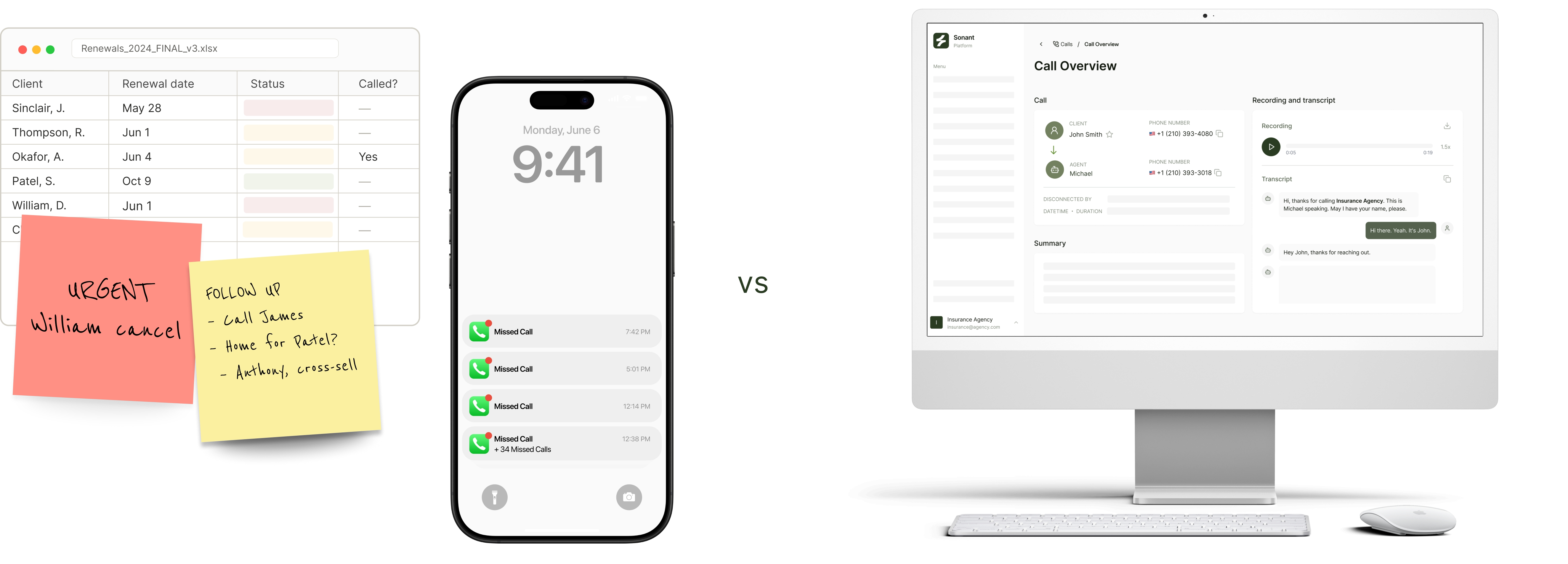
Live answering vs AI answering services is the practical decision most P&C (property and casualty) agency operations leaders face in 2026. Both options keep the phone answered. They differ on per-call cost, AMS (agency management system) write-back fidelity, Spanish handling at first ring, and scale economics. This piece compares them across the dimensions that actually decide which one fits your agency – and lands on an explicit verdict by agency profile. Hiring another receptionist is not always the first answer to missed calls, and the live vs AI decision usually comes after that realization.
Key Takeaways
- AI wins on per-call cost, AMS write-back, 24/7 coverage, Spanish at first ring, and scale economics
- Live wins on empathy-heavy conversations, complex commercial servicing, and warm voice quality
- The hybrid model (AI primary + live escalation) fits most retail agencies above 200 calls/day
- Under 100 calls/day with no Spanish requirement, live still makes practical sense
- AMS write-back is the field that flips most decisions toward AI
Live answering vs AI answering services: head-to-head comparison
The 8-dimension comparison agency operations leaders should run:
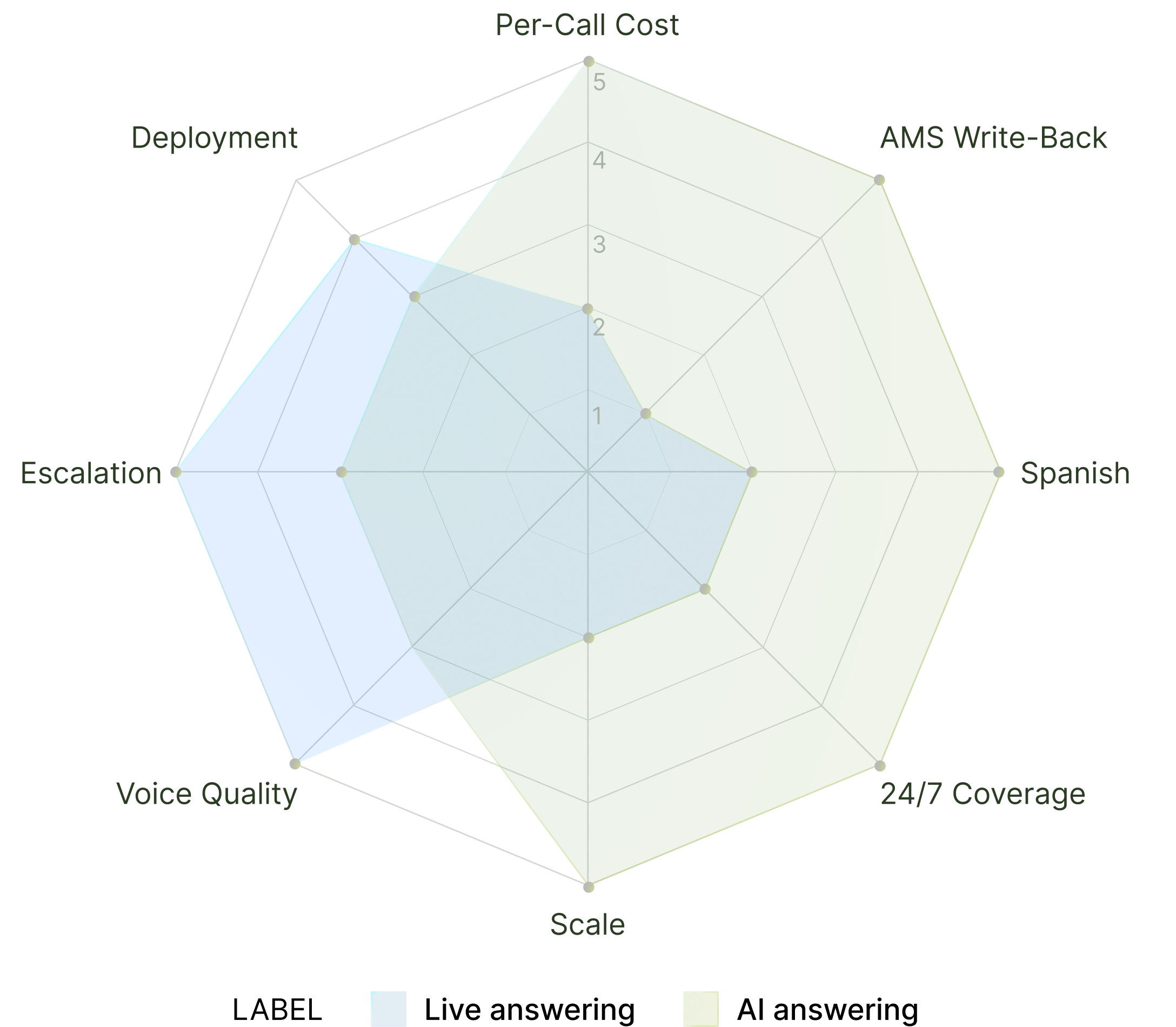
The Sonant Consumer AI Readiness Report provides additional consumer-side benchmarks for how policyholders rate the AI versus live experience in real inbound scenarios.
When live answering wins
Live answering wins on three specific use cases: empathy-heavy conversations (claim denials, total losses, business closures), complex commercial servicing on large accounts with bespoke endorsements, and high-value account handling for the top 10–20% of book by premium. For agencies under 100 calls a day with no Spanish requirement and no AMS write-back priority, live can still be the right answer.
Need help deciding which fits your agency? → Talk to Sonant
When AI answering wins
AI answering wins on routine inbound at scale: COIs (certificates of insurance), billing, claim status, quote intake, appointment booking, FNOL (first notice of loss) intake, and post-bind welcome calls. The per-call economics scale below $1.20 even at 2,000 calls a day. AMS write-back posts the note within 60 seconds of the call ending. Spanish handling at first ring. 24/7 coverage at the same per-call cost as daytime.
Why hybrid (AI primary + live escalation) is the 2026 default
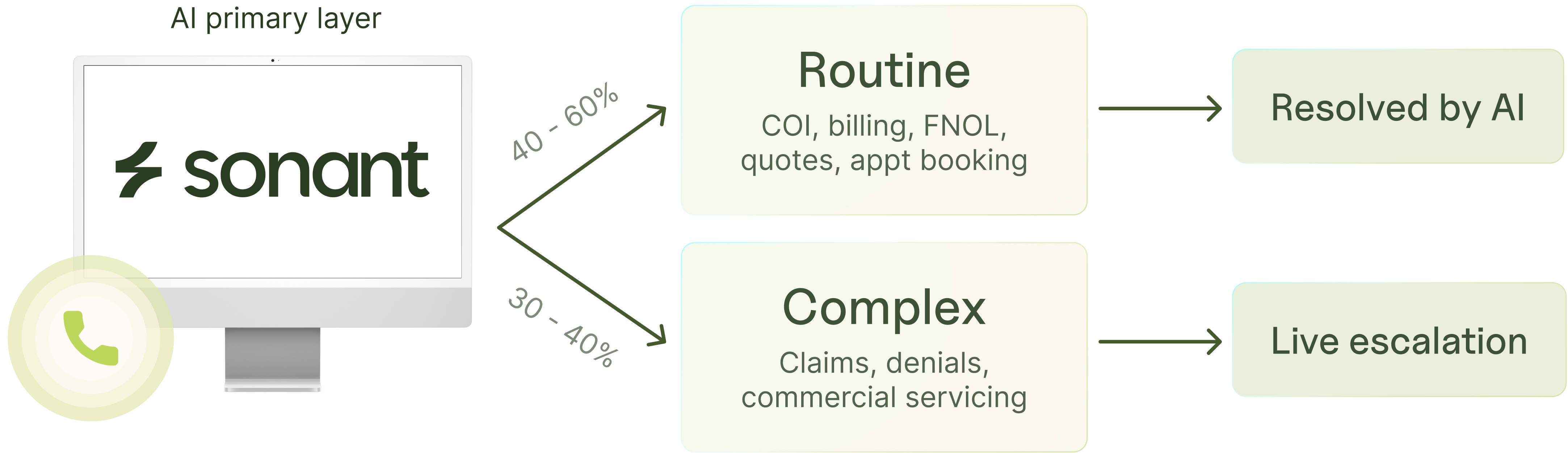
Most retail P&C agencies above 200 calls a day are landing on hybrid. AI handles the routine 40–60% with native AMS write-back. Live escalation handles the complex 30–40% where empathy and judgment matter. The cost math: $80K–$150K AI annual + $250K–$400K reduced live scope = $330K–$550K total versus $1M+ pure live. Better data quality. 24/7 by default. The hybrid model is what operations leaders end up with after running the spreadsheet.
Cost math at 600 calls/day
An agency at 600 calls/day, including 25% Spanish-speaking callers and 30% after-hours volume:
When live wins, when AI wins, when hybrid wins
The verdict by agency profile:
- Under 100 calls/day, no Spanish requirement: live (Smith.ai, AnswerHero, AnswerConnect)
- 100–300 calls/day, AMS write-back matters: AI with live escalation backup
- Above 300 calls/day, mixed personal + commercial book: hybrid (AI primary + live escalation)
- Above 1,000 calls/day, commercial-heavy book: hybrid plus offshore BPO (business process outsourcing) for commercial complexity
How Sonant fits the hybrid model
Sonant runs the AI primary layer in a hybrid setup. The platform answers inbound calls, captures intent, books appointments, writes the AMS note within 60 seconds of the call ending, and escalates urgent or complex requests to the live queue. Native integrations cover EZLynx, Applied Epic, HawkSoft, AMS360, QQCatalyst, Momentum, AgencyZoom, and Zywave. Spanish at first ring. 24/7. The workflow: caller calls → Sonant answers → captures intent → resolves routine OR escalates complex → writes the AMS note. Output is the note that posts and the call summary delivered to the right staff member.
Ready to model live vs. AI for your agency? Book a Sonant™ demo →
Related reading
- AI Voice Agents vs. Live Call Center Reps: What's Better?
- The Best AI Answering Services for Insurance Agencies in 2026
- 10 Ways to Reduce Insurance Operational Costs in 2026
- 100 AI Tools for Insurance Agencies (2026 Guide)






.svg)

.svg)


