.svg)

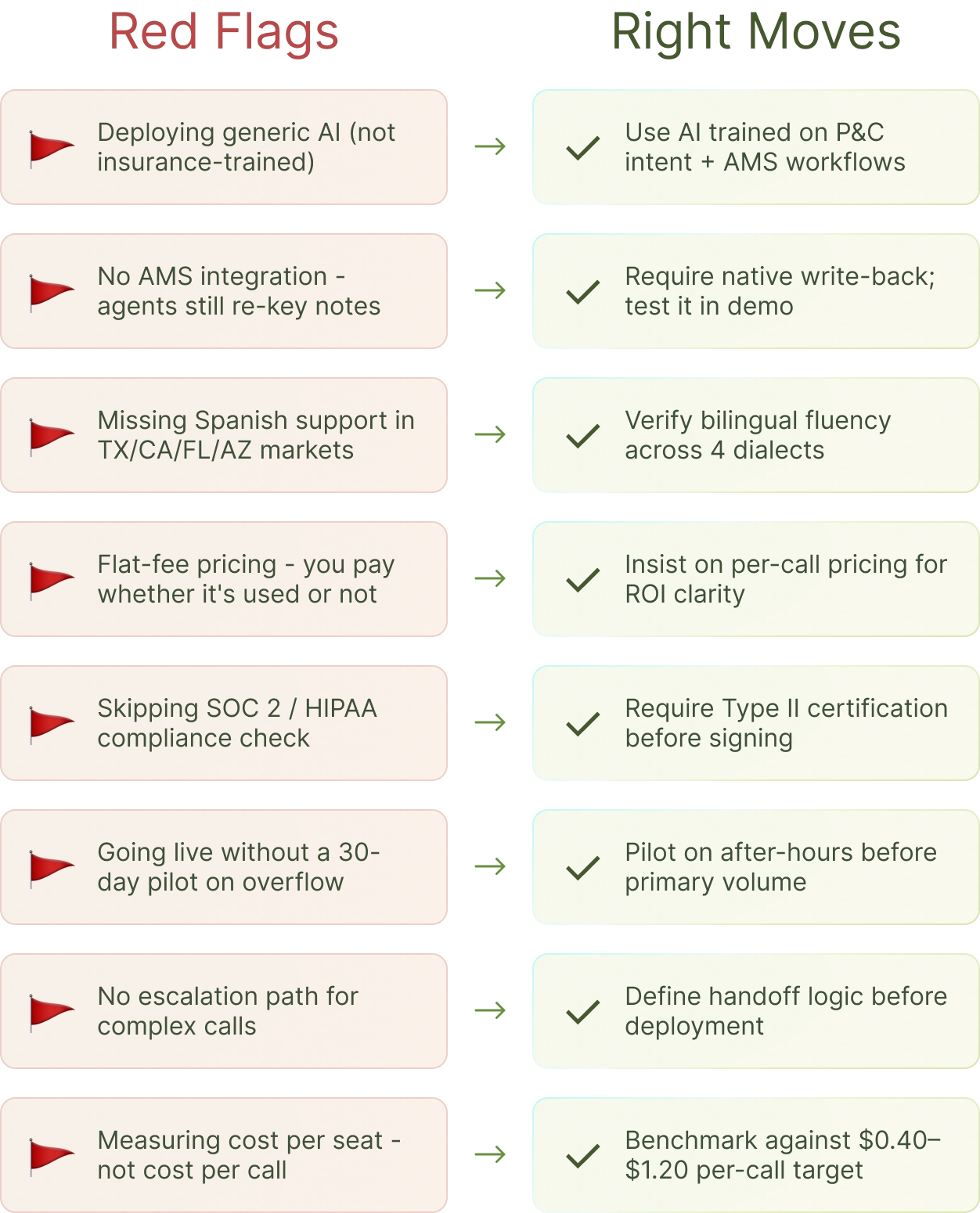
AI deployments at insurance agencies fail for predictable reasons. The technology works. The integration, the sequencing, or the vendor selection breaks. This piece is the 8 most common AI mistakes operations leaders make at P&C (property and casualty) agencies in 2026 – what goes wrong, why it fails, and the pre-purchase checklist that prevents each one. Most phone automation fails when it treats every caller the same; most AI deployments fail when the agency treats vendor selection as a technology decision instead of a workflow decision.
Key Takeaways
- AMS (agency management system) write-back middleware is the #1 cause of failed deployments
- Skipping the 30-day overflow pilot accelerates failure
- Cutting BPO (business process outsourcing) before AI is stable creates service gaps
- Spanish handling cannot be an afterthought in TX, CA, FL, AZ books
- The pre-purchase checklist below prevents 6 of 8 common mistakes
How we ranked the 8 mistakes
We synthesized 40+ customer interviews and vendor RFPs from 2024–2025 deployments. The 8 mistakes are ranked by frequency × dollar cost of the failure.
The Sonant Consumer AI Readiness Report reinforces that deployment outcomes depend more on integration and sequencing than on the AI technology itself.
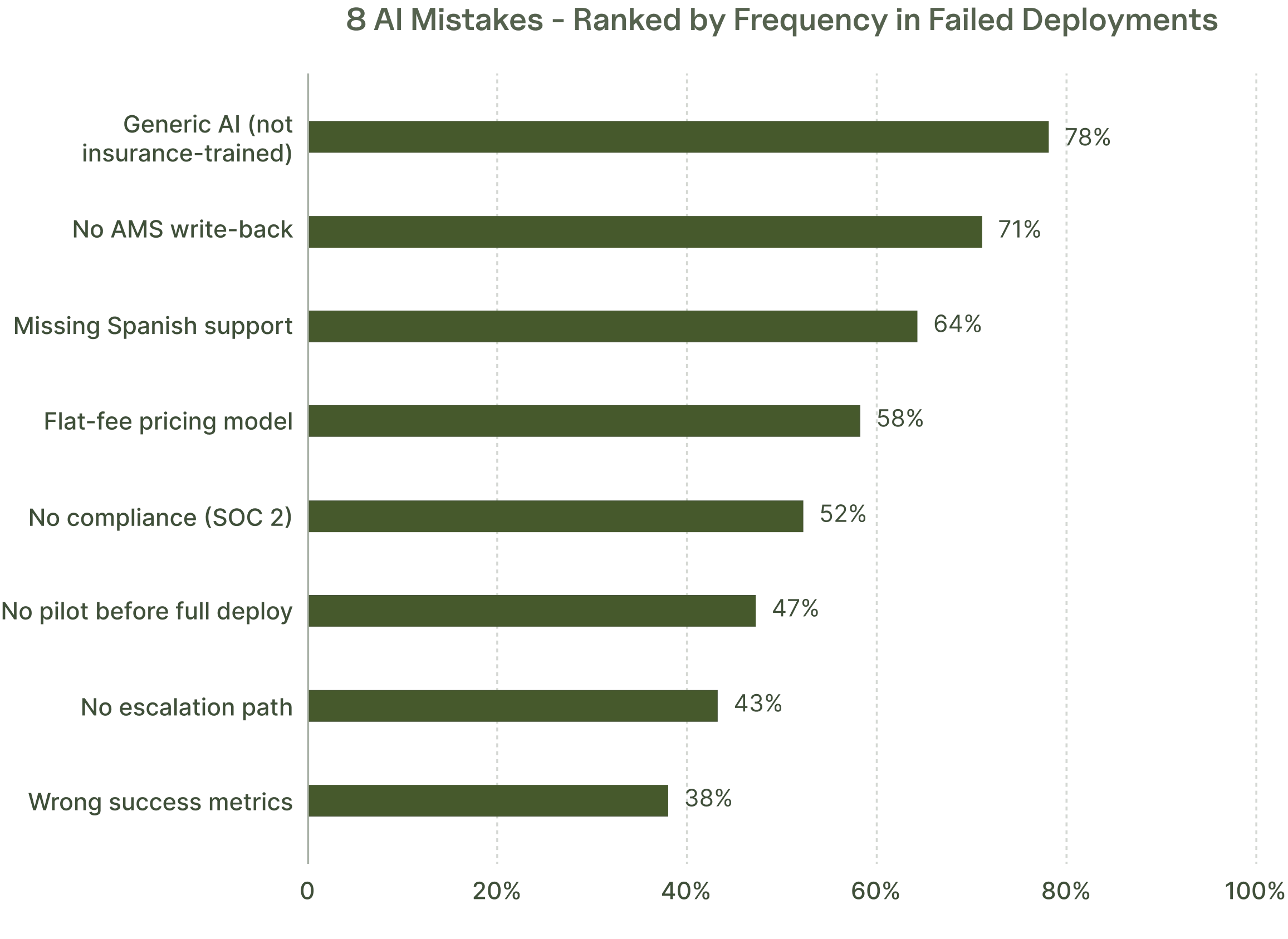
1. Picking a vendor without native AMS write-back
Middleware (Zapier, custom API) breaks every time the AMS releases an update. The CSR (customer service rep) team ends up transcribing notes manually, eating the AI savings. Why it fails: TCO turns negative within 12 months. Right move: native connectors to EZLynx, Applied Epic, HawkSoft, AMS360, QQCatalyst, Momentum, AgencyZoom, or Zywave.
2. Skipping the 30-day overflow pilot
Going straight to full deployment without piloting on overflow first. Why it fails: unknown unknowns hit production. Right move: route 15–20% of calls currently spilling to voicemail or 90+ second waits to AI for 30 days. Measure. Expand.
3. Cutting BPO before AI is stable
The unwinding order matters. Agencies cutting BPO contracts in months 1–2 before AI is stable create service gaps. Why it fails: quality drops, churn rises. Right move: prove AI in months 1–3, reduce BPO in months 4–6, finalize hybrid in months 7–9.
Want a deployment plan that avoids the top 8 mistakes? → Talk to Sonant
4. Treating Spanish as a feature instead of a requirement
In Texas, California, Florida, and Arizona books, 15–35% of inbound is Spanish-speaking. Routing to “press 2 for Spanish” that goes to voicemail kills pipeline. Right move: Spanish at first ring with native-speaker quality, 24/7. Test in the demo.
5. Buying carrier-grade platforms for retail agencies
Cognigy, Floatbot, Liberate at carrier-scale. Multi-month deployments, enterprise pricing, integrations focused on Guidewire and Duck Creek. Why it fails: wrong scale, wrong AMS focus. Right move: insurance-native vendors built for retail (Sonant, Cara, smaller insurance-specific players).
6. Buying developer infrastructure without engineering capacity
Retell, Bland, Synthflow, Vapi. Per-minute pricing looks attractive. Why it fails: the agency has to build the receptionist, prompts, AMS write-back, and insurance workflows from scratch. Right move: only if the agency has engineering capacity or is partnering with a buildout vendor.
7. Underestimating change management with the CSR team
CSRs interpret AI as a layoff signal. Why it fails: internal resistance kills adoption. Right move: frame AI as absorbing tier-1 routine so CSRs focus on tier-2 complex servicing. The role gets more interesting, not less.
8. Measuring the wrong things
Vendor demos that focus on demo polish, not on AMS write-back accuracy or response time. Right move: measure first-ring pickup, AMS write-back fidelity, Spanish-speaker capture, follow-up completion. Ignore the polish.
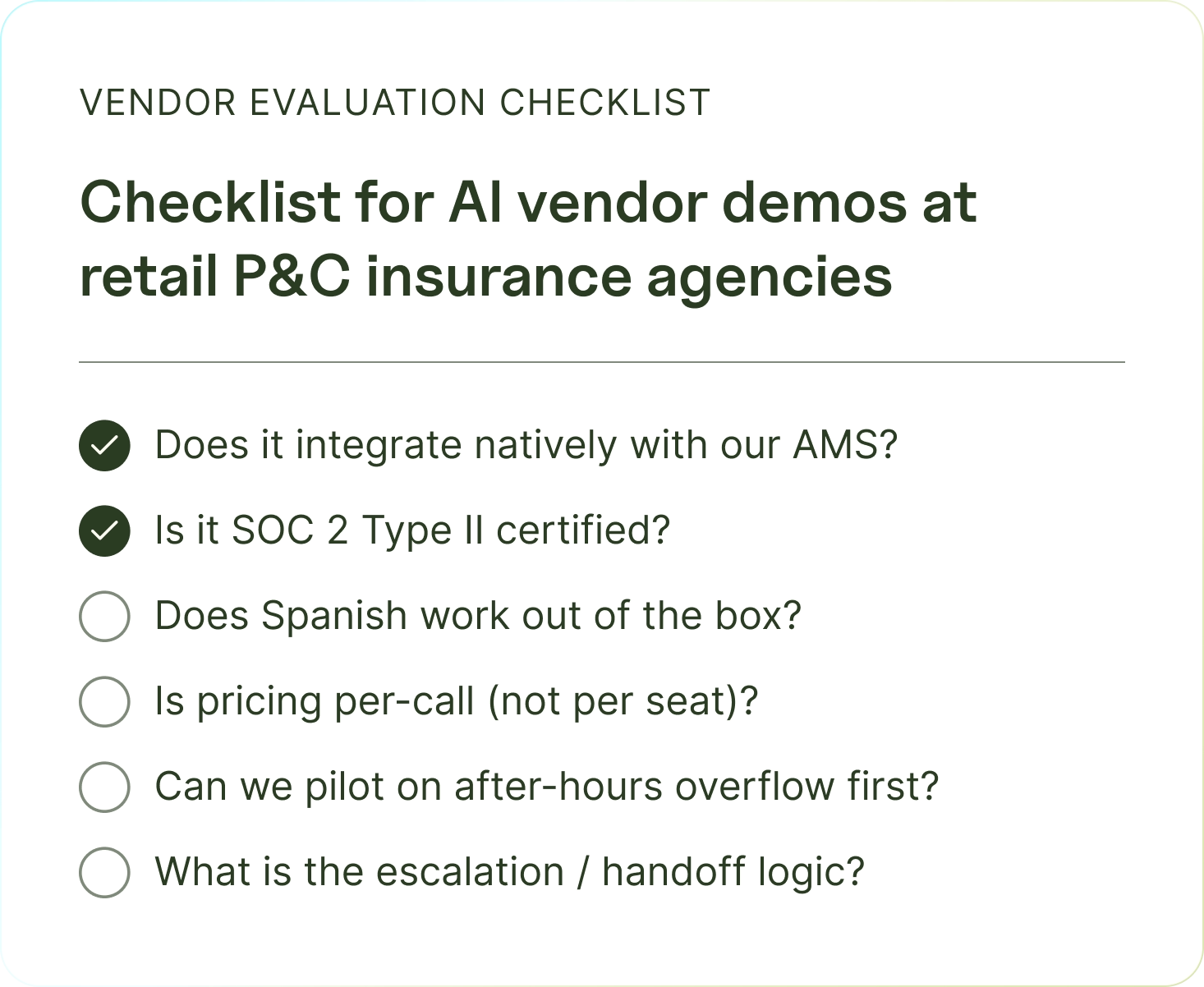
The pre-purchase checklist that prevents 6 of 8 mistakes
Before signing:
- Live AMS write-back demo on the agency’s platform (not a slide)
- Walkthrough of a non-renewal call from caller intent to AMS note
- Spanish handling at first ring tested in the demo
- Per-call cost quoted at 600, 1,200, and 2,000 calls/day
- Named case study from an agency in the size range
- 30-day overflow pilot offered without long-term contract
If a vendor cannot meet all six, the vendor is the wrong fit.
How Sonant addresses the 8 mistakes structurally
Sonant publishes native integrations to the 8 major AMS platforms (avoids mistake 1), offers a 30-day overflow pilot (mistake 2), runs the sequencing playbook with customers (mistake 3), handles Spanish at first ring (mistake 4), is built for retail P&C scale (mistake 5), ships as a finished product not infrastructure (mistake 6), includes change management support (mistake 7), and reports on the metrics that matter (mistake 8). The workflow: caller calls → Sonant answers → captures intent → writes AMS note → triggers follow-up. Output is the note that posts within 60 seconds, the call summary delivered to the right staff member, and the metrics reported in the dashboard.
The pre-purchase checklist that prevents all 8
Native AMS write-back demo, 30-day overflow pilot, Spanish at first ring tested, named insurance case study, transparent per-call pricing, structured deployment sequence, change management included, metrics reporting in the dashboard. Run each of these before signing. The deployments that fail almost always skipped 2–3 of them.
Ready to run the pre-purchase checklist on your vendor shortlist? Book a Sonant™ demo →
Related reading
- How to Start with AI in Your Insurance Agency
- The Best AI Receptionists for Insurance Agencies in 2026
- Agentic AI in Insurance: Benefits & Use Cases
- 100 AI Tools for Insurance Agencies (2026 Guide)






.svg)

.svg)


