.svg)

Vonage is an enterprise cloud communications platform, and for a P&C agency the honest verdict is that it's strong comms infrastructure - but its AI is general-purpose and the insurance/AMS story is unclear. This review covers what Vonage costs, what it integrates with, and where it fits. The short version: Vonage gives you voice, messaging, and APIs across one vendor, while an insurance-native AI receptionist on top handles and documents the calls.
All facts below are sourced from Vonage's public materials and publicly available information.
Key takeaways
- What it is: enterprise cloud communications platform (Ericsson-owned) - unified comms, contact center, and communications APIs.
- Best for: mid-market to enterprise organizations wanting one vendor across voice, messaging, and APIs.
- vs Sonant: complementary - Vonage is the comms layer; Sonant answers and documents the insurance calls on it.
- Watch-outs: the AI Virtual Assistant is general-purpose, not P&C-trained; AMS depth is unclear.
- Bottom line: use Vonage for comms, add an insurance-native AI receptionist for the agency calls.
TL;DR
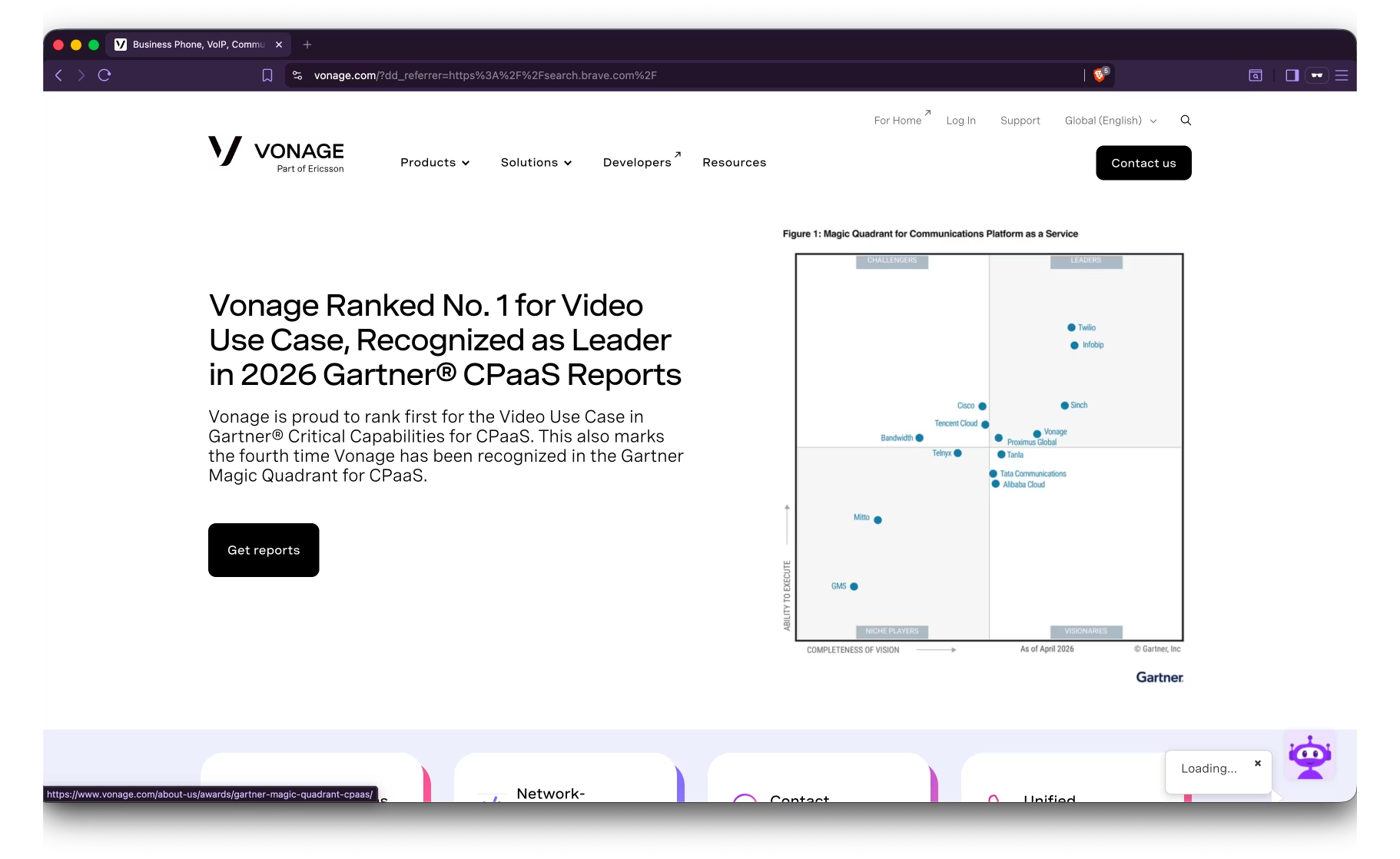
Vonage is a cloud communications platform owned by Ericsson (acquired for $6.2B in 2022), serving enterprises with unified communications, contact center (CCaaS), and communications APIs (CPaaS). Vonage reports serving 21+ industries.
Best for: mid-market to enterprise organizations needing unified communications infrastructure and contact-center operations.
Less of a fit for: retail P&C agencies wanting insurance-trained answering with clearly native AMS write-back out of the box.
Pricing: From $13.99/line/month + add-ons.
Implementation: Enterprise implementation with support.
1. What is Vonage?
Vonage is a cloud communications platform owned by Ericsson (acquired for $6.2B in 2022), serving enterprises with unified communications, contact center solutions, and communications APIs. Vonage reports being acquired by Ericsson for $6.2B (2022) and serving 21+ industries. It markets insurance-oriented features (it cites an EZLynx integration, call recording, virtual receptionist), but the AI is general-purpose and the AMS depth is unclear - verify it directly.
2. Who uses Vonage?
Vonage's public materials describe mid-market to enterprise organizations across 21+ industries. The typical user wants one vendor spanning voice, video, messaging, and APIs at scale. For an insurance agency, that means strong comms infrastructure with insurance-specific answering treated as a layer on top.
3. How much does Vonage cost?
Vonage's plans start from $13.99/line/month plus add-ons - accessible at the entry level, with enterprise tiers above. The pricing covers communications infrastructure; insurance-trained answering with reliable AMS documentation is a separate capability to confirm, since its built-in AI is general-purpose.
4. Key features
- Unified communications (voice, video, messaging)
- Contact center solutions (CCaaS)
- Communications APIs (CPaaS)
- CRM integrations (Salesforce, HubSpot, Microsoft)
- AI Virtual Assistant and Voice Bot (general-purpose)
- Omnichannel messaging (SMS, RCS, WhatsApp)
- Microsoft Teams integration
Communication channels: voice, video, SMS, RCS, WhatsApp, chat.
Conversation design: IVR, AI Virtual Assistant, Voice Bot (general-purpose).
Insurance terminology handling: insurance solutions marketed; verify depth (see item 1).
Feature breakdown
5. How long does it take to implement Vonage?
Vonage uses enterprise implementation with support, so timing reflects the scope of a mid-market or enterprise comms rollout - lines, routing, integrations, and contact-center configuration. The phone layer can be robust; insurance-specific answering with AMS documentation is a separate layer to add on top.
6. What does Vonage integrate with?
Vonage cites an EZLynx partnership plus general CRMs (Salesforce, HubSpot, Microsoft) and Microsoft Teams. Because the AI is general-purpose and the AMS depth is unclear, confirm how (and whether) insurance call data posts into your system - and consider an AI receptionist that writes calls into your AMS on top.
7. Compliance and security
Vonage reports SOC 2 Type II, ISO 27001, HIPAA, and PCI-DSS - a strong enterprise posture. A SOC 2 Type II report is the document to confirm for handling client data. For context on AI-in-insurance expectations, see the NAIC's model bulletin.
8. Pros and cons for insurance buyers
Pros:
- Enterprise comms infrastructure - voice, video, messaging, and APIs in one platform.
- Omnichannel messaging - SMS, RCS, WhatsApp, chat.
- Enterprise compliance - SOC 2 Type II, ISO 27001, HIPAA, PCI-DSS.
- Accessible entry pricing.
Cons / where it may fall short for retail P&C agencies:
- General AI, not insurance - the Virtual Assistant isn't P&C-trained.
- AMS depth is unclear; insurance-specific answering is a separate layer.
9. When Vonage fits an insurance buyer
Vonage fits a mid-market to enterprise organization that wants one vendor across voice, messaging, and APIs, with contact-center capability. If you want robust comms infrastructure and will treat insurance answering as a layer on top, it's a strong backbone.
10. Where Vonage and an AI receptionist fit together
Vonage is the comms layer; an insurance-native AI receptionist is what handles and documents the calls. Because its AI is general-purpose and the AMS story is unclear, run Vonage for the infrastructure and put an insurance-trained receptionist on top. See Sonant vs Vonage and voicemail vs AI receptionist.
Verdict
Vonage is a strong enterprise communications platform for businesses that want one vendor across voice, messaging, and APIs. For insurance the limits are specific: the AI is general-purpose and the AMS story is unclear. Use it as the comms layer and put an insurance-native AI receptionist on top to handle and document the calls.
Related reading
- Sonant™ vs Vonage alternative
- Best Voice AI Insurance Vendors
- AI Receptionists for Insurance Agencies: Buyer’s Guide
- 100 AI Tools for Insurance Agencies (2026 Guide)
Disclaimer
Vonage is a trademark of its respective owner. Sonant™ is not affiliated with or endorsed by the owner of Vonage. This review was created using publicly available information about Vonage and Vonage's public materials. We encourage readers to visit the official Vonage website for the most current product information. Last verified: 2026-06-15.






.svg)


.svg)


