.svg)

A conversational AI platform is software that understands what a person says or types and responds in natural language across channels like chat, SMS, and voice. For a P&C (property and casualty) insurance agency, the practical question is narrower than the category: which type actually answers the phone, captures caller intent, and writes the result into your AMS (agency management system)? This guide explains what a conversational AI platform does, the three types agencies run into, what to evaluate, and where each one fits. Most agencies do not need a broad platform to build on – they need a finished AI receptionist for insurance agencies that handles inbound calls.
Key Takeaways
- A conversational AI platform handles natural-language conversations across chat, SMS, and voice; the insurance question is which one covers the phone.
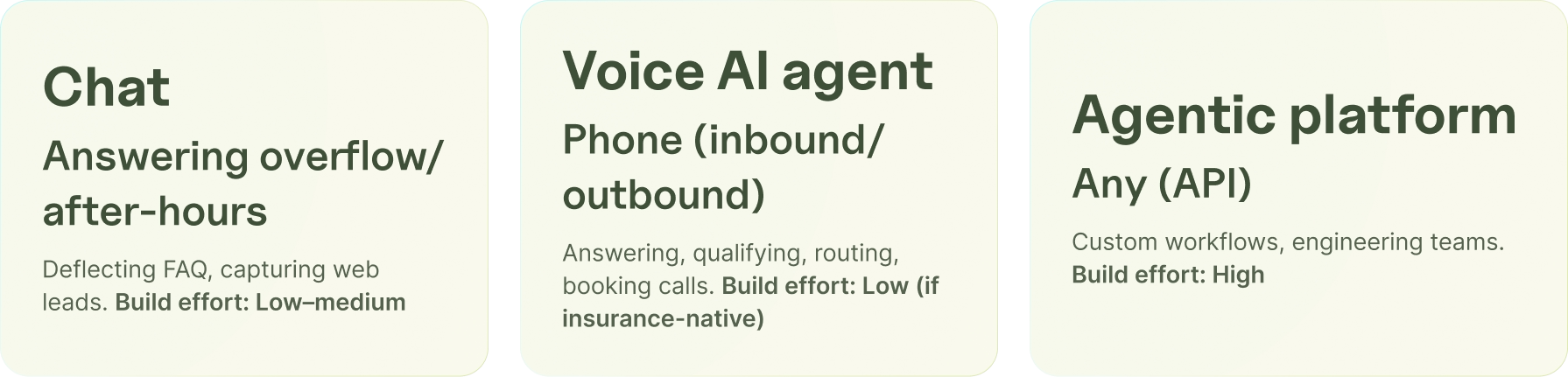
- Three types exist: chat/chatbot platforms, voice AI agents, and agentic platforms you build on. They solve different problems.
- Chat handles website questions; voice handles the inbound calls that carry quotes, claims, and renewals; agentic platforms require engineering.
- Evaluate on insurance training, AMS write-back, call handling, and compliance (SOC 2 Type 2) – not on channel count alone.
- For an agency front desk, a voice-first, insurance-native tool beats a broad build-your-own platform.
What is a conversational AI platform?
A conversational AI platform is software that interprets natural language and replies in kind, usually across several channels. It combines speech-to-text, a language model, and text-to-speech for voice, plus routing and integration logic. In insurance, the value is not the conversation itself – it is what happens after: the caller's intent is captured, the request is routed, and a note lands in the AMS. See conversational AI in insurance for the category background, and voice AI for insurance for the phone-specific view.
Want help judging which type fits your agency's phone? → Talk to Sonant
The three types, and what each one is for
The three types differ by channel and by how much you build. Chat platforms answer typed questions on your website. Voice AI agents answer the phone and speak with callers. Agentic platforms give developers the pieces to assemble a custom agent. An agency's inbound calls sit squarely in the second type.
Why voice is the type that matters for the front desk
Most agency demand still arrives by phone: quote requests, claim questions (including FNOL, first notice of loss), billing, and renewals. A chat widget cannot answer a ringing phone, and an agentic platform is a construction project. A voice AI agent answers the call, asks why the person is calling, qualifies the inbound lead, books the appointment, and escalates complex requests to licensed staff. That is the workflow an agency front desk actually needs, and it is the same workflow behind insurance call center automation.
.avif)
The Sonant Consumer AI Readiness Report shows policyholders accept AI-handled service when the AI answers quickly and routes them correctly, which is a voice problem before it is a chat problem. Answering fast is also how agencies reduce missed calls during renewal spikes.
What to evaluate in a conversational AI platform
Judge a platform on four things that decide whether it works for an agency, not on how many channels it lists. Insurance training determines whether it understands a COI (certificate of insurance) request. AMS write-back determines whether calls become documented records. Call handling determines whether it can route and escalate. Compliance determines whether you can put client data through it.
For the compliance baseline, confirm a SOC 2 Type 2 report; for AI-in-insurance context, see the NAIC model bulletin. For neutral P&C industry data, the Insurance Information Institute is a reliable reference.
Where chat and agentic platforms still fit
Chat platforms fit agencies that want to deflect routine website questions and capture typed leads after hours – a useful layer, not a phone solution. See insurance chatbots. Agentic platforms fit organizations with engineers and a custom use case; for most agencies, the build cost outweighs the benefit versus a finished tool. If you are surveying tools broadly, the 100 AI tools for insurance agencies guide maps the landscape.
How Sonant fits
Sonant is the voice layer of a conversational AI platform, built for insurance agencies. It answers inbound calls, asks why the person is calling, captures the details, books appointments, and escalates complex or licensed requests to staff – then writes the call note to the AMS. Native integrations cover EZLynx, Applied Epic, HawkSoft, AMS360, and more. The workflow: caller calls, Sonant answers, captures intent, resolves the routine request or routes the complex one, and posts the note. Compare options in best voice AI vendors for insurance and the best AI receptionists roundup.
Ready to see a conversational AI platform handle a live agency call? Book a Sonant demo →
Related reading
- Conversational AI in insurance
- Best voice AI vendors for insurance
- How an AI receptionist handles agency calls
- Reduce missed calls at your insurance agency
- 100 AI tools for insurance agencies (2026 guide)
- What is an AI voice agent
- Dialogflow review: fit for insurance agencies






.svg)

.svg)


