.svg)

Life insurance commission rates are the percentage of premium a carrier pays an agent or agency for selling and servicing a policy, and they are almost always front-loaded: a large first-year commission followed by much smaller renewal commissions in later years. The exact rate depends on the product, the carrier, and the distribution channel. Industry-typical first-year rates on term life are often quoted in the 40%–90% of first-year premium range, while whole and other permanent products can run higher. Renewals are usually a few percent of premium and taper off after a set number of years. This guide explains how those numbers are built and where to confirm them.
Key Takeaways
- Life insurance commission rates are expressed as a percentage of premium, split between a high first-year rate and lower renewal rates.
- First-year commission is front-loaded because most of the sales and underwriting work happens up front.
- Term life typically pays a lower dollar commission than whole or permanent life on the same face amount, because term premiums are lower.
- Renewal (or "trail") commissions reward the agent for keeping the policy in force and paying premiums on time.
- Carriers, general agencies, and distribution channels each shape the final rate; confirm specific figures against carrier contracts and public sources like the Insurance Information Institute.
What is a life insurance commission rate?
A life insurance commission rate is the percentage of policy premium that a carrier pays to the agent, agency, or brokerage that sells a policy. The rate is set in the agent's contract with the carrier or the general agency, and it changes based on the product type and the policy year. Commission is the primary way most independent life agents get paid, so the rate structure drives how a producer builds income over time. For a broader look at how agent pay is assembled across lines, see this breakdown of how insurance agent commissions are structured.
Want callers answered while your producers sell? → Talk to Sonant
Because commission is tied to premium, two policies with the same face amount can pay very different dollar amounts. A whole life policy carries a higher premium than a term policy for the same coverage, so even at a similar percentage the whole life sale produces a larger commission check. That difference shapes which products agents are drawn to, and it is a common thread in any honest look at what an insurance agent actually earns.
First-year vs renewal commission
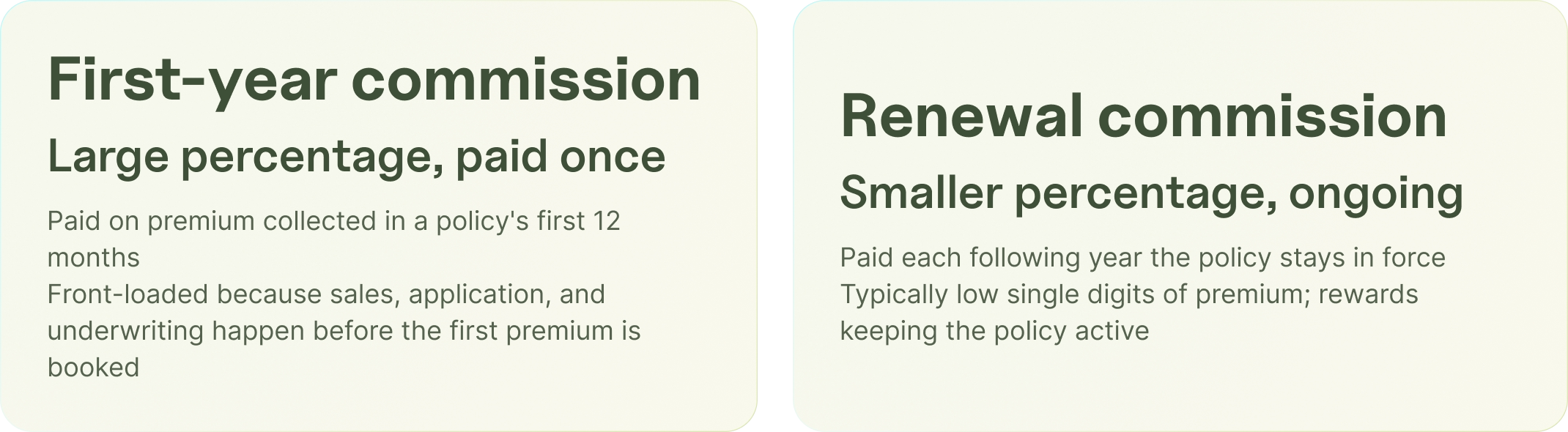
First-year commission is the large percentage paid on the premium collected in a policy's first 12 months, and renewal commission is the smaller percentage paid in each following year the policy stays in force. Carriers front-load pay this way because the sales work, application, and underwriting all happen before the first premium is booked. First-year rates on life products are commonly quoted well above renewal rates, sometimes by a factor of ten or more.
Renewal commissions, sometimes called trail or service commissions, typically run in the low single digits of premium and often stop after a set number of years such as year 10. They reward the agent for keeping the policy active and for handling service calls, beneficiary changes, and questions. The mix of first-year and renewal pay is the core of any insurance producer compensation plan, and it explains why persistency matters so much to a book's long-term value.

Term vs whole and permanent life commission
Term life and permanent life pay commission on the same percentage-of-premium logic, but the dollar outcomes differ sharply because their premiums differ. Term life has low premiums for a fixed period, so even a high first-year percentage produces a modest commission. Whole life and other permanent products carry much higher premiums, so the same or higher percentage yields a larger check. This is why product mix, not just headcount, drives producer income.
Permanent products can also carry commission on additional premium such as paid-up additions or riders, which adds complexity to the calculation. Agents working live-transfer or high-intent pipelines often weigh product mix carefully, a point covered in this guide to life insurance live transfer leads. For agency owners, the balance between term and permanent business also feeds into how an insurance agency is valued, since renewal streams and persistency affect the multiple.
How carriers structure life insurance commission rates
Carriers structure life insurance commission rates through a layered contract that sets a first-year rate, a renewal schedule, and sometimes bonuses or overrides tied to production. The rate a producer sees depends on the distribution channel: captive agents, independent agents, and brokerage general agencies each negotiate different splits. A general agency may keep an override on business its downline agents write, which reduces the writing agent's net rate while funding recruiting and support.
Regulators watch this structure too. The National Association of Insurance Commissioners publishes model guidance that shapes how insurers govern their distribution and disclosure practices, and state law sets licensing and suitability rules. Compensation is also reported at the occupation level: national wage and employment figures for insurance sales agents come from the Bureau of Labor Statistics, which is a better anchor than any single agency's numbers. When comparing pay across roles, it helps to look at both the salary picture for insurance brokers and the pay range for agency CSRs, since commission-heavy and salaried roles behave very differently.
Why commission structure affects agency operations
Commission structure affects operations because front-loaded pay pushes producers toward new sales, which can leave service calls, renewals, and existing clients under-covered. When a producer chases first-year commission, the phone still rings with beneficiary questions, payment issues, and policy service requests. If those calls go unanswered, persistency suffers and the renewal commissions that reward retention start to erode.
That tension is why many agencies separate selling from servicing. Missed calls are lost revenue, and the data on caller expectations is stark: the Sonant Consumer AI Readiness Report documents how quickly callers expect a response. Reducing the volume of routine interruptions on producers, covered in this piece on cutting down agency phone calls, frees them to write business while service still gets handled.
How Sonant fits
Sonant is an AI voice receptionist built for P&C (property and casualty) and life insurance agencies. When a caller reaches the agency, Sonant answers, captures the reason for the call, and writes a structured note straight to the AMS (agency management system) - with native integrations for EZLynx, Applied Epic, HawkSoft, and AMS360. Anything that needs a licensed decision, including questions about life insurance commission rates on a specific contract, is escalated to a licensed CSR (customer service representative) or producer with full context attached.
The workflow is simple: answer the call, log it to the AMS, escalate when needed, and notify the right person. The metric that matters is fewer missed calls and better persistency, and the output is producers who spend their time selling instead of triaging routine service. Sonant pairs naturally with a modern insurance agency management system and with AI-assisted lead qualification so the front office stays covered while the commission engine keeps running. For teams drowning in admin, it also helps cut back-office work across the agency.
See how many service calls your producers could hand off. Book a Sonant demo →
Related reading
- The building blocks of agent commission structures
- Designing a producer pay plan that retains talent
- Handing routine calls to an AI receptionist for insurance
- What renewal streams mean for agency value
- Winning conversions from life insurance live transfers
- How much commission do insurance agents make?
- Property & casualty insurance agent commission chart






.svg)


.svg)


