.svg)

.avif)
AI in insurance cost usually breaks into four pricing models: per-minute (you pay for talk time), per-seat (you pay per user or license), flat subscription (a fixed monthly fee), and custom enterprise contracts. For a small or mid-size property and casualty (P&C) agency, most voice AI and receptionist tools land in a predictable monthly range once you account for call volume and setup. The number that matters is not the sticker price - it is cost per handled call versus the fully loaded cost of the staff time you replace or redeploy. This guide explains each model, what drives the price up or down, and how to size return on investment (ROI) before you sign anything.
Key Takeaways
- AI in insurance cost falls into four models: per-minute, per-seat, flat subscription, and custom - each fits a different call volume.
- The real cost driver is call volume and complexity, not the headline price; integrations and after-hours coverage add or remove line items.
- Compare cost per handled call against a fully loaded customer service representative (CSR) wage, not just base salary.
- ROI shows up as recovered missed calls, faster response, and admin hours returned to licensed staff - quantify all three.
- Ask every vendor for total cost including onboarding, overage, and integration fees before comparing quotes.
What does AI in insurance cost, and which pricing model applies?
AI in insurance cost depends on the pricing model a vendor uses, and there are four common ones: per-minute, per-seat, flat subscription, and custom. Per-minute suits agencies with spiky or low call volume; flat subscription suits steady volume; per-seat suits tools tied to individual users; custom fits high-volume or multi-location agencies. Match the model to how your phones actually ring, not to the lowest advertised rate.
Per-minute pricing charges for talk time, so a short quote intake call costs less than a long first notice of loss (FNOL) conversation. Per-seat pricing charges per licensed user, which works when a tool sits inside your team's daily workflow rather than answering the main line. Flat subscription gives you a fixed monthly bill regardless of volume, which makes budgeting simple but can overcharge a quiet office. Custom contracts bundle volume tiers, integrations, and support - useful once you outgrow off-the-shelf plans. For a fuller vendor-by-vendor view, see our roundup of the top voice AI options for insurance agencies.
Not sure which model fits your call volume? → Talk to Sonant
What drives AI in insurance cost up or down?
Several factors move AI in insurance cost more than the base rate does: monthly call volume, average call length, how many integrations you need, after-hours or overflow coverage, and the number of workflows the tool handles. A tool that only answers and takes a message costs less than one that qualifies leads, books appointments, and writes notes back to your agency management system (AMS). Scope the work first, then price it.
Integrations are a frequent hidden line item. Native connections to systems like EZLynx, Applied Epic, HawkSoft, or AMS360 may be included, tiered, or billed separately - confirm before you compare quotes. Compliance also affects price: agencies handling personally identifiable information (PII) should expect vendors with a SOC 2 report, and you can verify what that audit covers through the AICPA SOC 2 framework. For context on where phone workload actually comes from, our guide on insurance agency call volume patterns breaks down the drivers, and if your goal is trimming overhead broadly, start with ways to reduce insurance operational costs.
.avif)
How do the pricing models compare on cost and fit?
The four pricing models trade predictability against flexibility, and the right choice depends on your call volume and how many jobs you want the tool to do. The table below lays out each model with industry-typical ranges - treat every figure as illustrative and confirm current pricing with each vendor, since published rates change often.
Use this as a shortlist filter, not a final answer. A per-minute plan can beat a subscription at 300 calls a month and lose at 3,000. When you request quotes, ask each vendor to model your real volume so you compare cost per handled call on the same basis. For a deeper cost breakdown of the human alternative, our insurance virtual assistant cost guide is a useful companion.
How should an agency calculate ROI on insurance AI?
ROI on insurance AI is the value returned minus the total cost, divided by that cost - but the value is more than saved salary. For a P&C agency, value comes from three places: calls recovered that would have gone unanswered, faster response that converts more quotes, and admin hours returned to licensed staff. Sum all three, then subtract the fully loaded cost of the tool.
Work through it as a short calculation:
- Measure recovered calls. Count missed and after-hours calls today, estimate how many the tool would answer, and multiply by your average revenue per new policy or renewal saved.
- Value the time returned. Estimate CSR hours spent on repetitive phone and note-taking work, and price them at a fully loaded wage - not base pay. National wage data from the Bureau of Labor Statistics is a defensible starting point, and our CSR salary breakdown helps you build the fully loaded figure.
- Add total cost. Include subscription or usage fees, onboarding, and any integration charges - the full picture, not the headline rate.
- Divide and compare. Express the result as cost per handled call and as payback period in months.
The industry backdrop matters here: consumer comfort with AI-handled interactions is rising, and the Sonant Consumer AI Readiness Report is a useful reference when you model conversion assumptions. For the mechanics of framing this as a business case, see our walkthrough of insurance agency software ROI and the companion piece on virtual receptionist software ROI for agencies.
A worked cost example for a mid-size agency
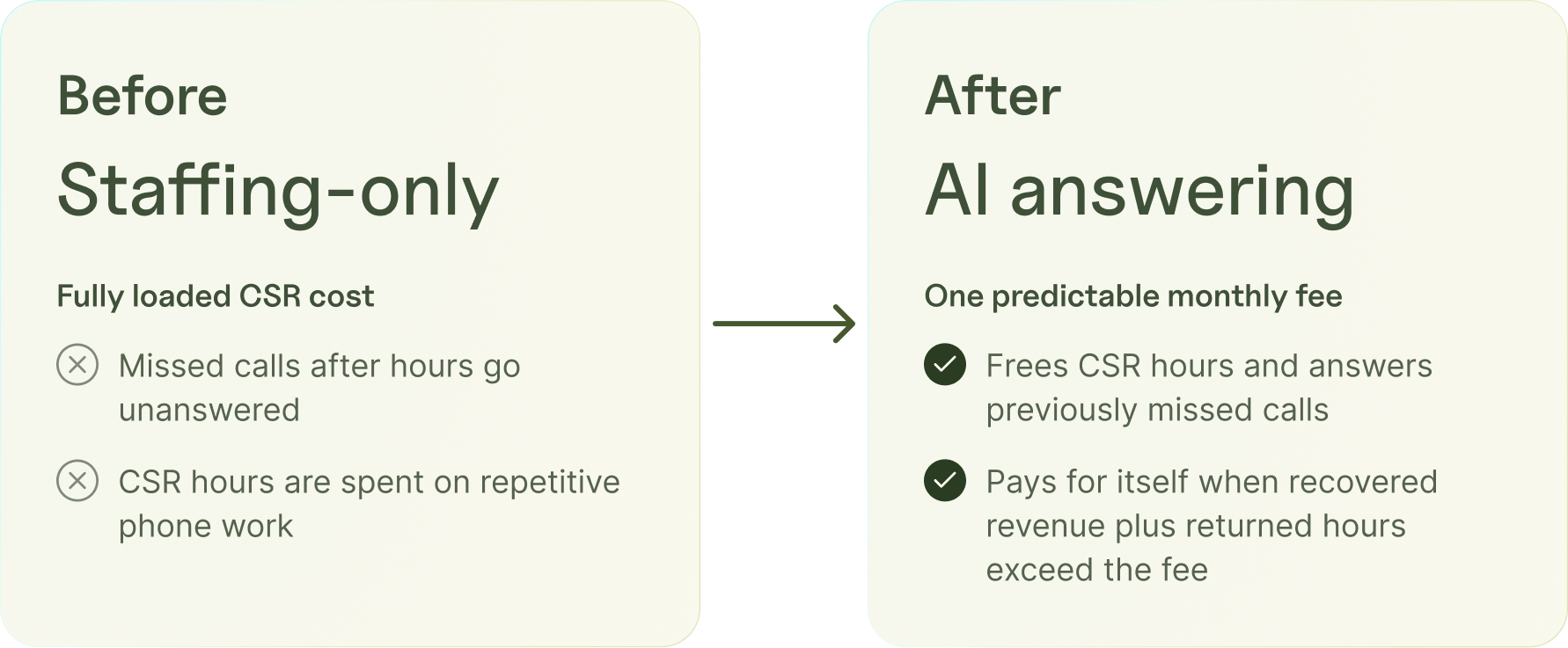
A cost example makes the models concrete: picture a mid-size P&C agency taking a moderate volume of inbound calls each month, with a share going unanswered after hours. The point is not the exact dollars - it is the shape of the comparison between paying for AI and paying for the staff time it offsets. Fill in your own numbers using ranges you can defend.
Under a flat subscription, the agency pays one predictable monthly fee no matter how the phones ring. Against that, weigh the fully loaded cost of the CSR hours the tool frees and the value of previously missed calls it now answers. When recovered revenue plus returned hours exceed the monthly fee, the tool pays for itself; the ratio between them is your ROI. General industry cost and premium context from the Insurance Information Institute can help you sanity-check the revenue-per-policy assumptions you plug in. If cutting repetitive workload is the main goal, our guide to reducing admin work in an insurance agency pairs well with this exercise, as does the overview of insurance call center automation.
How Sonant fits
Sonant is an AI voice receptionist built for P&C agencies, and its role in the AI in insurance cost equation is simple: answer inbound and after-hours calls, qualify callers, book appointments, and write structured notes back to your AMS - then escalate anything that needs a licensed human. The workflow is answer → capture → route or write-back → escalate. The metric is cost per handled call and hours returned to staff. The output is fewer missed calls and clean records in your system of record.
Sonant offers native integrations with EZLynx, Applied Epic, HawkSoft, and AMS360, so call outcomes land in the AMS without manual re-entry, and complex or coverage-specific requests route to a licensed CSR rather than being answered incorrectly. To see how this maps onto pricing and payback for your office, review how an AI receptionist for insurance agencies is deployed, the benefits of AI receptionists for insurance, and the practical steps in how to implement AI in your insurance agency.
Want a cost and ROI estimate built around your real call volume? Book a Sonant demo →
Related reading
- Cutting overhead across an insurance agency
- Answering more calls without adding headcount
- What a virtual assistant costs an insurance agency
- Building the software ROI case for your agency
- Automating the insurance call center
- Insurance agency AI: where to start and what to buy
- AI tools for insurance agencies






.svg)


.svg)


