.svg)

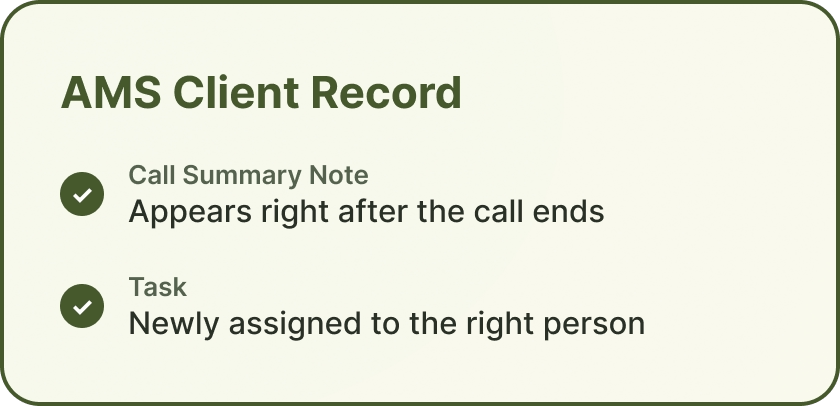
AI phone answering with AMS write-back means that when a call ends, a note automatically lands on the correct client record (who called, what they wanted, and a transcript) and a follow-up task is created, without anyone typing it. It is the difference between an AI that answers the phone and an AI that finishes the job inside your management system. If you are shopping for AI phone answering for your agency, write-back is the feature to interrogate hardest, because it decides whether the tool reduces your team's admin load or simply relocates it into a second inbox.
Key Takeaways
- AMS write-back is the finish line: a note on the right client record plus an assigned task, automatically, after every call.
- Without write-back, an AI receptionist just moves the documentation work - your team still reconstructs and types the notes.
- Ask exactly what the note contains (caller, intent, transcript) and whether a task is created and assigned.
- Confirm it works with your specific AMS - EZLynx, Applied Epic, HawkSoft, or AMS360 - and how it matches the caller to a record.
- Pricing depends on call volume, so get a quote from a demo rather than a sticker price.
What does "AI phone answering that writes back to your AMS" mean?
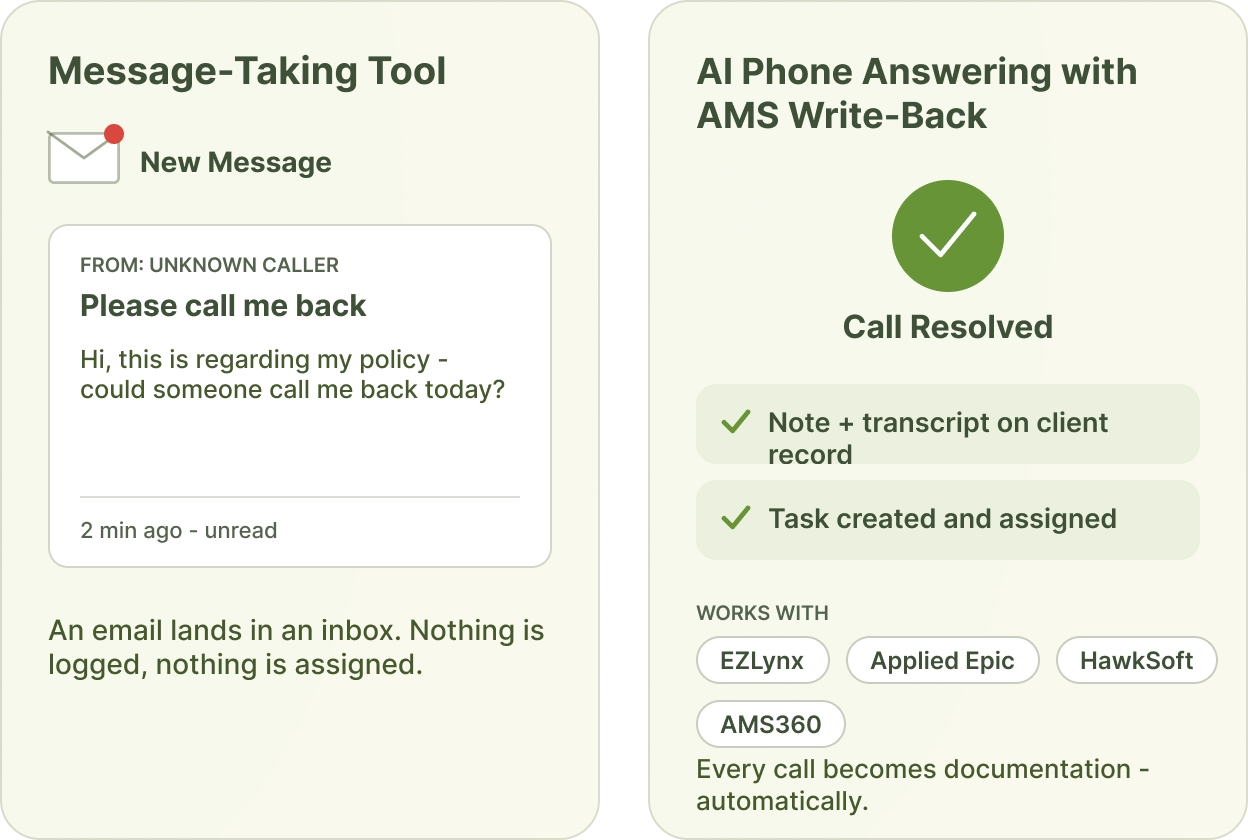
It means the AI doesn't stop at answering the call; it documents the outcome in your AMS the way a good CSR would. After the conversation, a note appears on the client record summarizing who called and what they needed, with a transcript attached, and a task is assigned so nothing falls through. That closing step is what makes insurance call center automation actually pay off, instead of leaving your team a pile of voicemails to transcribe.
Plenty of tools market themselves as AI phone answering for insurance agencies, but many stop at taking a message. The ones worth paying for behave like a full AI receptionist for insurance agencies: they resolve the routine request live and then write the record back into the system your team already lives in. If a tool can't do the write-back, you are buying a nicer voicemail.
Not sure whether a tool truly writes back or just takes a message? → Talk to Sonant
Write-back vs message-taking: what to compare
The gap between "took a message" and "wrote back to the AMS" is where the real savings live.
The right-hand column is what cuts administrative overhead rather than adding to it. For the mechanics of how that note and task get created, see does an AI receptionist log call notes to your AMS automatically, and for the broader effect on workload see reduce admin work at your insurance agency.
What to evaluate before you buy
Write-back touches client data, so evaluate the vendor accordingly. Ask for a current SOC 2 report, which shows independent auditing against the AICPA SOC 2 framework for how the tool stores and handles data, including the transcripts it writes to your AMS. Confirm the vendor's approach lines up with state guidance modeled on the NAIC model bulletin on the use of AI, since documented oversight of automated systems is increasingly expected. And remember the caller's perspective; the Insurance Information Institute is a useful yardstick for what policyholders expect when they call about a policy or a loss.
On the functional side, get specific. What exactly does the note contain? Is a task always created, and who is it assigned to? How does the tool match a caller to the right record, and what happens when it can't confirm identity? Review AI receptionist client data security and settle internally on what AI should handle versus a licensed agent. Confirm the specific integration for your AMS, whether EZLynx, Applied Epic, HawkSoft, or AMS360, and how write-back behaves for each. For how the AMS itself fits the picture, see the insurance agency management system guide and boost agency efficiency with AMS insurance software.
How Sonant fits
Sonant is an AI receptionist built for P&C agencies, and AMS write-back is core to how it works. On a call, Sonant verifies the caller against AMS data and resolves routine requests, for instance detecting the caller's carrier and texting the matching carrier payment link. When the call ends, it writes a note to the client record with who called, what they wanted, and a transcript, then assigns a task. That happens across the systems agencies already run, including EZLynx, Applied Epic, HawkSoft, and AMS360, and nobody types the note afterward.
Sonant is not a replacement for your team. It covers the calls your staff can't reach (overflow, after-hours, and Spanish-language calls) and hands the judgment calls back to licensed people. A human is still better on a complex, emotional claim conversation or a nuanced coverage question. The point of the hybrid model is that the AI handles the routine work and the documentation while your team keeps the decisions. If your agency is drowning in post-call note-taking, ai phone answering ams write-back insurance is exactly the capability that gives those hours back: the call is answered and the note is filed for you. Because the right configuration depends on your call volume, pricing comes from a demo and a quote.
Want to see AMS write-back happen live on a call? Talk to Sonant →
Related reading
- Does an AI receptionist log call notes to your AMS automatically?
- Best AI receptionist for EZLynx agencies
- Best AI receptionist for HawkSoft agencies
- Best AI receptionist for AMS360 agencies
- Insurance call center automation
- Reduce admin work at your insurance agency
- Insurance agency management system guide






.svg)

.svg)


