.svg)

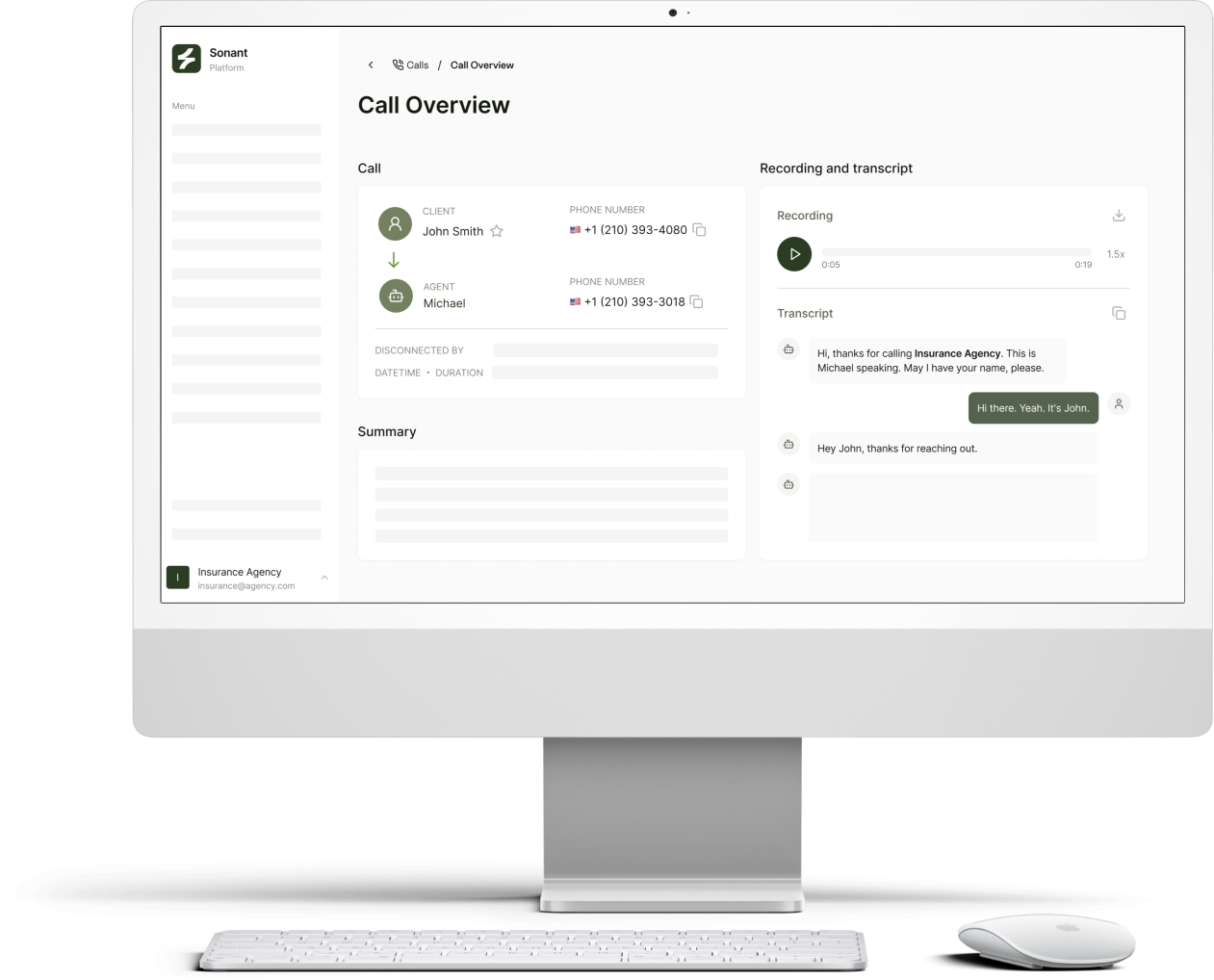
Yes. An AI receptionist can log call notes to your AMS automatically. After a call ends, it writes a note to the correct client record with who called, what they wanted, and the full transcript, and it assigns a task so the right person follows up. AI receptionist AMS call notes automation means the documentation happens as a byproduct of the call, not as a chore your CSR does between the next three phone lines. The write-back works with the common P&C platforms (EZLynx, Applied Epic, AMS360, and HawkSoft), so the note lands in the system your team already uses rather than in a separate inbox. Cutting that after-call typing is where agencies recover the most time, and it is a large part of how AI answering helps them reduce administrative overhead.
That is the difference between an AI receptionist and a phone service that just takes a message. The note lands where you actually work, inside EZLynx, Applied Epic, AMS360, or HawkSoft, attached to the right client, with a searchable transcript. No sticky notes, no "I'll write it up later," no gaps in the file when someone is out.
Key Takeaways
- An AI receptionist writes a call note to the correct client record automatically after each call: who called, what they needed, and a full transcript.
- It assigns a follow-up task to the right person, so nothing depends on someone remembering.
- Write-back works with common AMS platforms: EZLynx, Applied Epic, AMS360, and HawkSoft.
- Removing after-call typing is where agencies recover the most time, and administrative overhead drops sharply.
- The AI documents routine calls end to end and routes licensed decisions to staff, so notes stay accurate and judgment stays human.
Does an AI receptionist log call notes to your AMS automatically?
Yes, and the mechanics are straightforward. During the call, the AI receptionist identifies the client and the reason for the call. When the call ends, it composes a note (caller, intent, what was done, and the verbatim transcript) and posts it to that client's record. Then it creates a task and assigns it so the follow-up has an owner. This write-back is the core of what separates an AI receptionist for insurance agencies from a generic answering service, and it's why we treat AMS write-back as a must-have when evaluating any vendor.
The value shows up in time back. Documentation and re-keying are a big share of the administrative load in an agency, and automating it is a large part of broader insurance call center automation. It's also the fastest way to reduce admin work and reduce manual workload without cutting service quality: the notes get more complete, not less.
Tired of CSRs typing up calls instead of taking them? → Talk to Sonant
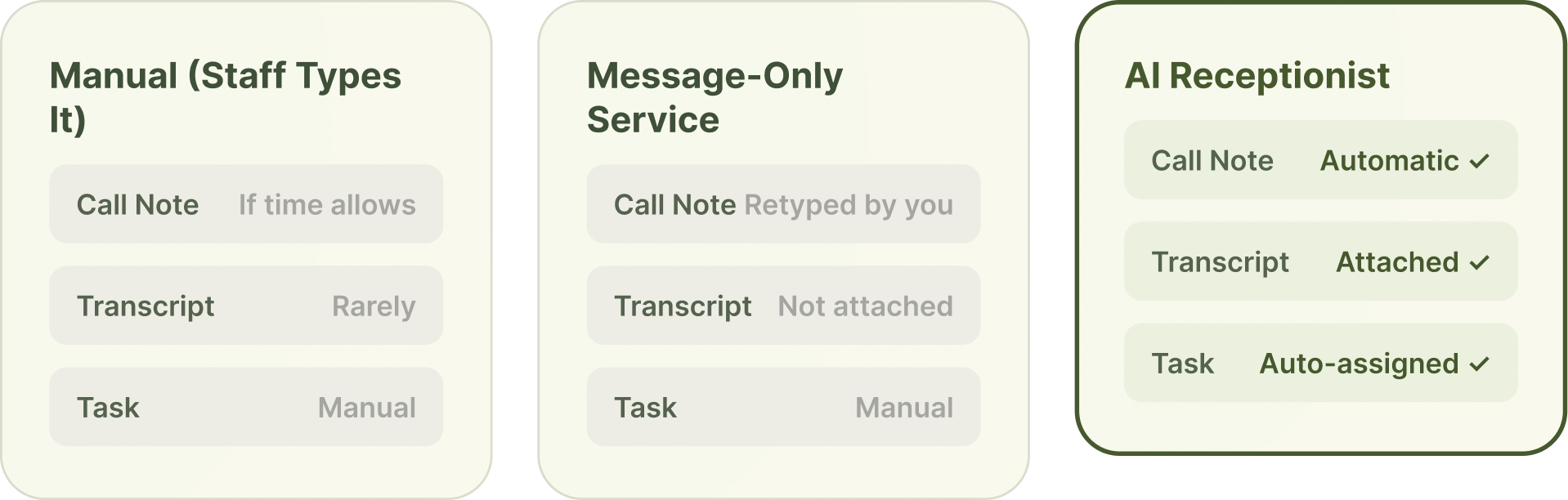
Manual notes vs automatic AMS write-back
Here's what changes when the note writes itself.
The failure mode with manual notes isn't laziness; it's volume. When the phones are busy, documentation is the first thing that slips, and incomplete files cause the errors and rework that show up later. Automatic write-back closes that gap by making the note a step in the call, not an afterthought.
What to evaluate in AMS note automation
Call notes contain personal and policy information, so how a vendor stores and protects that data is the first question. Ask for a SOC 2 report. It's the standard attestation for how a service organization handles customer data, and the AICPA SOC 2 framework spells out what it covers. If notes and transcripts flow into your AMS, that pipeline is exactly what a SOC 2 review is meant to scrutinize.
Governance matters too. Regulators expect documented, accountable AI use, and the NAIC model bulletin on the use of AI systems is the reference most states cite for testing and oversight, and a searchable, auditable transcript on every record actually helps you meet that bar. And because accurate documentation is part of good claims and service records, the Insurance Information Institute is a useful backdrop on why clean files matter across the policy lifecycle.
Then get specific about your stack. Confirm write-back to your platform, whether that's AMS360, EZLynx, Applied Epic, or HawkSoft, and make sure the note lands on the right client with the transcript attached. Your agency management system is your source of truth; the notes have to respect it.
How Sonant fits
Sonant connects to your AMS and writes back automatically. When a call ends, a note lands on the client record (who called, what they wanted, and the full transcript) and a task is assigned to the right person. No one retypes anything. This works during the day for overflow and after hours too, so your team walks in to complete records rather than a backlog.
Sonant is deliberately hybrid. It documents and resolves routine calls end to end, and it routes anything that needs a licensed decision to a person. See what AI should handle vs a licensed agent for where we draw that line. The point isn't to replace your CSRs' judgment; it's to give them back the time they spend typing up calls, with better notes than they'd have had time to write. If AMS documentation is your bottleneck, this is the piece that clears it.
Want every call documented in your AMS without the typing? Talk to Sonant →
Related reading
- Insurance call center automation
- AI phone answering that writes back to your AMS
- Best AI receptionist for AMS360 agencies
- Best AI receptionist for EZLynx agencies
- Reduce admin work at your insurance agency
- AI receptionist for insurance agencies
- What AI should handle vs a licensed agent






.svg)

.svg)


