.svg)

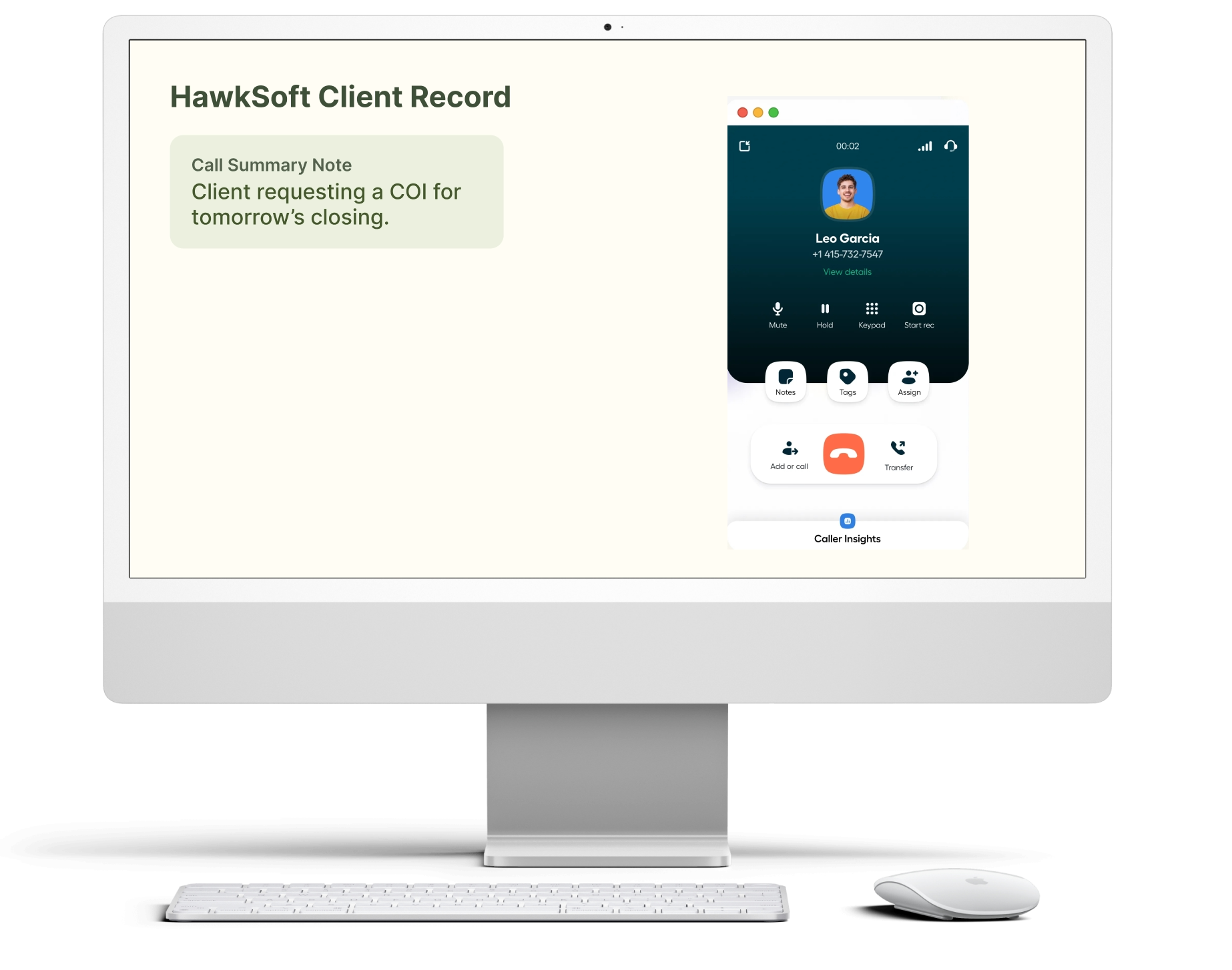
If you run a HawkSoft agency, the best AI receptionist is the one that answers the calls your team misses and then writes an accurate note back to the correct HawkSoft client record without anyone retyping it. An AI receptionist with HawkSoft integration picks up overflow, after-hours, and Spanish calls, resolves routine requests on the spot, routes anything that needs a licensed decision to a person, and documents the interaction in the AMS. The hard part is not answering the phone; plenty of tools do that. The hard part is finishing the job inside HawkSoft so your CSRs aren't stuck cleaning up voicemails and typing notes the next morning.
Key Takeaways
- The best AI receptionist for a HawkSoft agency finishes the job in the AMS: it writes a note to the client record and creates a follow-up task automatically.
- Ask how the tool matches a caller to the right HawkSoft record and what happens when it can't - the honest answer is "route to a person," not "guess."
- Routine requests (payment links, hours, ID cards, simple status) can resolve on the call; licensed decisions and coverage advice should escalate to staff.
- Verify security posture the same way you would any vendor touching client data: SOC 2, data handling, and call logging.
- Pricing depends on your call volume and setup, so get a quote from a demo rather than a sticker number.
What is the best AI receptionist for HawkSoft agencies?
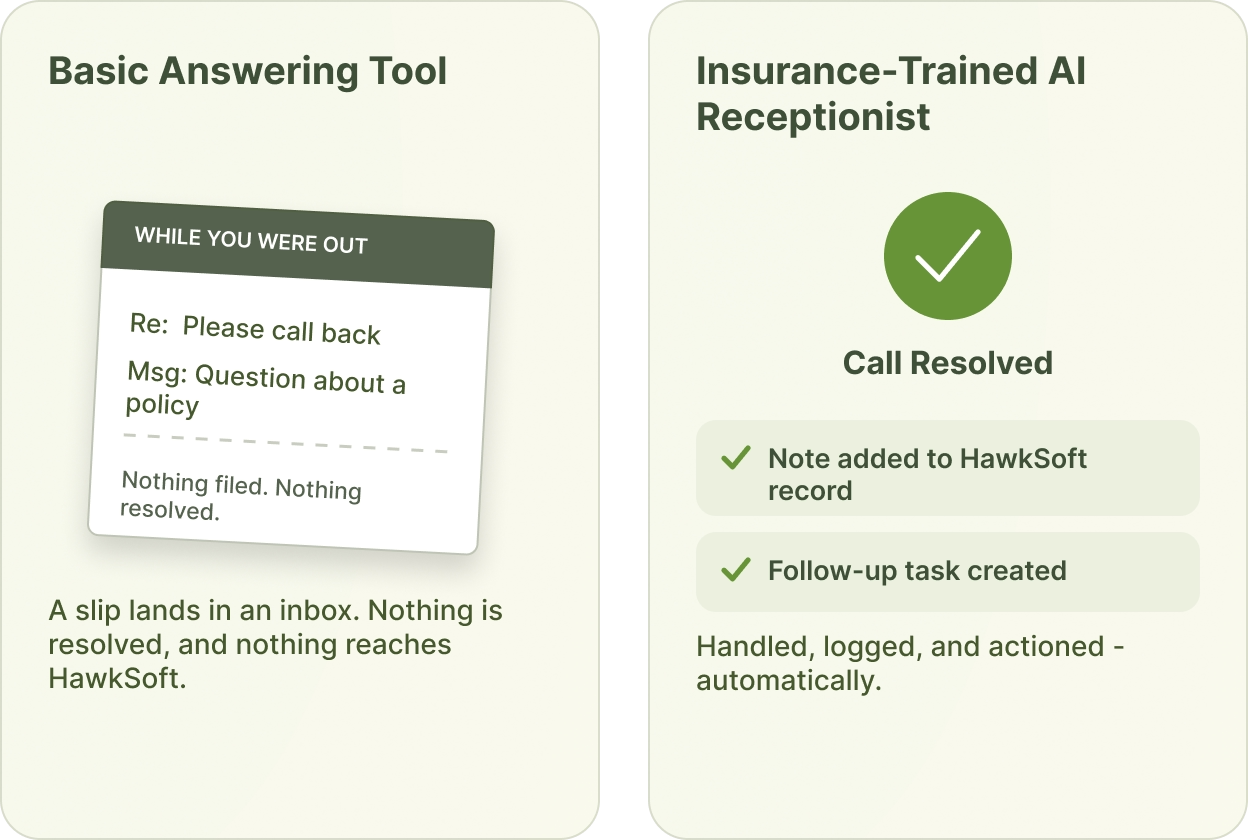
The best AI receptionist for HawkSoft agencies is one built for P&C insurance workflows, not a generic call bot with a HawkSoft logo on the page. In practice that means it connects to your AMS, resolves routine calls end to end, and logs every interaction back to the client record. A general-purpose AI receptionist for insurance agencies can take a message; an insurance-trained one can verify a caller against AMS data, detect intent, and write a structured note back to HawkSoft so the next person picking up the file sees exactly what happened.
The distinction matters because a HawkSoft agency lives inside its management system. If the AI answers calls but leaves documentation for your team to reconstruct, you have moved the work, not removed it. Look for AI phone answering that treats the AMS note as the finish line, and read up on how insurance call center automation actually reduces admin load rather than adding a second system to reconcile.
Not sure how an AI receptionist would fit your HawkSoft setup? → Talk to Sonant
HawkSoft AI receptionist: what to compare
Compare tools on the categories that decide whether the AI actually helps a HawkSoft agency, not on marketing adjectives.
The write-back row is the one buyers underweight and regret later. A note that lands on the correct HawkSoft record, with who called, what they wanted, and a transcript, is what keeps your team from doing the same work twice. For a deeper look at how that documentation flows, see does an AI receptionist log call notes to your AMS automatically and the broader guide to AI phone answering that writes back to your AMS.
What to evaluate before you buy
Treat an AI receptionist like any vendor that touches client data. Ask for the security documentation first: a current SOC 2 report tells you the vendor has been independently audited against the AICPA SOC 2 framework for how it handles data. Ask how the tool aligns with state guidance modeled on the NAIC model bulletin on the use of AI, since carriers and regulators increasingly expect documented oversight of automated systems. And keep the customer-experience bar in mind. The Insurance Information Institute is a useful reference point for what policyholders expect when they call about a policy or a loss.
Then evaluate the practical fit. How does the tool match a caller to the right HawkSoft record? What happens when identity can't be confirmed: does it proceed or route to a person? For the security-minded checklist, see AI receptionist client data security and caller verification for insurance. It also helps to be clear internally about what AI should handle versus a licensed agent so your team trusts the routing.
How Sonant fits
Sonant is an AI receptionist built for P&C agencies, and it works with the systems agencies already run, including HawkSoft, EZLynx, Applied Epic, and AMS360. On a call, Sonant verifies the caller against AMS data, resolves routine requests (for example, detecting the caller's carrier and texting the matching carrier payment link), and, when the call ends, writes a note to the client record with who called, what they wanted, and a transcript, then assigns a task. Nobody types it up afterward.
Sonant is not a replacement for your team, and we don't pretend it is. It covers the calls your CSRs can't reach (overflow, after-hours, and Spanish-language calls) and hands the judgment calls back to licensed staff. A human is still better on a complex, emotional claim conversation or a nuanced coverage question. The model is hybrid on purpose: AI handles the routine and the documentation, people keep the decisions. If your HawkSoft agency is losing calls to voicemail and losing evenings to note-taking, that is the gap Sonant closes. Pricing depends on your call volume, so the right next step is a demo and a quote.
Want to see how an AI receptionist would document calls in your HawkSoft workflow? Talk to Sonant →
Related reading
- AI receptionist for insurance agencies
- Best AI receptionist for EZLynx agencies
- Best AI receptionist for Applied Epic agencies
- AI phone answering that writes back to your AMS
- Does an AI receptionist log call notes to your AMS automatically?
- Boost agency efficiency with AMS insurance software
- Insurance agency management system guide






.svg)

.svg)


