.svg)

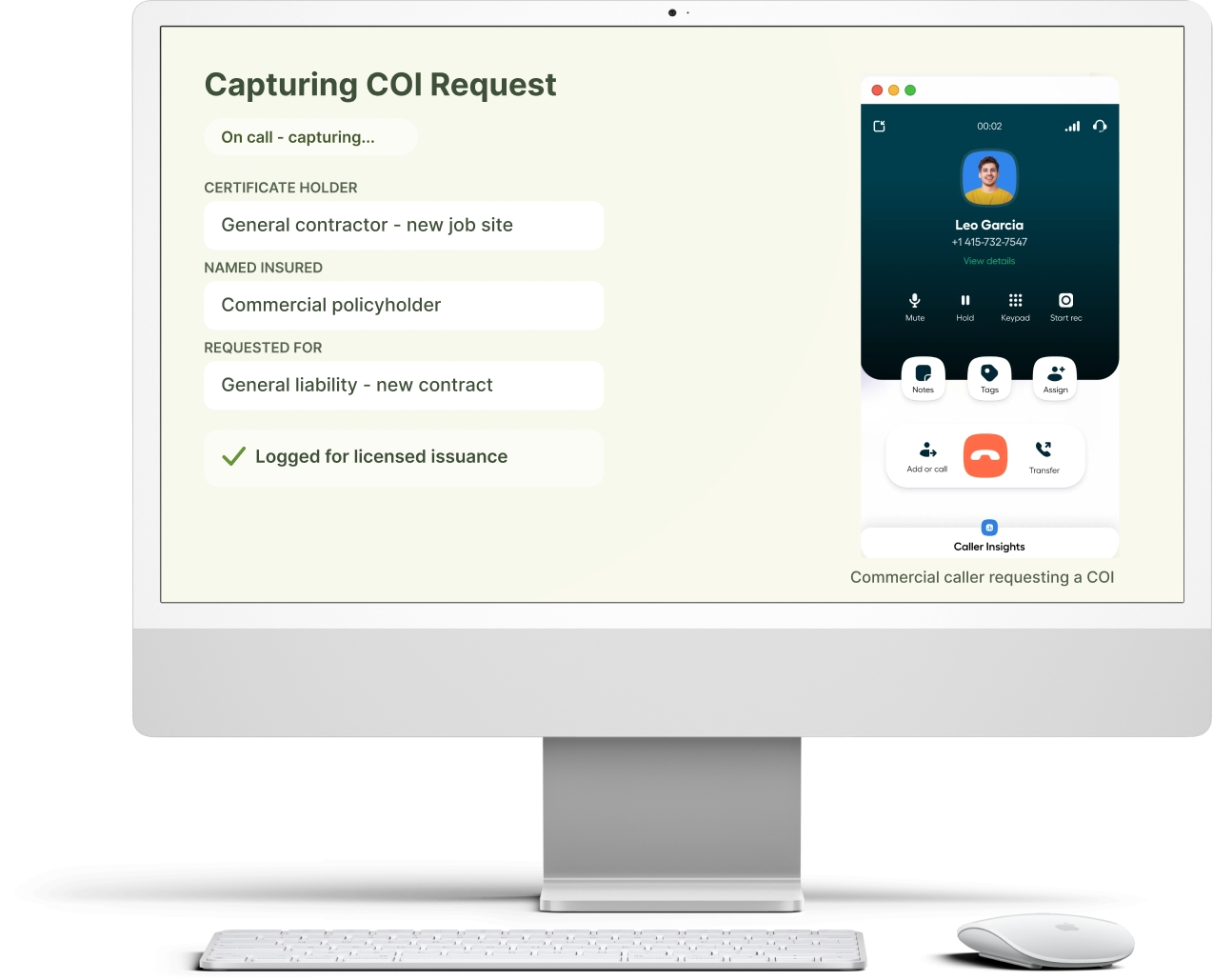
An AI receptionist can handle certificate of insurance (COI) requests by answering the call, verifying the caller against your agency management system, capturing the certificate holder and the details being requested, and logging the whole thing to the client record for a licensed person to issue. That is what AI answering for insurance COI requests looks like in practice: the routine intake gets done on the phone, and anything that needs a judgment call gets routed to staff. COI requests are one of the highest-volume, most repetitive calls a P&C agency takes, which makes them a good fit for automation that captures the request cleanly instead of dropping it into voicemail.
Key Takeaways
- An AI receptionist can answer a certificate of insurance request, confirm who is calling, and record exactly what they need.
- It writes a note and a task to your AMS so a licensed person can issue or review the certificate - no manual typing after the call.
- Caller identity is checked against your management-system data before any policy detail is discussed.
- Issuing a certificate that changes coverage or adds an insured stays with a person; the AI handles intake and routing.
- Handling routine COI intake by phone frees your team from the volume so they can work the requests that need real attention.
How does AI answering handle COI requests for an insurance agency?
When a client or a certificate holder calls to ask for a certificate, the AI receptionist answers, confirms the caller's identity against your management system, and asks for the details it needs: the named insured, the certificate holder, the job or contract it is for, and any wording the requester mentioned. It records all of that and drops a note plus a task on the client record so a licensed staffer can produce the certificate (often an ACORD 25 for general liability) and send it out. The point is that the request is captured accurately and lands in your AMS with a full call note, instead of sitting in a voicemail your team has to re-listen to and re-key. If you want the broader picture of what an AI receptionist for insurance agencies does across every call type, that guide covers it.
Tired of COI requests stacking up in voicemail? → Talk to Sonant
What an AI receptionist can and can't do on a COI request
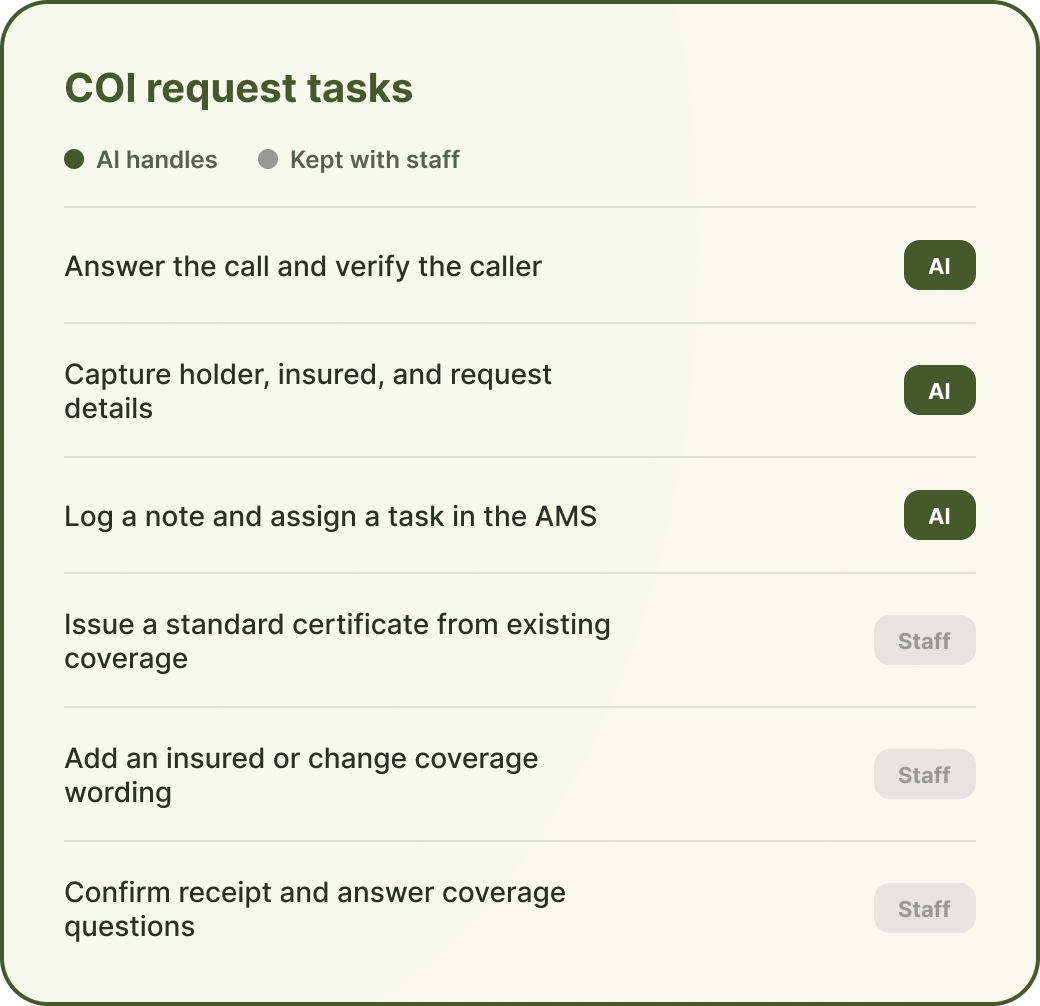
The honest split is that intake and routing are automatable; issuing the certificate is a licensed task. Here is how that breaks down.
What to evaluate before automating COI intake
Because a COI request touches client and policy data, look at how the vendor secures and handles that information. Confirm the provider has a current SOC 2 report. The AICPA SOC 2 framework sets the controls an auditor tests. Check how the vendor's approach lines up with the NAIC model bulletin on the use of AI, which is what state regulators are pointing insurers and their partners toward. And keep in mind that a certificate is evidence of coverage, not coverage itself; the Insurance Information Institute is a plain-language reference you can point staff and clients to. Beyond compliance, decide where your line sits between what the AI resolves and what a person signs off on; our take on what AI should handle versus a licensed agent can help you draw it.
How Sonant fits
Sonant answers the calls your team can't reach, including overflow, after-hours, and Spanish-speaking callers, and COI intake is a good example of the routine work it takes off the desk. On a certificate request, Sonant verifies the caller against your AMS data, captures the holder and request details, and writes a note plus a task to the client record in EZLynx, Applied Epic, HawkSoft, or AMS360 so a licensed person can issue the certificate. It does not add an additional insured or change wording on its own; those are judgment calls that stay with staff. The model is a hybrid: Sonant covers the routine, high-volume intake, and your team keeps every decision that requires a license. That same handling extends to related routine work like renewals and retention calls and fits into a broader move to reduce admin work across the agency. If phone volume is the real bottleneck, our overview of insurance call center automation and AI phone answering for insurance agencies puts COI handling in context.
Ready to stop re-keying COI requests from voicemail? Talk to Sonant →
Related reading
- AI receptionist for insurance agencies
- What a certificate of insurance is
- ACORD 25 explained
- How an AI receptionist verifies callers
- Does an AI receptionist log call notes to your AMS?
- AI receptionist for renewals and retention calls
- Insurance call center automation






.svg)

.svg)


