.svg)

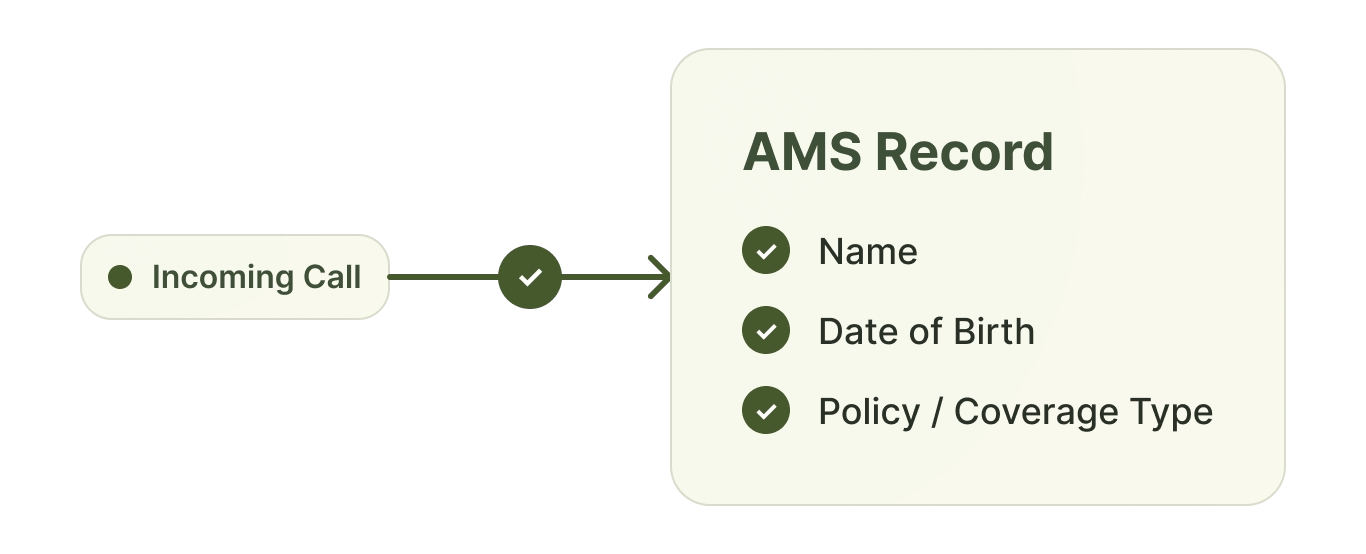
Yes. A well-built AI receptionist can verify a caller's identity before it shares any policy information, and a good one will refuse to continue if the caller cannot confirm who they are. That is the core of ai receptionist caller verification for an insurance agency: the system checks what the caller says against the record already in your agency management system, and only then does it discuss coverage, billing, or claims. If the details do not match, the call routes to a licensed person instead of exposing anything.
This matters because the phone is where personal information leaks. A caller asking "what's my deductible" or "can you email my dec page" is asking you to hand over protected data, and your front desk has to decide in a few seconds whether the person on the line is really the insured. An AI receptionist applies the same check the same way on every call, and it writes down what happened. For the bigger picture on where this fits, see our guide to the AI receptionist for insurance agencies.
Key Takeaways
- An AI receptionist verifies a caller against your AMS record (typically name, date of birth, and policy or coverage type) before it shares policy details.
- You can add a custom "stump question" (a detail only the real insured would know) for a second layer.
- If the caller cannot confirm the required details, the AI does not proceed; it routes the call to a person.
- Every verification attempt is logged with a full transcript, so you have a record of who asked for what.
- Verification handles routine identity checks; complex or sensitive judgment calls still go to licensed staff.
Can an AI receptionist verify callers before sharing policy info?
Yes. The AI receptionist compares the caller's answers to the data already stored on the client record in your AMS: commonly the name on file, date of birth, and the type of policy or coverage the caller references. When those line up, the AI continues and can handle the routine request; when they do not, it stops and hands the call to a staff member. Nothing about the policy is read aloud until the check passes. This is the same discipline a careful CSR uses, applied consistently on every call, and it pairs naturally with the way the system also handles caller identity verification in more detail.
Because the verification runs against live AMS data (EZLynx, Applied Epic, AMS360, or HawkSoft), it does not rely on the caller "sounding right." It relies on facts in the record. And because every attempt is captured with a transcript, you get an audit trail, useful when you review what data an AI receptionist stores and how it is secured. If a caller fails verification, that is logged too, so a suspicious pattern is visible rather than invisible.
Worried about who is really on the line before you share a policy? → Talk to Sonant
What a caller verification flow looks like, step by step
Here is how a verification-first call compares to the two common alternatives an agency uses today.
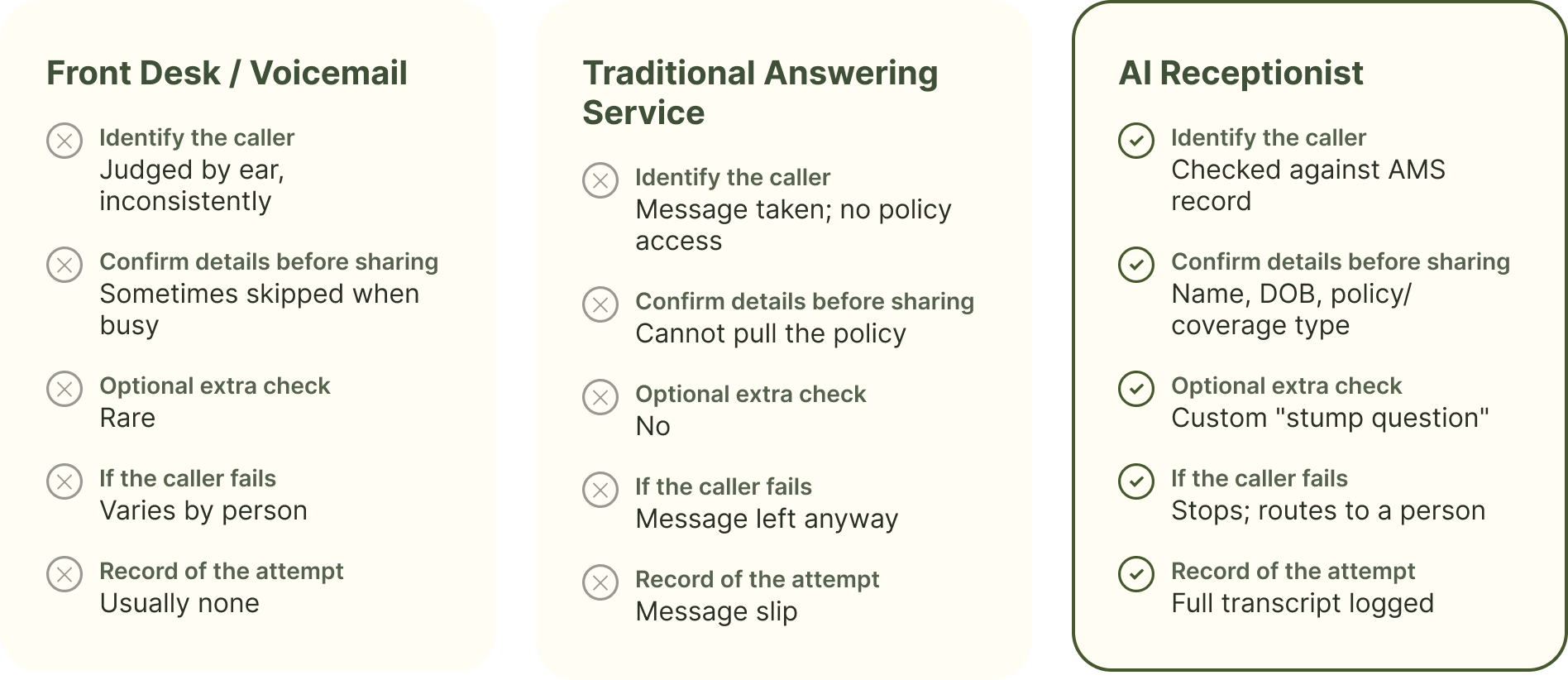
The optional "stump question" is worth calling out. It is a custom detail you configure (something only the actual insured would reasonably know) layered on top of the standard checks. It gives principals in higher-risk lines a second gate without adding friction to routine calls.
What to evaluate before you trust an AI with verification
Verification is a data-handling function, so evaluate the vendor the way you would any partner that touches client PII. Ask three things.
First, ask about controls and audits. A SOC 2 examination reports on a vendor's controls for security and confidentiality; the AICPA's SOC 2 framework explains what that report covers. Read the report, do not just accept the logo. Our checklist of SOC 2 and GDPR questions to ask an AI vendor walks through the specifics, and the deeper SOC 2 compliance question for AI receptionists covers what to confirm.
Second, ask about regulatory expectations. The NAIC model bulletin on the use of AI by insurers sets out how state regulators expect AI systems to be governed, documented, and overseen. Verification decisions are exactly the kind of process regulators want to see logged.
Third, keep the consumer's expectations in view. The Insurance Information Institute is a useful reference on how policyholders think about their coverage and their data, and that shapes how much friction a verification step should add. For the operational side of data handling, our overview of data compliance every insurance agency must know and the piece on protecting insurance clients' PII are good companions.
How Sonant fits
Sonant verifies each caller against the data in your AMS (name, date of birth, and policy or coverage type) before it shares anything, and you can add a custom stump question when you want a second check. If the caller cannot confirm the details, Sonant does not guess and does not proceed; it routes the call to a person. Every attempt, pass or fail, is logged with a transcript, and when a verified call resolves, Sonant writes a note back to the client record in your AMS automatically.
This is deliberately a hybrid model. Sonant covers the routine, high-volume identity checks and the calls your team cannot get to, including after-hours calls, while licensed staff keep the judgment calls: the caller who is upset, the edge case, the request that needs a licensed decision. For where to draw that line, see what AI should handle versus a licensed agent. Sonant is coverage for the calls the team can't reach, not a replacement for the team.
Want to see how caller verification would run on your own AMS data? Talk to Sonant →
Related reading
- AI receptionist for insurance agencies
- AI receptionist caller verification: how identity checks work for agencies
- Is an AI receptionist SOC 2 compliant? What agencies should verify
- AI receptionist client data security
- SOC 2 and GDPR questions to ask an AI vendor
- How to choose an AI receptionist vendor: an insurance buyer's checklist
- What AI should handle vs a licensed agent






.svg)

.svg)


