.svg)

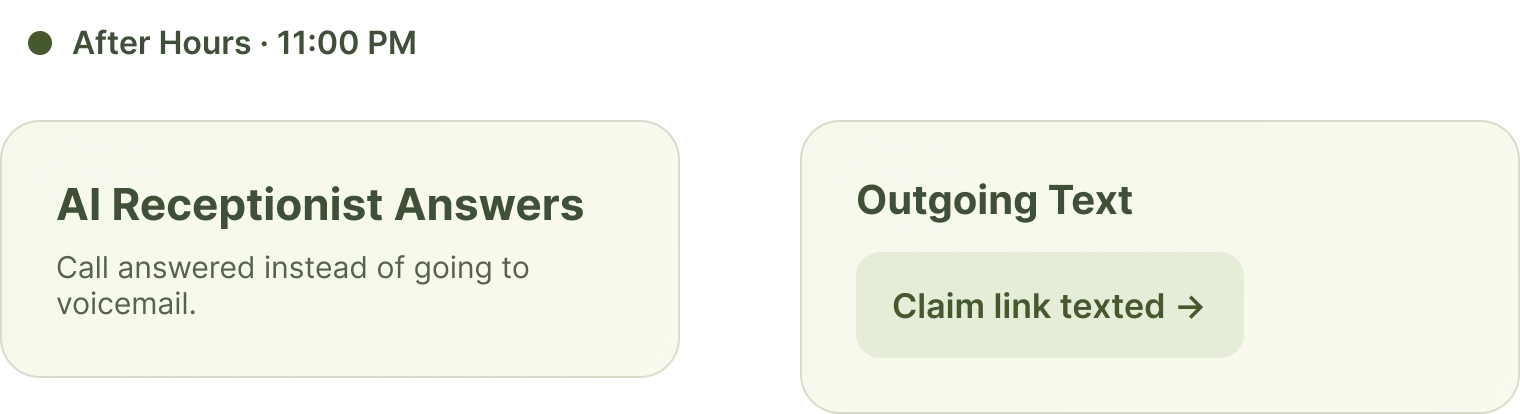
With an AI receptionist, after-hours insurance calls get answered live, 24/7, instead of rolling to voicemail. The AI greets the caller, collects the details of what they need, texts them the right carrier's claims or payment link, flags anything urgent, and drops a note plus a task on the client record so your team picks it up the next morning. After-hours call answering for insurance stops being a black hole and becomes documented work waiting in your queue. The scale of what usually goes missing is easy to underestimate: one agency found 641 after-hours calls that had gone unanswered before it turned the phones on overnight. Every one of those is a claim, a payment, or a prospect that either waited until morning or called a competitor instead.
That matters because the calls that come in after 5 p.m. are rarely small talk. They are accidents, water damage, a car that won't start in a parking lot, or a client trying to bind before a closing. When those calls hit voicemail, some callers leave a message and many just hang up and call the next agency. An AI receptionist is coverage for exactly those calls, the ones your team can't reach because they are home with their families.
Key Takeaways
- After-hours insurance calls get answered live 24/7 instead of going to voicemail, so the caller talks to something on the first ring.
- The AI collects claim or service details, texts the matching carrier's link, and flags urgent situations for faster follow-up.
- Every after-hours call becomes a note plus a task with a full transcript on the client record in your AMS.
- Licensed decisions (coverage advice, binding, anything requiring judgment) are routed to a person, not answered by the AI.
- One agency surfaced 641 after-hours calls that had gone unanswered, which is revenue and retention leaking out overnight.
What happens to after-hours insurance calls with an AI receptionist?
When a client calls after hours, the AI receptionist answers on the first ring, identifies why they are calling, and handles the parts that don't need a license. If it's a claim, it walks the caller through first notice of loss details and texts them the correct carrier's claims link so they can start the process that night. If it's a payment or a policy question, it captures the request. Then it writes everything back to your AMS as a call note and task so nothing is retyped in the morning. This is the same core behavior described in our overview of an AI receptionist for insurance agencies, just running while the lights are off.
The alternative most agencies live with today is voicemail, and voicemail after hours quietly costs you clients, which is why we compare the two directly in AI receptionist vs voicemail. If you already know overnight calls are a problem, our deeper guide on insurance after-hours calls covers the full picture, and capturing after-hours insurance leads shows what happens when those calls convert instead of disappearing.
Losing overnight calls to voicemail? → Talk to Sonant
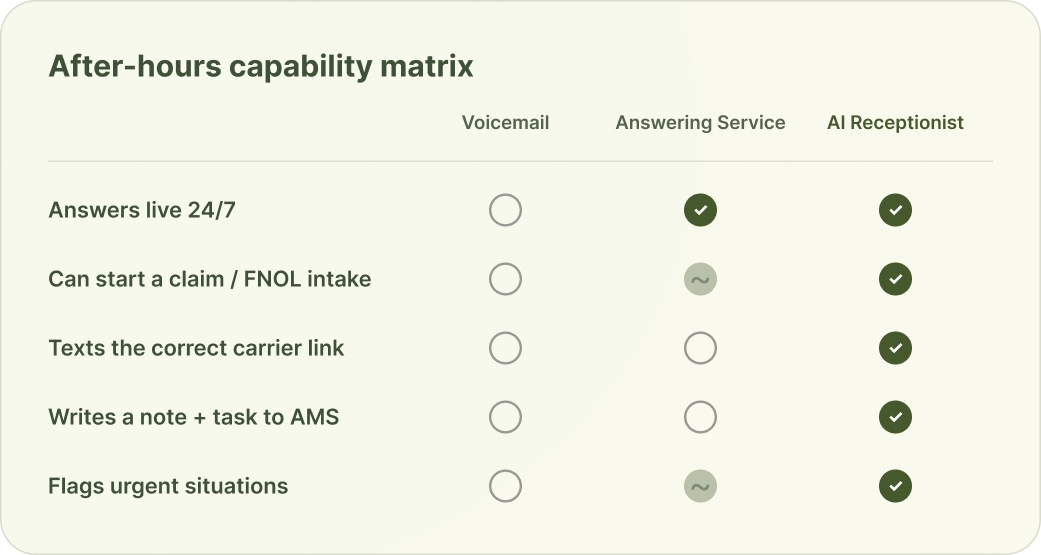
After-hours options compared
Agencies handle after-hours calls a few different ways. Here is how the common options stack up on what actually matters overnight.
An answering service can take a message and even reach a human, but it usually can't pull a policy, start a structured FNOL intake, or write back to your system of record. Voicemail does none of it. That gap is why so many after-hours calls create more work the next day instead of less.
What to evaluate before turning on overnight answering
After-hours calls carry claim data and personal information, so the questions you ask a vendor are the same ones you'd ask before handing any partner your client records. Start with security: ask whether the vendor holds a SOC 2 report, which is the standard framework for how a service organization protects customer data. The AICPA's SOC 2 framework explains what that attestation covers.
Then look at governance. Insurance regulators have started publishing expectations for how carriers and agencies use AI, and the NAIC model bulletin on the use of AI systems is the reference most states point to for accountability, testing, and oversight. Finally, know your own exposure: after-hours calls spike after catastrophes, and the Insurance Information Institute tracks the loss and claims trends that drive those overnight volumes. Match the tool to the calls you actually get.
You also want a clear line between what the AI resolves and what it hands off. Our guide on what AI should handle vs a licensed agent is a good gut check: routine intake and documentation are fair game overnight; coverage decisions are not.
How Sonant fits
Sonant answers the calls your team can't: overflow during the day, and everything after close. Overnight, it does the specific work that keeps an after-hours call from becoming lost revenue: it answers live, collects claim details, detects the caller's carrier and texts the matching claims or payment link, flags anything urgent, and writes a note plus an assigned task with the full transcript back to your AMS (EZLynx, Applied Epic, AMS360, HawkSoft). Your staff walk in to a documented queue, not a wall of voicemails to decode.
It is a hybrid by design. Sonant covers routine intake and documentation around the clock; it routes anything that needs a licensed decision to a person and won't pretend to give coverage advice. One agency that turned this on found 641 after-hours calls that had previously gone unanswered, a concrete measure of how much was slipping through before. If overnight coverage is the gap, this is the piece that closes it without adding a night shift. When you're ready to see it against your own call patterns, our best after-hours answering solutions roundup and the broader AI phone answering for insurance agencies guide are good next reads. It also takes pressure off the team, which matters given why insurance staff quit and how many missed calls quietly cut into retention when you don't reduce missed calls.
Ready to stop losing overnight calls to voicemail? Talk to Sonant →
Related reading
- What happens to after-hours insurance calls
- AI receptionist vs voicemail: what a missed call costs
- Best after-hours answering solutions for insurance agencies
- Capture after-hours insurance leads
- AI answering for FNOL intake
- Reduce missed calls at your insurance agency
- AI receptionist for insurance agencies






.svg)

.svg)


