.svg)

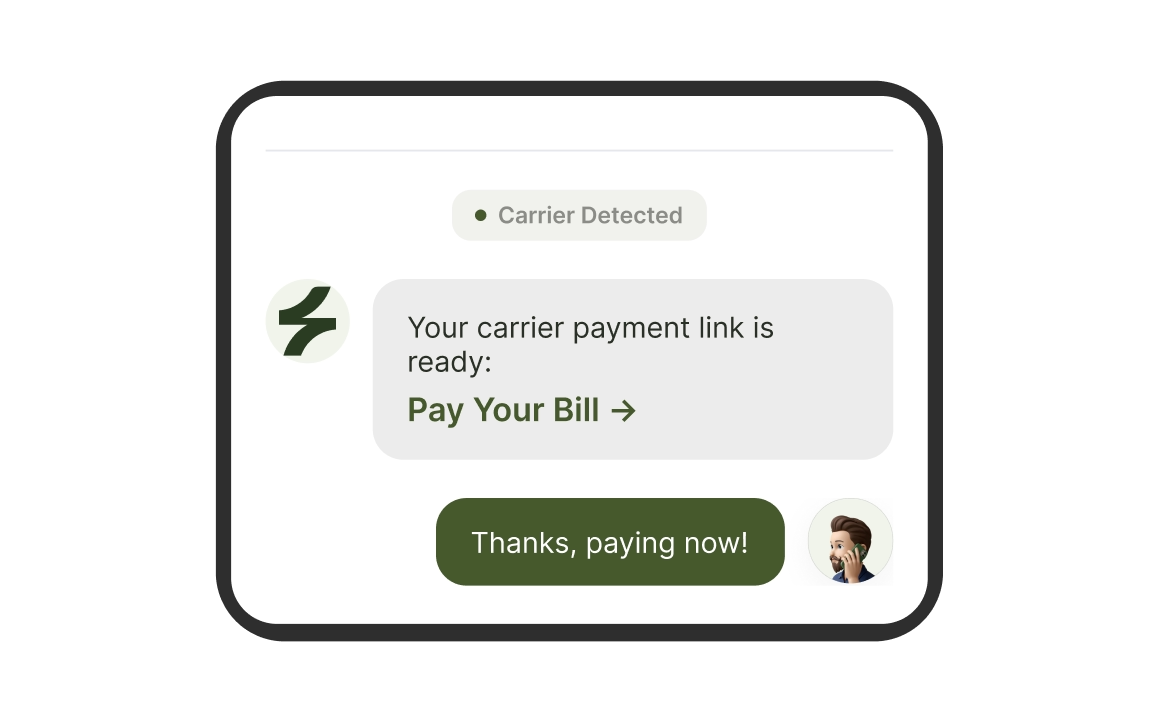
An AI receptionist can handle a "how do I pay my bill" call without transferring anyone or reading a card number over the phone. It detects the caller's carrier and texts the matching carrier-specific payment link (a Travelers client gets the Travelers link, a Progressive client gets the Progressive link) so the caller pays directly through their carrier's own portal. That is ai receptionist payment links for an insurance agency: the routine billing question resolved on the spot, safely, without a person having to pick up.
This is one of the most common calls an agency gets, and one of the least productive for staff to handle. Every payment call that ties up a CSR is a call they are not spending on quoting or service. Routing it to a carrier's secure link keeps the sensitive part off your phones entirely and frees the team for work that needs a person. It fits squarely inside AI phone answering for insurance agencies and pairs with the wider goal of reducing admin work at the agency.
Key Takeaways
- The AI detects the caller's carrier and texts the matching carrier payment link, with no transfer needed.
- Card details are not read aloud; the caller pays through the carrier's own secure portal.
- It resolves a high-volume, low-value call on the spot, freeing staff for work that needs judgment.
- The interaction is logged and a note is written back to the client record.
- Complex billing disputes and licensed questions still go to a person.
How does an AI receptionist text carrier-specific payment links?
When a caller asks how to pay, the AI first confirms who it is talking to, then identifies the caller's carrier and sends a text with that carrier's payment link. The caller taps through to the carrier's own portal to pay. The AI never collects or reads out card numbers, and the call is never transferred to a human just to point someone to a website. The match is the important part: the system sends the correct carrier's link, so a Travelers client is not handed a generic page and left to figure it out. Before any of this happens, the AI verifies the caller so the right person gets the right link.
Because the payment itself happens on the carrier's side, your agency does not touch card data on that call, which keeps a sensitive step off your phone lines. After the call, the AI writes a note back to the client record in your AMS noting who called, what they wanted, and that the payment link was sent, so your team has a record without typing it. This same routine-call handling underpins other workflows like certificate of insurance requests and renewal and retention calls.
Spending too much staff time pointing callers to payment pages? → Talk to Sonant
Payment handling: manual transfer vs carrier-link text
Here is how texting a carrier-specific link compares to the ways agencies handle payment calls today.
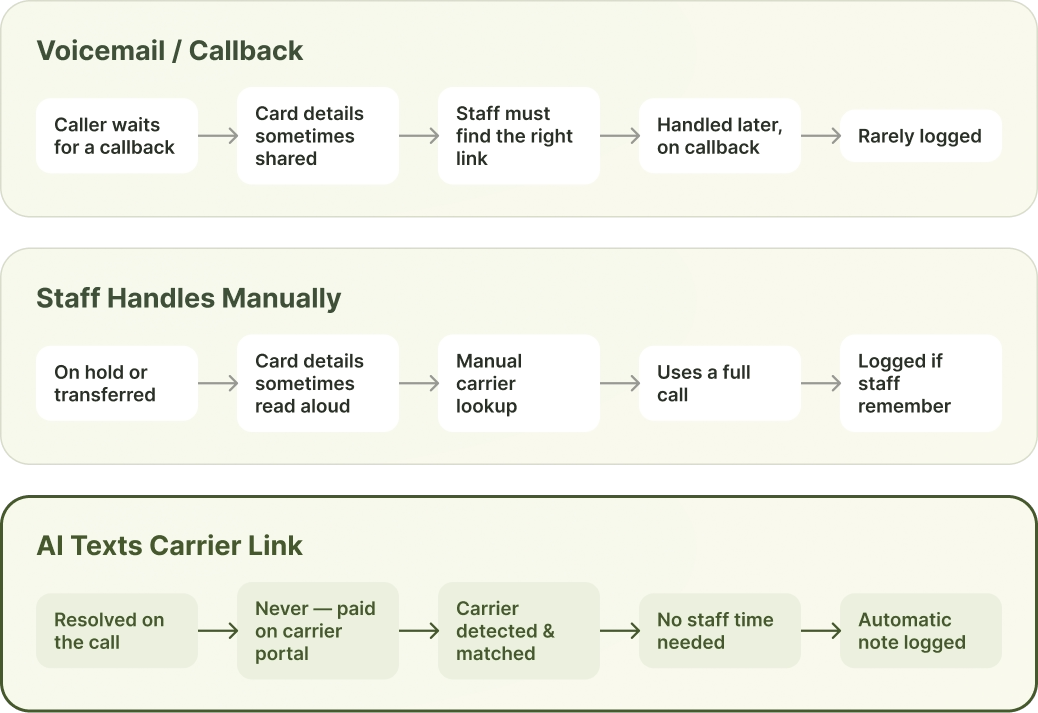
To be clear about the boundary: this handles the routine "where do I pay" call cleanly. A billing dispute, a question about why a premium changed, or anything requiring a licensed answer is a different call, and those should go to a person. Getting the routine ones off the queue is what makes room for that. Handling payment calls well also supports client retention calls, since a fast, clean payment experience is one less reason a client shops around.
What to evaluate before automating payment calls
Payments are sensitive, so evaluate how the vendor keeps card data off your call and how it documents each interaction.
Because the safest design keeps payment on the carrier's own portal, the AI vendor should still be able to show its controls for the data it does handle: the transcript, the client record, the routing. A SOC 2 report describes those controls; the AICPA SOC 2 framework explains its scope. Confirm the vendor is not storing card data itself and can prove it.
On governance, the NAIC model bulletin on the use of AI by insurers sets expectations for documenting and overseeing AI-handled interactions, and logged payment-link calls fit that. And the Insurance Information Institute is a helpful reference on how policyholders expect to interact with their carrier and agency, which is exactly the experience a carrier-matched link is meant to smooth. For a related collections workflow, see how agencies collect PIP faster with Sonant.
How Sonant fits
When a caller wants to pay, Sonant verifies them, detects their carrier, and texts the matching carrier payment link so they pay on the carrier's own portal: a Travelers client gets the Travelers link, a Progressive client gets the Progressive link. There is no transfer and no reading card numbers over the phone, and Sonant writes a note back to the client record in your AMS afterward. It is one of the routine, high-volume calls Sonant resolves on the spot as part of its broader phone answering role for agencies, day or night, including after-hours calls.
The split is deliberate. Sonant takes the routine payment call so your team does not have to; the moment a caller has a dispute or a question that needs a licensed answer, that goes to a person. For where that line sits, see what AI should handle versus a licensed agent. Sonant is coverage for the calls the team can't reach and the routine ones they shouldn't have to handle, not a replacement for the team on the calls that matter.
Want to see the carrier-link payment flow on a real call? Talk to Sonant →
Related reading
- AI phone answering for insurance agencies
- AI receptionist for insurance agency renewals and retention calls
- AI answering for certificate of insurance (COI) requests
- Can an AI receptionist verify callers before sharing policy info?
- Does an AI receptionist log call notes to your AMS automatically?
- Reduce admin work at your insurance agency
- How to choose an AI receptionist vendor: an insurance buyer's checklist






.svg)

.svg)


