.svg)

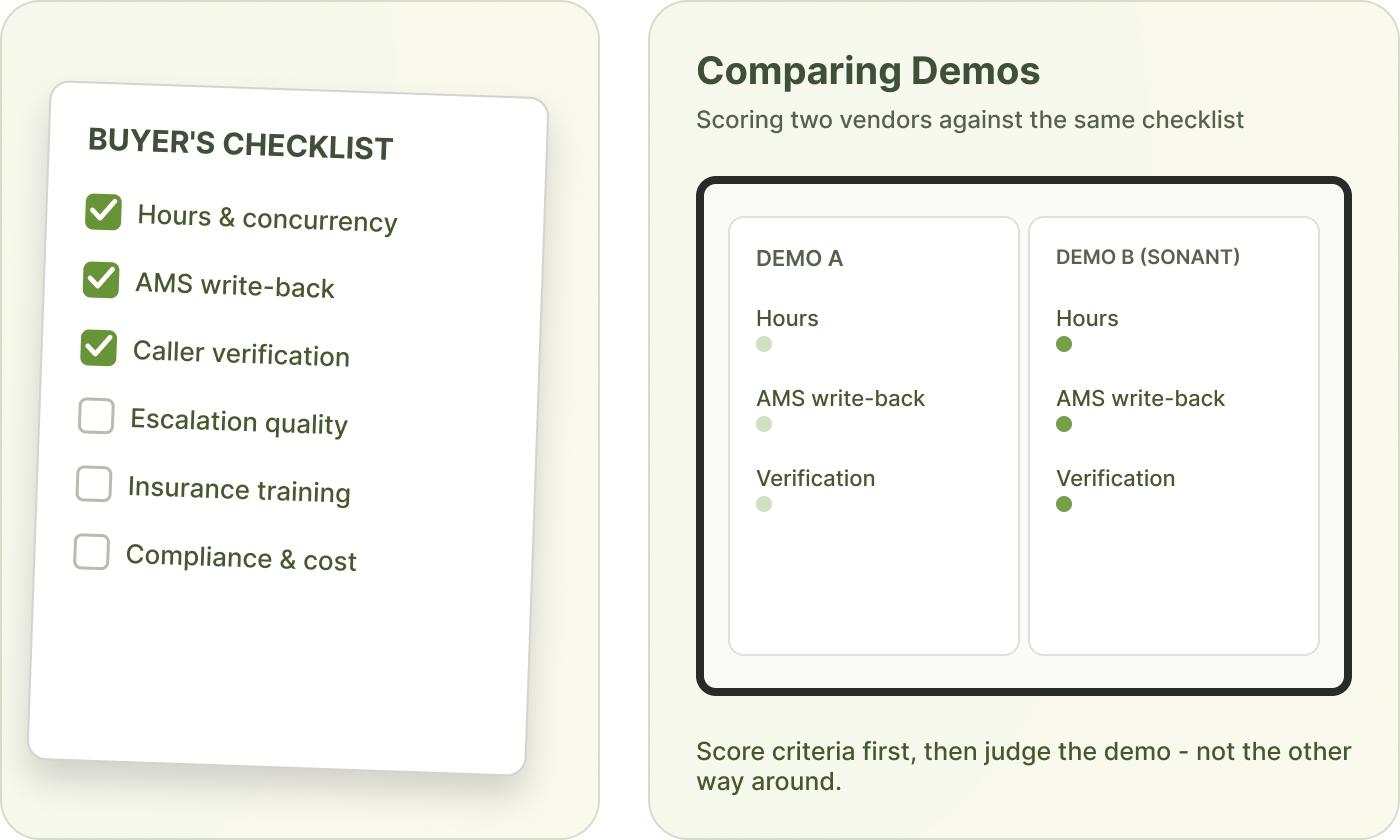
Choosing an AI receptionist for an insurance agency comes down to scoring vendors against a short, specific set of criteria: coverage hours and concurrency, AMS write-back, caller verification, escalation to licensed staff, insurance-specific training, compliance, and the cost model. The best way to learn how to choose an AI receptionist for insurance is to set those criteria first, vendor-neutral, and only then judge providers against them, so a slick demo doesn't distract from what actually matters day to day. Below is a checklist you can apply to any vendor, followed by how Sonant meets each one.
Key Takeaways
- Score vendors on capability categories - hours, concurrency, AMS write-back, verification, escalation, insurance training, compliance, cost - not on demo polish.
- AMS write-back is the difference between a tool that resolves calls and one that just talks; confirm it writes notes to your actual system.
- Caller verification and a clear escalation path to licensed staff are non-negotiable for an insurance line.
- Ask for the SOC 2 report and check the vendor's alignment with regulator guidance, not just marketing claims.
- Prefer a cost model you can predict; per-minute pricing gets expensive in your busiest weeks.
How to choose an AI receptionist for your insurance agency
Start with what the tool must do on a real call, in order of how much it affects your operation. First, coverage: does it answer 24/7 and handle multiple calls at once (concurrency), so overflow and after-hours don't hit voicemail? Second, does it write notes back to your AMS (EZLynx, Applied Epic, HawkSoft, AMS360) or just take a message? Third, does it verify the caller before sharing policy information, and does it cleanly escalate licensed decisions to a person? Fourth, is it trained on insurance workflows rather than a generic receptionist bot? Fifth, does it meet your compliance bar, and sixth, is the cost model predictable? Work these in order and most vendors sort themselves out. For the broader context on what these tools do, the AI receptionist for insurance agencies guide is the place to start, and our best AI phone answering roundup shows how the category shakes out.
Want a demo you can score against this checklist? → Talk to Sonant
The buyer's checklist: criteria and what "good" looks like
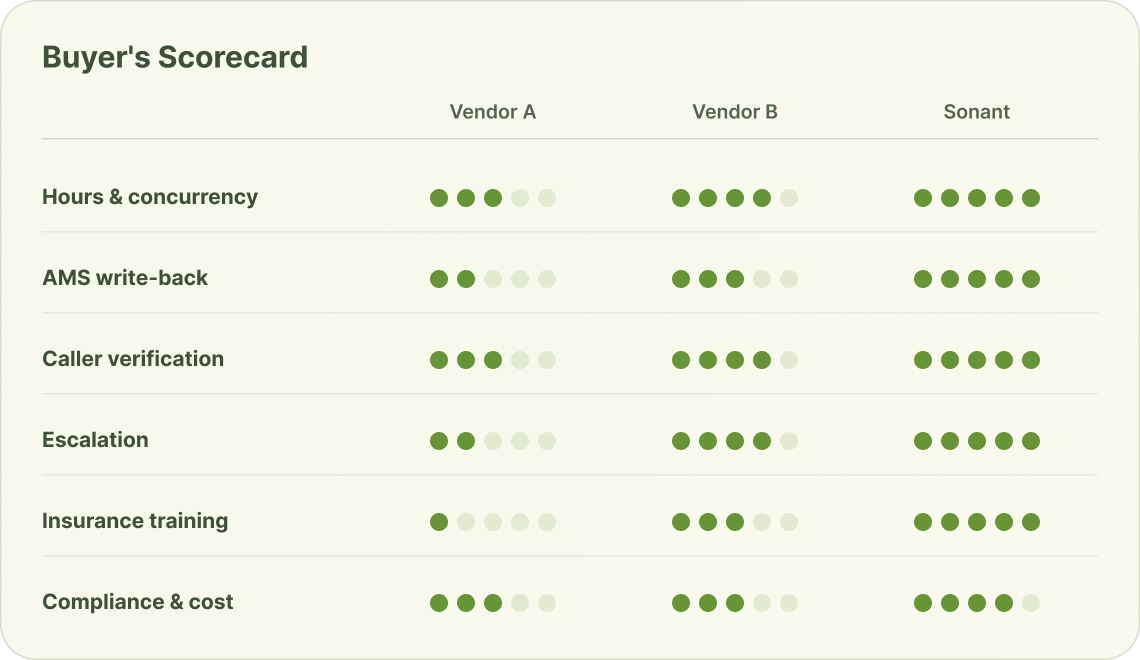
Use this as a scorecard for any vendor, Sonant included.
What to evaluate on compliance and governance
Compliance is where a lot of buyers under-ask. Request the vendor's SOC 2 report and read it; don't accept "we're SOC 2" as a claim. The AICPA SOC 2 framework describes exactly what an auditor tests, so you know what the report should cover. Check how the vendor's use of AI aligns with the NAIC model bulletin on the use of AI, which state regulators are using to set expectations for insurers and their partners. Keep a neutral reference like the Insurance Information Institute handy for anything client-facing. And use a structured question list when you talk to vendors: our SOC 2 and data questions to ask an AI vendor and the deeper SOC 2 compliance guide for AI receptionists give you that. On cost, favor predictability, which is what the per-minute vs flat-rate breakdown explains.
How Sonant fits
Held to the same checklist, here is how Sonant scores. Hours and concurrency: it answers 24/7 and takes overflow so peak volume doesn't hit voicemail. AMS write-back: after a call, a note lands on the client record and a task is assigned in EZLynx, Applied Epic, HawkSoft, or AMS360, with no manual typing. Verification: it checks the caller against your AMS data and won't proceed if they can't confirm, routing to a person instead. Escalation: licensed decisions go to your staff with context already logged. Insurance training: it's built for P&C workflows such as COIs, carrier payment links, FNOL intake, and renewals, not a generic receptionist. Bilingual coverage is included, handling full Spanish conversations, which our bilingual AI receptionist guide covers. On compliance and cost, we encourage you to run the same checklist you'd run on anyone. Sonant is deliberately a hybrid: it covers the routine, high-volume, and after-hours calls your team can't reach, and every licensed judgment stays with your people. If you're also weighing whether clients will accept it, see do callers accept an AI receptionist, and for onboarding, how long setup takes.
Have your checklist ready? Bring it to a demo. Talk to Sonant →
Related reading
- AI receptionist for insurance agencies
- How long does setup take?
- Is an AI receptionist SOC 2 compliant?
- SOC 2 and data questions to ask an AI vendor
- AI receptionist pricing: per-minute vs flat-rate
- Best AI phone answering services for insurance agencies
- Do callers accept an AI receptionist?






.svg)

.svg)


