.svg)


An AI receptionist for a life insurance agency answers overflow and after-hours calls, captures and qualifies inbound inquiries, verifies callers, and logs a note back to your system, then routes anything sensitive or licensed to an agent. Life insurance is different from P&C service work: the calls are often emotional, the products are advised, and the decisions are licensed. So the honest role for an AI receptionist on a life book is intake and routine service, with a licensed agent owning applications, illustrations, and beneficiary conversations.
Key Takeaways
- On a life book, an AI receptionist is best at intake, qualification, scheduling, and routine service - not advising on coverage.
- Sensitive calls - beneficiary changes, claims after a death, application questions - belong with a licensed agent, and the AI should route them cleanly.
- It captures after-hours and overflow inquiries that would otherwise go to voicemail, then books the follow-up.
- Every call is logged with a transcript so the agent walks into the follow-up already briefed.
- The value is speed-to-lead and coverage, while the relationship and the licensed advice stay human.
What can an AI receptionist do for a life insurance agency?
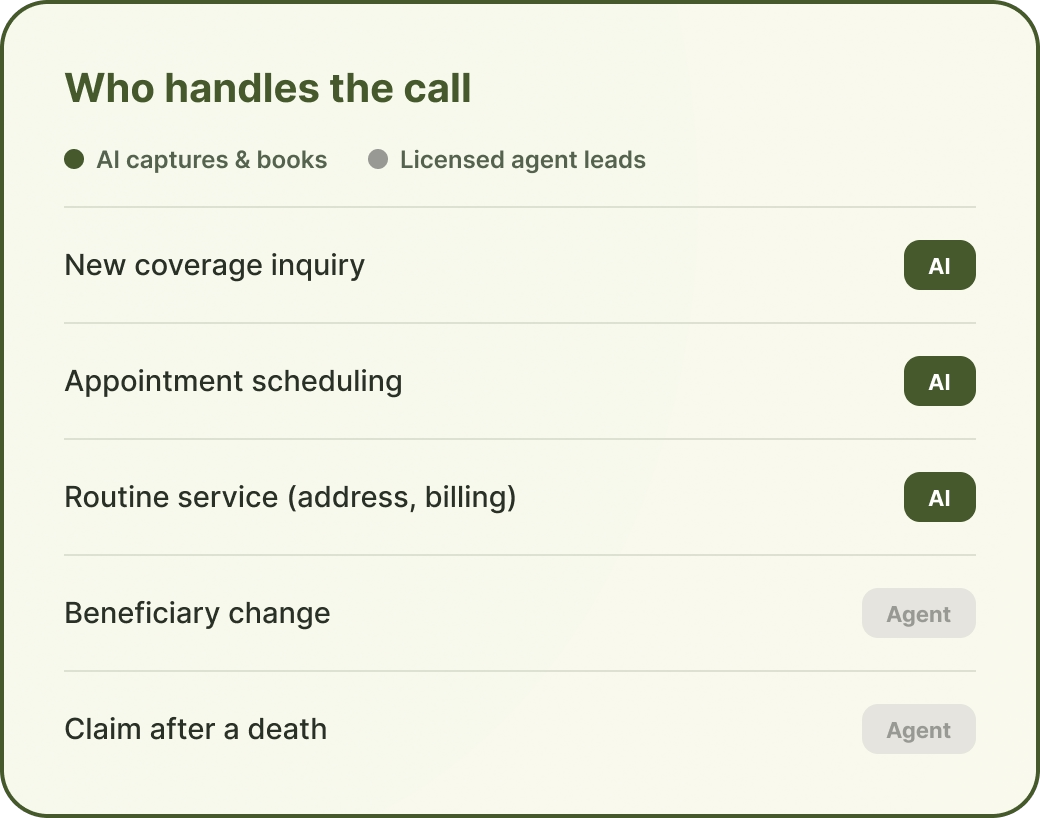
An AI receptionist for a life insurance agency handles the front of the call, the intake, so a licensed agent handles the substance. When a prospect calls about coverage, the AI can capture the inquiry, ask qualifying questions, verify a caller against your records where relevant, and book an appointment with an agent, logging everything to your system. For existing clients, it can take routine service requests and route the rest. What it does not do is quote, illustrate, or advise on a policy; those are licensed activities that stay with your agents.
This split matters more on life than on almost any other line, because the calls carry weight. A claim after a death, a beneficiary change, or a hardship question is a human conversation, and the AI's job is to recognize that and route to a person quickly and gently, not to try to handle it. Our guide on what AI should handle vs a licensed agent covers the boundary, and our will AI replace insurance agents piece addresses the bigger question directly. For the category overview, see AI phone answering for insurance agencies and the AI receptionist for insurance agencies guide.
Missing life inquiries after hours? → Talk to Sonant
Life insurance calls: what to handle vs route
The table sorts common life-agency calls by whether an AI receptionist should handle the intake or route straight to a licensed agent.
What to evaluate for a life book
- Speed-to-lead. Life inquiries convert best when answered fast. Check how the receptionist captures and books inbound leads, including after hours. See reducing missed calls and appointment booking.
- Qualification quality. Does it gather the right context so an agent walks into a briefed call? See lead qualification automation and our life insurance lead guide.
- Sensitive-call routing. Confirm how it recognizes and routes emotional or licensed calls to a person, and how gently it handles a caller reporting a death.
- Documentation. Every call should log a note with a transcript so nothing is lost between intake and the agent's follow-up. See AMS call notes automation and caller verification.
- Compliance and security. Life data is sensitive. Ask about a recognized attestation like SOC 2 and how the vendor aligns with the NAIC model bulletin on AI. The Insurance Information Institute is a useful independent reference on the life market, and our Consumer AI Readiness Report covers caller acceptance of AI answering.
How Sonant fits
Sonant is built for insurance agencies, and on a life book its role is intentionally narrow: answer the overflow and after-hours calls, capture and qualify new inquiries, handle routine service, and book the follow-up, while your licensed agents own the advice and the sensitive conversations. It verifies callers against your records where relevant, and after each call it writes a note with the transcript to the client record and assigns a task, so the agent picks up already briefed. It connects to EZLynx, Applied Epic, AMS360, and HawkSoft.
On the calls that matter most in life insurance, such as a claim after a loss, a beneficiary decision, or an application question, a licensed agent is not just better, they are required, and Sonant routes those to a person quickly and with care. It is coverage for the calls your team can't reach and a way to answer new life inquiries faster, not a substitute for the trust a licensed agent builds. For the broader debate on where automation stops, our piece on whether AI will replace insurance agents is a good read.
Want to see how new life inquiries would be captured and booked? Talk to Sonant →
Related reading
- AI phone answering for insurance agencies
- AI receptionist for insurance agencies
- Mastering life insurance live transfer leads
- What AI should handle vs a licensed agent
- Will AI replace insurance agents?
- AI appointment booking for insurance
- Insurance lead qualification automation






.svg)


.svg)


