.svg)

Most independent P&C (property and casualty) insurance agencies lose business at the phone, not in the quote. This guide ranks the best conversational AI companies for insurance agencies - the vendors that answer calls, capture caller intent, and hand off to licensed staff without dropping the ball. Conversational AI here means software that holds a natural spoken or typed exchange with a caller, understands what they need, and takes an action: booking a callback, starting a claim, or routing to a producer. We reviewed platforms on how well they fit agency workflows, not on demo polish. The insurance-native pick and the general-purpose builder tools are both below, scored on the same criteria.
Key Takeaways
- Conversational AI companies split into two groups: insurance-native platforms and general-purpose voice/chat builders you configure yourself.
- The hardest capability to fake is AMS (agency management system) write-back - logging call outcomes straight into EZLynx, Applied Epic, HawkSoft, or AMS360.
- Escalation to licensed staff matters: unlicensed automation cannot quote or bind, so clean handoff is a buying requirement, not a nice-to-have.
- Sonant is the insurance-native option; Bland AI, Vapi, Retell AI, Synthflow, and Voiceflow are builder platforms; Gail and Cara target insurance workflows more directly.
- Score each vendor on your real call mix - after-hours, FNOL (first notice of loss), renewals - before committing.
Why insurance agencies are shopping for conversational AI companies
Agencies are shopping for conversational AI companies because call volume outpaces staffing and missed calls become lost renewals. Consumers increasingly expect an immediate answer at any hour, per the Sonant Consumer AI Readiness Report. When a CSR (customer service representative) is on another line, the caller does not wait - they call the next agency.
Conversational AI is software that talks with a caller in natural language and completes a task rather than reading a menu. The industry backdrop is straightforward: the Insurance Information Institute tracks how service expectations shape retention, and CSR wages tracked by the U.S. Bureau of Labor Statistics make every unanswered call an expensive gap. For the category basics, see our primer on conversational AI in insurance.
How we scored the best conversational AI companies
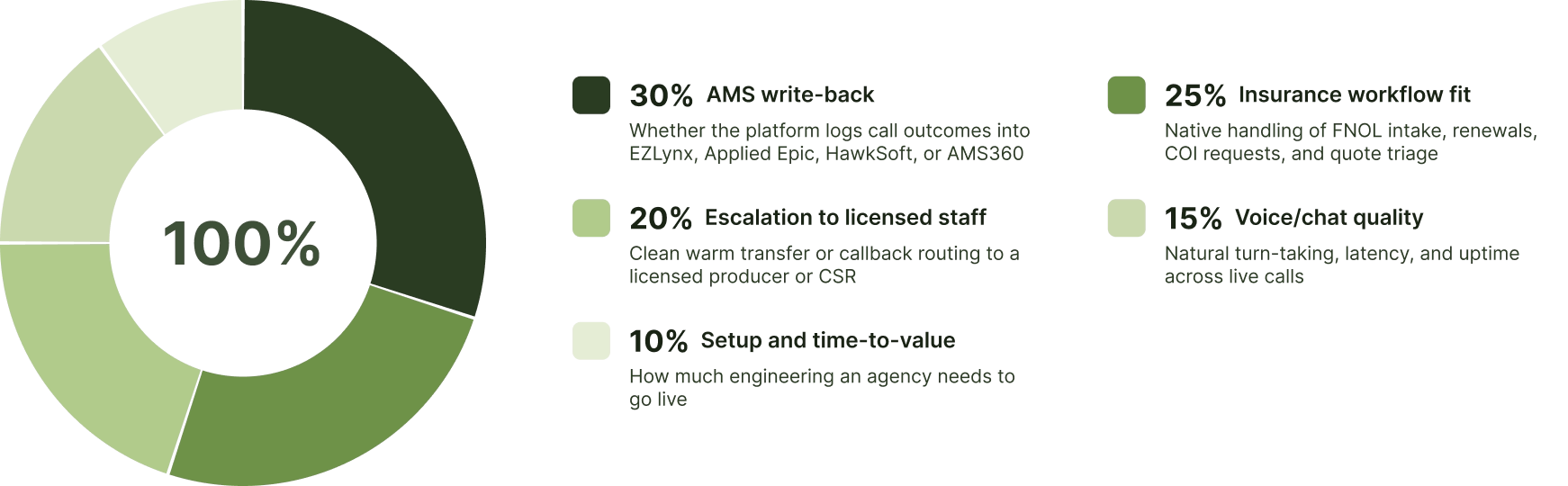
We reviewed 20+ voice and chat platforms and scored them on five weighted criteria built around real agency workflows - not generic call-center metrics. We looked specifically at AMS write-back, FNOL intake, and intent routing, since those are where general tools tend to break down against insurance requirements. Weights put the most points on the capabilities hardest to fake in a demo.
- AMS write-back (30%): whether the platform logs call outcomes directly into EZLynx, Applied Epic, HawkSoft, or AMS360, measured against each vendor's documented integrations.
- Insurance workflow fit (25%): native handling of FNOL intake, renewals, certificate (COI, certificate of insurance) requests, and quote triage.
- Escalation to licensed staff (20%): clean warm transfer or callback routing to a licensed producer or CSR, since automation cannot bind coverage.
- Voice/chat quality and reliability (15%): natural turn-taking, latency, and uptime across live calls.
- Setup and time-to-value (10%): how much engineering an agency needs to go live.
Total: 100%.
The 8 best conversational AI companies for insurance agencies
1. Sonant - the insurance-native pick
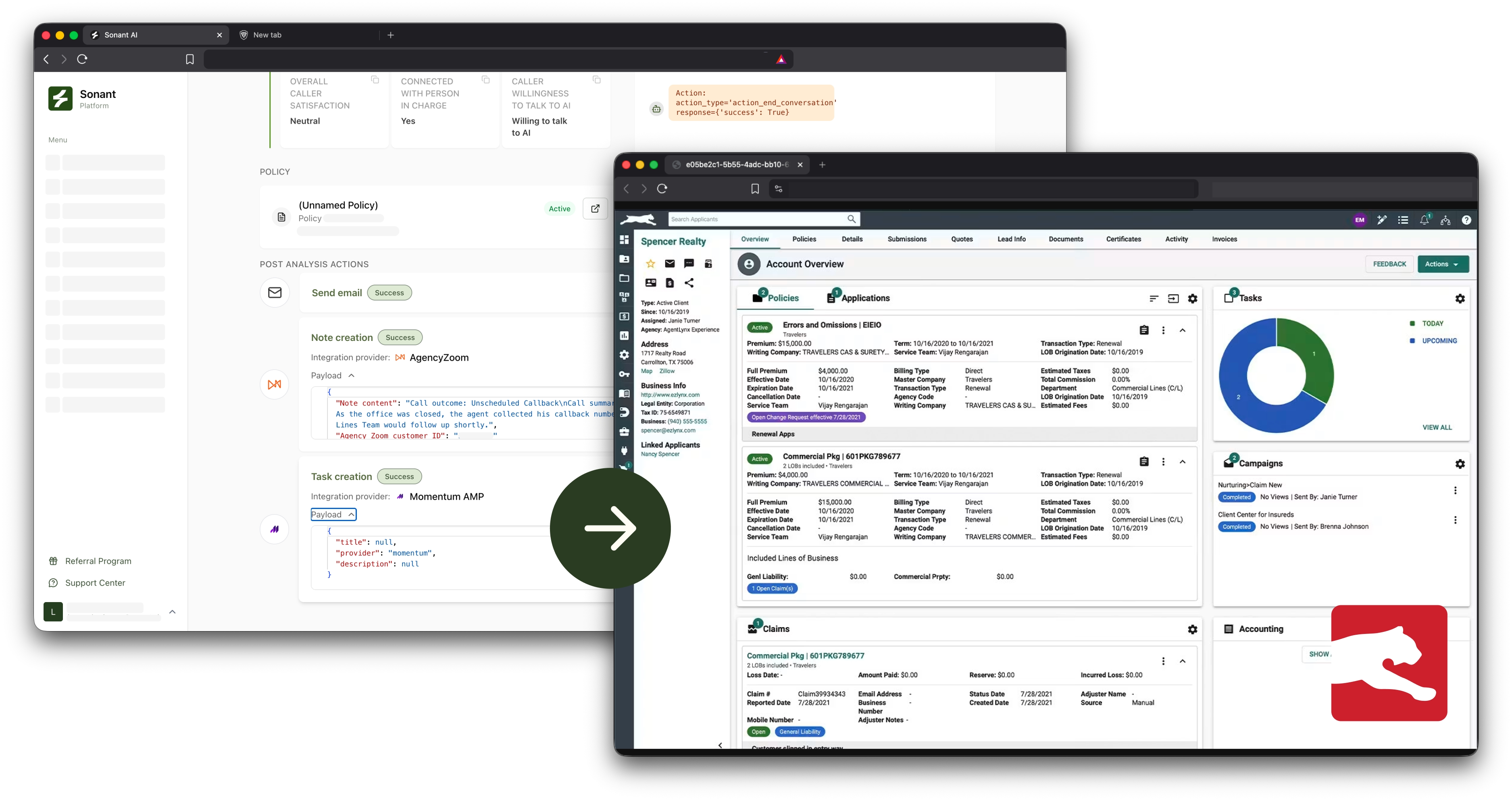
Sonant is a conversational AI platform built specifically for P&C insurance agencies. It answers inbound calls, captures caller intent, handles after-hours and overflow, starts FNOL intake, and writes call outcomes back to the AMS, then escalates to licensed staff when a caller needs a quote or bind. Because it ships with insurance workflows and native AMS integrations (EZLynx, Applied Epic, HawkSoft, AMS360) rather than a blank builder, agencies go live without engineering work. See where it sits among voice AI vendors for insurance.
2. Bland AI
Bland AI is a general-purpose voice AI platform for building phone agents programmatically. It fits teams with developer resources that want to design custom call flows from scratch. It is not insurance-specific, so AMS write-back and FNOL intake require custom integration work.
3. Vapi
Vapi is a developer-focused voice AI framework for assembling speech agents from modular components. It suits engineering teams comfortable wiring their own telephony, speech, and logic. Insurance workflows and AMS integrations are do-it-yourself rather than built in.
4. Retell AI
Retell AI provides infrastructure for building and deploying voice agents, with a focus on natural conversation and call reliability. It appeals to teams that want conversation quality handled while they build the business logic. It is horizontal, not insurance-native.
5. Synthflow
Synthflow is a no-code voice AI builder aimed at teams that want to configure agents without engineering. That lowers setup effort, but insurance-specific intake and write-back still need to be mapped by the agency. Compare the broader set in our AI receptionist for insurance agencies guide.
6. Voiceflow
Voiceflow is a design platform for building conversational assistants across voice and chat. It is strong for teams that want to visually design flows and works well for chatbot-style deployments. It is a builder, so insurance logic and integrations are configured by the user.
7. Gail
Gail targets insurance workflows more directly than the general builder tools, positioning around agency service tasks. Agencies evaluating it should confirm which AMS platforms it writes back to and how it escalates to licensed staff.
8. Cara
Cara is oriented toward insurance conversational workflows, including intake and service interactions. As with any newer entrant, validate its documented AMS integrations and FNOL handling against your own call mix before committing.
Summary comparison table
The table below summarizes how each vendor maps to the two things that decide fit: insurance-native workflows and where the heavy lifting falls at setup. Specifics vary by plan and should be confirmed with each vendor.
How Sonant fits
Sonant answers the inbound call, identifies why the caller is reaching out, and takes the right action, then measures the result and produces an output your team can act on. The workflow: a caller dials in after hours or during overflow, Sonant captures name, policy, and reason for the call, starts FNOL intake or a certificate request when relevant, and books a callback or warm-transfers to a licensed producer. The metric is answered-call rate and captured intent; the output is a written record in your system. Every outcome writes back to native AMS integrations - EZLynx, Applied Epic, HawkSoft, and AMS360 - so CSRs open a complete note instead of a voicemail. Among conversational AI companies, that combination of insurance workflows, FNOL automation, and escalation to licensed staff is what separates an insurance-native platform from a general builder. See the wider landscape in our agentic AI in insurance overview and how it helps reduce missed calls at your agency.
Before choosing a vendor, review the NAIC model bulletin on the use of AI by insurers so your call handling meets state expectations.
Related reading
- A working guide to voice AI for insurance operations
- The complete 2026 catalog of AI tools for insurance agencies
- Comparing the top AI receptionists built for insurance
- How to automate repetitive agency workflows end to end
- What is an AI voice agent?
- 6 Best Dialogflow Alternatives for Insurance Agencies






.svg)

.svg)


