.svg)

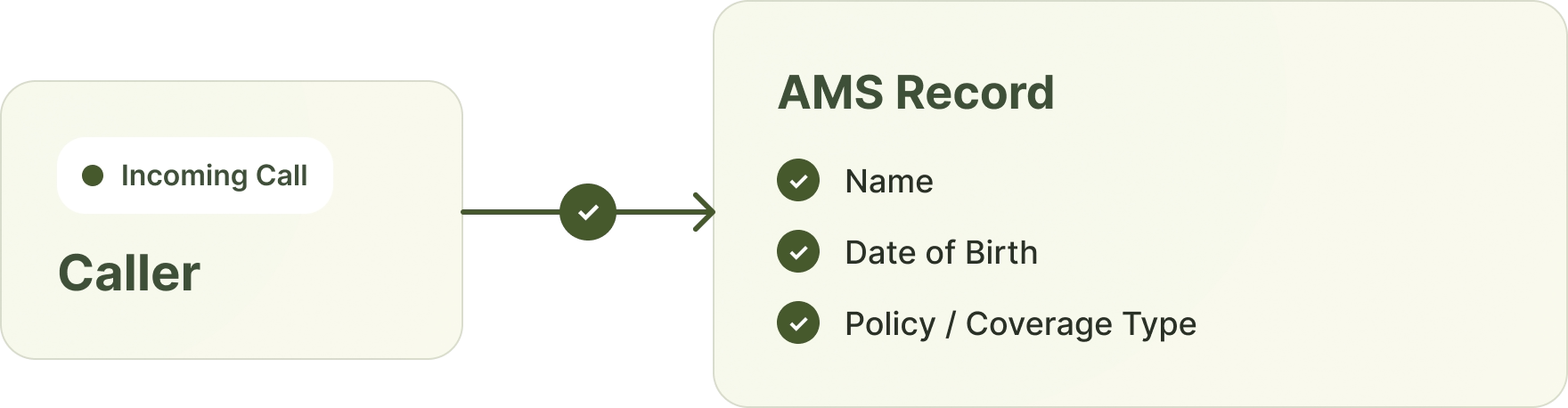
Insurance caller identity verification with AI is the process of confirming that the person on the phone is the actual insured before any policy detail is shared. An AI receptionist runs that check by comparing the caller's answers to the record already in your agency management system (usually the name on file, date of birth, and the policy or coverage type) and it only continues once those match. If they do not, it stops and hands the call to a person. That is insurance caller identity verification ai in one sentence: a consistent, logged check against real data, done before anything sensitive is said.
For an agency, the value is consistency. A busy front desk verifies unevenly; an AI runs the same check on every call and keeps a transcript of each attempt. It fits directly into how an AI receptionist supports day-to-day agency operations, and it is closely related to the broader question of whether an AI receptionist can verify callers before sharing policy info.
Key Takeaways
- Identity verification means confirming the caller is the insured before any policy detail is shared.
- The AI matches the caller's answers to AMS data: name, date of birth, policy or coverage type.
- An optional custom "stump question" adds a second layer for higher-risk situations.
- A caller who cannot confirm is not served by the AI; the call routes to a licensed person.
- Every attempt is logged with a transcript, giving the agency an audit trail.
How does AI caller identity verification work for insurance agencies?
The AI receptionist authenticates the caller against the data on the client record. When a call comes in, it collects the identifying details (name, date of birth, and the policy or coverage type) and checks them against what your AMS already has on file. A match means the AI can continue and resolve the routine request; a mismatch means it stops before sharing anything and routes the call to a staff member. Because the check runs on live AMS data rather than on how convincing the caller sounds, it is grounded in facts, not impressions.
Two design choices make it stronger. The first is the optional stump question, a detail you configure that only the real insured would know, layered on top of the standard fields. The second is logging: every attempt is captured with a transcript on the record, so a failed or suspicious verification is visible later. That audit trail is part of why identity verification connects so tightly to how an AI receptionist secures client data. Who can even see those logs is governed by how you manage users and permissions in the portal.
Not sure your current phone process protects policyholder data consistently? → Talk to Sonant
The layers of an identity check, compared
Not every check is equal. Here is how the common approaches stack up on the things that actually matter for protecting a policyholder's data.
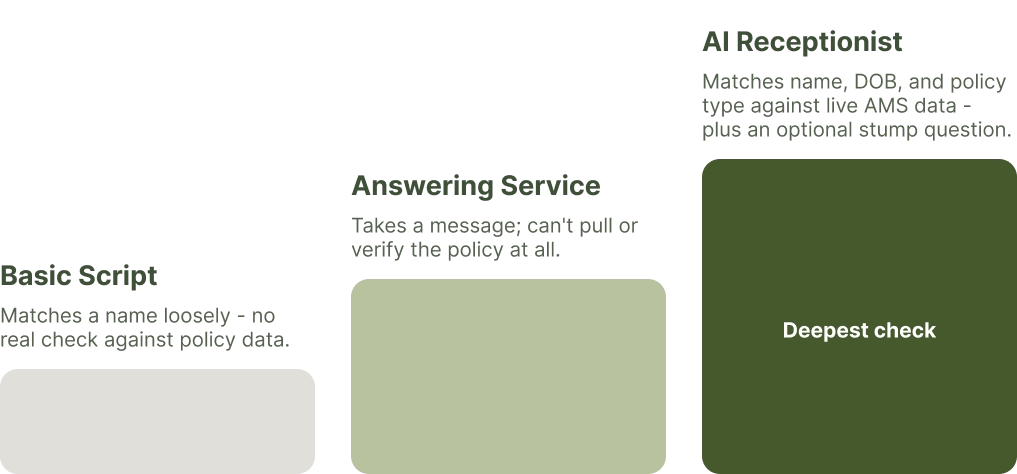
The honest limit here is worth stating: verification confirms identity, not intent. It stops the wrong person from getting policy data, and it stops the right person if the record is out of date, which is why routing to a human on failure matters as much as the check itself.
What to evaluate in an identity-verification vendor
Identity verification touches PII, so evaluate the vendor's controls, not just its features.
Start with an independent audit. A SOC 2 report describes a vendor's controls for security and confidentiality; the AICPA SOC 2 framework explains its scope. Ask for the report and read it. Our list of SOC 2 and GDPR questions to put to an AI vendor and our deeper look at SOC 2 compliance for AI receptionists show what to look for.
Then look at governance. The NAIC model bulletin on the use of AI by insurers sets state regulators' expectations for how AI decisions should be documented and overseen; a verification process that logs every attempt fits that expectation well. Finally, keep the policyholder's perspective in mind. The Insurance Information Institute is a good reference on how consumers view their coverage and data, which informs how much friction is acceptable. For the operational side, see data compliance every agency must know and protecting insurance clients' PII.
How Sonant fits
Sonant confirms each caller's identity against your AMS (name, date of birth, and policy or coverage type) before it shares any policy information, and you can add a custom stump question for a stronger gate. If the caller cannot confirm, Sonant will not proceed; it routes the call to a person. Every attempt is logged with a transcript, and once a verified call is resolved, Sonant writes the note back to the client record in your AMS automatically. This is the identity layer underneath the wider AI receptionist for insurance agencies.
The model is hybrid on purpose. Sonant handles the routine identity checks and the volume your team cannot always reach, while licensed staff keep the calls that need judgment: the upset caller, the unusual request, the licensed decision. For where that boundary sits, see what AI should handle versus a licensed agent. The goal is not to remove people from sensitive calls; it is to make sure the sensitive check happens every time.
Ready to see identity verification run against your own client records? Talk to Sonant →
Related reading
- AI virtual receptionists and insurance agency operations
- Can an AI receptionist verify callers before sharing policy info?
- Is an AI receptionist SOC 2 compliant? What agencies should verify
- AI receptionist client data security
- Protecting insurance clients' PII
- How to choose an AI receptionist vendor: an insurance buyer's checklist
- Can you manage your own users in an AI receptionist?






.svg)


.svg)


