.svg)

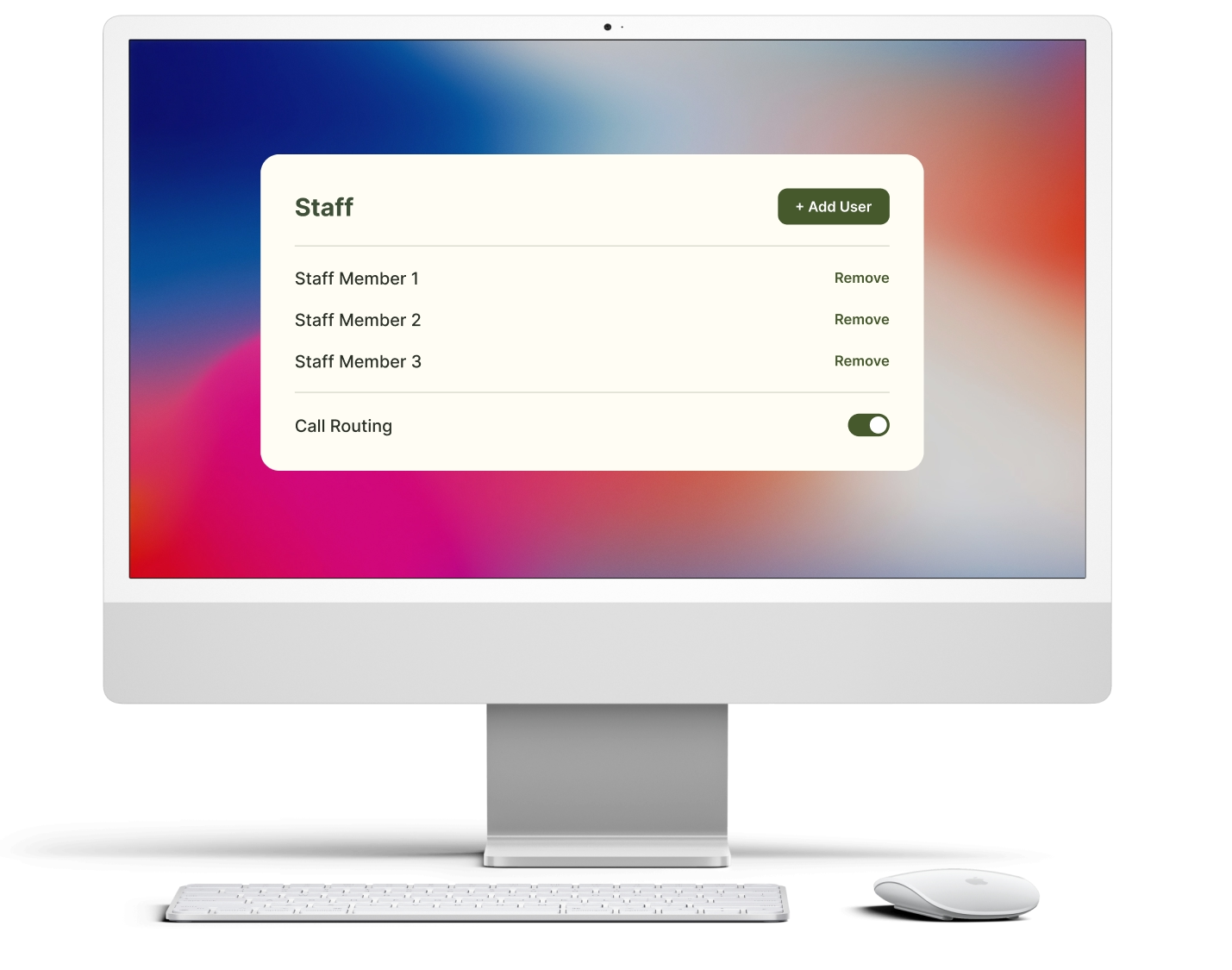
Yes. With a well-built AI receptionist, you manage your own users from a portal: you add staff, remove staff, and change who gets which calls yourself, and the routing updates take effect immediately. No support ticket, no waiting on the vendor. That is the heart of ai receptionist user management for an insurance agency: the people who run the front desk stay in control of how calls flow, even as the team changes. When a producer leaves or a new CSR starts, you reassign their calls in minutes rather than waiting days for a vendor to make the change on their side. The routing follows the current team, so a caller never lands with someone who is no longer there, and the person who owns your AMS user list can own this one the same way.
Control matters because agency staffing is not static. A producer leaves, a CSR joins, someone moves to a new line of business, or you open a second location. If every one of those changes means emailing a vendor and waiting, the tool becomes a bottleneck. Self-service user management keeps the AI in step with the team. It is one of the practical reasons agencies adopt an AI receptionist for insurance agencies in the first place, and it connects to how quickly you can get set up at all.
Key Takeaways
- You add and remove staff yourself in the portal, with no support ticket required.
- Routing changes take effect immediately, so calls follow the current team.
- Self-service control matters most during turnover, growth, and multi-location changes.
- Who can make changes should be governed by roles and permissions, and changes should be logged.
- User management is an admin task the agency owns; licensed judgment on calls still stays with staff.
Can you manage your own users in an AI receptionist?
Yes. In a good system, the agency administers its own users. You open the portal, add a new hire, assign them to the right call routing, and they start receiving the calls meant for them right away. When someone leaves, you remove them and their routing is reassigned immediately, so the calls do not fall into a gap. Because the change is live, there is no lag between a staffing decision and how the phones behave. This self-service model is what keeps an AI receptionist from becoming one more thing you have to file a ticket for.
That immediacy is especially valuable in two moments. The first is turnover, which runs high in this industry. When you are already rebuilding after losing a producer, the last thing you want is calls routing to someone who is gone. The second is scale: agencies running multiple locations need to adjust routing per office without a vendor in the loop. For context on why the churn is so constant, our piece on insurance agency employee turnover lays out the pressure.
Tired of waiting on a vendor every time your team changes? → Talk to Sonant
Self-service vs vendor-managed user control
Here is what changes when the agency controls users directly versus routing every change through a vendor.
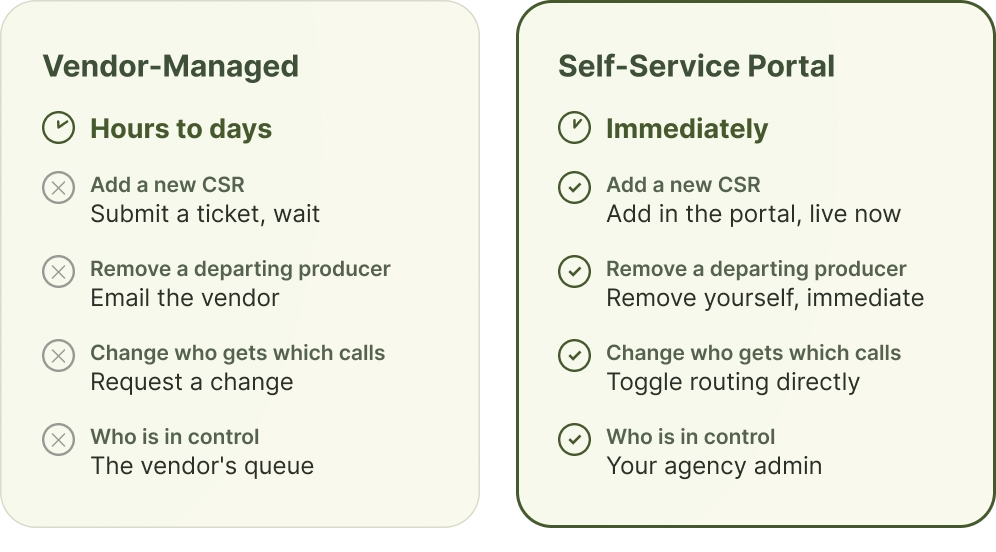
There is a tradeoff to name honestly: self-service control means the agency is responsible for keeping the user list accurate. That is a feature, not a bug, but it does mean someone on your side owns it, the way someone owns your AMS user list today.
What to evaluate in user management and access control
User management is also an access-control question: who can change routing, and who can see call transcripts. Evaluate it the way you would any system holding client data.
Ask about access controls in the vendor's audit. A SOC 2 report covers controls like logical access and change management; the AICPA SOC 2 framework explains what that includes. A vendor that lets you self-manage users should also let you scope permissions and should log who changed what. That ties into the broader SOC 2 question for AI receptionists.
Governance matters too. The NAIC model bulletin on the use of AI by insurers sets expectations for oversight and documentation of AI systems, and user- and access-change logs are part of a well-governed setup. And because the point of routing is ultimately caller experience, keep the consumer in view: the Insurance Information Institute is a useful reference on policyholder expectations. If your team is distributed, our guide to managing remote insurance CSRs pairs well with getting routing right.
How Sonant fits
With Sonant, your agency adds and removes staff in the portal itself, and routing updates immediately, with no support ticket. When a producer leaves or a new CSR starts, you change who gets which calls in minutes, and the phones follow. Sonant handles the routine and overflow calls, verifies callers, covers after-hours, and writes a note back to the AMS after each call, all routed to whoever is currently on your team.
User management is an admin function the agency owns, and that is the right split. Sonant handles the routing and the routine calls; your licensed staff keep the judgment calls the AI escalates to them. For where that line falls, see what AI should handle versus a licensed agent. Sonant is coverage for the calls your team can't reach and a way to keep routing current, not a replacement for the people making licensed decisions.
Want to see how fast you can update routing when your team changes? Talk to Sonant →
Related reading
- AI receptionist for insurance agencies
- How long does it take to set up an AI receptionist for an insurance agency?
- Does an AI receptionist log call notes to your AMS automatically?
- Best strategy after losing a producer
- Insurance agency multi-location management
- Managing remote insurance CSRs
- How to choose an AI receptionist vendor: an insurance buyer's checklist






.svg)

.svg)


