.svg)

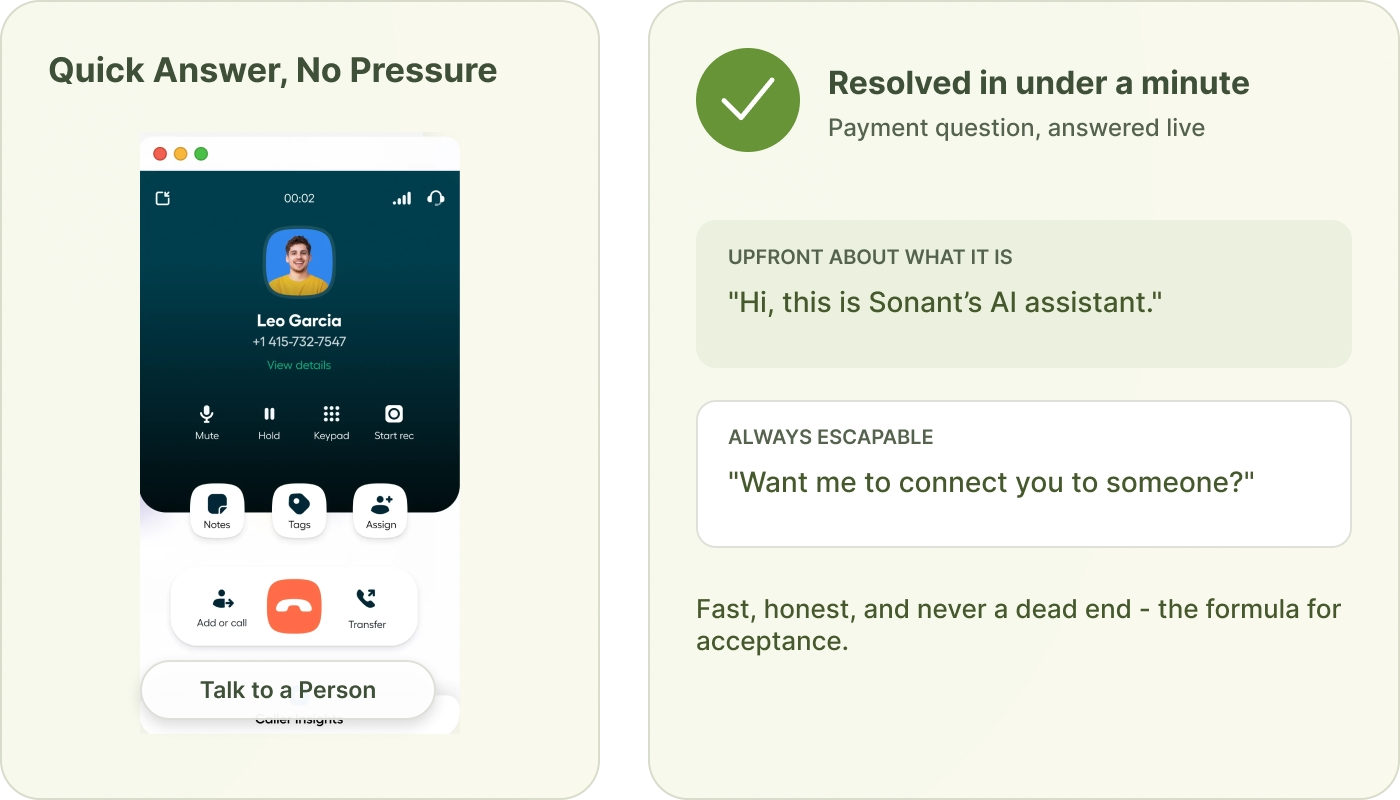
Callers do accept talking to an AI receptionist, but acceptance depends far more on how it's set up than on the technology itself. The pattern is consistent: callers are comfortable when the AI resolves their request quickly, is upfront about what it is, and hands off to a person the moment they need one; they resent it when it traps them in a loop. So the honest answer to "do callers accept an AI receptionist" is: yes, when it's fast, clear, and escapable, and that's a design choice, not luck. Below is what the Sonant Consumer AI Readiness Report and agency experience show, described qualitatively, plus how to configure for acceptance.
Key Takeaways
- Acceptance is driven by experience design: fast resolution, transparency, and an easy path to a human.
- The Sonant Consumer AI Readiness Report points to growing consumer comfort with AI on routine calls, especially when it's quick and offers a clear handoff.
- Callers accept AI most on routine tasks - payments, simple questions, intake - and least when they need judgment or empathy.
- The worst outcome is a caller who can't reach a person; a clean escalation path is what preserves trust.
- Being upfront that it's an AI, and letting callers opt for a person, tends to raise acceptance rather than lower it.
Do callers actually accept an AI receptionist?
Yes, with conditions. Both the findings on consumer AI readiness in insurance and what agencies see in practice point the same direction: consumer comfort with AI handling routine calls has been growing, and acceptance is highest when the AI is fast, transparent about being an AI, and gives a clear path to a person. The report's findings are qualitative here on purpose; the takeaway is the direction and the drivers of acceptance, not a single headline number. Where callers push back is predictable: on calls that need empathy or a licensed judgment, they want a human, and they should get one. That's why the right frame is coverage, not replacement: the AI takes the routine calls your team can't reach, and people keep the ones that need them. For the wider view of consumer-facing voice AI in insurance, and a real account of an agency whose clients were skeptical at first, see my clients don't want to talk to an AI - how one agency handled it.
Worried your clients won't accept it? → Talk to Sonant
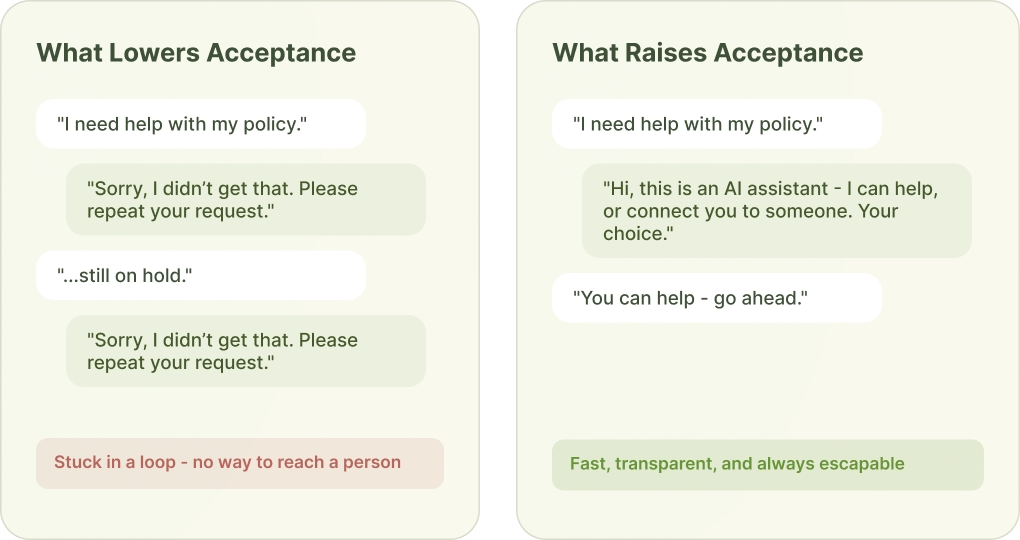
What raises acceptance vs. what lowers it
Acceptance isn't random; these are the levers.
What to evaluate so acceptance holds up
Acceptance also rests on trust that the tool handles data responsibly, so the compliance basics matter to callers even when they never see them. Confirm the vendor has a current SOC 2 report. The AICPA SOC 2 framework sets out the controls tested. Check alignment with the NAIC model bulletin on the use of AI, since responsible-AI expectations are part of how regulators frame consumer protection. And keep a neutral, plain-language reference like the Insurance Information Institute available for clients who want to understand their coverage from a source that isn't selling them anything. Beyond compliance, the biggest acceptance safeguard is getting the scope right, deciding what AI should handle versus a licensed agent, and making sure caller verification is smooth rather than an interrogation. Our buyer's checklist folds acceptance into the vendor decision.
How Sonant fits
Sonant is built around the exact things that drive acceptance. It resolves routine requests quickly, handles the full conversation in Spanish for Spanish-speaking callers and remembers their language preference for next time, and routes to a person the moment a call needs licensed judgment or a human touch, with a note already logged to your AMS so the handoff isn't a cold start. It verifies callers against your management-system data without turning the call into an interrogation, and it never traps a caller who wants a person. This is the hybrid model that keeps acceptance high: Sonant covers the routine and after-hours calls your team can't reach, and your people keep every call that needs them. If your instinct is that clients would rather talk to a human on the hard calls, you're right, and that's precisely how it's designed. For the broader debate on where AI and people each fit, see pros and cons of AI and human agents in insurance and will AI replace insurance agents, and for the fundamentals, what an AI voice agent is.
Curious whether your clients would accept it? Hear a call yourself. Talk to Sonant →
Related reading
- Voice AI in insurance
- AI receptionist for insurance agencies
- My clients don't want to talk to an AI - how one agency handled it
- What AI should handle vs a licensed agent
- Pros and cons of AI and human agents in insurance
- How to choose an AI receptionist vendor
- What is an AI voice agent?






.svg)

.svg)


