.svg)

If you are figuring out where to start with insurance agency AI, begin where the pain is loudest and the payoff is fastest: the phone. Most property and casualty (P&C) agencies lose more revenue to unanswered calls and slow callbacks than to any back-office task. So the practical sequence is answer the phone first, then automate documents and intake, then help with quoting - not the reverse. This guide gives you that order, a way to prioritize projects against your own numbers, and a checklist for what to evaluate before you sign anything. No hype, no rip-and-replace: each step should pay for itself before you fund the next.
Key Takeaways
- Start with the phone. Missed and abandoned calls are the clearest, fastest revenue leak in most P&C agencies.
- Sequence, don't sprawl: phone answering first, then document and intake automation, then quoting assistance.
- Prioritize by a simple score - frequency of the task times hours lost times how ready a tool is to handle it.
- Buy for integration. If a tool cannot write back to your agency management system (AMS), it creates work instead of removing it.
- Evaluate security early: ask for SOC 2, data handling terms, and clear escalation to licensed staff before the demo ends.
Where should an insurance agency start with AI?
Start with the phone. The first insurance agency AI project should be the one with the highest daily volume and the clearest cost of failure - and for most agencies that is inbound calls to a busy front desk. Answering, routing, and capturing every caller stops leaks you can measure in days, not quarters. Later projects build on that foundation.
The reason is sequencing risk. Quoting and rating touch pricing, carrier rules, and licensing - high stakes, slow to validate. A missed call, by contrast, is a self-contained problem: the caller either reached someone or did not. Fixing intake first gives you a fast, low-risk win and the credibility to fund the next step. An AI receptionist built for insurance agencies answers every line, captures the reason for the call, and routes or books from there. If you want the broader rollout plan, see the step-by-step guide to implementing AI across your agency.
Not sure which call flows to automate first? → Talk to Sonant
Consumer expectations reinforce the order. The Sonant Consumer AI Readiness Report documents how policyholders now expect fast, always-available responses - and the phone is where that expectation is tested first.
How do you prioritize AI projects in an agency?
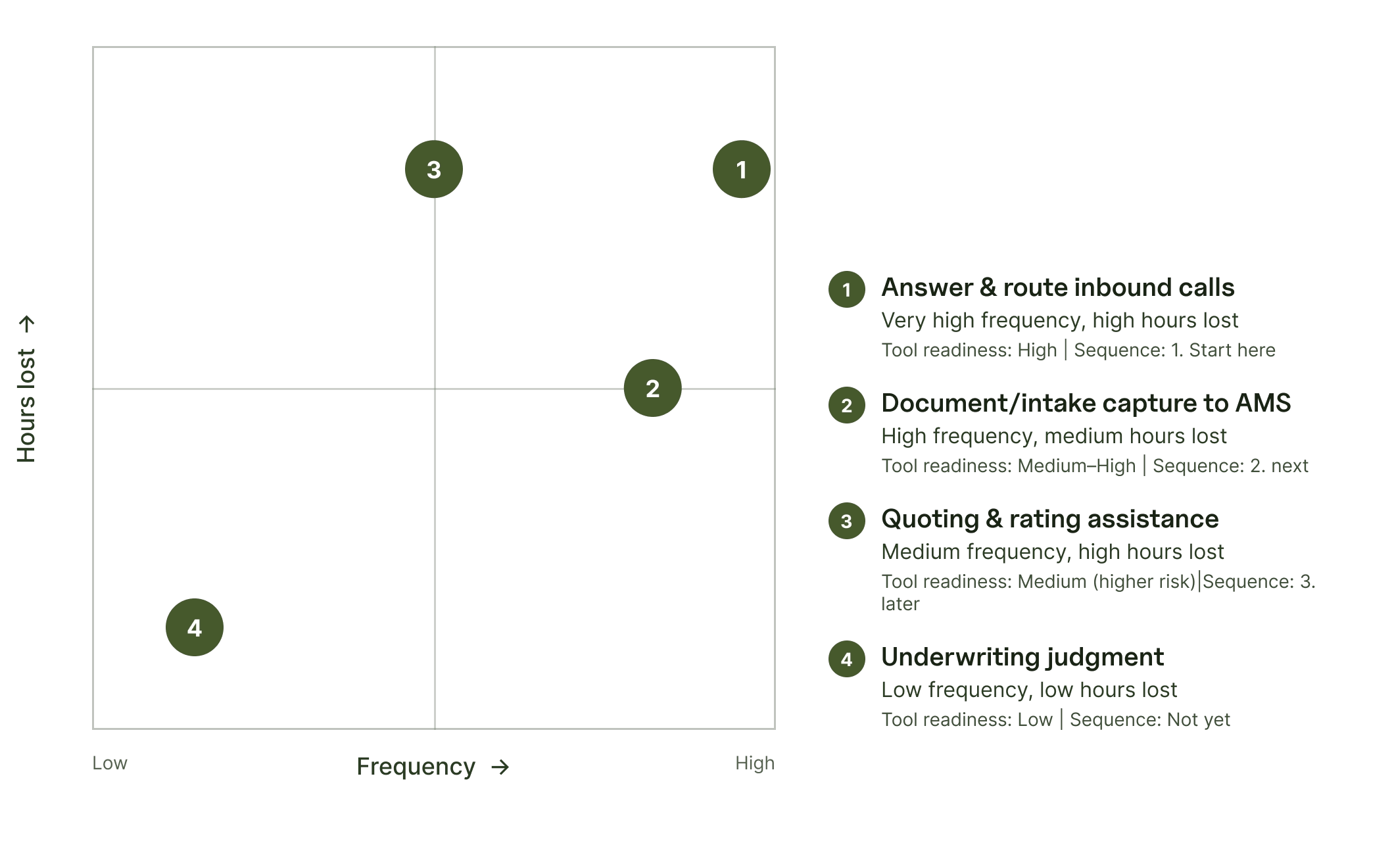
Prioritize with a simple score you can run on a napkin: frequency of the task, times hours lost to it each week, times how ready an off-the-shelf tool is to do it well. High-frequency, high-drag, tool-ready work rises to the top. Vague or high-risk work drops down the list.
The point of scoring is to resist shiny-object buying. A customer service representative (CSR) fielding the same coverage questions all day is a stronger candidate than an exotic underwriting experiment. Score each candidate task, then attack the top of the list. The table below shows how a typical ranking falls out.
For a fuller catalog of candidate tools mapped to agency tasks, the complete 2026 guide to AI tools for insurance agencies is a useful reference. And because phone leakage is usually the top-scored item, it is worth reading how agencies cut down on missed calls before touching anything else.
What comes after the phone - documents and quoting?
After the phone, automate documents and intake, then quoting. Once calls are answered and captured, the next drag is the manual keying that follows every call: notes, certificates of insurance (COIs), and claim details typed into the AMS by hand. Automating that write-back removes the second-largest time sink before you touch pricing.
Document and intake automation is lower-risk than quoting because it moves and structures information rather than making a pricing decision. This is where insurance workflow automation earns its keep - call summaries and structured fields land in the system of record without a human retyping them. FNOL intake automation is a natural early win here: structured first-notice-of-loss capture is repetitive and rules-based.
Quoting assistance comes third, on purpose. It touches carrier rules and pricing, so it needs more validation and tighter guardrails. Treat it as an assist to licensed staff, not a replacement. As you move up this ladder, agentic AI in insurance describes how systems begin to complete multi-step tasks - worth understanding, but adopt it after the basics work.
What should you evaluate before buying insurance AI?
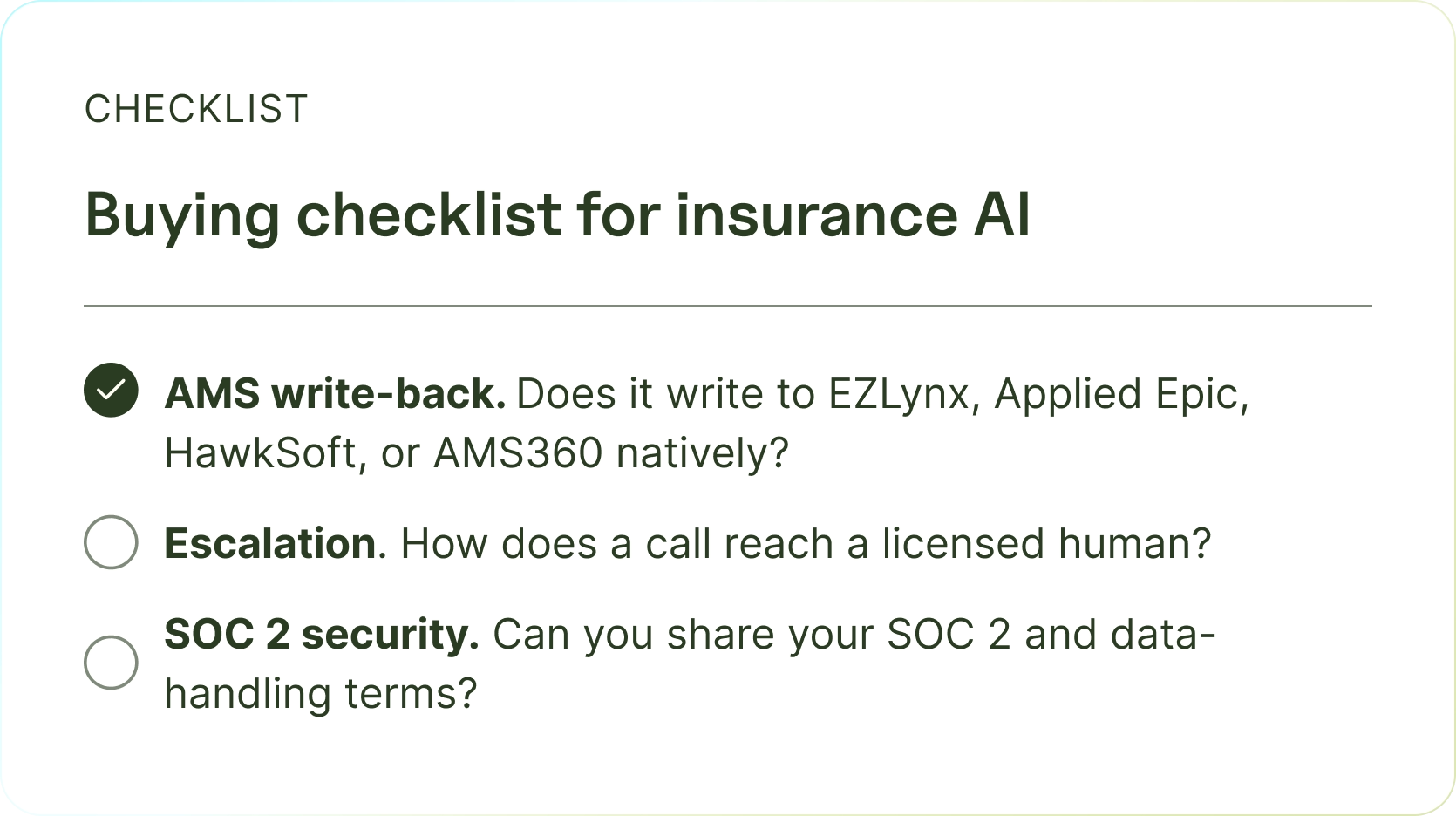
Evaluate integration, security, and escalation before you evaluate features. A tool that cannot write back to your AMS, cannot prove its security posture, or cannot hand off cleanly to a licensed human will create work rather than remove it - no matter how good the demo looks.
Integration is the first filter. Confirm native connections to the systems you actually run - EZLynx, Applied Epic, HawkSoft, AMS360 - because manual copy-paste erases the time savings. The general case for tight integration is covered in the ROI case for insurance agency software, and the mechanics of the system of record itself in this primer on agency management systems.
Security is the second filter. Ask for a SOC 2 report - the AICPA's SOC 2 framework governs how vendors handle personally identifiable information (PII) - and read the data-handling terms. Regulators are active here too: the NAIC model bulletin on AI sets expectations for how carriers and agencies govern AI use. For context on where the industry is heading, the Insurance Information Institute tracks adoption and consumer trends.
Use this checklist during the demo:
When comparing voice tools specifically, a shortlist helps - this roundup of voice AI vendors for insurance is a reasonable starting frame, and the benefits case for AI receptionists in insurance explains what a well-scoped phone project actually returns.
How Sonant fits
Sonant is where most agencies begin their insurance agency AI journey because it addresses the highest-scored task first: the phone. The workflow is direct - Sonant answers every inbound call, captures the caller's reason and details, and either books, routes, or escalates. That is the workflow. The metric is answered-call rate and reduced abandonment. The output is a structured summary written natively into your AMS - EZLynx, Applied Epic, HawkSoft, or AMS360 - so no one retypes it.
Escalation is built in: when a call needs a licensed human - a coverage change, a nuanced claim - Sonant hands it off to your staff with the context already captured. This is the phone-first foundation the rest of the sequence depends on. If reducing the admin work in your agency is the goal, answering and capturing calls cleanly is the step that makes documents and quoting worth automating next.
Want a roadmap scored against your own call and workload numbers? Book a Sonant demo →
Related reading
- How agencies roll AI out across every workflow
- The full 2026 catalog of AI tools for agencies
- What agentic systems can complete on their own
- Structured first-notice-of-loss capture, explained
- Why answering software returns more than it costs
- AI tools for insurance agencies
- Insurance agency automation software ROI






.svg)

.svg)


