.svg)

An AI answering service for insurance agents is software that answers your agency's phone calls with a natural voice, understands why the caller is reaching out, and then captures the details, books the callback, or routes the call - without a person on the line. For a property and casualty (P&C) agency, that means a quote request at 7 p.m. gets logged instead of lost, a first notice of loss (FNOL) gets escalated to a licensed rep, and a certificate of insurance (COI) request gets handled while your staff sleep. This explainer covers what an AI answering service for insurance agents actually does, how it differs from a human service, and how to choose one.
Key Takeaways
- An AI answering service for insurance agents answers calls, identifies caller intent, captures structured details, and routes or books - 24/7, without staff.
- The core difference from a human service is capacity and consistency: AI answers every call at once, follows the same script, and writes notes the same way every time.
- Human services still win on judgment-heavy, emotionally charged calls; the strongest setups escalate those to licensed staff rather than forcing AI to fake it.
- Choosing well comes down to insurance fit: does it understand quotes, claims, and renewals, and does it write back to your agency management system (AMS)?
- For a ranked, criteria-scored comparison of vendors, see the dedicated buyer's guide linked below.
What does an AI answering service for insurance agents do?
An AI answering service for insurance agents answers inbound calls with a conversational voice, determines whether the caller wants a quote, a claim, a policy change, or billing help, and then takes the matching action - capturing details, booking a callback, or escalating. The service works from your agency's greeting and rules, not a generic script. Think of it as call reception built around insurance workflows rather than a general receptionist that happens to answer.
In practice, most calls fall into a handful of intents. A new-business caller wants a quote, so the service captures name, coverage type, and contact details and books a producer follow-up. A policyholder reporting damage triggers FNOL intake, and the service escalates to a licensed rep or logs the loss details for the morning. Billing and COI requests get captured and routed. This intent-first design is what separates a genuine AI receptionist built for insurance agencies from a generic answering bot, and it is why agencies drowning in repetitive calls look here first to cut the volume of missed insurance calls.
See it handle a live quote and FNOL call → Talk to Sonant
AI answering service vs. human answering service
An AI answering service and a human answering service solve the same problem - a ringing phone nobody can pick up - but trade off differently. AI answers unlimited simultaneous calls instantly, follows one consistent process, and costs the same whether volume doubles overnight. Human services bring judgment and warmth on hard calls but queue during spikes and vary by agent. Most agencies do not need one or the other; they need the right split.
Consumers are increasingly comfortable with automated handling of routine requests, according to the Sonant Consumer AI Readiness Report. That comfort matters most on the repetitive calls - hours, quote status, billing - that consume customer service representative (CSR) time. It matters less on a distraught claim call, where a person still helps. The practical answer is a service that handles routine intents itself and hands emotional or complex calls to staff, a split we cover in depth in live answering vs. AI answering services and in the broader comparison of AI voice agents and live call-center reps.
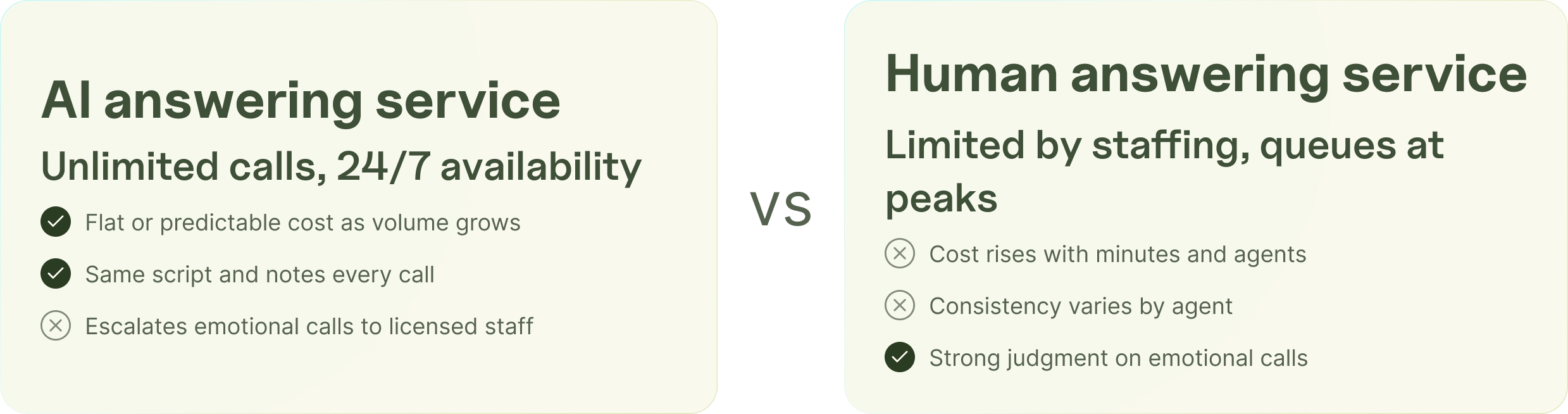
The honest read: AI wins on capacity, cost, and consistency; humans win on judgment. The pros and cons of AI and human agents in insurance go deeper, but the takeaway is that the two are complements, not rivals. An answering service and a general virtual assistant are also not the same thing - see answering service vs. virtual assistant if that is the comparison you are weighing.
How much does answering coverage actually cost an agency?
Answering coverage costs an agency in two ways: the direct price of the service and the indirect cost of the calls it prevents you from missing. Human answering services typically bill by the minute or by staffed hours, so cost scales with volume. A missed new-business call, by contrast, is a lost quote and a lost commission - often the larger number.
The indirect cost is the one agencies underestimate. Industry data on premiums and household spend is published by the Insurance Information Institute, and CSR and producer wage benchmarks come from the Bureau of Labor Statistics (BLS); a single missed quote can exceed a month of answering fees. The point is not a precise figure but the shape of the trade: after-hours and overflow calls are where agencies quietly lose revenue, which is why handling insurance calls after hours tends to pay for coverage on its own.
How to choose an AI answering service for insurance agents
Choosing an AI answering service for insurance agents comes down to insurance fit, not generic call-center features. The service should understand quotes, claims, renewals, and billing out of the box, write structured notes back to your AMS, and escalate the calls it should not handle. A general receptionist bot that treats every call the same will frustrate policyholders and leave your producers with cleanup.
Weigh these factors when you evaluate options:
- Insurance intent handling: Does it distinguish a quote from a claim from a billing question, and act correctly on each? This is the hardest thing to fake.
- AMS write-back: Does it log call details into EZLynx, Applied Epic, HawkSoft, or AMS360 automatically, or does a CSR re-key everything?
- Escalation to licensed staff: Can it hand off FNOL and complex calls to a person, rather than guessing on regulated advice?
- Security posture: Does the vendor hold a recognized attestation such as SOC 2, given the personally identifiable information (PII) callers share?
- Availability and capacity: Does it truly cover nights, weekends, and volume spikes without a queue?
If you want vendors scored against these criteria rather than a checklist, the ranked buyer's guide to the best AI answering services for insurance does exactly that. Solo and small shops should also read phone support built for independent agents, and anyone rethinking their overall setup will find the guide to insurance agency call management useful.
How Sonant fits
Sonant is an AI answering service for insurance agents built specifically for P&C agencies. A call comes in; Sonant answers, identifies the intent, and acts: it captures a quote request and books the producer, runs FNOL intake and escalates the loss to a licensed rep, or logs a billing and COI request. Every call is written back into your AMS natively - EZLynx, Applied Epic, HawkSoft, and AMS360 - so notes land in the client record instead of a voicemail box. The workflow is answer → capture intent → write to AMS → escalate when needed, and the output is a caught call, a structured note, and a follow-up your team can act on. For the calls that need human judgment, Sonant hands off to your staff rather than guessing, and it can feed cleaner intake into FNOL automation downstream.
Want to see it answer your agency's calls the way your best CSR would? Book a Sonant demo →
Related reading
- A ranked comparison of the top insurance answering vendors
- When to use live agents instead of automated answering
- Keeping after-hours callers from going to voicemail
- How solo producers cover their phones without hiring
- Weighing automated and staffed handling side by side
- Insurance agency AI: where to start and what to buy
- AI in insurance cost: pricing, ROI, and examples






.svg)

.svg)


