.svg)

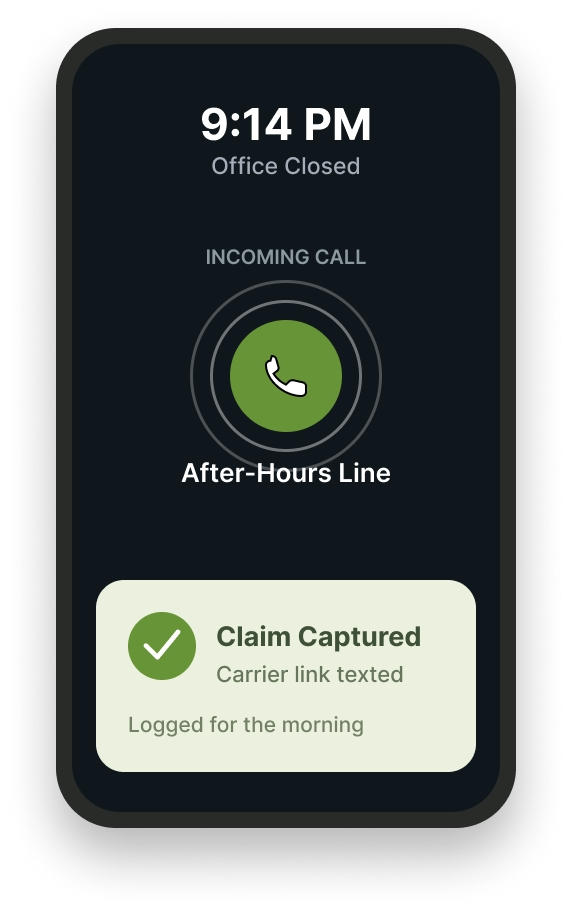
In one agency's own phone records, 641 after-hours calls went completely unanswered, and as the Insurance Information Institute notes, claims and coverage needs don't keep business hours; losses happen at night, on weekends, and over holidays. That is why the best after-hours answering solution for an insurance agency is the one that does more than take a message: it captures claim details, texts the carrier claims link, flags urgent calls, and logs everything so your team walks into a documented morning. This guide gives you a weighted scorecard to compare voicemail, answering services, and AI receptionists on the after-hours job specifically, and it compares capability categories honestly rather than inventing vendor figures.
Key Takeaways
- The best after-hours answering does the work, not just the message: claim capture, carrier link, urgent flag, and a logged task.
- After-hours is the biggest blind spot - one agency found 641 after-hours calls that had gone unanswered.
- Use the weighted scorecard below (five criteria totaling 100%) to rate any after-hours option consistently.
- Voicemail is the weakest option because most after-hours callers won't leave a message.
- Match the solution to your after-hours mix: pure message-taking for low volume, resolution and claim intake for the rest.
What makes the best after-hours answering for an insurance agency?
The after-hours job is different from daytime answering. At 9 PM the caller is often reporting a loss or shopping a quote they couldn't make during work, and they will not wait, because most after-hours callers move on rather than leave a voicemail. So the best solution is judged on what it does with that call: does it just record a message, or does it collect the claim details, send the carrier's claims link, and hand your team a documented task for the morning? That is the frame behind our guide to insurance after-hours calls and the broader case for 24/7 support.
The stakes are concrete. One agency found 641 after-hours calls that had gone unanswered, a direct leak into the cost of missed calls. Before the scorecard, the honest caveat: if your after-hours volume is tiny and mostly non-urgent, a simple message-taking service or even a good voicemail-to-email flow may be enough. The scorecard helps you decide where you actually fall.
Not sure what your after-hours volume really is? → Talk to Sonant
Methodology: how we weighted the criteria
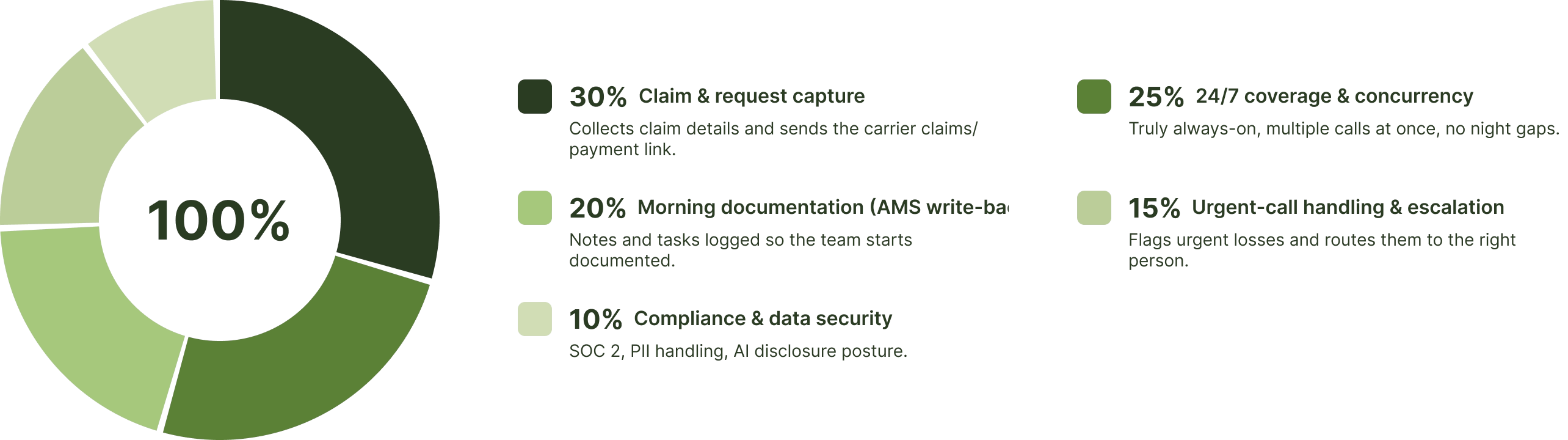
We scored after-hours answering on five criteria weighted by how much each affects an agency after the lights go off. The weights sum to exactly 100%. Rate any option 1-5 per criterion, multiply by the weight, and total it. This is a consistent way to compare voicemail, an answering service, and an AI receptionist without leaning on marketing numbers.
Comparing categories honestly: voicemail scores on cost and simplicity but near zero on capture and documentation. A traditional answering service scores on human reassurance and message-taking but can't pull a policy, issue a COI, or write to your AMS, and it typically bills per minute. An AI receptionist is designed to score across capture, coverage, and documentation, routing the urgent calls to a person. See the direct matchup in AI receptionist vs voicemail and the roundup in best AI answering services.
What to evaluate before you choose
Score the options, then do diligence on the two criteria that carry risk after hours. On security, confirm the vendor is SOC 2 audited, because after-hours claim intake captures sensitive PII with no one in the office watching. The AICPA SOC 2 framework shows what the audit covers, and our SOC 2 guide lists the questions. On regulation, check how an AI option discloses itself to a caller and treats consumers, against the NAIC model bulletin on AI.
Then match the solution to your real after-hours mix. If you get frequent after-hours FNOL calls, weight claim capture heavily and look at FNOL automation; if your nights are mostly quote-shoppers, weight coverage and next-morning follow-up. Whatever you pick, the goal is that no after-hours caller hits a dead line and that urgent losses reach a person, the same discipline as reducing missed calls. For the full vendor process, use how to choose an AI receptionist.
How Sonant fits
Against this scorecard, Sonant is built for the after-hours job. It answers overflow, after-hours, and Spanish-speaking calls 24/7, so nights and weekends stop going to voicemail. On an after-hours claim it collects the details, texts the carrier claims link, flags anything urgent, and creates a task with a full transcript, a direct answer to the 641-unanswered-calls problem and the model detailed in what happens to after-hours calls with an AI receptionist. Every call produces a note on the client record with no manual typing, so your team starts the morning documented rather than guessing.
Sonant is coverage for the calls your team can't reach at night, not a replacement for on-call judgment. A distressed claimant who needs a person still gets routed and flagged as urgent; the routine after-hours calls get resolved and logged. Whichever after-hours option you choose, score it on the five criteria above and confirm it does the work (capture, coverage, documentation, escalation), not just the message. See the whole flow in AI receptionist for insurance agencies.
Want to stop losing nights and weekends to voicemail? Talk to Sonant →
Related reading
- Insurance after-hours calls
- What happens to after-hours insurance calls with an AI receptionist?
- Capture after-hours insurance leads
- The real cost of missed calls at an insurance agency
- AI receptionist vs voicemail
- Best AI answering services for insurance
- 24/7 insurance support guide






.svg)

.svg)


