.svg)

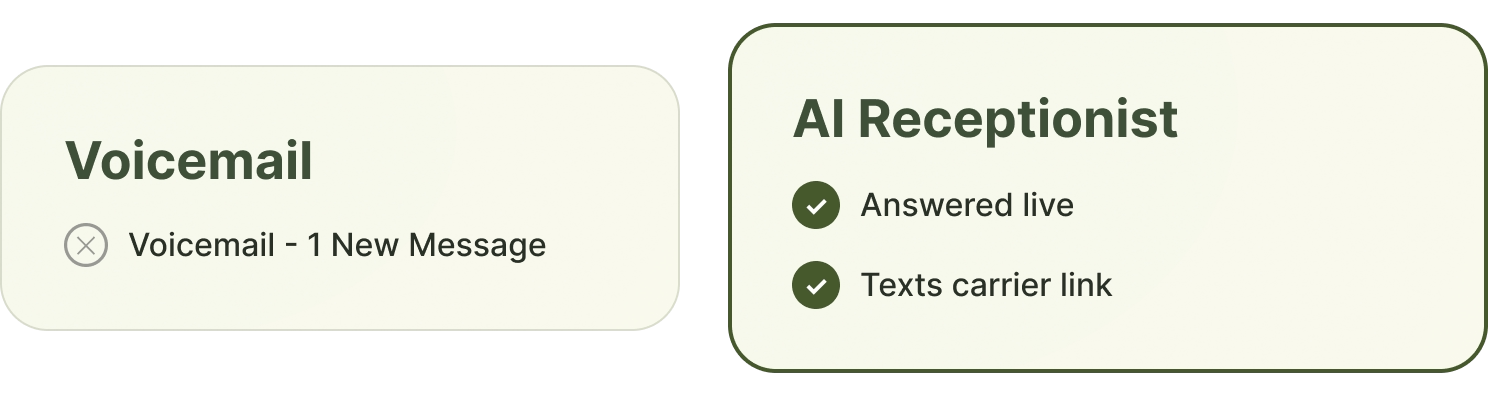
Voicemail records a message; an AI receptionist answers the call, handles the routine request, detects the caller's carrier and texts the matching claims or payment link, and writes a note plus a task to your AMS. That is the whole difference in one line, and it is why AI receptionist vs voicemail isn't really a close comparison for an insurance agency. A missed call that lands in voicemail is a caller you're hoping calls back; a call an AI answers is a client who got helped. The gap is easy to underestimate: one agency found 641 after-hours calls that went unanswered, most of which never became a voicemail at all. Voicemail is passive by design, while an AI receptionist resolves the routine call and logs it, so the request does not sit waiting for someone to notice it.
The cost hides in the calls that never become a message. When someone can't get through, a large share don't leave voicemail at all; they hang up and dial the next agency in their search results. So the real question isn't "voicemail vs AI" on features; it's what a missed insurance call actually costs you when it silently rolls to a recording no one hears until tomorrow.
Key Takeaways
- Voicemail records a message; an AI receptionist answers live, resolves routine requests, and documents the call in your AMS.
- Many missed callers don't leave a voicemail at all - they call the next agency, so the loss is invisible.
- Missed calls also create more work: callbacks, phone tag, and incomplete files.
- An AI receptionist covers overflow and after-hours calls, which is exactly when voicemail does the most damage.
- Voicemail is fine as a last-resort fallback; it's a poor front line for an agency that wants to keep the business.
AI receptionist vs voicemail: what a missed insurance call really costs
The cost of a missed call is rarely a single lost sale. It compounds. A prospect who hits voicemail keeps shopping. An existing client who can't reach you on a claim gets anxious and remembers it at renewal. And even the callers who do leave a message create work: someone has to listen, call back, and often play phone tag before anything gets resolved, which is the dynamic we cover in missed calls create more work. An AI receptionist changes the math by answering on the first ring, handling the routine part, and leaving a documented note in your AMS instead of a recording.
This is really a missed-call problem, not a voicemail problem, a point we make directly in the lead problem is a missed-call problem. The fix is answering more calls, which is also the most direct lever on retention, as covered in increasing retention by answering more calls and our guide to reducing missed calls. For the full dollar picture, see the real cost of missed calls.
Losing callers to a voicemail beep? → Talk to Sonant
Voicemail vs an AI receptionist, side by side
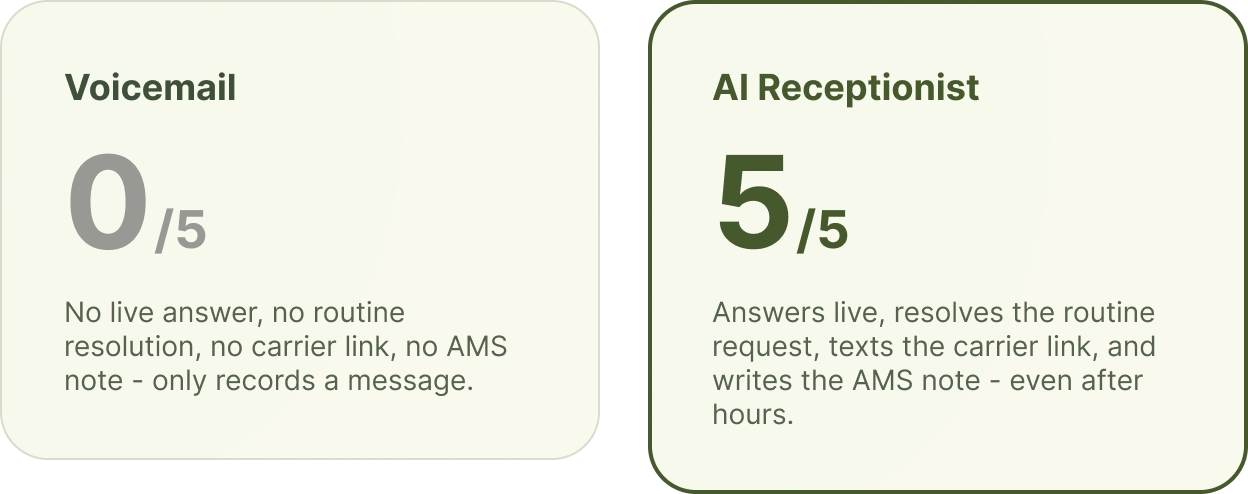
Here's what actually happens to the caller under each option.
Voicemail's one job is to record; everything after that depends on your team having time to listen and call back. An AI receptionist collapses that whole loop into the original call, and for the calls that need a person, it routes them instead of burying them in an inbox. If you're also weighing a human option, our AI receptionist vs answering service comparison covers that third path.
What to evaluate before replacing voicemail
If you're moving from voicemail to a system that answers and acts on calls, evaluate it like any vendor that touches client data. Ask for a SOC 2 report, the standard attestation for how a service organization protects customer data, described in the AICPA SOC 2 framework. A voicemail box holds messages; an AI receptionist processes policy and personal information, so the bar is higher.
Check governance too. The NAIC model bulletin on the use of AI systems is the reference most states point to for accountable, tested AI, and a logged transcript on every call actually helps you meet it. And to size the opportunity honestly, the Insurance Information Institute is a useful reference for the claims and service volumes that spike your call load, and those spikes are exactly when voicemail costs the most. Be clear about scope, too: an AI should handle routine calls and route judgment calls to staff, the line we draw in what AI should handle vs a licensed agent.
How Sonant fits
Sonant is the alternative to letting calls fall to voicemail. It answers live during overflow and after hours, handles routine requests on the spot, detects the caller's carrier and texts the matching claims or payment link, and writes a note plus an assigned task with the full transcript to your AMS. The caller gets helped in the moment, and your team gets a documented record instead of a message to decode.
Sonant is coverage for the calls your team can't reach, not a replacement for your team. It resolves the routine volume and routes anything requiring a licensed decision to a person. Voicemail still has a place as a true last-resort fallback, but as a front line it quietly costs an agency new business and retention. If missed calls are the leak, this is the patch. For the broader context, see our AI phone answering for insurance agencies guide, the after-hours calls overview, and the AI receptionist for insurance agencies primer.
Ready to stop paying the hidden cost of voicemail? Talk to Sonant →
Related reading
- The real cost of missed calls at an insurance agency
- Reduce missed calls at your insurance agency
- Missed calls create more work
- The lead problem is a missed-call problem
- What happens to after-hours insurance calls
- AI receptionist vs a traditional answering service
- AI receptionist for insurance agencies






.svg)


.svg)


