.svg)

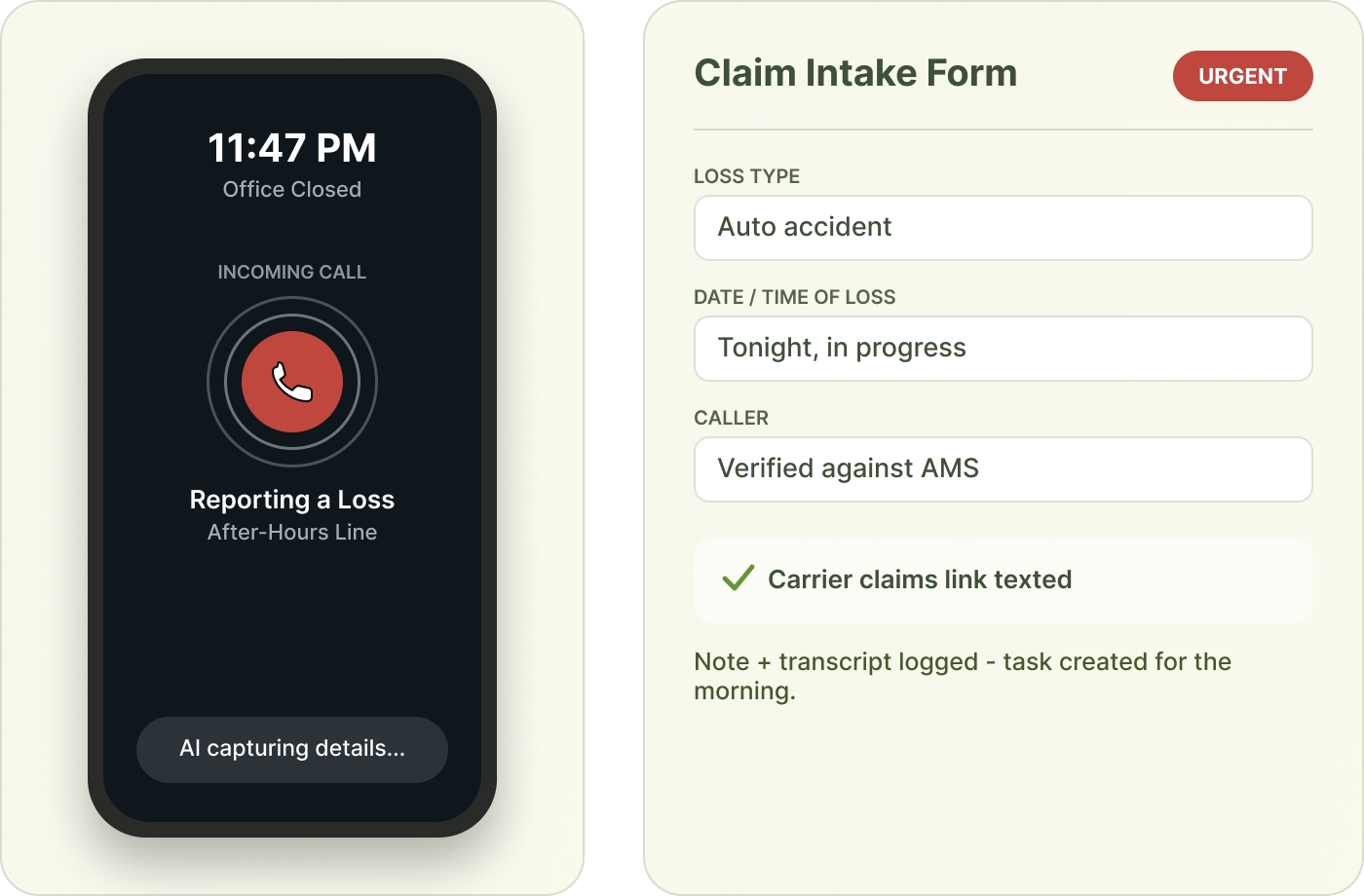
AI answering for FNOL (first notice of loss) intake captures claim details from callers around the clock, verifies the caller, flags urgent losses, texts the carrier's claims link where relevant, and writes a note with a transcript back to your AMS, then creates a task for a licensed staffer to follow up. It solves a specific, expensive gap: losses reported after hours or during overflow that would otherwise hit voicemail and lose hours or days. FNOL intake is a strong fit for AI because it is structured, time-sensitive, and mostly about capturing information accurately.
Key Takeaways
- FNOL intake is largely structured information-gathering, which makes it a strong fit for AI answering - as long as urgent losses are flagged and routed.
- The AI captures claim details 24/7, so a loss reported at 2 a.m. is documented, not sitting in voicemail.
- It verifies the caller, texts the carrier's claims link where relevant, and writes a note with a transcript to the AMS.
- Adjusting the claim, coverage decisions, and empathy-heavy conversations stay with your licensed team.
- The measurable win is speed: faster capture and a task waiting for staff at the start of the next business day.
What is AI answering for FNOL intake?
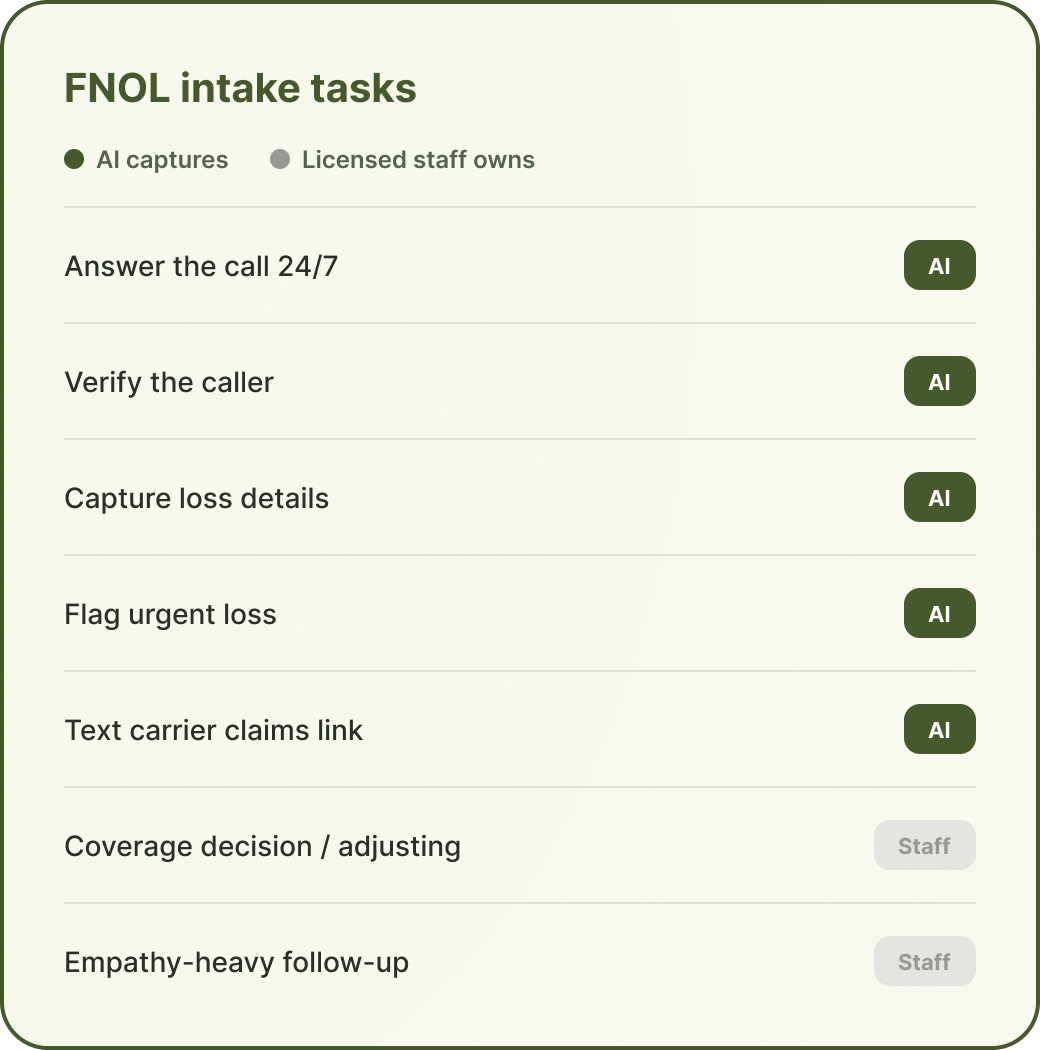
AI answering for FNOL intake is an AI receptionist handling the first call after a loss, the intake, without a live person needing to pick up. When a client calls to report an accident, damage, or a loss, the AI answers, verifies the caller against your AMS data, walks through the intake questions, captures the details, and flags whether the loss looks urgent. It then texts the carrier's claims link where relevant, writes a note with the full transcript to the client record, and creates a task so a licensed staffer follows up. What it does not do is adjust the claim or make a coverage determination; those stay with your team.
The reason this matters is timing. Losses do not wait for business hours, and one agency found hundreds of after-hours calls going unanswered, the kind of gap where a claim reported at night sits until morning. AI FNOL intake closes that gap. For the broader after-hours problem, see insurance after-hours calls and what happens to after-hours calls with an AI receptionist. For the automation category, see our FNOL automation guide and insurance call center automation.
Losses hitting voicemail after hours? → Talk to Sonant
FNOL intake: what AI captures vs what stays human
What to evaluate in AI FNOL intake
- 24/7 capture and urgency flagging. The whole point is answering when no one is at the desk. Confirm how it flags an urgent loss and routes it. See after-hours call handling.
- Verification. It should verify the caller against your AMS data and route when a caller can't confirm. See caller verification.
- Intake accuracy and AMS write-back. Details need to be captured cleanly and logged with a transcript, with a task assigned. See AMS call notes automation.
- Clear scope. It should capture the notice, not adjust the claim. See what AI should handle vs a licensed agent and our insurance claims automation overview.
- Compliance and security. Claim data is sensitive. Ask about a recognized attestation like SOC 2 and alignment with the NAIC model bulletin on AI. The Insurance Information Institute offers independent context on claims, and our Consumer AI Readiness Report covers how callers respond to AI at the moment of a loss.
For the revenue angle on catching losses and leads outside business hours, see capturing after-hours leads and reducing missed calls.
How Sonant fits
Sonant handles FNOL intake as part of answering an agency's calls, and its scope is clear. It answers 24/7, verifies the caller against your AMS data, collects the claim details through a structured intake, flags urgent losses, and texts the carrier's claims link where relevant, with no transfer needed. When the call ends, it writes a note with the transcript to the client record and creates a task, so a licensed staffer starts the day with the loss already documented. It connects to EZLynx, Applied Epic, AMS360, and HawkSoft.
It does not adjust claims or make coverage decisions; those are licensed judgments that stay with your team, and Sonant routes them with the context already gathered. On the human side of a loss, a caller who is shaken deserves a person, and the right design gets them there while still capturing what's needed. Think of Sonant as making sure the first notice is never missed and never has to be re-typed: the coverage layer, not the claims department. For the full picture, see the AI receptionist for insurance agencies overview.
Want to see an after-hours loss report captured end to end? Talk to Sonant →
Related reading
- Insurance call center automation
- FNOL automation
- What happens to after-hours insurance calls with an AI receptionist
- Insurance after-hours calls
- Insurance claims automation
- What AI should handle vs a licensed agent
- AI receptionist for insurance agencies






.svg)

.svg)


