.svg)

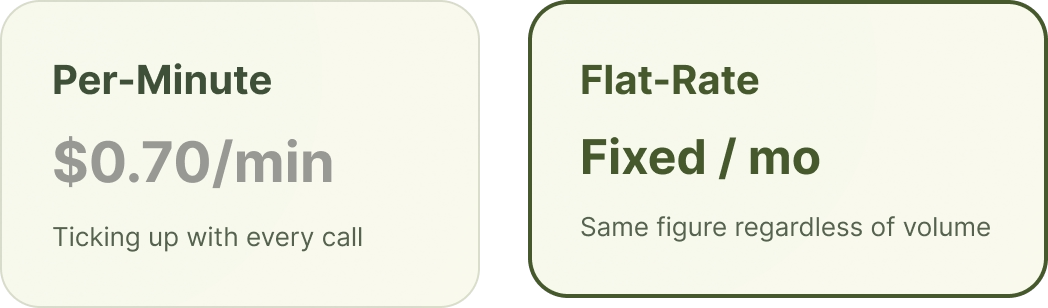
AI receptionist pricing generally takes one of two shapes: per-minute, where you pay for time on the phone, or flat-rate, where you pay a set monthly fee. Which one is better for your insurance agency depends on your call volume and how long your calls run. Per-minute rewards short, infrequent calls and punishes a busy month, while flat-rate is predictable but can overcharge a quiet office. Understanding both models is the fastest way to read any AI receptionist pricing page without getting surprised on the invoice, and it's why the most accurate number comes from a volume-based quote rather than a sticker.
Key Takeaways
- The two common AI receptionist pricing models are per-minute and flat-rate; the best fit depends on your call volume and call length.
- Per-minute (the answering-service norm at roughly $0.70 a minute) is cheap when calls are few and short, expensive when volume spikes.
- Flat-rate is predictable and budget-friendly for steady, higher volume, but can overcharge a quiet agency.
- Look past the model at what a call actually delivers: a resolved, logged call is worth more than a longer message-taking one.
- Because volume drives the real number, a quote from a demo beats any published price.
AI receptionist pricing: per-minute vs flat-rate
Per-minute pricing is the model most traditional answering services use, often around $0.70 a minute, which works out to roughly $500 to $800 a month for about 100 calls. It's straightforward: talk more, pay more. That's fine when your call volume is low and predictable, but it has a nasty edge. The busier you get, and the longer each call runs, the faster the meter climbs. It also quietly penalizes the outcome you actually want, because a thorough call that resolves a client's issue costs more than a quick brush-off.
Flat-rate pricing charges a set fee regardless of minutes. For an agency with steady, moderate-to-high volume, that's predictable and usually cheaper per call than a metered plan. The risk runs the other way: a quiet office can end up paying for capacity it doesn't use. Neither model is inherently better; it depends on your numbers. What matters more is what the call delivers. A per-minute answering service can only take a message; an AI receptionist for insurance agencies resolves routine requests and logs them to your AMS, so you're comparing not just price per minute but value per call. For the model-by-model economics of the traditional options, see answering service vs virtual assistant and insurance virtual assistant cost.
Not sure which pricing model fits your call pattern? → Talk to Sonant
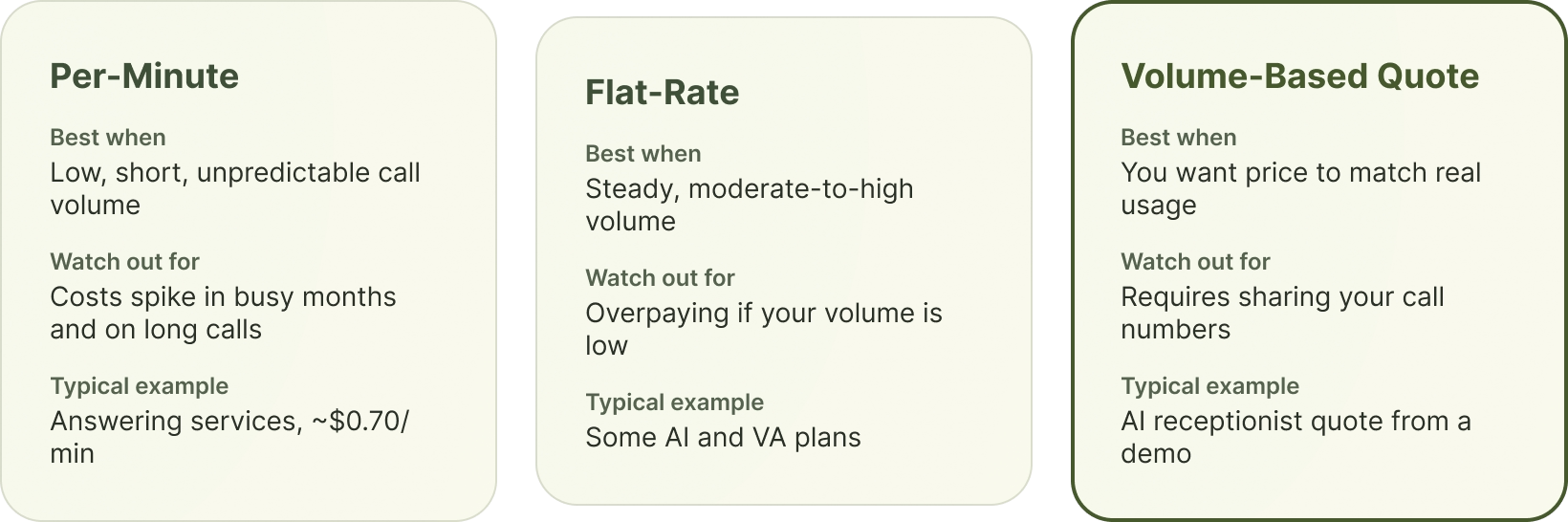
Which pricing model fits your agency?
Match the model to how your phones actually behave.
The table points at the honest conclusion: the right price is the one built on your real volume. That's why a good AI receptionist vendor asks about your call load before quoting. For how this plays out against a traditional service specifically, see is an AI receptionist cheaper than an answering service and the capability side in AI receptionist vs a traditional answering service. If you're weighing live human answering against AI, live answering vs AI answering services is the direct comparison.
What to evaluate beyond the pricing model
Once you understand the model, evaluate the vendor the way you would any tool touching client data. Ask for a current SOC 2 report, which is proof of independent auditing against the AICPA SOC 2 framework for how the vendor stores and handles data. Confirm the approach aligns with state guidance modeled on the NAIC model bulletin on the use of AI. And keep the policyholder's experience in view. The Insurance Information Institute is a useful reference for what callers expect when they reach out about a policy or a claim, which is ultimately what your spend has to deliver.
Then compare on cost per resolved call, not cost per minute. A per-minute plan that only takes messages can look cheap until you add the staff hours spent reworking those messages. A flat-rate plan that resolves and documents calls may cost less per finished outcome even if the monthly line is higher. Those are the numbers that decide value. See what an AI receptionist actually saves an agency (ROI), the fuller cost picture in how much does an AI receptionist cost, and, if you're comparing against payroll, AI receptionist vs hiring a CSR and reduce insurance agency labor costs.
How Sonant fits
Sonant is an AI receptionist built for P&C agencies, and rather than publish a single sticker price, we quote based on your call volume, because that's what actually determines the right number. On a call, Sonant connects to your AMS (EZLynx, Applied Epic, HawkSoft, AMS360), verifies the caller, resolves routine requests like carrier-specific payment links, and writes a note and task back to the client record. That's the "value per call" side of the pricing conversation: you're paying for resolved, documented calls, not just minutes on a line.
Sonant is coverage for the calls your team can't reach (overflow, after-hours, and Spanish-language calls), not a replacement for the team. A human is still better on a complex, emotional claim or a nuanced coverage question, and if all you need is bare message-taking, a per-minute answering service can be perfectly adequate. The reason to look past the pricing model is that the cheapest meter often leaves the most rework behind. Tell us your call volume and we'll put a real quote against it.
Want pricing matched to your real call volume? Talk to Sonant →
Related reading
- How much does an AI receptionist cost for an insurance agency?
- Is an AI receptionist cheaper than an answering service?
- Insurance answering service vs virtual assistant
- Insurance virtual assistant cost
- What an AI receptionist actually saves an agency (ROI)
- AI receptionist vs a traditional answering service
- Live answering vs AI answering services






.svg)


.svg)


