.svg)

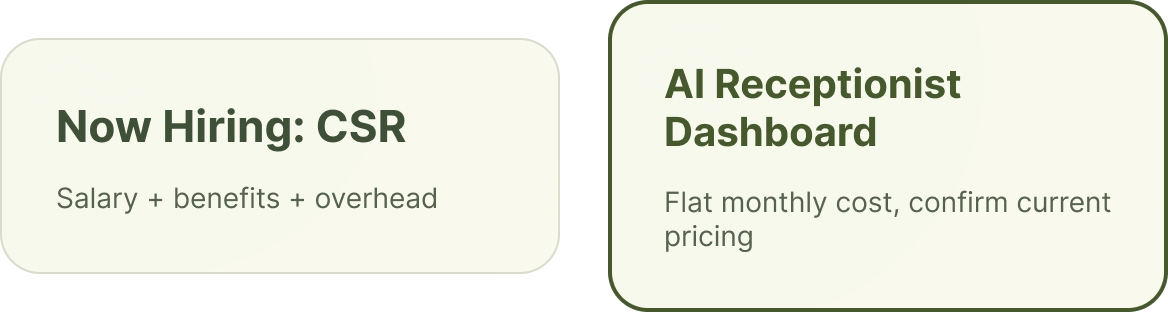
Deciding between an AI receptionist vs hiring an in-house CSR comes down to two different cost models and two different jobs. Hiring a CSR gives you a licensed-capable person for empathy, judgment, and complex service during set hours, with a salary, benefits, and a ramp period. An AI receptionist gives you 24/7 coverage for routine and overflow calls at a flat, predictable monthly cost, with no ramp and no turnover risk. For most agencies the real question isn't either/or. It's which calls deserve a person and which just need to be answered and documented.
This post lays out the honest cost comparison and where each option wins. If you want the broader money view first, start with our insurance virtual assistant cost breakdown and the VA vs hiring a CSR comparison.
Key Takeaways
- A CSR is a person: salary, benefits, and a ramp period, plus turnover exposure - but real judgment, empathy, and licensed capability.
- An AI receptionist is flat, predictable coverage that answers routine and overflow calls 24/7 with no ramp and no turnover.
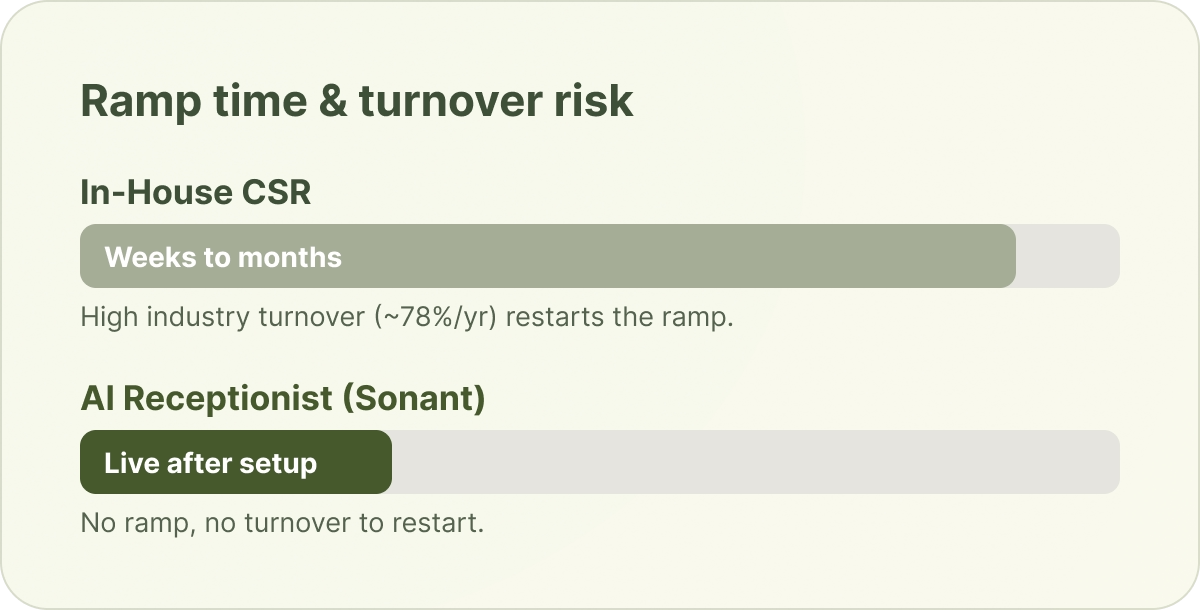
- Insurance CSR turnover is high (industry turnover runs around 78% a year), so a single hire is not guaranteed coverage.
- The strongest setup is hybrid: AI handles routine/overflow and documents to your AMS; your CSR handles complex, licensed, and high-empathy work.
- Compare on cost per resolved call and hours covered, not just headline salary versus subscription.
AI receptionist vs hiring a CSR: the real cost comparison
Start with what each actually costs to run. A new in-house CSR carries a salary plus benefits and payroll overhead, and they aren't fully productive on day one. Insurance roles commonly take weeks of ramp before a rep is confident pulling policies and handling calls unassisted. During that ramp you're paying full cost for partial output. For current pay benchmarks, see insurance CSR salary, and for the timing question, when to hire an insurance CSR.
An AI receptionist inverts that. There's no ramp and no benefits load; it's a flat, coverage-based cost from the first week, and it answers routine calls immediately. Sonant connects to your agency management system, resolves routine requests on the spot, and logs every interaction. Agencies that route routine and overflow calls to it typically cut administrative overhead substantially. The trade-off is honest: an AI receptionist is not a licensed producer and is not the right tool for a grieving claimant or a nuanced coverage dispute. That's still a job for a person.
There's also a coverage-continuity difference people underweight. A CSR covers set hours and can leave. Insurance turnover runs high, and each departure restarts hiring and ramp. See why insurance staff quit and the CSR retention stats for how expensive that churn gets. An AI receptionist doesn't quit, doesn't call in sick, and covers nights and weekends by default.
Trying to decide whether to hire or automate first? → Talk to Sonant
Cost and capability side by side
The table makes the split clear: a CSR wins on judgment and licensed work, an AI receptionist wins on hours, predictability, and documentation. Neither one alone covers everything an agency phone throws at it. For the deeper hiring-cost math, hire an insurance CSR in 2026 is the companion piece.
What to evaluate before you hire or automate
Run this before you post a job or sign a contract:
- Call mix. What share of calls are routine service versus complex, licensed conversations? The routine share is your automation opportunity; see what AI should handle vs a licensed agent.
- Coverage gaps. When do calls go unanswered? If it's evenings and weekends, a single daytime hire won't fix it, so weigh after-hours coverage.
- Documentation quality. How consistent are your call notes today? Automatic AMS note-and-task logging removes a common source of dropped follow-ups.
- Compliance. Ask any AI vendor about SOC 2. The AICPA SOC 2 framework explains what a report should cover, and review the NAIC model bulletin on AI for regulator expectations on governing AI use.
- Client expectations. The Insurance Information Institute tracks how policyholders reach their agencies; match coverage to how your book actually calls.
A low-risk move is to test AI on routine calls before committing to a new hire; our guide to testing an AI receptionist before hiring a CSR walks through it.
How Sonant fits
Sonant is coverage for the calls your team can't reach, not a substitute for hiring good people. When you're short-staffed, mid-hire, or just buried in routine service calls, Sonant answers, verifies the caller against your AMS, resolves the routine request, and writes a note plus a task to the client record so nothing falls through. That frees your CSR to spend their day on the work that actually needs a licensed human.
The model is deliberately hybrid. Sonant covers routine, overflow, after-hours, and Spanish-language calls; your team keeps the judgment calls: coverage advice, tough claims conversations, anything that needs empathy or a license. Many agencies find the right answer isn't "hire or automate" but "automate the routine so the one CSR you have isn't drowning." If you're actively comparing the two paths on dollars, revisit our breakdown of virtual assistant pricing and the comparison of a VA against an in-house hire.
Wondering whether to automate routine calls before your next hire? Talk to Sonant →
Related reading
- Insurance virtual assistant cost
- Insurance VA vs hiring a CSR
- When to hire an insurance CSR
- Why insurance staff quit
- Test an AI receptionist before hiring a CSR
- What AI should handle vs a licensed agent
- AI receptionist for insurance agencies






.svg)

.svg)


