.svg)

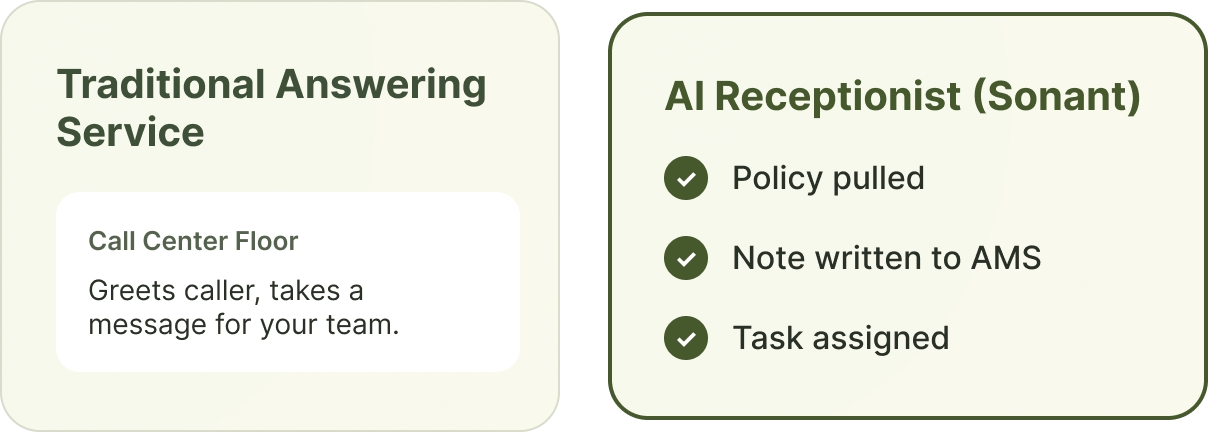
An AI receptionist and a traditional answering service both stop your phone from going unanswered, but they solve different problems. A traditional answering service is a human call center that greets callers and takes messages; it can't pull a policy, issue a certificate of insurance, or answer a coverage question, and you usually reach a different person each call. An AI receptionist connects to your AMS, resolves routine requests on the call, and writes a note to the client record afterward. If you're weighing AI receptionist vs answering service for insurance, the decision is really relay versus resolution, and cost follows from that. This post compares both on cost and capability: hours, concurrency, AMS write-back, insurance training, escalation, and compliance.
Key Takeaways
- A traditional answering service takes messages; an AI receptionist resolves routine insurance requests and documents them in your AMS.
- Answering services are usually billed per minute - roughly $0.70 per minute, or about $500 to $800 a month for 100 calls - which scales up with volume.
- An answering service can't pull a policy, issue a certificate, or answer coverage questions; it hands the work back to your team.
- An AI receptionist answers 24/7, handles many calls at once, and writes a note plus a task to the client record after each call.
- Both should escalate anything requiring a licensed decision - the difference is whether the routine 60-80% is resolved before it reaches your staff.
AI receptionist vs answering service for insurance: which fits your agency?
Start with what each actually does on the call. A traditional answering service is a human call center: a person answers, takes down who called and why, and passes the message to you. That's genuinely useful for pure message-taking, and if that's all you need, it's fine. But an answering service can't pull a policy, issue a COI, or answer a coverage question, and it's usually a different person each time, billed per minute. An AI receptionist for insurance agencies is a different animal: it connects to your AMS, resolves the routine request on the call, and logs the interaction.
The clearest way to see the split is the difference between relay and resolution. With an answering service, the call becomes a message you still have to process tomorrow. With an AI receptionist, a payment, ID-card request, or address change is finished on the call and documented, which is why our answering service versus virtual assistant breakdown treats AI as a third option rather than a swap for either.
Wondering whether your calls need message-taking or actual resolution? → Talk to Sonant
There's a third option most agencies don't frame clearly: instead of choosing between a human answering service and a human virtual assistant, an AI receptionist covers the routine and after-hours load and escalates the rest.
Cost and capability: the comparison
Here's the side-by-side on the categories that decide it. The answering-service figures below are typical, known ranges for human message-taking services.
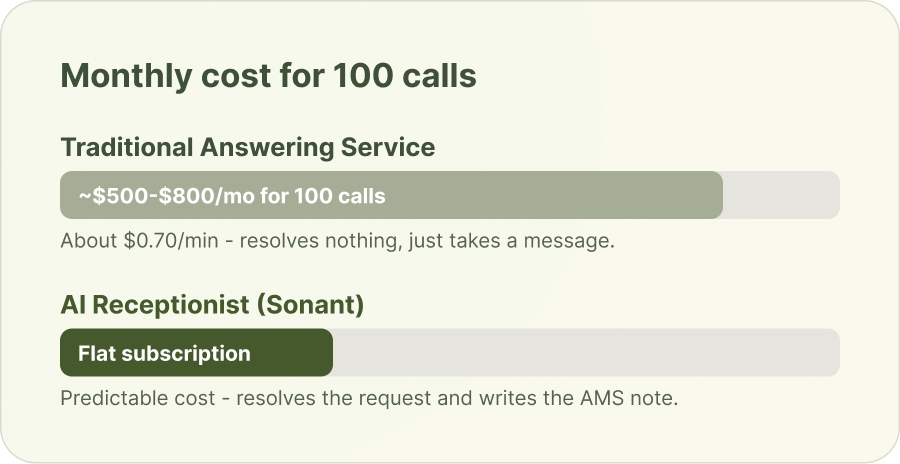
The line that changes the math is cost model. A per-minute answering service looks cheap at low volume and gets expensive fast as calls climb, and you're paying for message-taking, not resolution. A flat subscription is easier to forecast, and the work is actually completed. For a full breakdown, see is an AI receptionist cheaper than an answering service and the AI receptionist cost guide. And after a Sonant call, a note lands on the client record with the transcript and a task is assigned. See how AI call notes get logged to your AMS automatically.
What to evaluate before you choose
Look past the monthly price at what the call actually accomplishes and whether the vendor can back its compliance claims.
- Security and data handling. Anything touching client policy data should explain how it verifies callers and protects data. Ask for a current SOC 2 report and read what it covers using the AICPA SOC 2 framework. Sonant verifies identity against AMS data before sharing anything; see caller verification and our SOC 2 notes.
- AI governance. If you adopt AI answering, know your state's stance. The NAIC model bulletin on the use of AI by insurers is the baseline regulators reference.
- Consumer expectations. The phone is still where clients turn under stress. The Insurance Information Institute is a neutral source on how policyholders engage with agencies.
- Total cost of relay. A cheap per-minute message you still have to work through isn't cheap. Factor in your team's follow-up time. Compare against your real numbers with the cost guide.
How Sonant fits
Sonant is coverage for the calls your team can't reach, not a replacement for your team. It answers 24/7, absorbs overflow and after-hours volume, resolves the routine requests, and hands anything requiring a licensed decision to a person with the full transcript attached. Agencies running this hybrid model cut administrative overhead by a large margin because the routine 60-80% of calls get resolved and documented without staff involvement, while judgment stays with licensed people. An answering service is honestly fine for pure message-taking, and a human is better on a complex, emotional call, and Sonant routes those on purpose. The point isn't that the answering service is bad; it's that most agency call volume is routine service work that can be finished on the call instead of relayed.
If you're currently on an answering service, the practical next step is our guide on switching from an answering service to an AI receptionist. To compare against the other human option, see AI receptionist versus an offshore virtual assistant, and for the honest AI-versus-staff line, read what AI should handle versus a licensed agent. The best virtual assistant for insurance overview and AI phone answering for insurance agencies give you the wider field.
Want to see resolution instead of relay on your own routine calls? Talk to Sonant →
Related reading
- Insurance answering service vs virtual assistant
- AI receptionist for insurance agencies
- Is an AI receptionist cheaper than an answering service? Cost breakdown
- Switching from an answering service to an AI receptionist
- AI receptionist vs offshore virtual assistant for insurance agencies
- Does an AI receptionist log call notes to your AMS automatically?
- How much does an AI receptionist cost for an insurance agency?






.svg)


.svg)


