.svg)

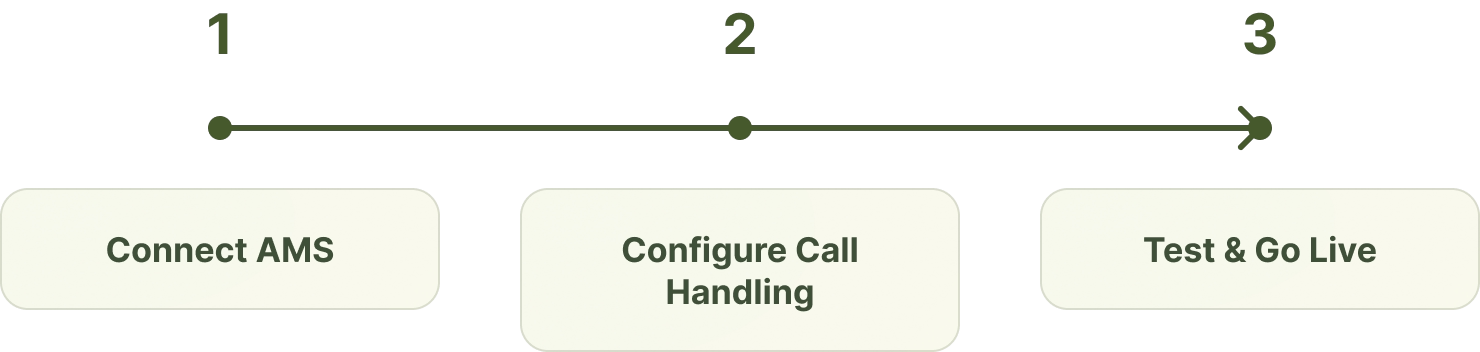
Setting up an AI receptionist for an insurance agency is much faster than hiring and training a person to do the same job. There is no 30-to-90-day ramp; instead, onboarding centers on three things: connecting your agency management system, defining how calls should be handled and routed, and testing the flows before you go live. That is the honest answer to ai receptionist implementation time for an insurance agency: the timeline is driven by setup and configuration, not by teaching a new employee your book of business from scratch.
The contrast with hiring is the whole point. A new CSR or producer takes weeks to months to reach full productivity, and our look at insurance producer ramp time covers why. And in an industry where staff turnover is high, you may run that ramp more than once. An AI receptionist is configured once and stays configured, which is a large part of the appeal of an AI receptionist for insurance agencies.
Key Takeaways
- Setup is driven by configuration, not a hiring-and-training ramp of 30 to 90 days.
- The main steps are: connect your AMS, define call handling and routing, and test before go-live.
- What lengthens setup: complex routing, multiple locations, or many custom call types.
- After go-live, you manage users and routing yourself, so ongoing changes are fast.
- Your team stays in the loop: the AI handles routine calls and escalates the rest.
How long does it take to set up an AI receptionist?
The setup timeline depends on how much you configure, not on how long a person needs to learn the job. The core work is connecting the AI to your AMS (EZLynx, Applied Epic, AMS360, or HawkSoft), deciding how different call types should be handled (verification, payments, after-hours, routing to the right staff) and testing those flows on real scenarios before the phones go live. A single-location agency with straightforward routing is quicker to stand up than a multi-location shop with many custom call types; the variable is your configuration, not the technology.
Two things keep the timeline honest. First, connecting the AMS is what lets the AI verify callers and write notes back to the record from day one, so that connection is worth doing carefully. Second, once you are live, you manage your own users and routing in the portal, so later changes take minutes, not another onboarding cycle. If you want to see it working before committing, you can even test an AI receptionist before hiring a CSR.
Wondering how quickly you could have calls covered? → Talk to Sonant
Setup vs hiring: what the timeline really compares
The fair comparison is not "instant versus slow." It is "configure once" versus "hire, train, and re-hire." Here is how they line up.
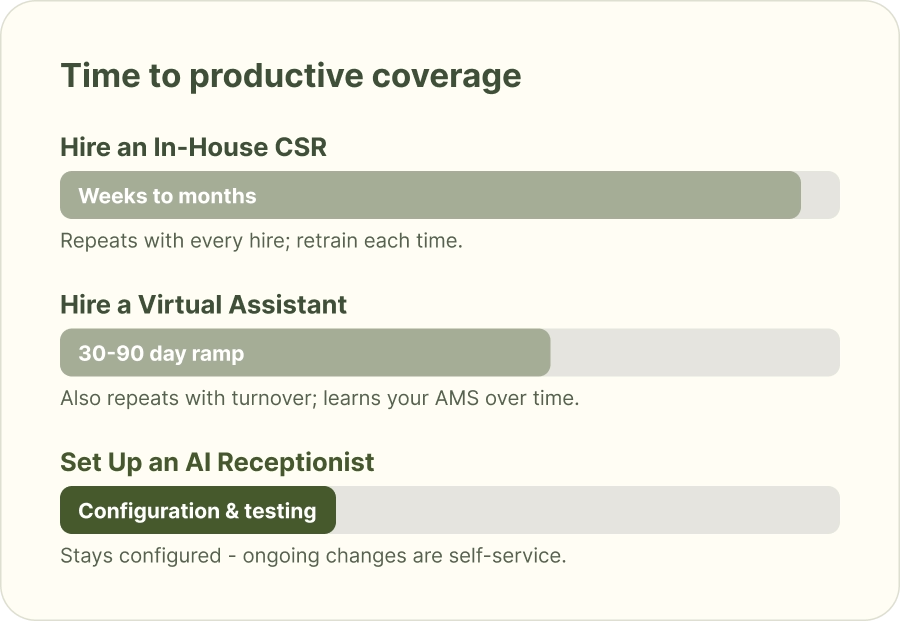
An honest caveat: setup is not zero effort. Connecting your AMS and mapping out how calls should be handled takes some of your team's attention up front. The payoff is that you do it once, and unlike a new hire, the configuration does not walk out the door. For how this weighs against ongoing staffing spend, see insurance virtual assistant cost.
What to evaluate about implementation before you sign
Fast setup should not mean cutting corners on security or governance. Evaluate a few things while you scope the timeline.
Ask what the AMS connection touches and how the vendor secures it. A SOC 2 report describes a vendor's controls for security and confidentiality; the AICPA SOC 2 framework explains what that covers. A responsible onboarding includes confirming those controls, not just wiring up the integration. See our SOC 2 question for AI receptionists for the specifics.
Ask about governance and oversight. The NAIC model bulletin on the use of AI by insurers sets state regulators' expectations for how AI systems are documented and overseen, worth building into your rollout from the start rather than retrofitting. And because setup ultimately shapes the caller experience, keep the policyholder's expectations in view; the Insurance Information Institute is a good reference. As you scope, our buyer's checklist for choosing an AI receptionist vendor helps you compare implementation plans apples to apples.
How Sonant fits
Sonant's onboarding centers on connecting your AMS, configuring how each call type should be handled and routed, and testing before you go live, not on a hire-and-train ramp. Once you are live, Sonant answers routine and overflow calls, verifies callers, covers after-hours calls, and writes a note back to the client record after each call. Because you handle user and routing changes yourself in the portal, changes after go-live are quick and do not require another setup cycle.
Setup does not remove your team from the equation; it gives them coverage. Sonant handles the routine and the calls staff can't reach; licensed decisions and the calls that need judgment stay with your people, which the AI escalates to them. For where that line falls, see what AI should handle versus a licensed agent. Sonant is coverage you can stand up quickly, not a replacement for the team.
Want a realistic setup timeline for your agency's call flow? Talk to Sonant →
Related reading
- AI receptionist for insurance agencies
- Can you manage your own users in an AI receptionist?
- Does an AI receptionist log call notes to your AMS automatically?
- Insurance producer ramp time
- Test an AI receptionist before hiring a CSR
- How to choose an AI receptionist vendor: an insurance buyer's checklist
- Insurance virtual assistant cost






.svg)

.svg)


