.svg)

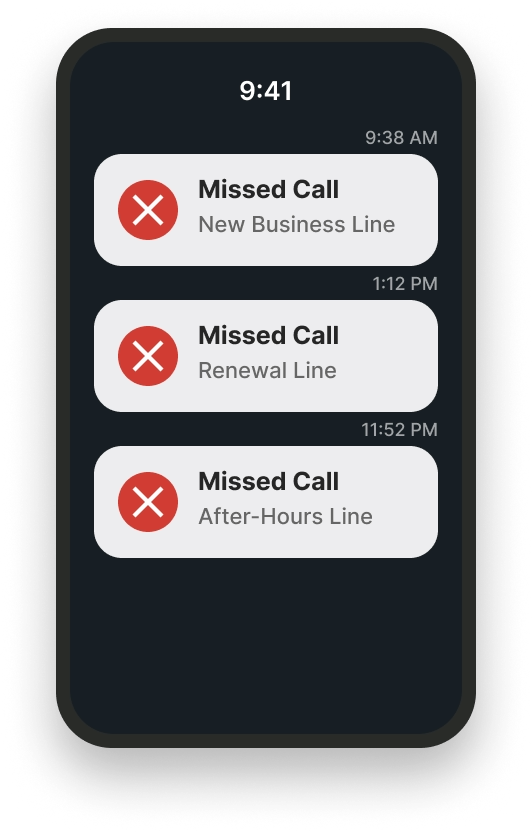
The real cost of a missed call at an insurance agency is the value of the quote, renewal, or claim conversation that never happened, not the price of the ring. To size it, multiply the calls you miss by your close rate and your average policy value, then add the retention and after-hours losses most agencies never track. The cost of missed calls at an insurance agency is almost always higher than owners assume, because voicemail hides it: a caller who reaches voicemail usually calls the next agency, not back. This post shows how to calculate your own number and where the leak actually is.
Key Takeaways
- A missed call's cost is the lost quote or retained policy behind it, not the missed ring - size it with close rate × average policy value.
- Voicemail understates the loss because most callers move to the next agency instead of leaving a message.
- After-hours is the largest blind spot: one agency found 641 after-hours calls that had gone unanswered.
- Missed calls also create hidden work - callbacks, re-explaining, and chasing - that pulls staff off revenue.
- You can pull every input for this calculation from your own phone system and AMS today.
What does a missed call actually cost an insurance agency?
It costs the outcome of the call, discounted by how likely that call was to convert. A missed sales call is a lost quote times your close rate; a missed service or renewal call is a retention risk; a missed claims call is a client who feels abandoned at the worst moment. The way to make this concrete is a simple formula: missed calls per month × your close rate × average policy value = lost new-business revenue, then add an estimate for retention lost on missed service calls. Pull your missed-call count from your phone system and your close rate and policy value from your AMS. For the mechanics of cutting that number, see reduce missed calls.
Voicemail is why the true cost stays hidden. A caller shopping for coverage rarely leaves a message and waits; they dial the next agency. That is the core of the lead problem being a missed-call problem. And the loss compounds: missed calls don't disappear, they come back as callbacks and re-explaining, which is its own drain, as missed calls create more work. To turn the recovered version of this number into a return figure, pair it with the AI receptionist ROI math.
Want help sizing your own missed-call cost? → Talk to Sonant
Where the loss hides: a breakdown
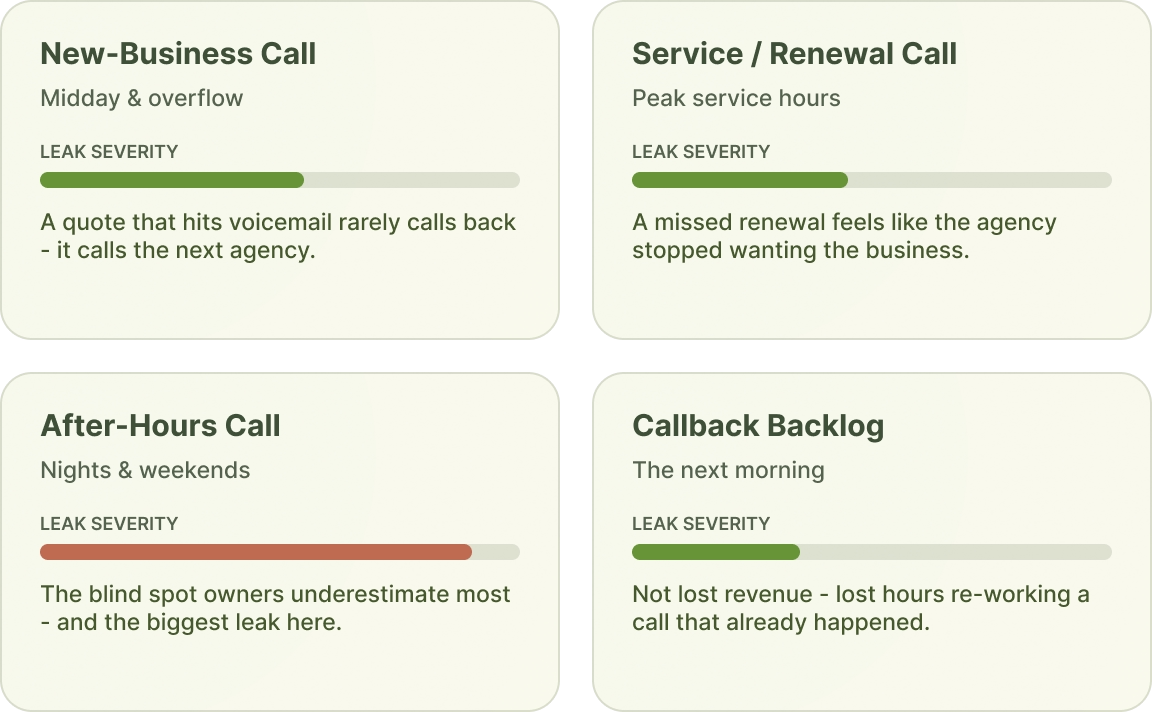
Missed calls aren't one bucket. They break into categories that leak at different times of day and cost different amounts. Sizing each separately gives you a defensible total.
After-hours is the category owners underestimate most. One agency found 641 after-hours calls that had gone unanswered, every one a potential quote, renewal, or claim that hit a dead line. That is why the after-hours calls window and capturing after-hours leads deserve their own line in your calculation, alongside your daytime phone call volume.
What to evaluate when you decide how to fix it
Once you have a number, the fix is a coverage decision, and it comes with diligence. If you consider any answering technology, ask whether the vendor is SOC 2 audited, because captured call details contain client PII. The AICPA SOC 2 framework is the benchmark. For AI answering specifically, weigh disclosure and consumer-protection expectations against the NAIC model bulletin on AI. And to benchmark your call economics against the wider market, the Insurance Information Institute is a neutral source.
Be honest about which missed calls are worth recovering. A complex coverage question or a distressed claimant is best served by a licensed person, so the goal isn't to automate everything; it's to make sure no call hits a dead line while routing the ones that need judgment to your staff. Voicemail's real weakness, covered in AI receptionist vs voicemail, is that it does neither. The follow-on labor from misses also feeds the burnout behind why staff quit.
How Sonant fits
Sonant is an AI receptionist for P&C agencies, and it targets exactly the calls that turn into the cost above. It answers overflow, after-hours, and Spanish-speaking calls 24/7, so new-business and renewal calls stop hitting voicemail. On an after-hours claim it collects the details, texts the carrier claims link, flags anything urgent, and creates a task with a full transcript. That is the answer to the 641-unanswered-calls problem, and the model behind what happens to after-hours calls. Every call produces a note on the client record with no manual typing, which also kills the callback-backlog cost, the same principle as insurance call center automation.
Sonant is coverage for the calls your team can't reach, not a replacement for the team. Routine requests get resolved; judgment calls get routed to a licensed person. The point isn't that a machine answers every ring; it's that no caller reaches a dead line, and the revenue you were quietly losing to voicemail stops leaking. See how it connects to the whole workflow in AI receptionist for insurance agencies.
Want to see how much you're losing to missed calls, and how much you'd recover? Talk to Sonant →
Related reading
- Reduce missed calls at your insurance agency
- What happens to after-hours insurance calls with an AI receptionist?
- AI receptionist vs voicemail
- What an AI receptionist actually saves an agency (ROI)
- Your lead problem is a missed-call problem
- Insurance after-hours calls
- Insurance agency phone call volume






.svg)


.svg)


