.svg)


To automate insurance renewals, you build a timed workflow that fires policy-specific touches at 90, 60, and 30 days before the expiration date, captures any coverage changes from the client, and flags policies that need a re-shop. The automation handles the reminders, the data entry, and the scheduling; a licensed producer or CSR (customer service representative) handles the actual re-marketing and the coverage advice. When you automate insurance renewals this way, nothing slips past the renewal date because a rep was on another call, and every policyholder hears from the agency before the carrier's rate notice lands in their inbox.
Key Takeaways
- A renewal workflow runs on three timed touches - 90, 60, and 30 days before expiration - so no policy reaches its date unreviewed.
- Automation owns the reminders, change capture, callbacks, and AMS (agency management system) write-back; licensed staff own the re-marketing and coverage advice.
- Change capture at renewal keeps the policy accurate and surfaces cross-sell or coverage-gap conversations early.
- Re-shopping is a licensed activity - automation queues and preps it, a producer decides and quotes it.
- Missed renewal calls are lost retention; answering every inbound renewal question is part of the same system.
What does it mean to automate insurance renewals?
To automate insurance renewals means moving the repeatable parts of the renewal cycle - the reminders, outreach, data updates, and scheduling - onto a system that runs them on a fixed calendar without a person triggering each one. The renewal decision stays human; the busywork does not. The goal is retention: every policy gets reviewed and every client gets contacted on time, regardless of call volume that week. This mirrors the broader shift toward structured workflow automation for insurance agencies, where routine steps are systematized so staff time goes to judgment calls.
See how a renewal workflow runs end to end → Talk to Sonant
What is the 90/60/30 renewal touch schedule?
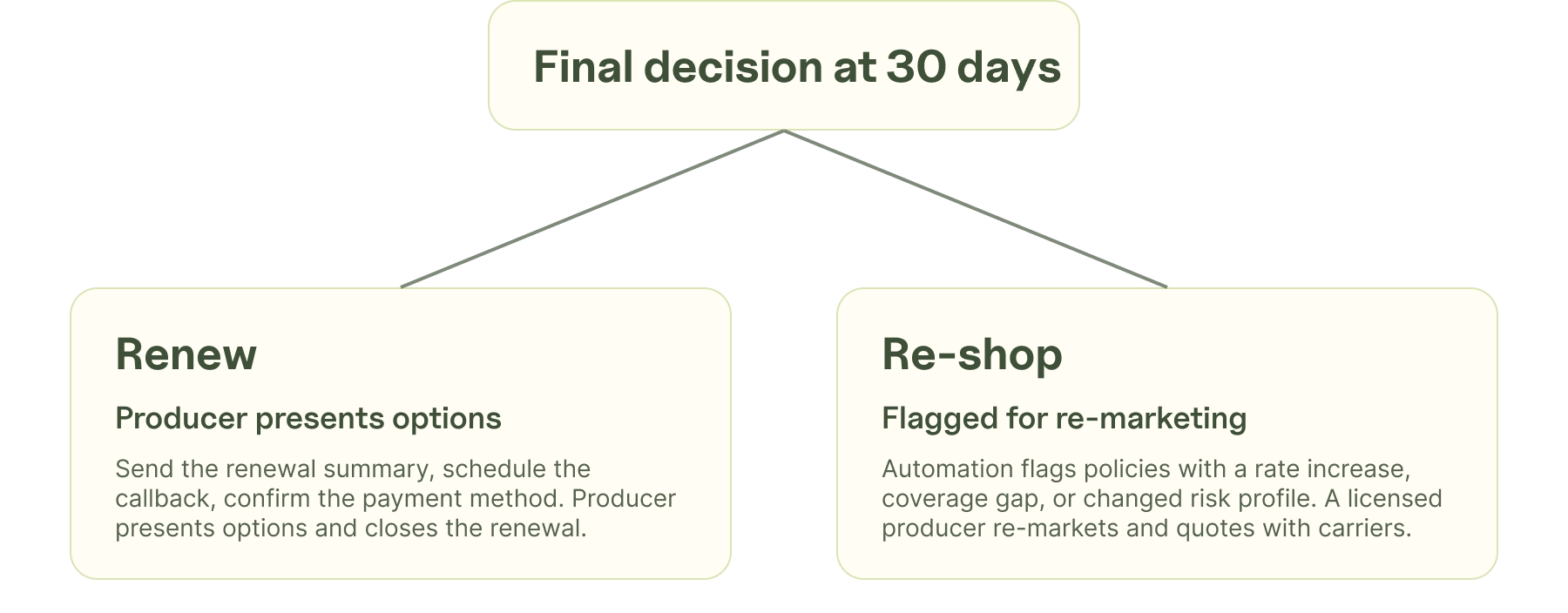
The 90/60/30 schedule is a three-touch renewal cadence: a 90-day early review, a 60-day change-and-confirm outreach, and a 30-day final decision touch before the policy expires. Each touch has a distinct job, and each can be triggered automatically off the expiration date in your AMS. The schedule gives the agency enough runway to re-market before renewal without leaving the client waiting.
Here is how the touches divide the work:
Timing the first touch at 90 days matters because carrier rate revisions and non-renewals often arrive with limited notice; the Insurance Information Institute tracks how market conditions drive premium and availability shifts that agencies have to get ahead of. Starting early gives the producer room to re-market before the client is surprised by a rate change.
How do you capture policy changes during renewal?
Change capture is the step where the agency asks the policyholder what has changed since last year - a new vehicle, a home addition, a teen driver, a business the client now runs - and records it before the policy renews. Automation drives the outreach and writes the answers back to the record; a licensed rep interprets what those changes mean for coverage. Skipping this step is how policies quietly drift out of alignment with the client's actual risk.
An automated 60-day touch can send a short set of change questions by text or email, or ask them on a scheduled callback, then log the responses directly to the policy file. That removes the manual re-keying that eats CSR time - the same category of gain covered in cutting administrative work at an insurance agency. When a client calls back mid-cycle with an update, automated callback scheduling for insurers puts them on a rep's calendar instead of into voicemail.
Accurate change capture also protects PII (personally identifiable information): a system that writes structured answers to the AMS record keeps client data in one governed place instead of scattered across sticky notes and inboxes. Keeping renewal data current inside the agency management system is what makes the rest of the workflow trustworthy.
Which renewal steps automate, and which stay human?
The steps that automate are the timed and repeatable ones: reminders, outreach, change collection, AMS write-back, callback scheduling, and renewal summaries. The steps that stay human are the licensed ones: re-marketing to carriers, quoting, advising on coverage, and closing the renewal. Regulators are explicit that AI-assisted processes still require oversight - the NAIC's model bulletin sets expectations for insurer AI governance and accountability, which is why the quote-and-advise decision belongs to a licensed person.
Drawing the line clearly is the point:
- Automated: expiration-date triggers, review notices, change questionnaires, record updates, callback booking, payment-method confirmation, renewal recaps.
- Human (licensed): coverage-gap advice, carrier re-marketing, quoting, comparing options, and the final renewal recommendation.
This split is also why answering the phone matters so much at renewal season. When rate notices go out, inbound questions spike, and missed calls at an insurance agency turn into non-renewals. Handling that inbound load consistently is core to insurance agency call management, and it pairs naturally with the outbound renewal cadence.
How does re-shopping fit into an automated renewal?
Re-shopping - re-marketing a policy to carriers to find better coverage or pricing - is triggered by the workflow but executed by a licensed producer. The automation flags which policies qualify (a rate increase, a coverage gap, a changed risk profile) and assembles the data the producer needs; the producer then does the actual quoting. Re-shopping every policy every year is neither practical nor advisable, so the flag rules keep the licensed effort focused where it pays off.
A well-built flow queues the flagged policies with their updated change-capture data attached, so the producer opens a ready-to-quote packet rather than rebuilding the file. The time this returns is the same kind of recovery documented in AI scheduling assistants saving weekly hours for insurance agencies. Freeing producers from prep work is one of the clearest benefits of AI receptionists for insurance, because their licensed time goes to selling, not sorting.
How Sonant fits
Sonant is an AI voice receptionist built for P&C insurance agencies, and it slots into the renewal workflow at the touchpoints that don't require a license. On the inbound side, Sonant answers renewal questions, confirms coverage details, and books callbacks, including after-hours insurance calls when the office is closed. On the outbound side, it runs the 90/60/30 touches, collects change-capture answers, and writes them back through native AMS integrations - EZLynx, Applied Epic, HawkSoft, and AMS360 - so the record updates without manual entry.
The workflow-to-metric-to-output path is direct: the renewal cadence runs (workflow), every policy gets a timed touch and no renewal call goes unanswered (metric), and licensed staff receive a queue of re-shop-ready, change-captured policies (output). Anything requiring a license - quoting, coverage advice, closing - escalates to a producer or CSR immediately. When you automate insurance renewals with Sonant, the routine cadence runs on its own and your licensed team handles only the decisions that legally require them, which is also how FNOL (first notice of loss) intake automation is scoped. Agencies weighing the operating cost of this approach can compare it against reducing insurance operational costs.
Ready to put your renewal cadence on autopilot and keep licensed staff on the decisions? Book a Sonant demo →
Related reading
- How AI phone answering works for insurance agencies
- Handling more insurance calls without adding staff
- Automating lead qualification for insurance agencies
- How to implement AI inside your insurance agency
- Where consumers stand on AI: the Sonant readiness report
- Insurance agency AI: where to start and what to buy
- Best AI for Insurance Agents (2026)






.svg)


.svg)


