.svg)

Missed call text back is an automatic SMS that fires seconds after a call rings out, so the person who couldn't reach you gets an answer instead of a voicemail beep. It works because the caller is still holding the phone.
It fails when nobody is watching the reply, which is where most buyers discover the real cost of missed calls. Two numbers explain why the category grew. The FTC's Do Not Call Registry data book reports that the Registry held over 258 million active registrations in fiscal year 2025, so calling an unknown number back is a weak recovery plan.
And LexisNexis Risk Solutions reported that at the end of the first quarter of 2026, 47.3% of policies-in-force had been shopped at least once in the previous 12 months, the highest rate since it began tracking in 2020, which is what a missed call costs in a renewal business.
That's why owners are shopping for a missed call text back service instead of hoping people try again. This guide reviews 10 of them with pricing taken from each vendor's own page, what each one does after the call is missed, and where each stops being the right pick.
Key Takeaways (TL;DR)
- The best overall missed call text back software: Sonant is the fit for independent property and casualty (P&C) insurance agencies, because it answers the call instead of texting an apology afterwards, pulls the caller's policy record live, and writes the request into the agency management system (AMS) as a routed task. StreetSmart Insurance captured $120k in quotes after hours with it.
- Why you need it: A caller who reaches voicemail rarely waits, and a callback from an unrecognized number rarely connects. A text keeps the thread open on the one channel the customer is already looking at.
- Who it's for: Businesses where one inbound call carries real revenue and the team can't always pick up. This guide leads with independent insurance agencies, Sonant's focus - and covers text-back tools for other local businesses so buyers can size the category.
- How to choose the right one: Decide whether a text is enough or the call needs answering, check where the conversation and the record land afterwards, and confirm who replies when the customer texts back. Then price it against your real missed-call volume rather than the headline plan.
- Expected price: Sonant quotes a predictable partner rate per agency with onboarding, configuration, and support included. Across the rest of this list, single-purpose tools start near $25 a month, all-in-one software runs $97 to $497 a month, vertical software starts at $199 a month, and dealership and enterprise pricing is quoted per location.
Table of Contents
- Top Missed Call Text Back Software in 2026 at a Glance
- How We Chose the 10 Best Missed Call Text Back Tools
- What Is Missed Call Text Back?
- Why Do You Need Missed Call Text Back?
- Who Needs Missed Call Text Back Software?
- Best Missed Call Text Back Software Reviewed
- How to Choose the Best Missed Call Text Back System
- Everything You Need to Know About Missed Call Text Back Tools
- Answer the Call Instead of Texting Back, With Sonant
- FAQs About Missed Call Text Back
Top Missed Call Text Back Software in 2026 at a Glance
Two things decide what this category is worth to you, which are how much of the request the tool finishes and where the result lands afterwards. The table compares all 10 on both, and the full reviews follow underneath.
How We Chose the 10 Best Missed Call Text Back Tools
Evaluating a missed call text back system is different from comparing texting apps. You can't score it on how fast the first message fires, because every tool clears that bar in under a minute.
What separates them is "call recovery depth", meaning how much of the request gets finished, and "system write-back", meaning whether the outcome lands where your team already works.
We looked at more than 35 tools that appear in missed-call searches and vendor comparisons, then shortlisted 10 using a weighted scoring system:
- Call recovery depth (25%): Whether the tool only sends a text, holds a two-way thread, or answers the call outright and completes the request.
- System write-back and routing (20%): Whether the outcome lands in a CRM, agency management system, or dealer management system as a structured record, and whether it reaches the right person.
- True cost at real missed-call volume (20%): We read each vendor's published rate card, including per-call and per-minute overage, add-on charges, and per-user fees.
- Compliance and deliverability (15%): Whether the vendor documents A2P 10DLC registration, opt-out handling, and consent, since an unregistered sender gets filtered before the customer sees anything.
- Time to value and setup work (10%): How long until the first live text or answered call, and how much scripting or workflow building the vendor hands back to you.
- Support after go-live (10%): Whether onboarding and ongoing support are included or billed separately, and who you reach when handling breaks.
Published ratings shaped the pros and cons rather than the score, because review volume tracks how long a company has existed more than how well it recovers a 6 p.m. call. The two figures in the introduction come from the FTC data book on Do Not Call registrations and the LexisNexis Insurance Demand Meter on policy shopping.
What Is Missed Call Text Back?
Missed call text back is an automated text sent to a caller whose call went unanswered, usually within 30 to 60 seconds, telling them you saw the call and offering a way forward. The message can carry a booking link, a reply prompt, or an emergency keyword, and the better tools keep the conversation going in the same thread.
The category splits into four groups that behave differently once calls start arriving.
- Single-purpose text-back tools: One job, one trigger, one message. Enzak sits here, and the appeal is price plus a setup measured in minutes.
- All-in-one local business software: Text-back is one feature inside reviews, payments, and a shared inbox. Podium, Weave, and Kenect work this way.
- Build-it-yourself automation: A workflow you configure, so the message and the follow-up can be as specific as you want. HighLevel fits here.
- AI answering that prevents the missed call: A voice agent picks up instead, then texts links or summaries as part of the conversation. Upfirst, Rosie, Numa, RingCentral's AI Receptionist, and Sonant for insurance agencies belong here.
An AI missed call text back tool belongs in that last group, because the agent holds a conversation rather than firing a template and waiting for somebody to read the reply.
The practical difference is what the customer holds at the end. A text-back tool hands them an acknowledgement and hands you a reply to answer, while AI phone answering hands them a booked appointment or a captured request and hands you a finished task.
Why Do You Need Missed Call Text Back?
Because the calls you miss are the ones you paid the most to generate, and the customer has a next option one search away. A prospect who calls at 6 p.m. has already decided to talk to somebody, and the business that answers first usually keeps them.
Do the math before deciding how urgent this is. Take a household auto and home bundle at $1,800 a year and typical commission rates of around 12%, which is roughly $216 in revenue that renews each year the client stays.
Miss four of those calls a month and you have handed a competitor about $10,000 a year in renewing revenue, before counting the referrals that client never sends.
The damage lands in three places.
- Lost new business: Inbound calls carry the highest intent and the shortest patience of any channel you run. StreetSmart Insurance captured $120k in quotes after hours once its phones were covered around the clock.
- Lost retention: Existing customers judge you on whether anyone picked up when something went wrong. In a business where revenue renews annually, a service failure costs more than the single call.
- Lost mornings: Voicemail creates work instead of removing it, because somebody has to listen, call back, and play phone tag before the real job starts. The gap between an AI receptionist vs voicemail is where most of that time disappears.
The wider pattern shows up in national survey data. In the Federal Reserve Banks' 2026 report on employer firms, reaching customers and growing sales was the most commonly reported operational challenge, ahead of hiring or retaining qualified staff.
Hiring your way out is harder than it looks, since a second shift means recruiting, training, covering sick days, and paying premium hours for a phone that rings unevenly.
That's why a missed call text back app became the first thing most small teams automate, and why the teams with real revenue per call move on to answering the phone properly.
Who Needs Missed Call Text Back Software?
Not every business loses money to an unanswered phone. The ones that do share a pattern, which is high-intent inbound calls, a team that can't always reach the phone, and a competitor who can. These five see the fastest payback.
Independent Insurance Agencies
Agencies with 15 or more staff rarely have a dedicated receptionist, so the general line rings out to producers and customer service representatives (CSRs) who are already mid-quote.
At 2,000 or more policies in force, $5M to $20M of premium, and more than 30 calls a day, that arrangement stops working, and owners describe the problem in revenue terms rather than service terms, as "Too many calls, not enough time for revenue work".
After hours it goes to voicemail, and the caller with a fresh accident or a renewal question waits or shops. What these teams need is closer to insurance agency call management than a text template, because the caller has to be verified, the policy record has to be read, and the request has to reach the CSR who owns that account.
Best Missed Call Text Back Software Reviewed
Each entry below covers who the tool fits, what it does once a call is missed, published pricing, and where it stops being the right choice.
1. Sonant™
Overview
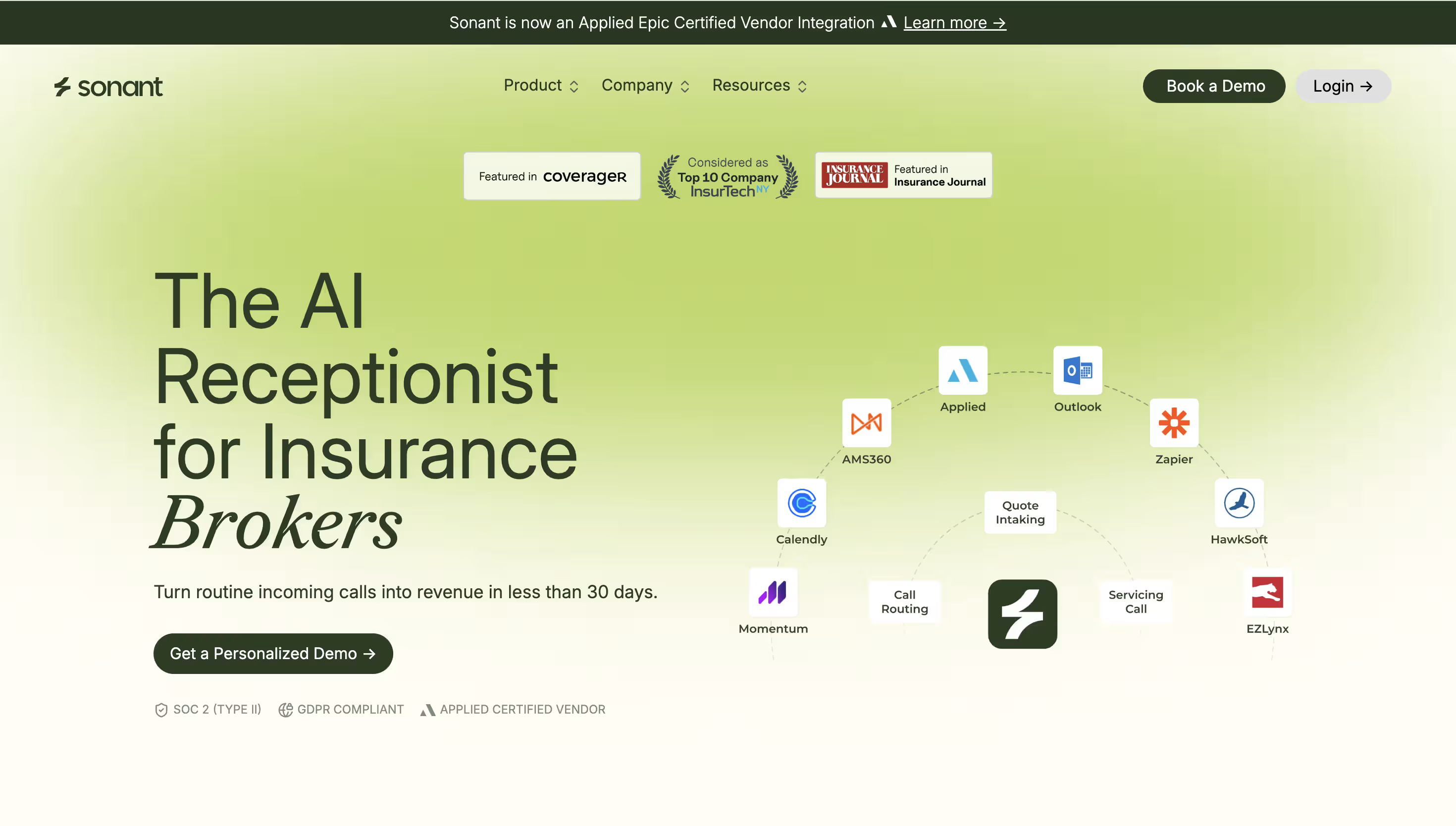
Sonant is the AI receptionist purpose-built for insurance agencies. It answers inbound calls 24/7, recognizes and verifies the caller, reads their record in the agency management system while the call is live, takes the information a quote or service request needs, and triages the call into a task routed to the right person.
It takes the opposite approach to everything else on this list. Rather than apologizing by text after the phone rings out, Sonant picks up so there's no missed call to recover, then uses texting inside the conversation to send a payment link, a quote link, or a carrier claims link.
It works as backup for the team rather than a replacement for it, clearing routine traffic so licensed staff keep the conversations that need them. Its insurance call answering service covers one industry end to end, which makes it the narrowest tool here by design.
Ideal For
- Independent P&C agencies of 5 or more staff with no dedicated receptionist
- Agencies with reception that still lose after-hours, lunch-rush, and overflow calls
- Operations leaders routing callers to assigned CSRs and account managers
- Agencies with bilingual books, particularly English and Spanish
- Agencies running Applied Epic, where Sonant is the first and only voice AI Applied has certified when Applied launched their program.
Top Features
- Live record lookup during the call: Sonant pulls policy, coverage, renewal date, and deductible from the agency management system while the caller is on the line, so nobody is asked to repeat what you already hold.
- Quote and service intake instead of a message: The call ends with structured information written back as a task, which is why mornings start with a work queue rather than voicemail.
- Mid-call texting: Sonant sends a payment or quote link inside the conversation, so the customer gets the thing they called for instead of a promise.
- Warm transfer and VIP routing: Calls hand off to a person with the context attached, and chosen clients can bypass the AI and ring a human directly.
- Account-based routing: Sonant looks up who owns the caller's account and routes there, which static phone menus and text templates can't do.
Why We Stand Out?
Sonant already knows P&C insurance, so there's no script to write and no blank canvas to fill. Agencies go live in under 30 days, and the native AMS integrations are two-way API connections to Applied Epic, AMS360, EZLynx, HawkSoft, Momentum, QQCatalyst, and AgencyZoom rather than screen-scraping that breaks on the next vendor update.
Sonant is also the first voice AI Applied certifies, so agencies don't pay a separate integration fee to connect the phones to Epic. Triage is the mechanism that separates it from message-taking of any kind, automated or human. Cornerstone Insurance measured a 43% staff productivity gain after Sonant started turning phone traffic into Applied Epic tasks, with the team moving from 70 to 100 tasks a day.
While Firefly Network cut manual routing by 90% across more than 200 branches, and Alpha Direct Agency now covers 2,000 to 3,000 calls a month this way.
SOC 2 Type II and GDPR compliance sit behind a public trust and security page, which matters when a caller is verifying identity before hearing policy details.
Pros
- Answers the call, so there's nothing to recover by text later
- Reads the caller's policy record live and writes the outcome back as a routed task
- Routes to the assigned CSR by looking up who owns the account
- Published customer results, including StreetSmart's $120k in after-hours quotes and BIG Pickering's 100% answer rate
- No scripting to build, and onboarding, configuration, and support are included
Cons
- Built only for insurance agencies, so contractors, practices, dealers, and property managers are better served elsewhere on this list
- Not a standalone text-back autoresponder, so a business that only wants an SMS on missed calls is buying something bigger than it needs
- No public rate card, which means a demo before you can compare cost
Pricing
Sonant quotes a predictable partner rate structured around your operation rather than per-minute tiers, and onboarding, configuration, and support are included. Because the rate is set up front rather than metered per minute, a storm week doesn't produce a surprise invoice.
You need a demo to get a number, which is the trade-off for pricing built around your call volume rather than a bundle you may not use.
Final Verdict
For an independent agency where a missed call is a lost quote and a retention risk, Sonant is the fit for an independent agency where a missed call is a lost quote, because it handles the call the way a good CSR would by verifying who's calling, reading the record, capturing the request, and putting it in front of the right person.
It suits agencies that treat the phone as a revenue channel rather than a message queue.
2. Podium™
Overview
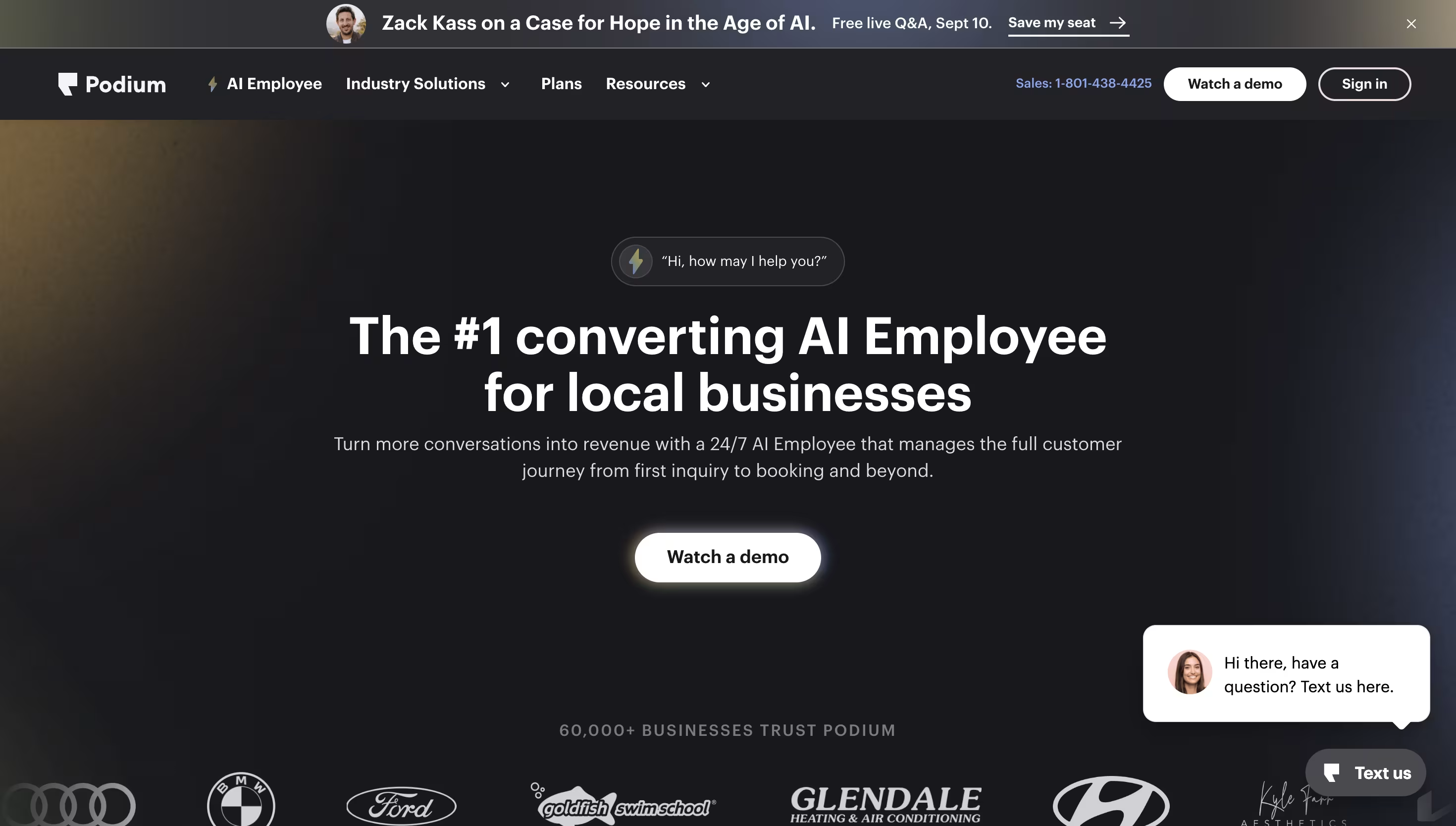
Podium is customer communication software for local businesses, built around a shared inbox that pulls calls, texts, webchat, and reviews into one place.
Its Phones product automatically texts missed and after-hours callers, and its AI Employee add-on answers questions and books appointments in the thread.
The company sells hardest into auto dealerships, aesthetics, home services, and retail, and its homepage claims more than 60,000 businesses. The problem it targets is the local business losing leads between channels, where a call goes unanswered, a webchat sits unread, and nobody knows which customer already reached out twice.
Ideal For
- Home service, retail, and aesthetics businesses that also want review generation
- Multi-location local brands that need one inbox across sites
- Teams that want text-back and payments in the same tool
- Auto dealerships wanting sales and service conversations together
- Owners who prefer a managed product over building automations
Top Features
- Automatic text on missed and after-hours calls: Podium Phones texts the caller so the conversation continues instead of ending at voicemail.
- AI Employee: An add-on that replies, answers common questions, and books appointments without a person in the thread.
- Shared inbox across channels: Calls, texts, and webchat land in one place, so the team can see the customer's history before replying.
- Review requests: Automated review invitations after a job, which is the feature many buyers arrive for.
Why They Stand Out?
Podium suits businesses where the missed call is only part of the problem and reputation is the other half. Few tools here cover text-back, webchat, payments, and review generation as one product, and for a business running four tools that consolidation is the real value.
The AI Employee also moves Podium past the acknowledgement text, since it can hold a conversation and book from inside the thread rather than waiting for staff to open the inbox.
Pros
- Text-back, webchat, payments, and reviews in a single inbox
- AI Employee can complete bookings without staff involvement
- Strong presence and templates for dealerships, home services, and retail
- Onboarding and phone or chat support included on every plan
Cons
- No published pricing, so comparison needs a sales call
- AI Employee is an add-on rather than part of the base plan
- Priced above single-purpose tools, which is hard to justify at low call volume
- Breadth means depth is shallower in any one vertical
- No insurance-system or dealer-system record lookup during the conversation
Pricing
Podium doesn't publish rates. Its pricing page states that plans are built around specific business needs and directs buyers to sales, and that AI Employee can be added to any plan. Onboarding and support are included on every plan.
Final Verdict
Podium suits a local business that wants one inbox for calls, texts, webchat, and reviews, and that has enough volume to use all of it. It's a reasonable pick for dealerships and home services teams already investing in reputation.
Buyers who only need a basic SMS autoresponder will not use most of Podium's product breadth. The absence of published pricing means comparison against single-purpose tools requires a sales conversation.
3. HighLevel™
Overview
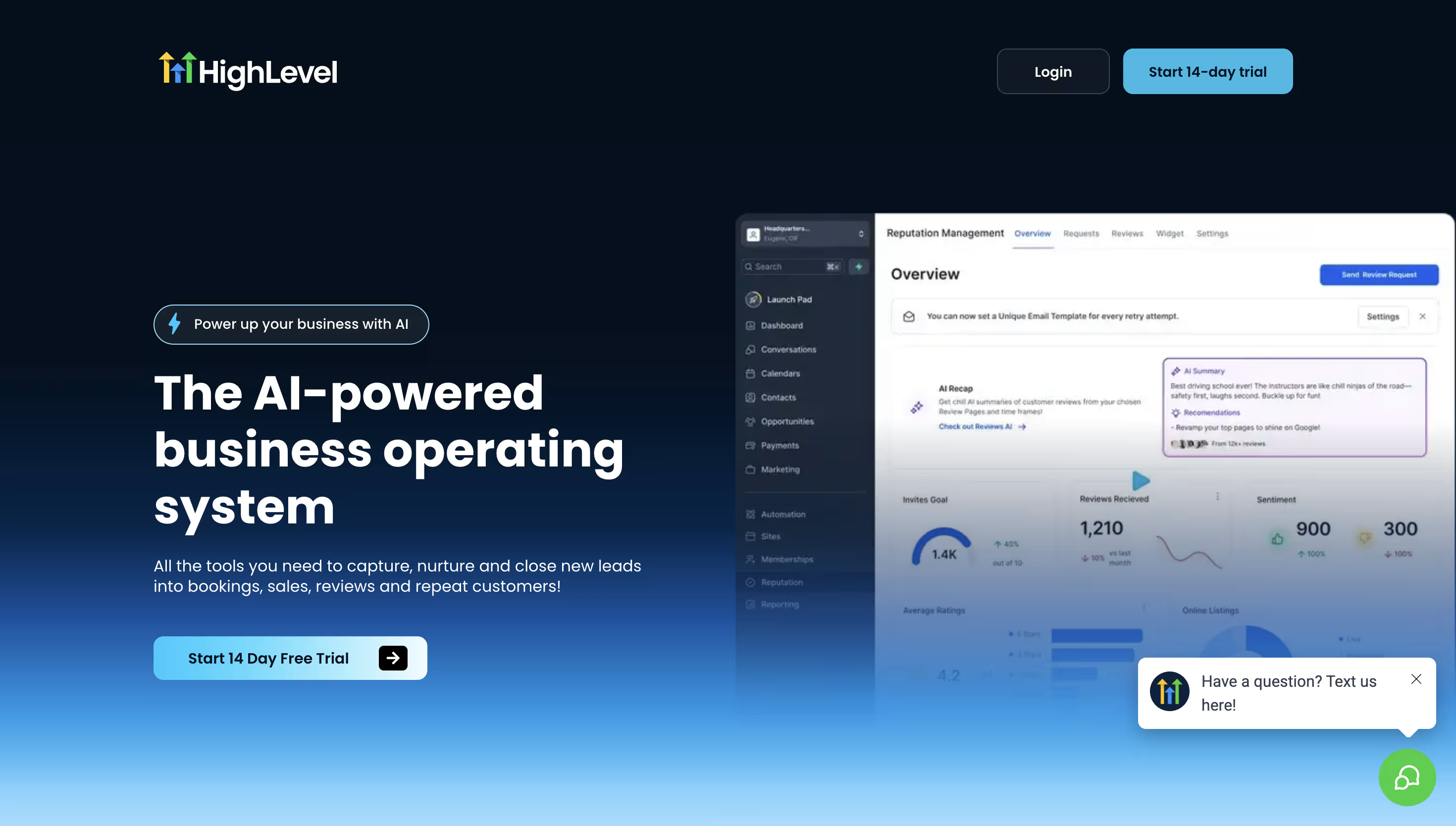
HighLevel, sold as GoHighLevel, is a CRM and marketing automation product used heavily by agencies and consultants who resell it to local clients. Missed call text back is a native feature, and it also ships as a workflow recipe you can extend with wait steps, tags, and conditions.
The core problem it solves is control. Anyone who has outgrown a fixed template can build the exact sequence they want, from the first text to CRM tagging to team alerts, and the same account can run it across dozens of client sub-accounts.
Ideal For
- Marketing agencies managing text-back for many local clients
- Operators who want the message and follow-up sequence customized
- Businesses that want text-back inside the CRM holding their pipeline
- Teams comfortable configuring workflow triggers
- Consultants reselling communication automation under their own brand
Top Features
- Native missed call text back: A built-in feature plus a workflow recipe, so the first text can be live quickly and refined later.
- Call Status workflow trigger: Fires on statuses including not answered, busy, voicemail, and completed, which allows different handling for each.
- Conversation AI and Voice AI: Optional AI that replies in the thread or answers the phone, on top of the text-back automation.
- Unlimited contacts and users: Every plan includes them, so growth doesn't change the bill.
Why They Stand Out?
HighLevel is one of the most flexible options here, because the automation is yours to shape rather than a setting to toggle. Filtering by call direction and status, adding wait steps, and tagging first and second calls are all standard, which matters once you have enough volume to care about repeat texts.
The agency model is the other differentiator, since one subscription covers unlimited sub-accounts on the higher tiers and phone and email can be rebilled to clients.
Pros
- Published pricing with a 14-day trial on every plan
- Full customization of the message, timing, and follow-up sequence
- Unlimited contacts and users on all plans
- Native CRM, so every recovered call sits on a contact record
- Unlimited sub-accounts from the $297 tier for anyone managing multiple businesses
Cons
- Configuration takes real time, and the default missed-call recipe typically needs wait steps or tags to prevent repeated notifications
- AI and messaging usage are billed on top of the subscription
- Built for operators and agencies, so a single-location owner inherits a lot of product
- No vertical knowledge, so the AI has to be taught your industry from scratch
- No native connection to insurance, dealer, or practice systems
Pricing
HighLevel publishes three plans. Starter is $97 a month or $970 a year for three sub-accounts, Unlimited is $297 a month or $2,970 a year with unlimited sub-accounts, and Agency Pro is $497 a month or $4,970 a year, adding SaaS mode and advanced API access. An enterprise plan is quoted, and every plan starts with a 14-day free trial.
Final Verdict
HighLevel is the right call for agencies and technical operators who want missed call text back automation shaped exactly to their process, with the CRM underneath it. It rewards the buyer willing to configure.
A single-location business that wants the phone handled rather than a workflow to build should compare HighLevel's setup time and usage-based costs against managed AI answering tools.
4. Weave™
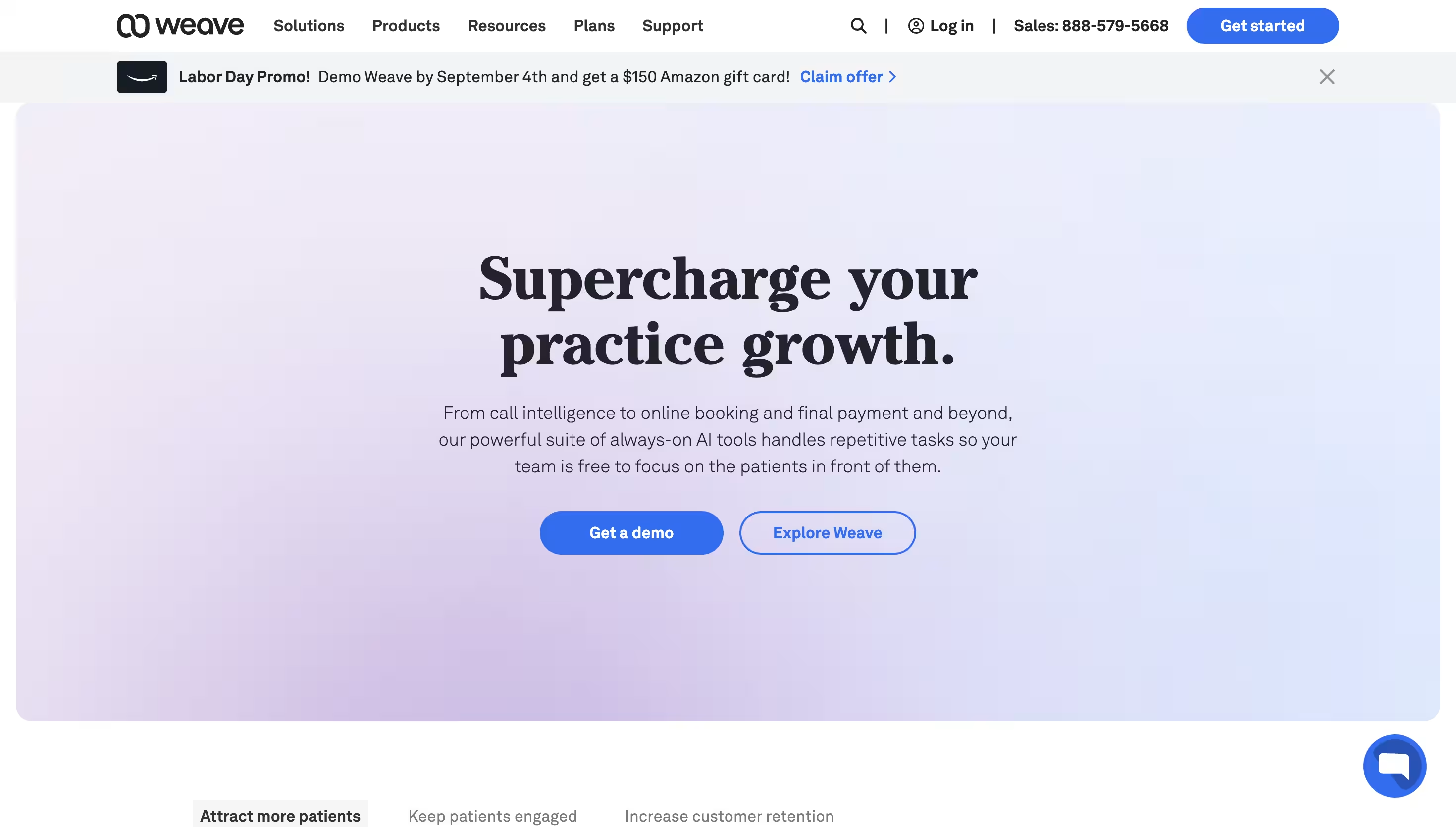
Overview
Weave is patient communication and phone software for healthcare practices, concentrated in dental, optometry, and veterinary. Missed call text is part of the base plan, alongside two-way texting, Call Pop caller screens, text to pay, and scheduling features.
The problem Weave targets is the front desk that physically cannot answer everything during check-in rushes, where the missed call is usually a hygiene appointment, a recall, or a worried owner and the schedule gap costs the practice the same either way.
Ideal For
- Dental practices and dental groups
- Optometry and ophthalmology practices
- Veterinary clinics and animal hospitals
- Multi-location practices standardizing phone handling
- Practices replacing a phone system and a texting tool at once
Top Features
- Missed call text in the base plan: No add-on needed to text a caller whose call rang out.
- Call Pop: The caller's record appears on screen as the phone rings, so staff open the call knowing who it is.
- Two-way texting and text to pay: The thread can carry a real conversation and a payment, not only an acknowledgement.
- AI Receptionist: An early-access product that answers over voice and text, books appointments, and hands off to staff.
Why They Stand Out?
Weave suits dental, optometry, and veterinary practices, because it treats the phone system and the messaging as one product and prices the missed call text as standard.
Practice management integrations mean the caller screen and the reminders reference real appointments rather than a generic contact list.
Its AI Receptionist also puts Weave in the group that can answer rather than only recover, though it's newer than the rest of the product.
Pros
- Missed call text included at the base price with no add-on
- Built around dental, optometry, and veterinary workflows
- Call Pop gives staff context before they answer
- Published starting price and clearly separated bundles
- Onboarding and award-winning support included with every plan
Cons
- Healthcare only, so businesses outside practice settings gain nothing from the specialization
- The base plan is the floor, and scheduling, reminders, reviews, and marketing sit in $149 bundles
- AI Receptionist is early access, with pricing not published
- Hardware is part of the package, which adds cost and switching friction
- Enterprise pricing requires a sales conversation
Pricing
Weave starts at $199 a month, which includes Call Pop, two-way texting, missed call text, text to pay, the mobile app, team chat, call analytics, fax, and two premium Yealink phones.
The Coordinate bundle adds online scheduling, forms, and reminders for $149 a month, and the Attract bundle adds reviews, email marketing, and bulk texting for $149 a month. Enterprise pricing and the AI Receptionist are quoted.
Final Verdict
Weave is the obvious shortlist entry for a dental, optometry, or veterinary practice that wants the phone system, the missed call text, and patient messaging from one vendor. It's strongest for practices ready to replace hardware at the same time.
Any business outside healthcare pays for practice-specific features it can't use, and practices wanting the full feature set should budget for the bundles rather than the $199 headline.
5. RingCentral™
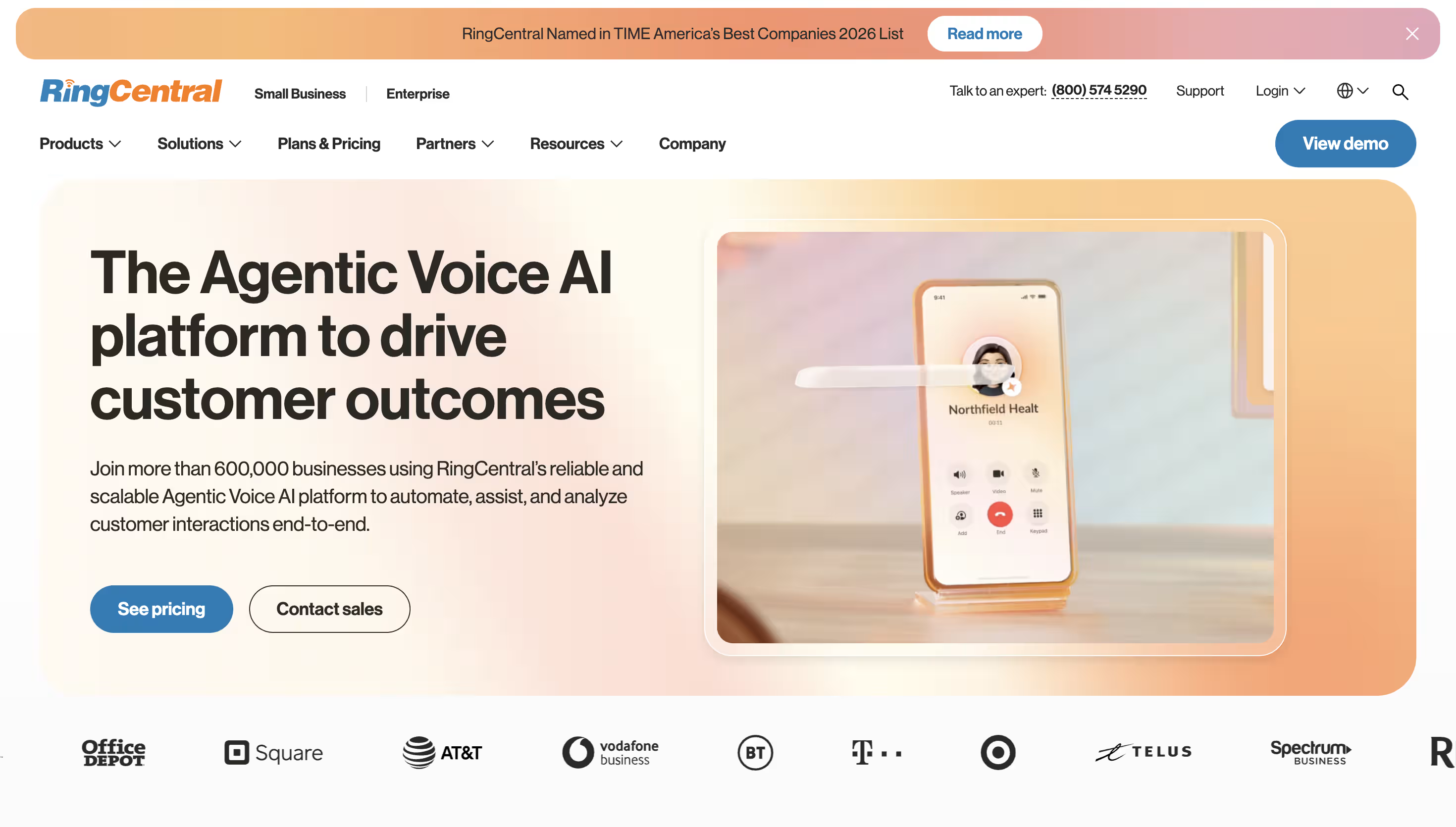
Overview
RingCentral is a business phone and communications provider serving more than 600,000 businesses, and its AI Receptionist answers calls, sends texts, and books appointments on top of any RingEX plan.
For teams already on RingCentral, missed-call handling is an add-on rather than a new vendor.
The problem it addresses is fragmentation. Adding a separate text-back tool means a second number, a second inbox, and a second bill, while keeping it inside the phone system keeps routing, voicemail, and messaging in one admin console.
Ideal For
- Businesses already running RingCentral for phone service
- Multi-site teams that need call routing and messaging administered together
- Companies with IT that prefers one telephony vendor
- Teams needing multilingual answering across locations
- Offices replacing an on-premise phone system
Top Features
- AI Receptionist: Answers calls 24/7, sends texts, handles common questions, and books appointments, and works on any phone system.
- Language switching mid-conversation: Callers can be handled in multiple languages, with complex issues handed to the team.
- Business SMS shared inbox: An add-on that brings templates and compliance tools to customer texting.
- Enterprise-grade call routing: Queues, hunt groups, and after-hours rules configured centrally.
Why They Stand Out?
RingCentral suits businesses where the buying decision belongs to whoever owns the phone system. The AI Receptionist bolts onto existing service, so nothing has to be ported and no second number enters the mix, and the same admin controls after-hours rules for every site.
Scale and reliability are the other draw, since the network runs enterprise telephony for large multi-site operations.
Pros
- Adds AI answering and texting without changing phone providers
- Published add-on pricing for AI Receptionist and business SMS
- Handles multiple languages in the same conversation
- Central admin for routing, hours, and messaging across locations
- Mature integrations with mainstream CRM tools
Cons
- Add-ons stack, so AI Receptionist and SMS both raise the per-user cost
- Core RingEX plan pricing is quoted by user count rather than published as flat tiers
- The AI Receptionist ships without industry-specific handling; agencies build their own intake and knowledge base
- No record lookup in an agency management, dealer, or practice system during the call
- Best value only if you already run or plan to run RingCentral for telephony
Pricing
RingCentral prices AI Receptionist from $39 and the Business SMS Booster at $25, both as add-ons to a RingEX plan, with core plan pricing quoted by user count and a discount of up to 33% for annual billing. Other add-ons, including Conversational Intelligence from $60 and the Call Queues Booster at $35, are priced separately.
Final Verdict
RingCentral makes sense for businesses that already run its phone service and want AI answering and texting administered in the same console. It's a sound pick for multi-site operations with IT oversight, and agencies weighing the two can read Sonant's RingCentral comparison side by side.
Teams that need industry-specific handling or live customer-record lookup during the call will need to build the industry layer themselves or evaluate vertical alternatives. Add-on stacking also raises total cost for smaller offices.
6. Numa™
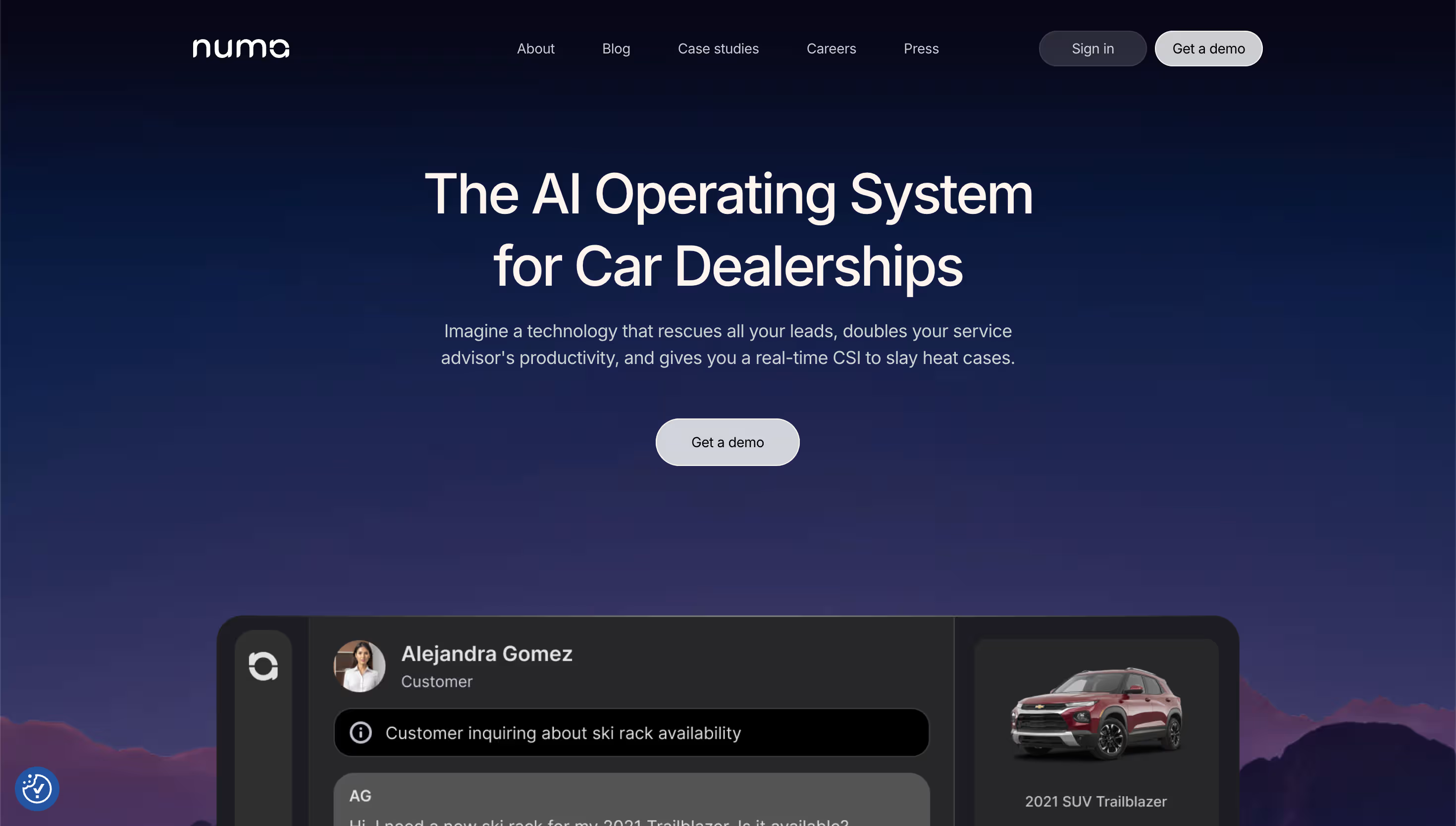
Overview
Numa is AI software built for car dealerships, covering the service drive and sales floor with voice AI, texting, and write-back into the dealer management system. Rather than acknowledging a missed call, it answers and resolves the request, then records it against the repair order.
The problem it solves is the service drive nobody can staff to demand. Advisors are with customers, the phone rings continuously, and every unanswered service call is a repair order that leaves. Numa reports handling more than a billion calls and texts and an appointment booking rate above 80%.
Ideal For
- Franchise and independent car dealership service departments
- Dealer groups standardizing phone handling across rooftops
- Service managers tracking response time and repair order value
- Sales teams answering inventory questions after hours
- Dealerships already running a mainstream DMS
Top Features
- Voice AI that resolves requests: Answers the call with full context rather than greeting and transferring.
- DMS write-back: Outcomes land against the repair order, so the advisor sees the work rather than a message.
- Appointment booking: Service appointments are booked in the conversation.
- Response time reporting: Numa states it cuts average customer response time from 23 hours to under 10 minutes.
Why They Stand Out?
Numa is built for one lane because it commits to a single industry and integrates where the work happens.
Most voice AI greets and transfers, while Numa resolves the request and writes it back to the DMS, which is the difference between a message and a booked repair order.
Its published outcomes are dealership-specific too, including a repair-order dollars per advisor lift above 35% and heat cases resolved at 70%.
Pros
- Built for dealership service and sales workflows
- Writes results back to the dealer management system
- Answers and completes requests rather than texting an apology
- Live in two to three weeks according to the vendor
- Published dealership outcome metrics
Cons
- No public pricing, so budgeting needs a sales conversation
- Car dealerships only, so other verticals gain nothing
- Requires a supported DMS to deliver the write-back
- Aimed at dealership scale, so low-volume operations overpay
- Nothing in the product for businesses that only want an SMS autoresponder
Pricing
Numa doesn't publish pricing and quotes per dealership after a demo. Most dealerships go live in two to three weeks according to the company.
Final Verdict
Numa is the pick for a dealership service department losing repair orders to unanswered calls and slow replies, especially in a group standardizing across rooftops. Its value depends entirely on DMS integration and dealership volume.
Any business outside automotive retail, or any dealership wanting a cheap autoresponder rather than an AI that works the service drive, should look elsewhere on this list.
7. Kenect™
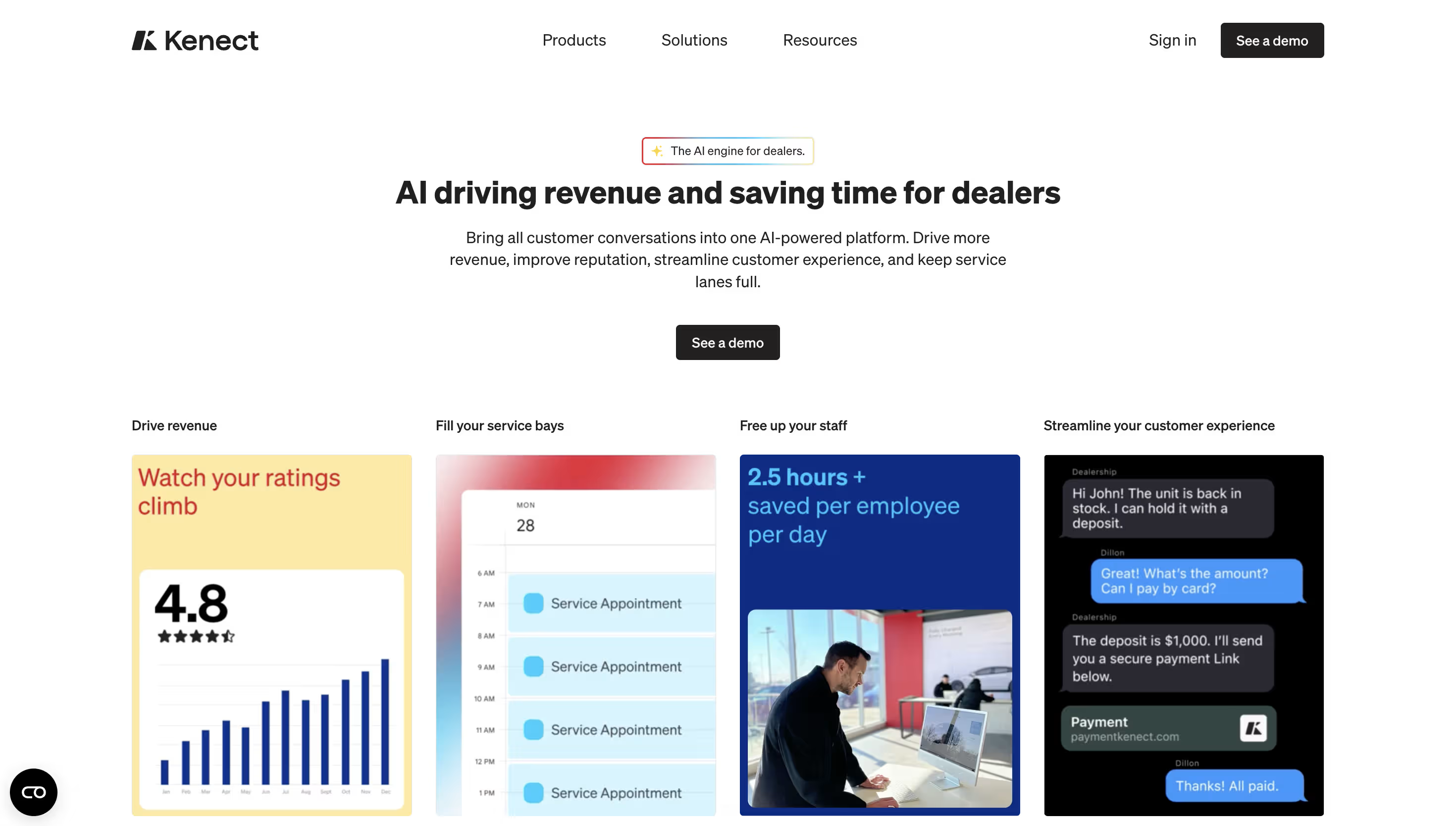
Overview
Kenect brings dealer customer conversations into one product across texting, webchat, voice AI, payments, and reviews. It serves automotive, equipment, powersports, RV, marine, and outdoor power dealers, with an AI receptionist and DMS integration underneath.
The problem it targets is the dealer losing revenue and reputation at the same time. Service calls ring out, parts questions go unanswered, and the customer leaves a review about it, so Kenect pairs conversation handling with review generation and payment collection.
Ideal For
- Equipment, powersports, RV, and marine dealers
- Automotive dealers wanting service scheduling and reviews together
- Dealers collecting payments by text for parts and service
- Groups running recall and reactivation campaigns
- Dealers standardizing conversations across departments
Top Features
- AI receptionist and voice AI: Answers and handles service and sales calls around the clock.
- Text messaging with payments: Staff text customers and collect payment in the same thread.
- Review generation: Automated review requests, which is how many dealers first find the product.
- DMS integration: Conversations and appointments connect to dealership data rather than a separate contact list.
Why They Stand Out?
Kenect suits non-automotive dealers, a group most communication software ignores.
Equipment, powersports, marine, and outdoor power dealers get templates and workflows built for their sales and service cycles rather than a generic local business setup.
The published dealer outcomes are specific too, including a 23% increase in monthly service revenue, 100% of calls answered around the clock, and 90 minutes saved per employee per day.
Pros
- Covers six dealer verticals, including ones most vendors skip
- Conversations, payments, and reviews in one product
- AI receptionist plus human texting from the same inbox
- DMS integration so conversations tie to dealership records
- Published dealer results and named customer references
Cons
- No public pricing at all, including add-ons
- Dealers only, so other local businesses get no benefit
- Breadth across six verticals means less depth in any one
- Review generation is the lead product, so text-back buyers pay for more than they need
- Value depends on the DMS integration working for your system
Pricing
Kenect publishes no pricing and quotes per dealership after a demo, including managed services for reputation, publishing, and conversations.
Final Verdict
Kenect is worth shortlisting for equipment, powersports, RV, marine, and outdoor power dealers who want conversations, payments, and reviews handled together. It fits dealers whose reputation and phone problems are the same problem.
Businesses outside dealer retail have nothing to gain, and the absence of any published pricing makes it slow to evaluate against tools you can price in a minute.
8. Enzak™
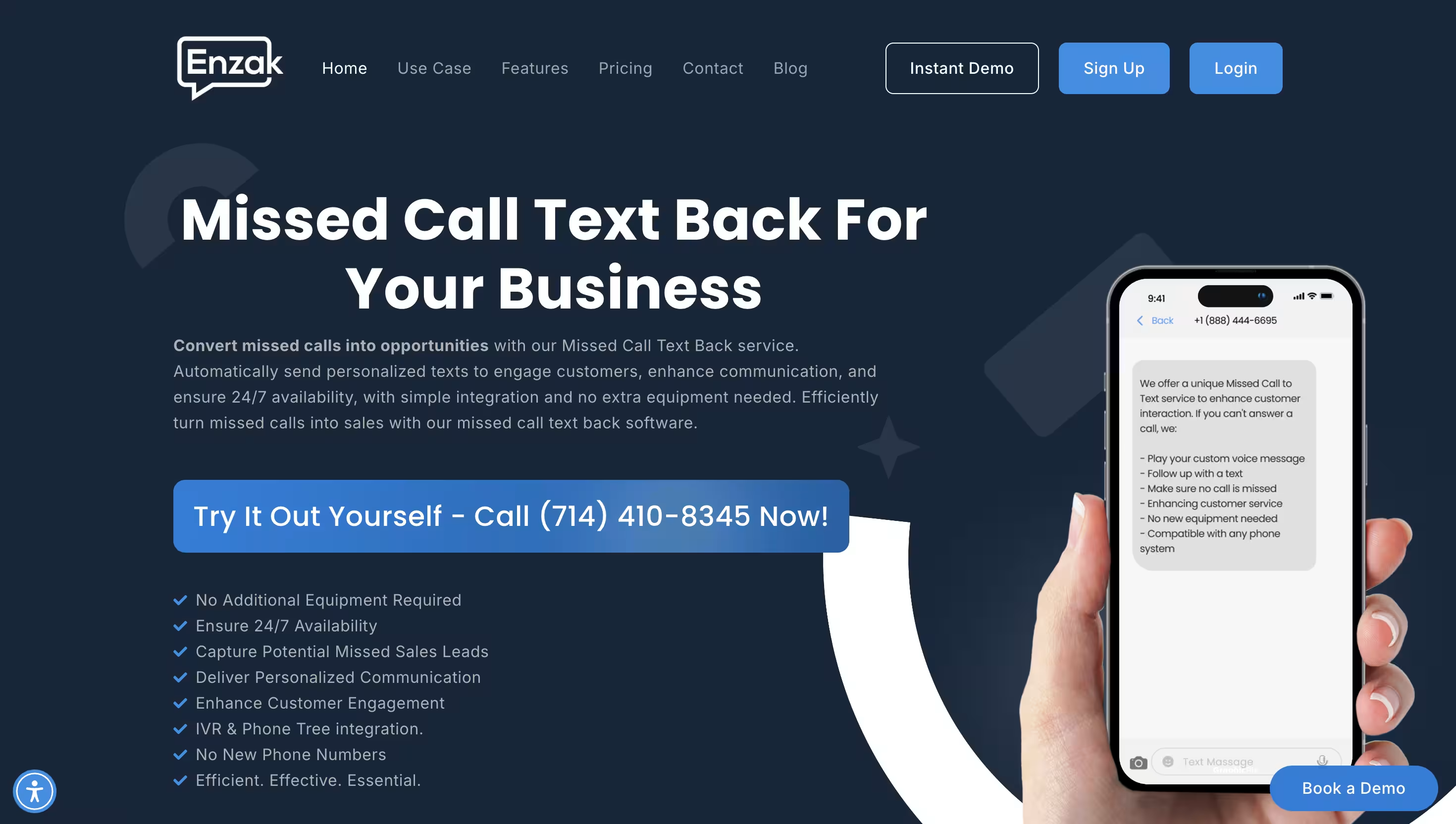
Overview
Enzak does one thing, which is texting the people whose calls you missed. It sends a fully customizable message when a call goes unanswered, with separate text for working hours and after hours, and it works with your existing number and phone tree.
The problem it solves is the simplest version of this category. A business that misses calls and has nobody to watch an inbox wants the caller pointed at a menu, an order page, or a booking link within seconds, and doesn't want a software project to get there.
Ideal For
- Restaurants and takeaways pointing callers to an online menu
- Independent contractors with no office staff
- Clinics and offices directing callers to a booking page
- Businesses keeping their current phone system and number
- Owners who want text-back working today with no build
Top Features
- Separate working and after-hours messages: Different text depending on when the call arrived, plus custom voice greetings.
- 1,000 texts a month included: A volume most small businesses won't reach.
- IVR and phone tree integration: Works with an existing phone menu and needs no new number or hardware.
- A2P 10DLC registered: Enzak states it complies with A2P 10DLC, which decides whether messages get delivered at all.
Why They Stand Out?
Enzak's entry pricing is among the lowest for dedicated text-back tools, and the narrow scope is the point. There's no CRM to learn, no workflow to build, and no per-user licensing to plan, and analytics show which missed calls turned into replies.
Keeping your existing number and phone tree also removes the migration that makes bigger products a project rather than a purchase.
Pros
- Dedicated missed call text back with the lowest published entry price on this list
- Published pricing, including add-ons and extra users
- Works with your current number, phone system, and IVR
- Separate messaging for working and after hours
- A2P 10DLC registration documented publicly
Cons
- One-way texting by default, with two-way as a paid add-on
- No CRM, no record lookup, and no routing
- Text-back only, so it can't answer, qualify, or book
- Nobody is watching the thread unless your team is
- Analytics are basic next to full communication software
Pricing
Enzak lists its Missed Call Text Back service at $99 a month, discounted 80% for the first month, including 1,000 texts a month, custom voice greetings, custom messages for working and after hours, and analytics, with extra user accounts at $10 each.
Two-way texting is a $49 add-on, and separate add-ons cover AI enhanced visual voicemail at $75 a month and call back requests at $49 a month.
Final Verdict
Enzak is the right choice for a small business that wants an automated text going out within seconds and nothing else, particularly restaurants and one-person operations where the alternative is silence.
Its limits become obvious as soon as customers reply, because one-way messaging by default means a paid add-on or an unanswered thread. Any business whose calls need qualifying, booking, or a record lookup will outgrow it quickly.
9. Upfirst™
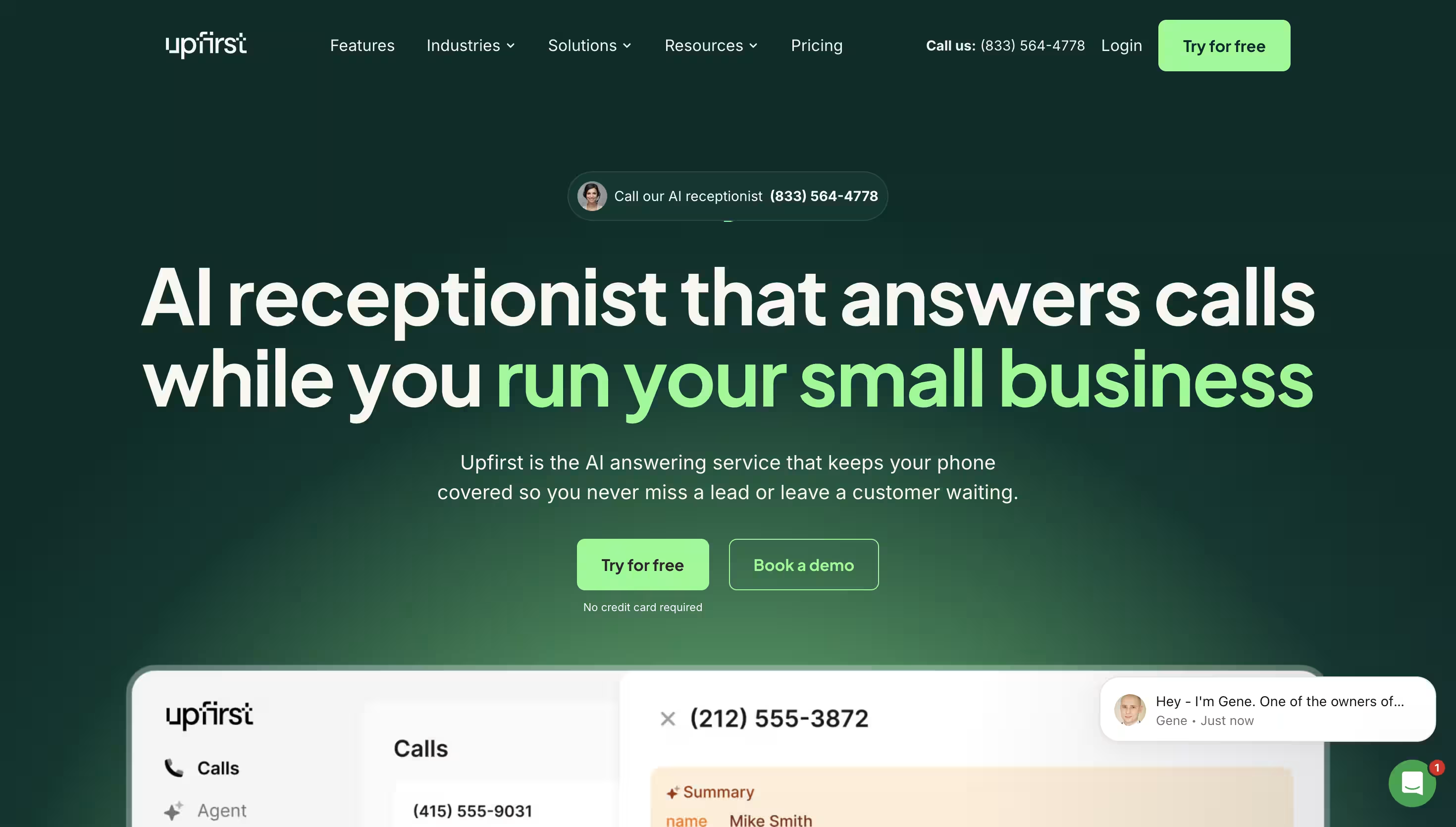
Overview
Upfirst is an AI receptionist for small businesses that answers the call, captures what the caller needs, and follows up by text with a calendar link so the appointment can be booked in the SMS thread.
It publishes plans by call volume, which makes it one of the easiest tools here to budget.
The problem it targets is the owner who is the business. Nobody can answer while on a job or with a client, and Upfirst covers the phone with published call bundles rather than a per-seat license.
Ideal For
- Real estate agents and property managers
- Contractors, HVAC companies, and plumbers without office staff
- Law firms screening and qualifying intake calls
- Salons, towing, and pest control businesses
- Small teams needing multilingual answering on a small budget
Top Features
- AI receptionist on every plan: Answering, routing, call screening, and lead qualification are included rather than tiered.
- Follow-up text with a calendar link: Callers pick a time inside the SMS thread instead of waiting for a callback.
- Call summaries, recording, and transcription: Every call is written up and searchable.
- 35+ languages: Multilingual handling without a separate plan.
Why They Stand Out?
Upfirst suits budget-conscious buyers because the cheapest plan is a real AI receptionist rather than a stripped-down autoresponder. Pricing per call rather than per minute also makes forecasting easier, since you count calls you already receive.
Overage rates fall as plans rise, from $1.50 down to $0.70 a call, so growth doesn't punish you at the edges.
Pros
- Lowest published entry price for AI answering at $24.79 to $24.95 a month
- Predictable per-call billing with declining overage rates
- AI receptionist, routing, and scheduling on every plan
- Multilingual handling included
- White-glove onboarding and custom integrations from the Pro tier
Cons
- Named integrations are thin beyond Zapier
- No industry knowledge, so handling stays general
- Compliance agreements sit on the custom tier
- Call bundles are small at the entry tiers, so overage arrives fast
- No record lookup in a CRM, agency management, or practice system during the call
Pricing
Upfirst publishes four plans. Starter is $24.95 a month for 30 calls with $1.50 per extra call, Premium is $59.95 for 90 calls at $1 extra, Pro is $159.95 for 300 calls at $0.75 extra, and Scale is $299 for 600 calls at $0.70 extra.
Annual billing cuts each price, and anything above 600 calls is quoted, with volume discounts, priority support, and compliance agreements.
Final Verdict
Upfirst suits an owner-operated business that wants calls answered and appointments booked without a five-figure commitment, and the published per-call pricing makes it simple to model.
It's a good starting point for contractors, agents, and small firms. Once call volume grows or the handling needs to know your industry and read a customer record, the general-purpose answering and thin integration list become the ceiling.
10. Rosie™
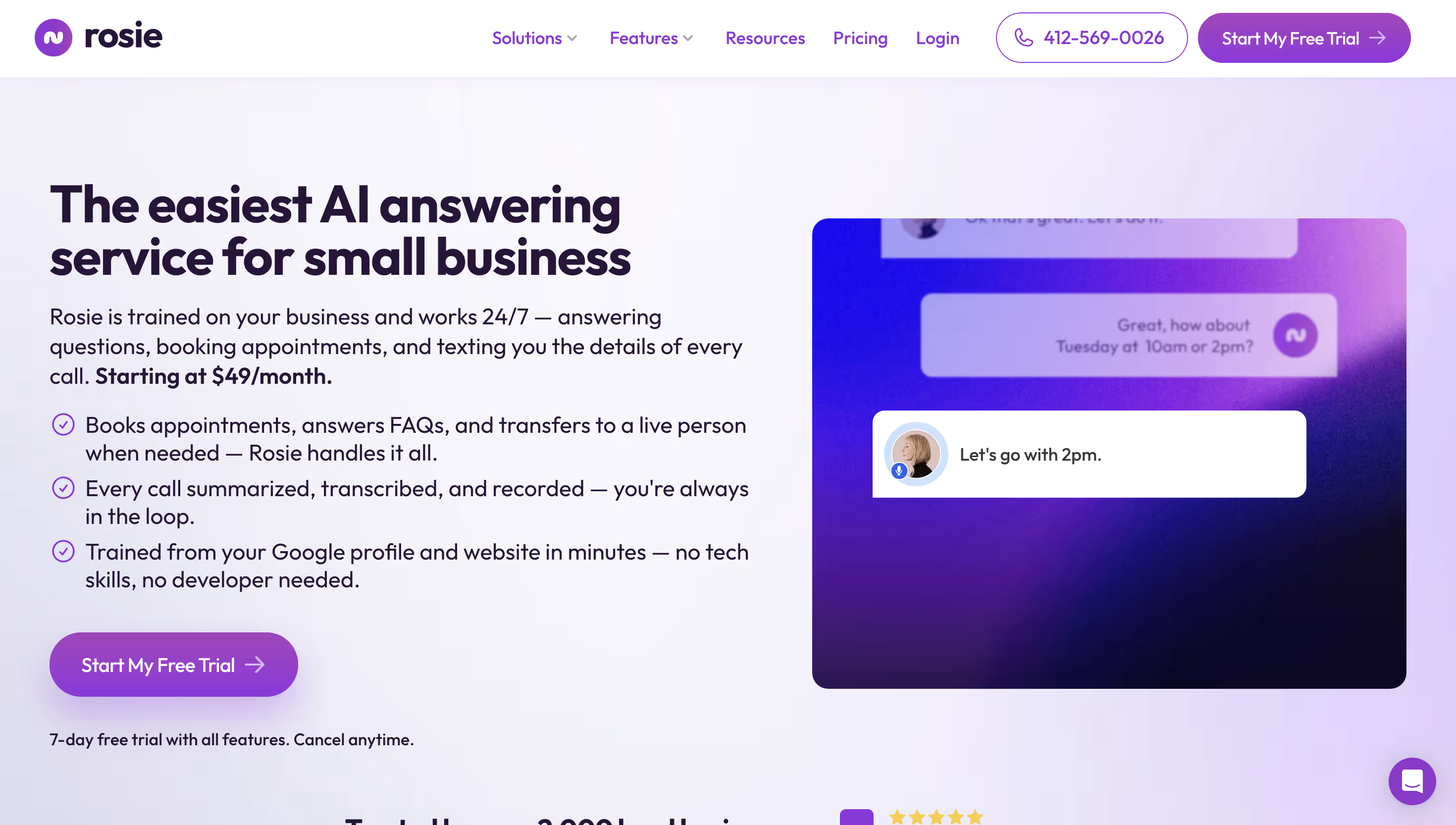
Overview
Rosie is an AI answering service for small businesses, trained from your website and Google profile in minutes. It answers calls 24/7, answers FAQs, books appointments, texts callers during the call, and transfers to a person when needed, with more than 2,000 local businesses using it.
The problem it solves is setup friction. Most owners who never fix their phone coverage stall on configuration, so Rosie builds the knowledge base from what you already publish and starts answering the same day.
Ideal For
- Solo owners and micro businesses
- Local service businesses with unpredictable call volume
- Businesses wanting AI answering live the same day
- Owners who need every call summarized and recorded
- Teams adding a website chat widget alongside phone coverage
Top Features
- Trained from your website and Google profile: No scripting, no developer, and setup measured in minutes.
- Texts callers during the call: The Scale plan sends texts mid-conversation, and every plan sends appointment links by text.
- Appointment booking: Books directly rather than promising a callback.
- Call summaries, transcripts, and recordings: Every call is documented for later.
Why They Stand Out?
Rosie suits entry-level buyers because it removes the work that stops small businesses from ever going live. Training from public information means the AI can answer real questions on day one instead of reciting a script somebody has to write.
Transparent minute bundles help too, since each plan states the included minutes rather than hiding usage behind credits.
Pros
- Published plans from $49 a month with a 7-day free trial
- Setup in minutes with no scripting or developer time
- Every call summarized, transcribed, and recorded
- Books appointments and transfers to a human when needed
- Two months free on annual billing
Cons
- Minute bundles are small, and overage rates aren't published
- Mid-call texting is limited to the Scale plan and above
- No industry knowledge, since it only knows what your website says
- Website texting is a $50 add-on with 25 conversations included
- No integration with insurance, dealer, or practice systems
Pricing
Rosie publishes three plans. Professional is $49 a month for 250 minutes, Scale is $149 for 1,000 minutes and adds mid-call texting, and Growth is $299 for 2,000 minutes. A website texting add-on costs $50 a month with 25 conversations included and $1 per extra conversation, and annual billing includes two months free.
Final Verdict
Rosie is a strong entry-level choice for a solo owner or micro business that wants calls answered today without configuration, and the published minute bundles make the first bill predictable. It fits businesses where the alternative is voicemail.
Growing teams hit the ceiling quickly, since unpublished overage rates, minute caps, and no system integration mean the tool stops scaling right when call volume makes it matter.
How to Choose the Best Missed Call Text Back System
Most buyers compare the monthly price, sign up, and find out a quarter later that the tool sends texts nobody answers. These seven checks surface the difference before you commit.
1. Decide Whether a Text Is Enough or the Call Needs Answering
Ask what a good recovered call looks like when it's finished. If pointing the caller at a menu, a booking page, or a reply prompt closes the loop, a text-back tool does the job cheaply. If the call has to end with a verified caller, a completed intake, or a booked appointment, you need something that answers, because a text only moves the work to whoever opens the inbox next.
2. Confirm Who Replies When the Customer Texts Back
This is the check almost nobody runs, and it decides whether the tool works. A one-way message creates an expectation, so ask whether the thread is two-way, whether replies reach a shared inbox or one person's phone, and what happens to a reply that arrives at 9 p.m. Enzak, for example, is one-way by default with two-way sold as a $49 add-on, and that single detail changes the whole workflow.
3. Check Where the Conversation and the Record Land
The best missed call text back software writes into the system your team already opens, whether that's a CRM, an agency management system, or a dealer management system. Notifications by email and text create a second inbox somebody has to reconcile. Ask which integrations are native two-way connections and which run through Zapier or a manual export, because that answer decides how much cleanup you inherit each morning.
4. Price It Against Real Missed-Call Volume, Not the Plan
Pull the last three months of call logs and count the calls that rang out, then check how each vendor bills, whether by call, by minute, by user, or by message. A 30-call bundle at $24.95 sounds cheap until a busy month adds 40 calls at $1.50 each.
Comparing an answering service cost against a flat rate on the same volume is the only fair test.
5. Verify A2P 10DLC Registration and Opt-Out Handling
An automated business text from an unregistered sender gets filtered before the customer sees it, so ask for the vendor's A2P 10DLC registration status in writing.
Then check how the tool records consent and processes opt-outs, since the FCC requires callers and texters to honor a revocation request made by any reasonable method. Keep the message transactional, name your business in the first line, and include an opt-out instruction.
6. Ask How Long Setup Takes and Who Supports You Afterwards
Time to value is the criterion buyers skip and regret. Ask how many days until the first live text or answered call, how much scripting or workflow building lands on you, and whether onboarding, configuration, and support are included or billed separately.
A tool that needs six weeks of building costs you the season you were trying to cover, and one that goes quiet after setup leaves you debugging call handling alone.
7. Test What Happens With an Industry-Specific Request
Give each vendor a real call from your week and listen to how it's handled. A caller asking whether a policy covers a rental car, or which repair order a part belongs to, exposes the difference between a tool that recites a template and one that knows your work.
Sonant's guide to choosing an AI receptionist lists the questions worth asking, and the gated AI buyer's guide covers the evaluation in more depth.
Everything You Need to Know About Missed Call Text Back Tools
The ratings below score each tool against the six criteria above, from one to five stars. Affordability reflects cost at real missed-call volume rather than the entry price, which is why Sonant rates well on a quoted partner rate with no per-minute overage despite publishing no rate card.
Answer the Call Instead of Texting Back, With Sonant
If you run an independent insurance agency, the calls ringing out are quotes, claims, renewals, and payment questions. A missed call text back tool sends those callers an apology and leaves the work for tomorrow.
Sonant answers those calls 24/7, verifies who's calling, reads their record in your agency management system, captures the request properly, and drops a routed task in front of the CSR who owns the account.
Agencies usually start with nights and weekends because the alternative there is voicemail, then widen the coverage once the handling proves itself. StreetSmart Insurance captured $120k in quotes after hours, and Cornerstone Insurance moved from 70 to 100 tasks a day once phone traffic arrived as structured work. The numbers behind those results sit in the Sonant case studies. Setup takes under 30 days with onboarding, configuration, and support included, and there's no script to write because Sonant already knows P&C insurance.
Book a Demo and hear it answer a call on your own agency management system.
Disclaimer:
All product names, logos, and brands are property of their respective owners. Podium™, HighLevel™, Weave™, RingCentral™, Numa™, Kenect™, Enzak™, Upfirst™, Rosie™ are trademarks of their respective companies. No affiliation, endorsement, or sponsorship is implied. Product features, pricing, and availability are current as of August 2026 and subject to change; verify with each vendor before making a purchase decision.
About the Author
Francisco Lopes is co-founder and CEO of Sonant, the AI receptionist built for insurance agencies. He got P&C-licensed himself before building the product, so the workflows in this review are judged against how an agency runs its phones rather than against a feature list. A Stanford Graduate School of Business alum and Forbes 30 Under 30 honoree, he has written on agency operations and AI adoption for IA Magazine and posts regularly on Francisco Lopes on LinkedIn.






.svg)

.svg)


